

How long does it take for a rescue dog to trust you? (4 real-life examples!)

If you Google the question “How long does it take for a rescue dog to trust you?” you’ll see the answer “3 months” jump out at you. But I’m not so sure about that.
Just like people, dogs are individuals. While one dog will adapt quickly, another will take a long time to come around to fully trusting you and feeling safe in your home.
There are so many factors involved, it’s impossible to give a stock answer. Having said that, there are several things you can do to help the process move along more quickly, and I’ll explore those in this article.
I’ll also discuss my own experiences with four of the rescue dogs – ranging from moderately to extremely fearful – I’ve adopted over the last 15 years.
What is the 3-3-3-rule?
Every shelter dog has her own unique personality, so it’s important to remember that there’s no one-size-fits-all approach to establishing trust and building a bond. There’s certainly no fixed timeline.
That said, the 3-3-3 rule can be helpful as a guideline for understanding your pup’s behavior during her adjustment period and make the transition easier – both for her and for you.
According to dog trainer Debbie DeSantis, it goes something like this:
3 days
During the first three days when you first bring your new furry friend home, she needs time to settle in and become familiar with her new environment.
She may feel anxious or overwhelmed by everything and require some time to adjust and feel safe.
This can include:
- Feeling overwhelmed
- Feeling scared and unsure of what’s going on
- Not feeling comfortable enough to “be herself”
- Loss of appetite
- Shutting down (i.e. offering no behavior), hiding away, and/or sleeping a lot
- Gastrointestinal upset (i.e. diarrhea) due to stress and/or dietary changes
3 weeks
As your new addition starts to relax and become more familiar with her surroundings, you may start to witness her true personality coming through.
This can include:
- Feeling more comfortable and relaxed in her new environment
- Starting to enjoy interactions and activities with her new family members
- Getting into a routine
- Letting her guard down and starting to show her true personality
- The emergence of any ingrained behavior problems
3 months
The first three months are when things start to come together. Well, hopefully, anyway!
If it’s still not happening for you and your pup, don’t worry. There’s still plenty of time.
By the three-month window, you should have a good handle on your dog’s true personality and temperament.
This can include:
- Being completely at ease in her new home
- Learning to trust you
- Feeling safe and secure in her new home with his new people
- Embracing her new daily routine
All dogs are individuals so this is by no means a cookie-cutter approach that can be applied to all dogs in all situations.
However quickly or slowly your new furry friend goes through this transition process, supporting her is key. Most important of all, don’t rush her!
The more you respect her boundaries and let her make her own choices and decisions, the faster she’ll realize that you are worthy of her trust and devotion.
So again, there’s no fixed timeline. All the 3-3-3 rule does is take some of the guesswork out of understanding what your new pup needs to help her adjust to her new life.
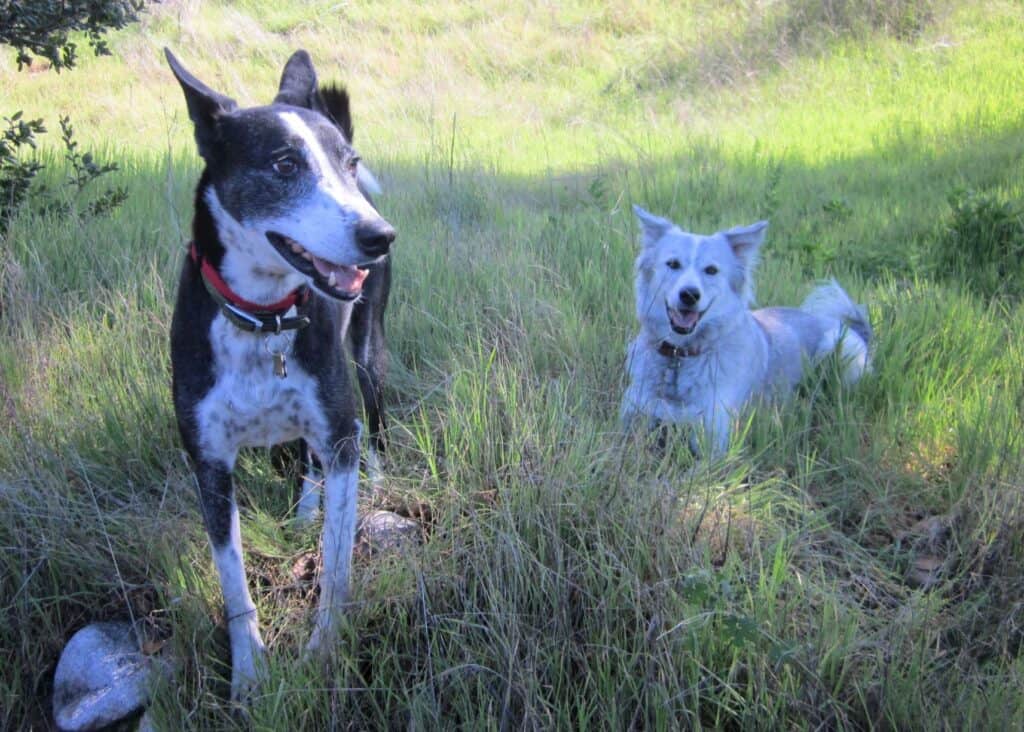
What affects how long it takes my rescue dog to trust me?
Many things can affect how long it takes your rescue dog to trust you.
These include how she was treated in her previous home, if she’s had positive experiences with people before, and how she is treated now.
Dogs are individuals just like people, so some may take longer to warm up to you than others.
Age can also be a factor, as some older dogs may take longer to adjust to changes in their environment.
The learning environment your dog experienced earlier in life—such as how much socialization she had with other pets and people—is also important, as this will affect how open and friendly she is toward strangers and new situations.
The temperament and genetics of the dog are another consideration – certain personalities may take longer to open up to someone they don’t know than others.
Finally, the new home environment matters too. If the pup’s first impression is that her new home is safe, secure, and loving it’ll be easier for her to understand that she’s safe and can trust you.
What can I do to get my rescue dog to trust me more quickly?
When you first get your newly adopted rescue dog home it’s a lot for her to deal with.
Even though it’s her new home, for her it’s a strange place. There are new people and a completely new environment, with new smells, new sounds, new food – or even new everything if she’s never been in a home before.
Not to mention the presence of other pets, if you have them.
It’s quite natural for her to be overwhelmed. Anyone would be!
Most likely she’ll need time to regroup, so allowing her a decompression period and some quiet time is essential.
Safety first
One of the most important things you can do is help your dog to feel safe. If she feels safe she can start to relax. She’ll be able to think more rationally if she’s not in a constant state of fight or flight.
Feeling safe is essential for your dog’s well-being and will form the foundation for everything that happens from here on. You can start with this on her very first day.
Provide a safe place
It’s important to create an area or room for your pup which meets all her basic needs.
Include things like food, water, bedding, and a few dog toys and chew toys too. It shouldn’t be somewhere that will be too noisy or full of activity, so try to find a quiet part of the home so she can decompress in peace.
If you don’t have a spare bedroom or bathroom, you could use a baby gate or dog gate to section off an area.
Obviously, you’ll pop in with her meals and take her out for bathroom breaks, but other than that, leave her to chill out and regroup.
As she starts to show signs she’s settling in and feeling calmer, you can start to leave the door open for her to come out when she’s ready.
Don’t make a big deal of it when she does. Just offer her some tasty treats and talk to her in an upbeat friendly voice, and let her retreat to her safe space whenever she wants to.
If you let her do this on her terms, she’ll feel more in control of her environment. This is essential in the process of her learning to trust you.

New E-Book
👉 My new E-book, The Fearless Fido Formula: 15 Mistakes Smart Dog Parents Never Make Again is officially live!
👉 If you’re a dog parent, especially of a fearful pup, this is for YOU!
👉 AND…you’ll get 4 amazing bonuses for FREE!
Not sure if this is right for you and your dog? Get more info here
Leave her be
All you have to do now is nothing at all! Just sit back, be patient, and give her time to adjust to her new surroundings.
This is another way you can help her feel safe.
Let her set the pace
Don’t rush your new pup into doing loads of things, like going for long walks or to the dog park (note: not all dogs enjoy dog parks!), meeting the extended family, or doing a huge training session.
You’ll have plenty of time for all that later. For now, just give her time to adapt, get used to her new environment and routine, and feel secure in the safety of her new home.
Understand how she feels
When you’re getting to know your new rescue dog it’s essential to try to understand how she feels.
Some dogs will be super happy and excited at all the new stuff going on, while others will be more cautious or even clingy. Some dogs may be stressed and anxious, while others will be extremely fearful or even shut down.
This will all be manifested in your pup’s body language and behavior.
Which brings me to…
Learn to read her body language
Dogs are master communicators and tell us all sorts of things about how they’re feeling. All we have to do is pay attention.
So learning to read your rescue dog’s body language is an essential piece of the puzzle when you’re working on gaining her trust.
Here’s a great little video from Fear Free Happy Homes showcasing the basics of canine body language:
Keep her below threshold
All this means is that you need to make sure your dog doesn’t feel overwhelmed, anxious, scared, or stressed.
Once you’ve learned how to understand her body language, you can do your utmost to keep things positive.
Your goal should always be to avoid crossing over the line where your dog goes from feeling calm, relaxed, confident, and happy, to feeling stressed, frustrated, anxious, or scared.
So watch carefully for any signs of discomfort and take your cues from your dog. If she starts showing signs of fear or stress, back off and give her some time to regroup.
The more you can create a calm and relaxed environment where you respect what your pup is telling you, the quicker she’ll gain confidence and feel comfortable in your presence. This is another integral part of helping her to feel safe.
Worried you won’t be able to identify the signs your pup is feeling fearful, anxious or stressed? Never fear, this excellent handout from Fear Free Happy Homes tells you everything you need to know.

Use calming signals
According to renowned Norwegian dog behavior expert Turid Rugaas, there are approximately 30 “canine calming signals” that dogs use to communicate with each other and avoid conflict.
The “head turn” is one of the most commonly used signals, and it can be incredibly effective when building your relationship with a new rescue pup.
If you notice your pup is starting to look stressed, simply turn your head to the side for a bit to tell her you’re not a threat.
By understanding her signals and using them in the same way, you’re able to learn how to speak your dog’s language and show her she can trust you.
Another useful thing to know is that staring is considered to be hostile in the world of canine communication, so try making soft eye contact with your pup instead. So look at her, then look away, then look back, and then away again.
This is such an easy way to communicate with her, to show her you’re not a threat and that she can trust you.
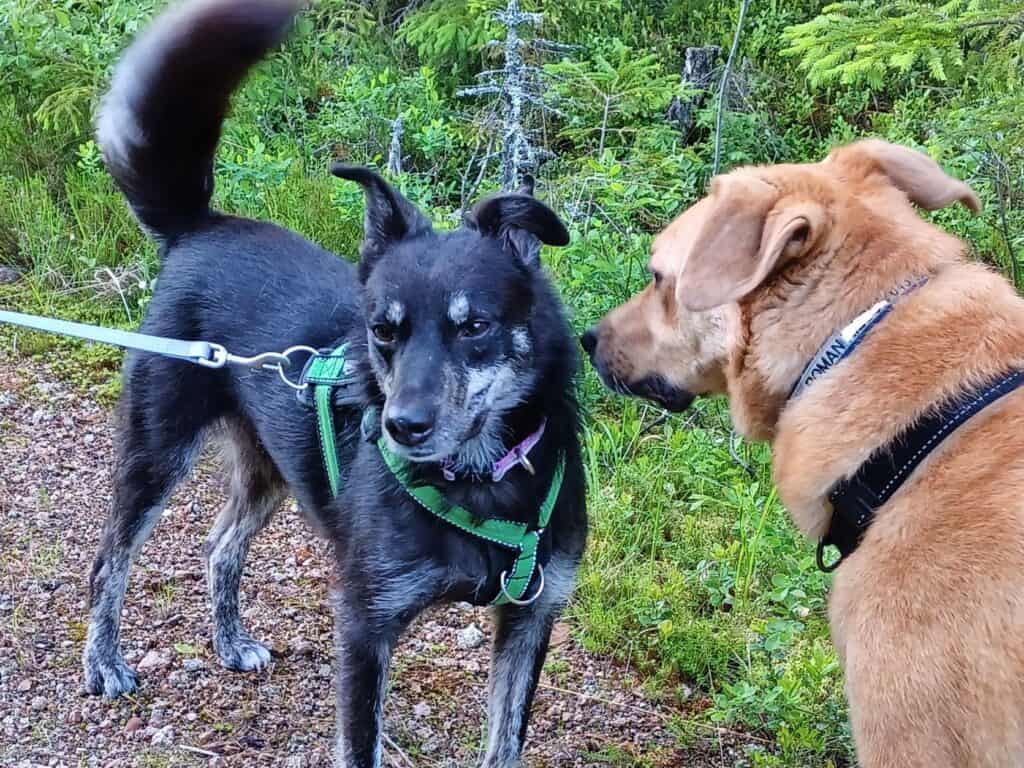
Let her make her own choices
Forget all that old nonsense about how you have to “dominate” your dog and “show her who’s boss.” The dog training world has moved on. Well most of it, anyway.
Dog training in the 21st century is all about collaboration, a dialogue if you will.
By empowering your pup to make her own choices and decisions, you can help her to feel safe and in control of her environment. She’ll also be engaging her rational brain, which means she’ll be less likely to react emotionally to any given situation.
By allowing your pup to decide if she wants to approach you or not, if she wants to be petted or not, if she wants to be petted and then changes her mind, and respecting her decision, you can show her she can trust you – because you’re never going to make her do something she’s uncomfortable with.
This is another key element in building a stronger bond of trust between the two of you.
Create positive associations through positive interactions
All the body language and calming signals in the world will be out the window if you’re somehow triggering a negative association with your presence.
Positive reinforcement and rewards are one of the most effective ways to get your pup to feel safe and comfortable in your presence, so it’s worth putting in the time and effort to get this right.
Your end goal is for your pup to look forward to spending time with you, so make sure any interactions you have with her are paired with good things and experiences.
This will help build a strong foundation of trust.
Keep interactions short
Keep interactions brief when you first start getting to know your new companion. This will prevent her from becoming overwhelmed or stressed.
So be sure to watch for stress signals, such as yawning or panting, tail tucking, or avoidance behavior. If you see any of these signs, it’s time to take a break and give her some space.
Always try to end your interactions on a positive note, even if you just gently toss her a treat and leave the room.
Stay calm and quiet around her
When interacting with your rescue pup, it is important to be calm and communicate in a gentle, soothing tone.
Avoid using high-pitched or excited tones, as these can be overwhelming or even frightening – depending on the dog.
Additionally, try to avoid making sudden movements or loud noises as this can also cause distress.
Training sessions
Positive reinforcement training is a great way to build your dog’s confidence and, consequently, the bond between you.
Positive reinforcement training involves rewarding your dog for desired behaviors, which helps her to learn what you want more quickly while also making her feel good.
Yes, really!
Dogs get a dopamine rush when they are anticipating a reward. (Dopamine is a neurotransmitter – or chemical messenger in the brain – that is associated with feeling happy.)
This type of training can be used with dogs of any age and is a great way to keep communication open and positive between both ends of the leash.
It’s worth taking the time to learn more about how rewards-based training works, and finding out what types of rewards work best for your pup (i.e. what she values the most highly).
Here’s a video from The Dog’s Trust demonstrating how positive reinforcement training works:
Clicker training
Clicker training is a form of positive reinforcement training where you use a clicker to mark and reward behaviors you like.
By telling your dog what to do, instead of what not to do, you can have an incredible effect on how your dog feels, how she behaves, and how she communicates with you.
Clicker training is based on positive reinforcement and the science of animal learning, which states that behaviors that are rewarded are more likely to be repeated.
Here’s dog trainer Sally Marchant explaining the basics:
Playtime and brain games
Playing interactive games and engaging in scent exercises with your newly adopted rescue pup is an excellent way to form a strong bond and build trust.
Food puzzle toys (e.g. Kongs, or snuffle mats) and environmental enrichment (e.g. scent games where you hide tasty dog treats around the house or yard for her to sniff out) can help keep your pup mentally engaged.
Use the right gear
Using a well-fitted harness and a longer leash (I prefer a minimum of 6ft. to give the dog space to sniff around and do “dog things” without me standing on top of them) will stand you in good stead when teaching your dog she can trust you.
Avoid at all costs equipment designed to work by causing fear or pain, such as choke, prong, anti-bark, and shock collars. How can your dog learn to trust you when you’re causing her pain or scaring her?
Enlist the help of a dog buddy
Another dog can also be a great source of support for your new rescue dog.
Dogs are social animals, and while not all dogs enjoy the company of their canine peers across the board, many dogs enjoy interacting with a special dog friend or two.
If your rescue dog can see that your existing dog is comfortable around you and trusts you, then that helps to establish your “credibility” in her eyes as well.

Set a routine
Setting up a routine from day one is key to helping your pup settle in and begin building trust – both with you and the other members of the household.
Mealtimes should be regular and predictable, as dogs thrive on routine and thrive when they know what to expect.
Walks, playtime, and other activities should also be a part of your regular schedule so your pup can get used to her new routine and begin to relax in her new environment.
Real-life examples: How long did it take for four different rescue dogs to trust me?
Dog #1. Louis
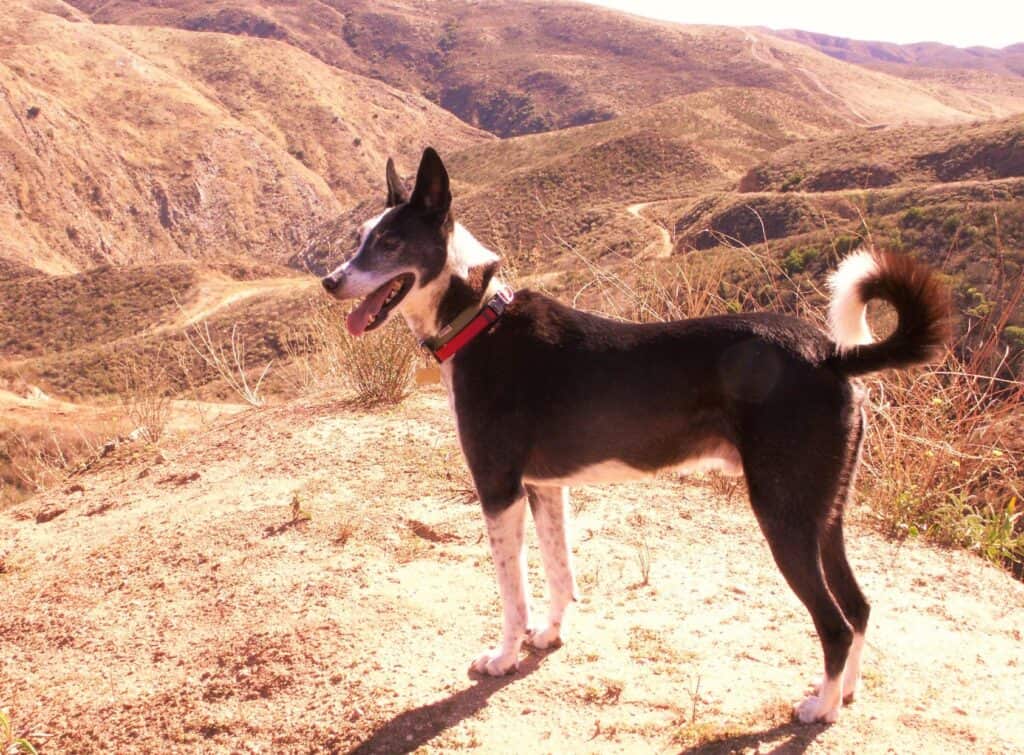
Louis spent the first two years of this life chained up. He was then rescued and spent two more years in a barky dog shelter with little mental stimulation.
Louis was a nervous wreck when we adopted him and the most fearful dog I’d ever seen. He particularly hated you doing anything behind his head. Even clipping on the leash was an ordeal for him.
He was always terrified of being hurt and so would snap at your hand, drawing blood, to protect himself if ever he thought he was at risk.
The first thing we had to do was learn to read Louis’ signs of discomfort as he was quite stoic in his behavior.
After a few snapping incidents I identified the tiniest of top lip curls. It was just a few millimeters, you could barely see it. But if you did, you knew it meant trouble.
By learning to read Louis, I was able to work on keeping him under threshold. This meant avoiding ever getting to the point where he felt he had no other option but to snap at you to make you stop doing whatever the scary thing was.
Although Louis remained fearful throughout his life, he did gradually grow to trust us – for the most part at least – but it took several months.
Even then, we always had to pay close attention and make sure he didn’t get overwhelmed because if that happened, he could revert to the snapping behavior that had previously served him well. And we didn’t want to risk that.
Louis wasn’t the easiest dog, none of which was his fault. We learned to accept him for who he was and were able to give him a great life on that basis.
He never fully trusted anyone else though, only us. And that’s how it was for the rest of his life until he left us at the age of 16 years.
Dog #2. Daisy
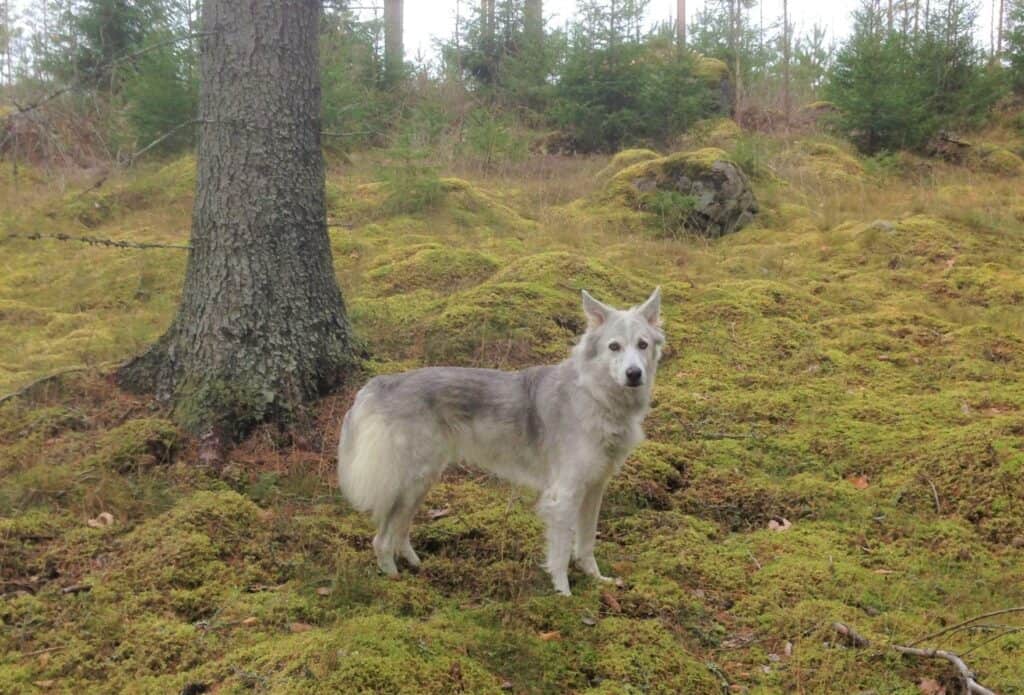
We rescued Daisy from the street in Dubai at the age of about 8 months (as estimated by the vet). She was skeletally thin, covered in chemical burns, and completely exhausted when we found her.
From the get-go, Daisy was surprisingly amenable with us. She trusted us within her first week and blended in immediately with the three other dogs we had at the time (including Louis, who became her BFF).
However, she would get snappy if you tried to do anything like clipping her nails or removing a tick.
Even drying her with a towel or putting on a harness risked an aggressive response, no matter how careful you were. Not because she was an aggressive dog, but because she was scared.
So we had to work on all those things to make them less stressful for her and teach her she didn’t need to fear them – or us.
Daisy shared our lives till she crossed the Rainbow Bridge aged 14 years but throughout her entire life, I was the only person she’d allow to clip her nails or remove a tick.
Anyone else would get growled at and if they didn’t respect her signal and back off, a timely air snap.
So sometimes dogs trust one person for some things, another person for other things, and many people not at all. And I was fine with that.
Dog #3. Roman
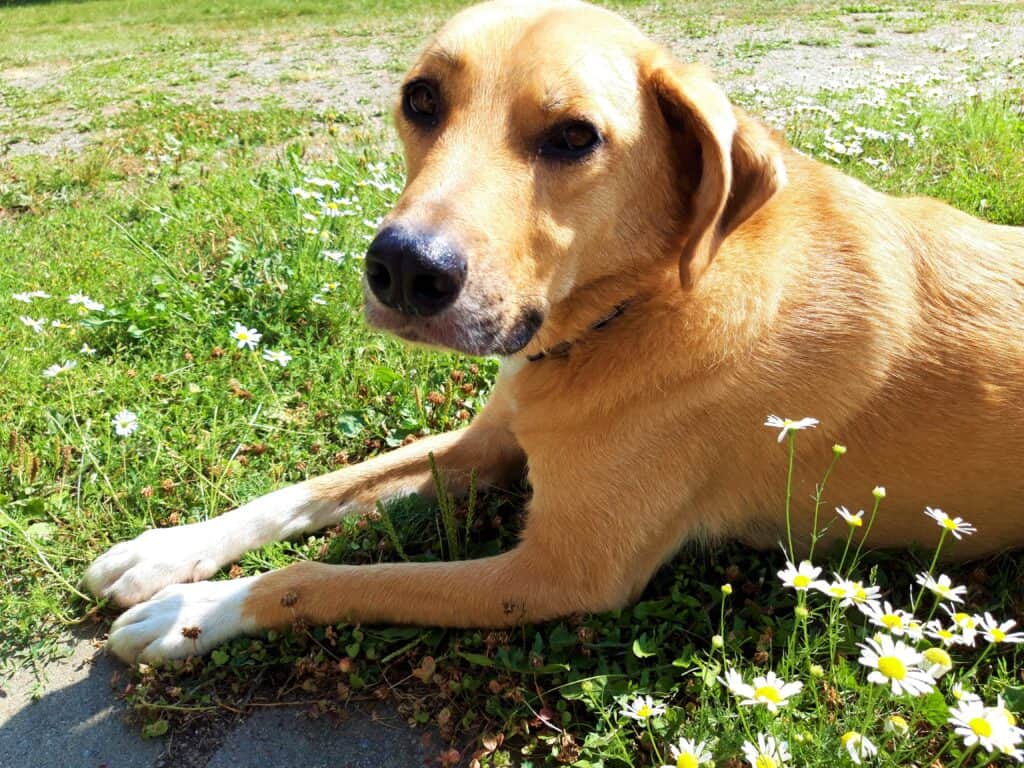
Roman is one of our more recent dogs and, for the most part, is very trusting. We adopted him aged 3 after he’d been in a shelter in Romania and then a foster home in Finland for four months.
A few days after he first came to live with us I took him out for a walk. Given his calm and friendly disposition, I had no particular concerns and, when we got to a tricky part of the trail (which he was negotiating much faster than me), I dropped the leash without thinking.
I planned to pick it up again once we got to the top of the rocky incline.
I often did this with our other dogs at the time as I’d recently fractured my wrist and it was easier than keep clipping and unclipping their leashes, which was awkward and painful.
I should explain that this was an area where dogs were allowed to roam free. However, whenever we saw other people, or people walking dogs, we’d put the dogs back on leash till they had passed.
So there I was at the top of the hill, ready to pick up Roman’s leash again. Except he didn’t want me to get close enough to do that.
He suddenly became very skittish and wary of me, jumping around just out of reach.
He came near enough to get a treat (I was carrying a treat bag full of chopped-up pieces of cheese, his favorite), but every time I bent down to pick up the leash – or even if I moved to stand on it – he danced away again.
We did this for about an hour. He didn’t run off but he wouldn’t come quite close enough either. I had made a huge miscalculation, thinking I had his 100% trust when really, he barely knew me.
The solution? Call my other half to bring Daisy to the same spot. Once Daisy had arrived, we turned and walked back home with her (only about 10 minutes away, luckily).
Roman, still with his leash dragging behind him, followed us the whole way.
We took a gamble and it paid off. Sometimes you have to think outside the box.
Remember I mentioned earlier how having a dog buddy can show your new rescue pup she can trust you? This is a great example of that.
All in all, it took about another 10 days for Roman to fully trust me, during which time I worked on his recall (i.e. getting him to come back when called), and we were able to continue our forest walks without a hitch.
Dog #4. Florence
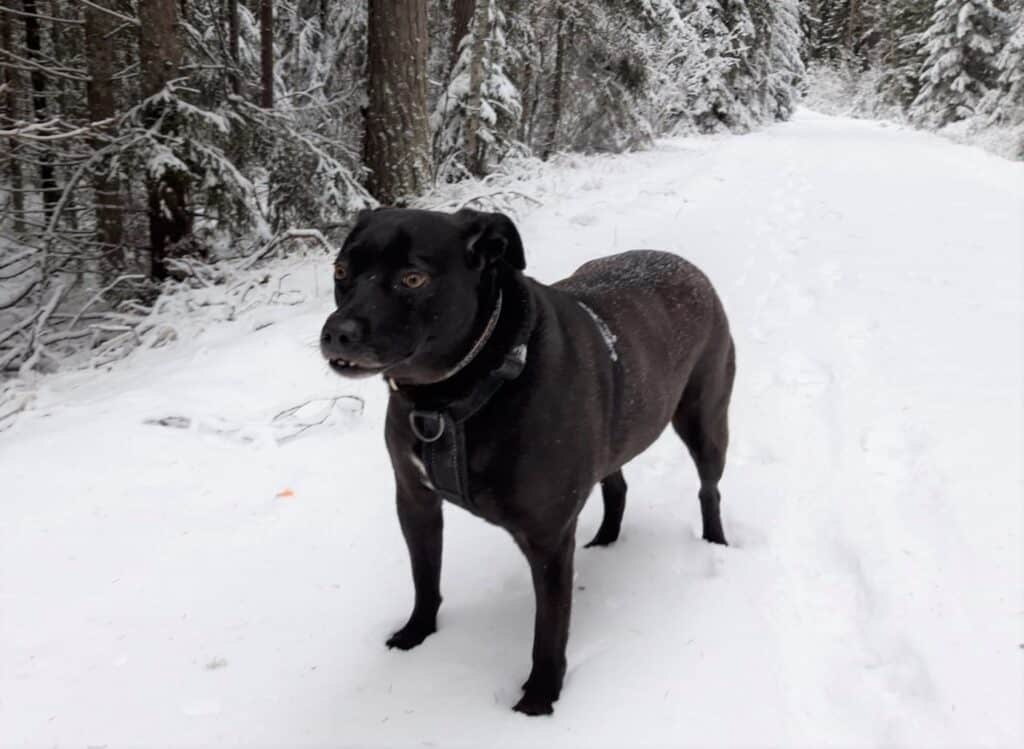
I’ve written about Florence many times. We adopted her aged 8 after the local dog rescue reached out to me and said they had this extremely fearful, unsocialized dog with a sweet temperament and they’d like to give her a chance. Would I be interested?
I mean really, how can you say no? Of course, I was interested!
So Florence got on the next dog transport up to Finland from Romania and, 36 hours later, off I went to the adoption event to meet her.
Goodness me, she was so shut down!
She was terrified. She was rigid, like a statue. We had to carry her to the car because she was too scared to walk. When we got her home, we had to carry her into the house. She then lived in a bathroom for four weeks, too scared to come out.
During this time I worked on creating positive associations with treats and mealtimes and allowed her to take things at her own pace.
I knew we’d turned the corner when she started tentatively wagging her tail in anticipation when I brought in her food. It took about five days to get to reach that little milestone.
But if I inadvertently got closer than she was comfortable with, she’d cower in the corner. If this happened, I’d give her a head turn to assure her I wasn’t a threat. I’d then back off immediately to help her understand she was safe and could trust me
After the first couple of weeks, we started using a dog gate so Florence could see our other cats and dogs and they could see her, rewarding both sides for calm behavior.
After about two weeks of that, we started leaving the door open altogether.
For the first few days, Florence didn’t venture out at all. She’d just lie in the corner of her room.
But then, she started tentatively sticking her nose out into the hallway. That quickly developed into coming out a few yards and then running back into the bathroom.
I didn’t make a fuss about this, just let her go back and forth as she wished.
After a few more days, she started coming the whole way out, along the hallway and into the living room. Sometimes she’d even sniff my hand for a treat and then race back to her room.
Finally, after about seven weeks, Florence came and sat next to me on the sofa, turned her back, and went to sleep. I didn’t dare move an inch! She stayed about an hour then went back to her room.
Meanwhile, once Florence started showing an interest in the world outside her room, I started carrying her outdoors for quick bathroom breaks.
The first few days she didn’t walk much and would lie down a lot, scared of me and scared of the environment.
To give her an added sense of comfort and security, I started bringing her new canine companion, Roman, along whenever we were outside together. He could show her better than I could that she was safe and could trust me.
She still panicked if I ventured too close to her, so I used a long line (10 yards) while we were outdoors together. This way, we were able to build up the length of our walks without causing her undue distress.
We worked on all this for about six months until we got to the point where Florence completely trusted me, would run back to me when off-leash on walks, and happily snooze next to me on the sofa and enjoy having her head scratched.
Looking back now, I remember thinking I’d never seen such a shutdown dog. But by letting Florence set the pace, observing her body language and responding accordingly, and not rushing her into doing anything she wasn’t ready for, we got to the point where she fully trusted me in a pretty decent timeframe.
Final thoughts
This all reminds me of a fascinating tale where the Humane Society of the United States (HSUS) rescued 62 dogs, including 19 puppies, from a property near Las Vegas, New Mexico.
Those charged with caring for the dogs demonstrated unending compassion and commitment in their work to rehabilitate them and it is an inspiring reminder that patience is essential when working to gain a dog’s trust.
Even if it takes a little longer than we might hope, the results are well worth it. Whether your dog takes three days, three weeks, three months, or even longer it’s completely normal and there’s no need to stress about it.
The most important thing of all is to let your dog set the pace – you’ll get there eventually! And don’t hesitate to reach out for the assistance of a certified positive training and behavior consultant if you need to.
You may also be interested in:
- 10 Proven Ways To Win Your Rescue Dog’s Heart (And Trust)
- 12 Tips On How To Socialize A Rescue Dog With Humans
- 20 Tips On How To Get A Scared Dog To Trust You
- Adopting A Rescue Dog: 20 Tips For The First Seven Days
- Overcoming Fear: How To Help The Rescue Dog Who’s Scared Of Everything
Resources
- Adopting a Pet with a History of Abuse: What You Should Know – PetMD
- Body Language Gallery – iSpeakDog
- Calming Signals – The Art of Survival – Turid Rugaas
- Clicker Training basics [Video] – Naturally Happy Dogs
- Dog Body Language 101 [Video] – Fear Free Happy Homes
- From trauma to trust – Karen E. Lange
- Spectrum of FAS (Fear, Anxiety and Stress) – dog – Fear Free Happy Homes
- The 3-3-3 Rule: What Are the Phases of a Rescue Dog? – Debbie DeSantis
- The Benefits Of Positive Reinforcement With Your Dog [Video] – Dogs Trust Dog School
- The Bond That Never Developed: Adoption and Relinquishment of Dogs in a Rescue Shelter – Francesca Mondelli, Emanuela Prato Previde, Marina Verga, Diana Levi, Sonia Magistrelli, & Paola Valsecchi
- What Is Clicker Training? – Stephanie Gibeault
NEED A DOG TRAINER OR BEHAVIOR EXPERT?

If you need more help dealing with a training or behavior issue, please find professional help from a force-free dog trainer who can consult with you either in person or remotely.

GOOD PLACES TO START ARE:
- COAPE Association of Pet Behaviourists and Trainers
- Pet Dog Trainers of Europe
- International Companion Animal Network
- Institute of Modern Dog Trainers
- Pet Professional Guild

All dog owners deserve to have successful relationships with their canine companions!
