
Your Dog’s Behavior FINALLY Makes Sense (Dog Psychology 101)

Has your dog ever done something that made you think, honestly, did you do that just to annoy me?
Blocked the door when you tried to leave. Refused to walk, just lay down in the middle of the path and wouldn’t move. Snapped at you when you reached for their collar with zero warning. Lunged at another dog and barked at the owner when you’re out on a walk.
It’s easy to label these behaviors as stubborn, mean, naughty, or even aggressive. But here’s the truth: dogs aren’t trying to be difficult. But they are communicating. And once you learn to read what they’re actually saying, everything changes.
Why Emotional State Is Everything
When I assess a dog’s behavior professionally, I don’t start with the behavior itself. I start with one question: what is this dog feeling when they’re doing the behavior?
That might sound obvious. But most of us do the opposite. We see the barking, the lunging, or the chewed-up shoe, and we react to the action, not what caused it.
Here’s why that matters. A dog who is fearful, stressed, or anxious will express that in their behavior. A dog who is bored or frustrated, with no outlet for natural behaviors like sniffing, chewing, digging, or exploring, will express that too. The behavior isn’t the problem. The behavior is the symptom. The emotional state underneath it is what you actually need to change.
This is a genuinely different way of thinking about dog behavior than most of us grew up with. We’re used to focusing on what the dog did: rewarding behaviors we like and trying to stop the ones we don’t. But behavior is only part of the picture.
Reward-based training works very well for teaching a dog to sit. It works very badly for a dog who is barking because they’re frightened, pulling on the leash because they’re overwhelmed, or destroying furniture because they’re anxious or chronically under-stimulated. In all of those cases, focusing only on the unwanted behavior does nothing for the emotions driving it, and often makes the dog feel even worse.
And the goal isn’t complicated. The aim is for your dog to be in a calm but positive emotional state as much as possible. That’s it. Every decision you make—whether you let them sniff on walks, how you introduce them to new people or dogs, what enrichment you provide, or how you respond when they’re anxious or scared—should serve that goal.
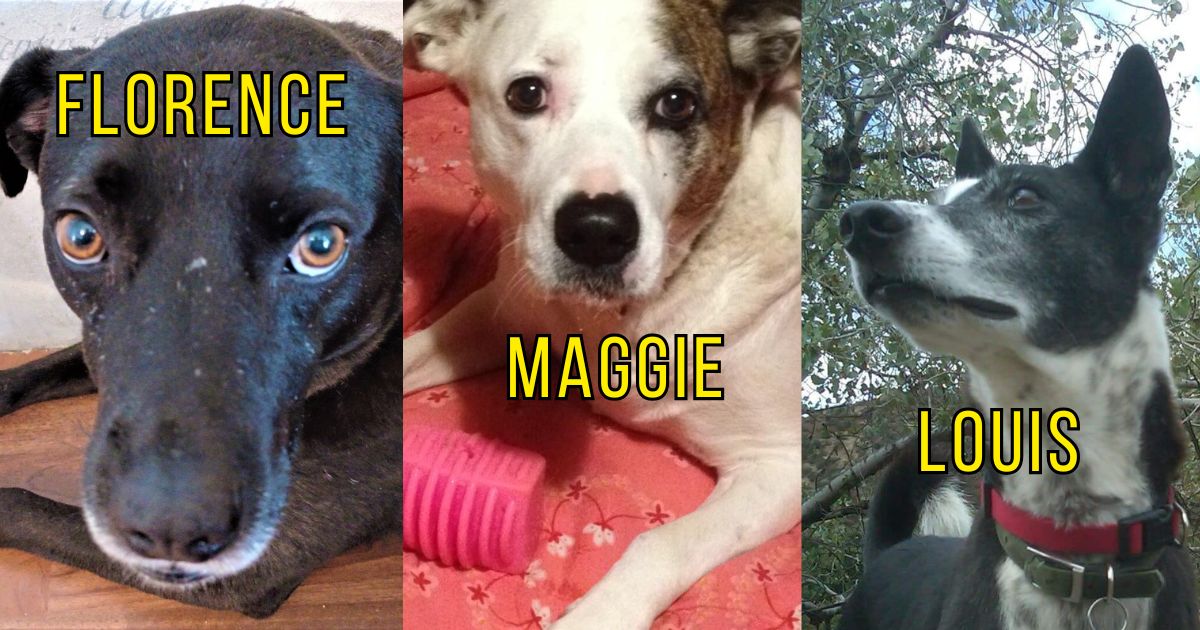
Let me show you what I mean with three of the rescue dogs I’ve lived with over the years.
Maggie: When Insecurity Drives Behavior
Pit Bull-Labrador cross Maggie had been through at least three owners in as many years when I adopted her. She was back in a shelter, again, through no fault of her own. And she had developed a set of behaviors that, on the surface, looked like they would be difficult to live with. Not to mention frustrating and irritating.
Whenever someone tried to leave the house, Maggie would try to stop them. She’d grab onto their clothes, shoes, bag, whatever she could reach. She’d physically block the door. She couldn’t even be left alone in a separate room from our other dogs without panicking.
Now, if you walked into that situation without knowing Maggie’s history, you might see a dog with a behavior problem. A dog who needed training. A dog who was “behaving badly.”
Every single one of those interpretations would be wrong. Maggie was in a new environment and didn’t yet know if she was safe. She wasn’t trying to control our actions or annoy us. She was simply terrified of being abandoned again. In her eyes, us opening the door was a threat. Putting on our shoes was a threat. Picking up keys was a threat. They were all cues that she was about to be left alone. She’d learned, through repeated, painful experience, that when people left, there was no way of knowing if—or when—they would ever come back.
Here’s what actually worked. Not training. Definitely not punishment (please don’t do this!). Safety. Within a few weeks, Maggie had learned that life was predictable again. Food arrived at the same times every day. Every day followed a familiar routine. She had a safe place to sleep where nobody disturbed her. We took fun hikes together, played games, and if we had to leave her alone, we always gave her a frozen KONG packed with treats so our departures predicted something good. Most importantly, she learned that whenever we left, we always came back.
As her sense of safety grew, those early behaviors disappeared. Completely. We didn’t train them out of her. The need for them simply dissolved. The behavior was never the problem. It was a perfectly reasonable response to an emotional state shaped by years of uncertainty and loss.

Florence: The Power of Doing Less
Then there was Florence, our one-of-a-kind Romanian rescue dog.
When Florence arrived, she was so terrified she wouldn’t jump out of the car. She wouldn’t walk on the ground. After an hour of patiently waiting on a cold November evening, I eventually had to carry her into the house.
From there, she lived in our spare bathroom for an entire month, too scared to come out. Whenever we did go outside, she’d lie down under trees, in ditches, anywhere she could make herself small and invisible. She wouldn’t move. Sometimes for half an hour or more. She seemed terrified of the world and everything in it.
And here’s what I did about it: nothing.
I waited. I stood there, patient, standing at a distance (holding a long line so she didn’t feel like I was crowding her), giving her all the time she needed. Because I wanted her to learn something very specific: that I would never force her to do anything. That she was in control of her own body and what happened to her. That I would respect her choices. That safety, with me, was predictable and that she could trust me.
I also enlisted help. Our other dog, Roman, was calm and confident, trusted us implicitly, and knew he was safe with us. I let Florence watch Roman interact with me. Watch him take treats. Watch him accompany me on walks, completely relaxed and engaged in the environment.
Roman was doing what’s called social buffering, where the presence of a calm, confident dog signals to a fearful dog that this situation is safe. It’s the same principle that helped my cat Jethro find his confidence through his friendship with another of our cats, Magnus.
And then one evening, about two months in, Florence quietly came and lay next to me on the couch. For a whole hour. Facing away from me but choosing to stay close. That was the turning point. Not because of anything I did actively. Because of everything I didn’t do.

Louis: The Barely-There Warning Signal
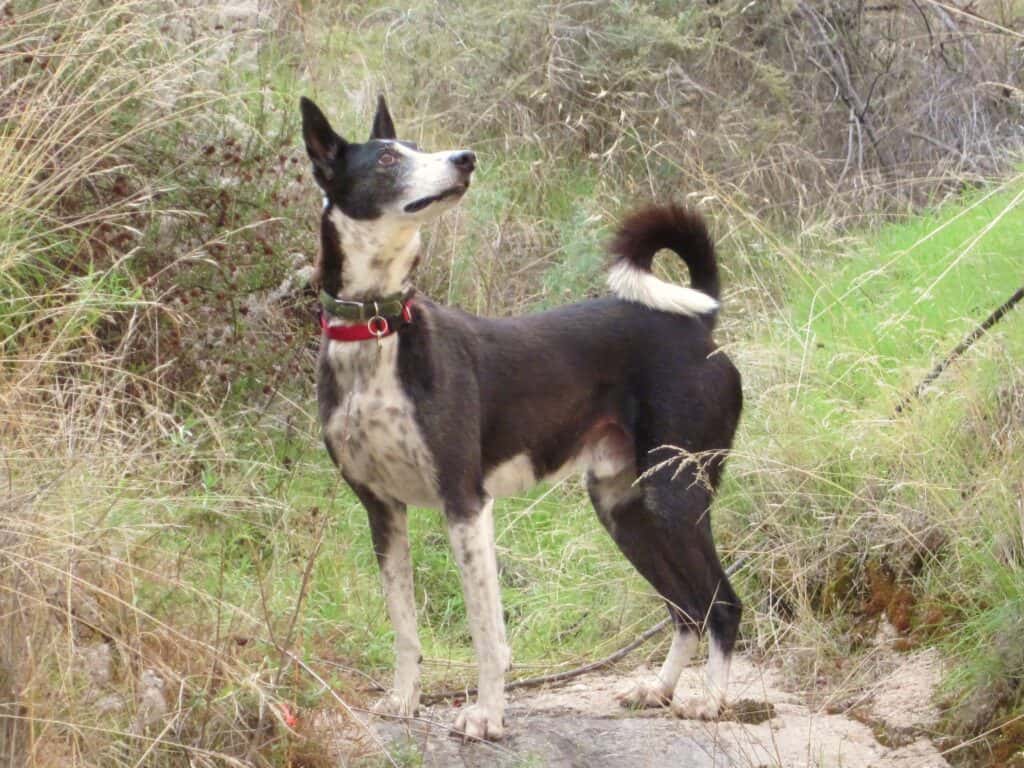
Saluki cross Louis was a nervous wreck when we adopted him. His specific fear was touch, especially anywhere near his head or neck. If someone reached behind his head to clip on a leash, he would snap. And he drew blood. He wasn’t messing around.
Now, here’s what most people would have seen: an aggressive dog. A dangerous dog. A dog who would bite without warning. A dog who would have to be returned to the shelter to meet an uncertain fate.
But Louis did give a warning. It was just so subtle I initially missed it. A minute curl of his top lip. Barely perceptible. But that was his signal, “I’m not comfortable with this. Please stop.”
The problem wasn’t that Louis was unpredictable. The problem was that I hadn’t yet learned to read him. When I realized that was his signal, everything changed in an instant. It enabled me to respect his boundaries before he felt the need to escalate. I could work with him on his terms, at his pace. I could make sure he never felt unsafe enough to snap again. I could even make sure he never felt unsafe enough to have to curl his top lip again.
It took a few months. But Louis learned to trust me, not because I trained him out of the behavior, but because I proved to him that I would listen. That his warnings mattered. That he didn’t need to escalate to be heard.
What This Means for Your Dog: The Consent Test
All three of these stories point to the same thing: your dog’s behavior makes sense when you look at their emotional state. And respecting that emotional state, rather than overriding it, is what builds trust.
This is where the consent test comes in. It’s simple. Hold out your hand to your dog for a few seconds and watch what they do next.
- A “yes” looks like approaching, leaning into you, nudging your hand, staying close, or asking for more.
- A “no” looks like moving away, turning their head, walking off, freezing, lip licking, yawning, or showing other signs of discomfort.
- A “maybe” looks like hesitation or conflict. Your dog may want the interaction but also feel uncertain or uncomfortable—for example, wanting a treat but being too worried to come forward. If it’s not a clear “yes,” treat it as a “no.”
If it’s a “no,” don’t try to persuade them otherwise. Respect their choice and let them decide if they want to re-engage later. It doesn’t mean your dog doesn’t love you. It doesn’t mean they’re unfriendly or antisocial. It means in this moment, for whatever reason, they don’t feel like interacting. Giving your dog that choice helps them feel safe and in control of what’s happening to them. And having that sense of control is one of the most powerful stress-reducers going.
Combine this with plenty of enrichment through opportunities to sniff, explore, chew, play, and make choices throughout the day, and you’re actively building your dog’s emotional resilience. You’re not just managing behavior. You’re changing the emotional state that drives it.
Putting It All Into Practice
If you take one thing away from Maggie, Florence, and Louis’ stories, let it be this: the next time your dog does something that you don’t want them to do, or seems out of character, resist the urge to feel annoyed or frustrated. Ask what might have changed instead.
A few practical starting points:
First, assume there’s a reason: When your dog does something you don’t like, your first question shouldn’t be “how do I stop this?” It should be “what is this dog feeling right now?”
Second, read the subtle signals: The lip curl. The body freeze. The avoidance. These aren’t things your dog is doing to annoy you, they’re your dog’s way of telling you something before they escalate to growling, barking, lunging, or even biting. Most dogs give plenty of warning before they reach that point. The trouble is that those early signals are quiet, and it’s easy to miss them if you’re not looking for them or don’t know what to look for.
Third, do less, not more: The instinct when a dog is struggling is to intervene, more training, scolding (again, please don’t do that), more management. But with fearful and insecure dogs, the most powerful thing you can often do is create predictability. Safety. A world where your dog doesn’t need those behaviors anymore. Florence is proof of just how far patience alone can go.
Fourth, take note of sudden behavior changes: If a behavior appears suddenly, especially something like house soiling, aggression, hiding, or any kind of dramatic personality or behavior change, start with a vet check. Pain and medical issues affect a dog’s behavior just as powerfully as past trauma does, and ruling that out first can save weeks of misdirected training.
Fifth, practice the consent test daily: It takes seconds, and over time it teaches your dog that their signals are noticed and respected, which is the foundation of trust.
And finally, treat enrichment as prevention, not an extra: Sniffing, chewing, exploring, and digging aren’t optional extra. They’re how you give a dog’s natural behaviors somewhere appropriate to go.
The Bottom Line
Here’s what I’ve learned from living and working with multiple rescue dogs over many years: dogs don’t “misbehave” for no reason. They’re not scheming. They’re not stubborn or naughty. They’re not trying to dominate us or show us who’s boss. They’re responding, always, to how they feel. Behavior doesn’t happen in a vacuum. It happens for reasons driven by emotions. Start there, and everything else starts to make sense.
