

Fearful To Fearless: How To Stop Your Scared Dog Barking

This post may contain affiliate links, which means we may receive a commission, at zero cost to you, if you make a purchase through a link. Please see our full disclosure for further information.
As pet parents, we all know that dogs bark – it’s just part of their natural way of communicating with the world around them. However, when a dog barks excessively, especially out of fear, it can be a distressing and difficult behavior to manage.
The two main questions are:
- Why do scared dogs bark?
- What can I do to help my pup feel more at ease?
In this article, I’ll answer both of these questions. I’ll explore the potential reasons behind fear barking and provide some useful tips and techniques to help address your dog’s barking – effectively.
How Do I Get My Scared Dog To Stop Barking?
While it can be challenging, there are several strategies you can use to help your dog overcome his fear and, as a consequence, reduce his constant barking.
Positive Reinforcement Training
Positive reinforcement training is a humane and effective way to modify dog behavior.
It is a technique that focuses on rewarding desirable behavior in dogs, based on the principle that dogs are more likely to repeat behaviors that result in positive outcomes, such as tasty treats, praise, games, or toys.
In other words, any time your dog does something you like, you reward him immediately – before he stops doing it.
For example, if you want your dog to sit, you give him a treat as soon as his butt hits the ground. Over time, he learns to associate the behavior with the reward and will be more likely to repeat it.
If you wait for him to get up and walk away, you haven’t rewarded him for the behavior you wanted (i.e. sitting). Timing is everything.
Positive reinforcement training methods are effective because if the dog gets it wrong, nothing happens. But when he gets it right, he gets a reward. A paycheck for a job well done.
By creating a positive and rewarding learning environment like this for your dog, you can set him up for success every time.
How? As he learns that nothing bad or scary is going to happen (conversely – only good things are going to happen!), it encourages him to try out new behaviors, teaching him to make good choices in the process.
When a dog is trusted to make his own decisions without coercion or punishment, it can significantly boost his confidence levels over time. For fearful dog owners, this is pure gold.
Systematic Desensitization and Counter-Conditioning
Desensitization and counter-conditioning are techniques used together to change a dog’s association with something (“a stimulus”), such as an object or situation.
The process involves gradually exposing your dog to the stimulus at a low intensity and gradually increasing it until he has a new, positive association with it.
In other words, we change his emotional response so something that was previously scary now becomes something neutral – or even fun and appealing.
To start the desensitization and counter-conditioning process, your dog should be at a distance where he can remain calm in the presence of the stimulus and not become aroused.
This is known as keeping him under threshold.
As soon as he notices the stimulus, feed him tiny bits of high-value treats. These treats need to be really high value, such as pieces of cheese, sausage, chicken, or anything else your dog absolutely loves.
Regular kibble or dog treats are probably not going to cut it here. This has to be something extra fabulous that your pup doesn’t get very often – if at all. If it takes chunks of steak, well then, so be it!
Let’s say your dog is scared of the vacuum cleaner, which, by the way, is a very common fear in dogs.

New E-Book
👉 My new E-book, The Fearless Fido Formula: 15 Mistakes Smart Dog Parents Never Make Again is officially live!
👉 If you’re a dog parent, especially of a fearful pup, this is for YOU!
👉 AND…you’ll get 4 amazing bonuses for FREE!
Not sure if this is right for you and your dog? Get more info here
Example: Desensitizating and Counter-Conditioning Your Dog To The Vacuum Cleaner
Here are the steps you might take to desensitize and counter-condition your dog to the vacuum cleaner:
- Start by identifying the threshold distance at which your dog has no reaction to the vacuum cleaner. For example, he may be okay at 30 feet but starts to become anxious or fearful at 20 feet. It’s important to start at the right distance to avoid overwhelming your dog.
- Next, start desensitizing your dog to the vacuum cleaner by gradually increasing exposure to it. This means starting at the distance where he is comfortable and gradually moving the stimulus closer (or him closer to the stimulus) over several training sessions. During this time, it’s important to remain calm and patient, and not to force your dog to get too close too quickly.
- At the same time, use counter-conditioning to help your dog develop a positive association with the stimulus. This involves pairing the presence of the vacuum cleaner with those highly coveted chunks of cheese or sausage. I would start with the vacuum cleaner switched off and rewarding my dog for just looking at it. This will show him that the presence of the vacuum cleaner predicts good things, and help reduce his fear and anxiety. Once he’s okay with that, you can start switching it on for a few seconds, regarding him, then switching it off again.
- As you gradually increase exposure to the vacuum cleaner, continue to pair it with positive things, like yummy treats or play. This will help your pup learn that the stimulus is not something he needs to be afraid of. In fact, good things happen when it’s around.
- Finally, once your pup is comfortable with the vacuum cleaner switched on at a close distance, continue to work with him to build his confidence and reduce his fear. This may involve further training, such as teaching him to focus on you instead of the stimulus, or teaching him alternative behaviors that are incompatible with barking and lunging.
I’ll go into this in more detail in the next section.
Overall, desensitization and counter-conditioning can be effective tools for training a dog who is scared of something.
It’s essential, however, to go at the dog’s pace, not rush him, and make only very gradual increases – both in distance to the scary thing and the duration of the training.
A few minutes (or even less) can be plenty for each training session.
You can take your cues from your dog’s body language. When he looks happy and relaxed and is quiet, instead of fearful and barking, you can move to the next step.
Training An Alternative Behavior
Now we’ve addressed the emotional side of things, let’s look at some of the more practical aspects.
Training an alternative behavior can be another effective strategy for reducing barking in dogs.
As I explained earlier, when a dog is already over threshold and engaging wholeheartedly in a particular behavior, such as barking, there’s no point telling him to stop or shouting “NO!”
But by training him to do something else that is incompatible with barking, such as sitting or fetching a toy, you can redirect his focus and energy in a more positive direction.
This can help to break the cycle of the barking behavior and provide your pup with a more appropriate outlet for his energy.
With consistent training and reinforcement, your dog can learn to automatically engage in the alternative behavior instead of resorting to barking.
Renowned dog trainer Emily Larlham has an excellent series of videos where she demonstrates how to train alternative behaviors in dogs, including dogs who bark at:
- Loud noises
- Unfamiliar people
- Men in hats
- Dogs behind fences
- Doorbell ringing or a knock at the door
- Scary things in general
Managing The Environment
Managing the environment can be another useful strategy for reducing a dog’s barking behavior both inside and outside the home.
For example, if your dog is prone to barking at passersby or other stimuli when looking out the window, covering the windows with opaque film or blinds can prevent him from seeing these triggers and barking in response.
Similarly, when out for walks, using parked cars, bus stops, large trees or anything else as a visual barrier can help to prevent your dog from seeing or being triggered by other dogs, people, or whatever else bothers him.
It can also be helpful to choose quieter routes or times of day for walks to avoid potential triggers while you’re working on training your pup. This will help keep him under threshold as much as possible.
You can also teach him to “Walk Away,” which trainer Emily Larlham addresses in her video series. Here’s the direct link to save you some time finding it.
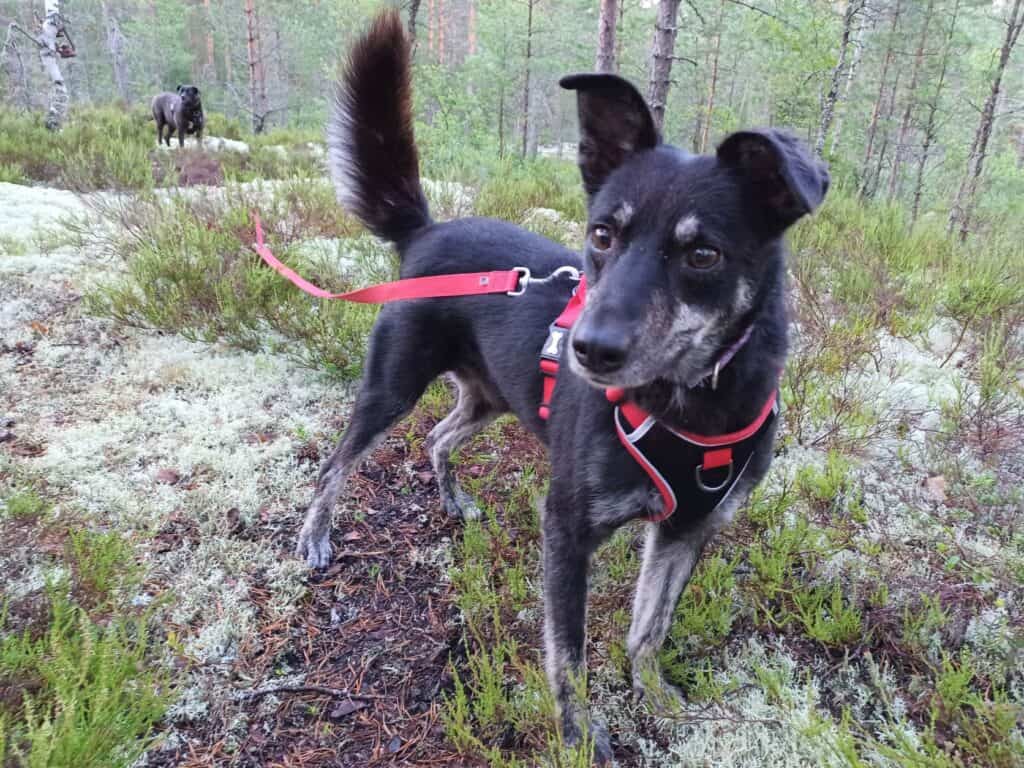
Our recent adoptee, Romanian rescue dog Lennox, can be quite reactive on the leash when he sees other dogs, so if I see another dog in the distance, I don’t hesitate to change direction and go a different way.
My goal is always to keep him under threshold and not allow him to practice the “bad behavior” of barking and lunging at other dogs while we’re working on our training.
By managing the environment in this way, you can help to create a more peaceful and less stressful environment for your dog, reducing the likelihood of barking behavior.
Play A Game
Play can be a powerful tool in changing a dog’s emotional state from one of fear to one of happiness.
When your dog is engaged in play, it activates positive emotions and stimulates the release of endorphins, which are natural mood elevators. This can help to override feelings of fear and anxiety, shifting his focus to more enjoyable activities.
This positive association can then be transferred to other situations, helping to reduce fear and anxiety and improve overall well-being.
Another of our Romanian rescue dogs, Roman, tends to put the brakes on and get anxious when we’re out on our walks and he wants to go in a different direction to me.
While I often let my dogs choose which way we go on our walks, sometimes that’s just not practical. So I start a little game and pretend I’m about to run off and want him to chase me. He gets all excited, starts bouncing about, and comes my way immediately.
His entire emotional state shifts in an instant.

Distraction
Interrupting and distracting can also be an effective way to stop your dog from barking at something that is triggering him.
One approach is to use a sudden noise or action to interrupt him, such as jumping around making kissy noises, or excitedly running in the opposite direction and calling his name (as I do with Roman on our walks).
Another option is to distract him with something he loves, such as a favorite toy or yummy treat.
For example, if your dog is barking at a person or dog passing by, you can redirect his attention by throwing the toy or treat for him to find and retrieve.
This can shift his focus away from the trigger and onto a more positive, enjoyable activity.
Treat Scattering
Here’s an example of that.
Going back to Lennox, while we’re working on our training, if I spot another dog when we’re out and about and there’s absolutely no way to avoid them, I scatter a bunch of treats on the ground and excitedly tell Lennox to “Find it!”
This immediately distracts him and turns the situation into a game. He is very food-driven (as are most dogs!) and he can’t wait to snuffle through the snow to sniff out the treats.
Research shows that sniffing lowers both heart rate and blood pressure in dogs, helping them to stay calmer (Budzinski & Budzinski, 2021).
So while the other dog is approaching, Lennox is distracted, calmer, and learning to associate the presence of another dog with something pleasant. All in one go. How great is that?

Look At That
Another excellent option is the Look at That game, originally devised by renowned dog trainer Leslie McDevitt.
Look at That is a positive reinforcement training technique used to teach dogs to look at a specific trigger, then look back at their owner for a treat.
The idea is to change a dog’s emotional response to the trigger by rewarding him for looking at it rather than reacting to it.
To play the game, the dog is kept at a safe distance from whatever triggers him. When he looks at it, even fleetingly, the owner says “Look at that!” in a happy voice and then immediately gives him a treat.
The dog is then encouraged to look back at the owner for another treat. You repeat the game, with the trigger gradually getting closer, until the dog can look at the trigger without reacting.
Over time, the dog learns to associate the trigger with good things (treats) and becomes less reactive and fearful.
This game is used for many shy or reactive dogs to help build confidence towards stimuli that they are nervous about or fearful of,” says trainer Kris Crestejo, who demonstrates how to play Look at That in this video.
Tips and Tricks for Success
Alongside training and behavior modification, there are various other ways to help your dog feel less fearful and more at ease in general.
This, in turn, can elevate his overall mood state by alleviating the anxiety, frustration, or boredom that may underlie his excessive barking behavior.
Let’s take a closer look.
Physical Exercise
Regular exercise is an excellent way to help your dog burn off excess energy and reduce stress.
Exercise helps release endorphins, which can boost your dog’s mood and help him feel more relaxed.
It can include activities like walks, runs, hikes, and playtime in the backyard. It’s also a great way to strengthen your bond.
Mental Stimulation
Providing your dog with opportunities for mental stimulation can also help reduce anxiety.
This can include activities like puzzle toys, chew toys, and scent work – anything where your dog has to think for himself.
Providing mental stimulation will give your pup’s brain a workout, resulting in an overall more relaxed demeanor and decreased likelihood of responding to situations with excessive emotion.
Calming Aids
There are several natural calming aids that can be used to help reduce anxiety in dogs:
- An Adaptil Calming Pheromone Collar or an Adaptil Diffuser, which uses pheromones to create a sense of security and comfort (Note: it works for some dogs and not others!).
- Through A Dog’s Ear or Relax My Dog, which is music designed specifically for dogs and can help mask loud any loud noise.
- Rescue Remedy, a blend of flower essences, can also help reduce anxiety levels in some dogs.
- A Tellington TTouch Body Wrap or a Thundershirt Anxiety Jacket applies gentle, constant pressure that may calm anxiety, fear, and over-excitement due to a variety of environmental triggers.
These aids can be used in combination with training and behavior modification options to help create a calm and supportive environment where your dog can feel calmer, safe, and relaxed.
You May Also Like:
Why Do Dogs Bark?
All dogs bark. It’s a normal dog behavior and part of how they communicate their intentions and feelings.
Dogs bark for many different reasons, such as to alert their owners to potential threats, to communicate with other dogs, or simply to express their excitement or frustration at some unmet need.
Common Reasons Why Dogs Bark
- Frustrated
- Bored
- Social Isolation
- Excited
- Joining in with other dogs
- To get attention
- Wants to play
- Wants access to something
- Worried
- Scared
- Separation anxiety
- Stressed
- Warning/alert
- Aggressive
- Protective
- Defensive
- Breed-specific (e.g. herding dogs, scenthounds, small dogs)
Dogs will use a different type of barking in different contexts for different reasons, depending on both the situation and whatever emotions they are feeling at the time.
Territorial barking, for example, will sound different from alarm barking, which will sound different from excitement barking.
Not sure why your dog is barking?
Animal psychologist Alexandra Horowitz provides more insight in this 2-minute video:
Understanding Fear Barking
While it’s not realistic to expect dogs not to bark, excessive barking due to fear can be a concerning behavior that needs to be addressed.
To do this effectively, it’s important to identify the root cause of your dog’s barking.
Fear barking is reinforcing for dogs because very often it works – by making the scary thing go away.
Let’s say for example you have a dog who feels fearful when other dogs walk past his house. He can see them from the yard or the window.
He barks excessively because he just wants them to go away. And they do!
Not because he barked at them. Because they were walking past anyway!
But that doesn’t matter. In your dog’s eyes, his barking made the scary thing go away. He got what he wanted from barking – his “reward” if you like – because now he feels safe again.
His brain is being flooded with feel-good chemicals from the sheer relief of it.
What do you think he’ll do next time it happens? That’s right – the exact same thing! Behavior that gets rewarded gets repeated.
Will he care that you shouted “NO!” at him? Probably not.
First, shouting “No” does not acknowledge or address his emotional state (i.e. fear); second, it doesn’t teach him an alternative behavior; and third, he probably didn’t even hear you in his emotionally aroused state.
How To Recognize Fear In Dogs
Dogs communicate how they feel through their body language and facial expressions. Sometimes the signs of stress are obvious, while other times they are quite subtle.
Here are some of the many possible signs that your dog is feeling scared:
- Panting
- Yawning
- Tongue flick
- Turning away
- Stiff facial muscles/tight mouth
- Freezing
- Ears back
- Tail carriage low or tail tucked
- Whale eye
- Standing with back legs planted ready to run (fight or flight)
- Furrowed brow
- Vigilant/agitated
- Drooling
- Shaking/rapid heartbeat
- Hiding
- Peeing/pooping (sometimes a lot)
- Excessive drinking, sniffing, also sleeping to avoid the scary situation
- Avoiding eye contact
- And of course, barking

Why Is My Scared Dog Barking?
Fearful behavior in dogs can be triggered by a variety of things.
Keep in mind that the list of things your dog might be scared of is potentially limitless, as it will depend on his genetics, background, early learning environment, and socialization experiences.
Possible Reasons Why Your Dog Is Scared
- Loud noises
- Scary things
- New people
- Unfamiliar dogs
- Dogs on leashes
- Dogs behind fences
- Doorbell ringing or a knock at the door
- House guests
- Men
- Men in hats
- Men with beards
- People holding umbrellas
- People using crutches or walking aids
- People carrying large shopping bags or pulling luggage
- Kids on bikes
- Kids on skateboards
- Cats
- Brooms, mops, or anything with a long handle
- Vacuum cleaner
- Garbage truck
- Mail carrier
- Thunderstorms
- Fireworks
- Plastic bags blowing in the wind
- Traffic cones
- Statues
- TV

Identifying The Triggers For Fear Barking
Identifying the triggers for your dog’s fearful behavior is essential to understand the underlying cause of his anxiety.
Without this information, it can be challenging to determine what is causing his fear and, therefore, how to address it.
Once you know what your pup’s triggers are, however, you can work on reducing his anxiety through positive reinforcement training and behavior modification techniques.
Understanding your dog’s triggers also allows you to anticipate and avoid situations that may trigger his fear.
This prevents him from experiencing unnecessary stress and discomfort and practicing the unwanted behavior.
Should You Just Ignore A Barking Dog?
Whether you should ignore your barking dog depends on the underlying cause of the behavior. It may work if your dog is barking for attention or out of boredom.
Maybe. Or he might just bark even more.
At the same time, giving in to his “demands” by reacting or engaging with him may reinforce the behavior, making it more likely to continue in the future.
If your dog is barking because he is scared, ignoring him could potentially make the situation worse. You often read the (misleading) advice not to reinforce fear. But fear is an emotion, not a behavior. Ignoring your dog won’t change how he feels.
At the same time, if your dog is scared, comforting him might help him feel better. It would be cruel to ignore him in that situation, in my opinion.
Do Anti-Bark Collars Work?
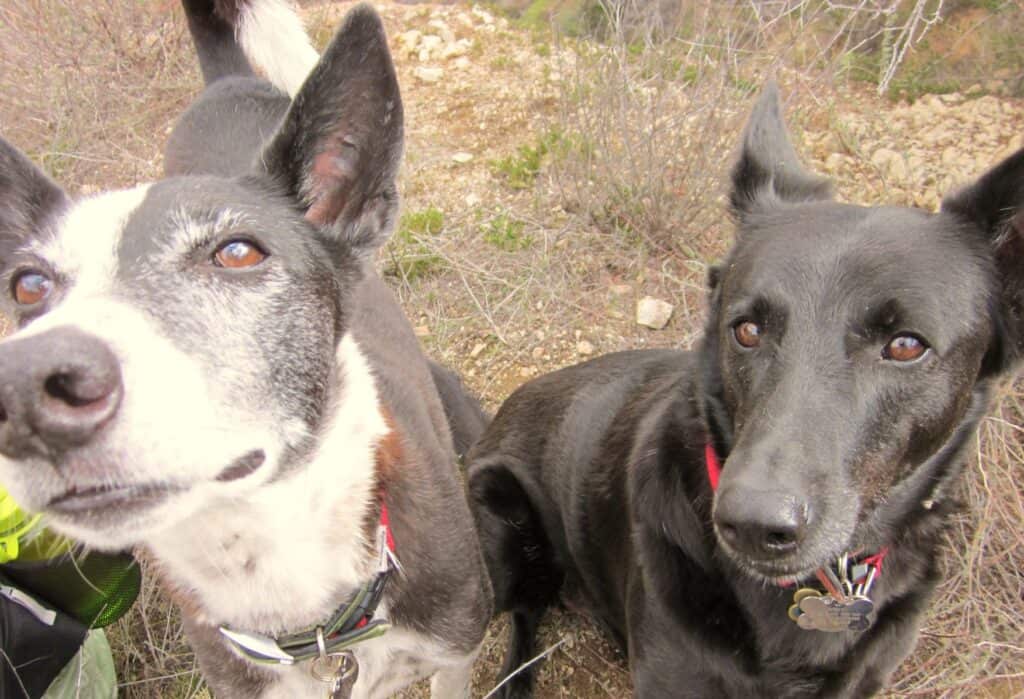
Full disclosure – back in the day when I didn’t know much about dog behavior, I thought anti-bark citronella collars would be a great way to stop our nervous rescue dogs, Roxy and Louis barking at visitors.
While it was obvious they didn’t like the smell, it didn’t stop them barking. Their emotional arousal was so high that, for them, it was “worth the pain.” Their need to express their fears far outweighed the unpleasantness of having a blast of citronella sprayed in their face
Most importantly of all, it did not change their underlying emotional state. They were still scared of the visitors. In fact, all I’d done was make visitors even more scary by adding something unpleasant to an already fractious situation.
Instead, I should have been teaching Roxy and Louis that visitors were a good thing – someone else to give them yummy treats and play fun games with them.
The Risks of Anti-Bark Collars
Simply relying on an anti-bark collar won’t provide a long-term solution to excessive barking.
Without teaching your dog an alternative behavior or addressing his underlying fear, he will continue to bark any time you forget to put on the collar.
Wearing it may make him even more anxious than before.
While you still have a scared dog, you may now also have a dog who is scared to express his fears by barking.
What will he do instead? Lunge? Growl? Bite? That’s no good for anyone.
Moreover, dogs are smart and can learn when the citronella is running low, so go back to barking full steam ahead as it empties. Some dogs will also adjust the volume of their barks to avoid triggering the collar.
It’s important to recognize that barking is a form of communication, much like when dogs growl, and adding something else unpleasant into the mix won’t resolve the root issue.
Instead, use your dog’s barking as valuable information about his emotional state. Then, work to address and modify it with the appropriate training techniques to get the best results.
Before You Go…
If you have a fearful dog, you’re not alone – many newly adopted dogs come to their new homes with fears and anxieties that can make life challenging for both them and their owners.
However, with the right guidance and approach, you can help your furry friend overcome their fears and live a happy, fulfilling life.
In my article, Overcoming Fear: How To Help The Rescue Dog Who’s Scared Of Everything, I provide a host of practical tips and strategies to help your dog build confidence and overcome his fears.
Don’t miss out on this valuable information – click on the link to read the article now and take the first step towards helping your rescue dog live his best life!
I also recommend renowned dog training and behavior expert Turid Rugaas’ book, Barking: The Sound of a Language.
In it, Rugaas dives into different types of barking and their underlying causes from the dog’s point of view, and provides clear instructions on how to address any potential issues.

MORE TO EXPLORE
Recommended Products
- Adaptil Calming Pheromone Collar
- Adaptil Diffuser
- Barking: The Sound of a Language – Turid Rugaas
- Kong
- LickiMat
- Relax My Dog Music
- Rescue Remedy
- Tellington TTouch Body Wraps
- Through A Dog’s Ear (iCalmPet)
- Thundershirt Anxiety Jacket
Resources
- At the Heart of the Walk – Christina and Aurélien Budzinski
- Dog Barking: What You Can Do – Pat Miller
- KikoPup Barking Series [Video] – Dog Training by KikoPup
- Just Say No to Saying “NO!” – Karen Baragona
- Look At That Game For Fearful/Shy Dogs – How to train [Video] – Kris Crestejo
- My Dog Is Barking. What Do I Do? – Lori Chamberland
- Sound Sensitive Dog BARKS at the Slightest Noise [Video] – It’s Me or The Dog
- What Different Dog Barks Mean [Video] – Insider Tech
- What To Do When Your Dog Reacts [Video] – DogKind
- Why Dogs Bark and How to Stop Them – Pat Miller
NEED A DOG TRAINER OR BEHAVIOR EXPERT?

If you need more help dealing with a training or behavior issue, please find professional help from a force-free dog trainer who can consult with you either in person or remotely.

GOOD PLACES TO START ARE:
- COAPE Association of Pet Behaviourists and Trainers
- Pet Dog Trainers of Europe
- International Companion Animal Network
- Institute of Modern Dog Trainers
- Pet Professional Guild

All dog owners deserve to have successful relationships with their canine companions!
