

How To Show Dominance To A Dog (Good News: There’s No Need!)

“Hello? The Dark Ages called. They want their dog training methods back!”
Sigh. Have you ever been told you need to show dominance to your dog to get him to “obey” you? Unfortunately, this is still a prolific school of thought and you’ll find it plastered all over the internet.
That doesn’t mean it’s correct though, and it’s not. The concept of dominance in dogs is outdated and inaccurate and has been rebuked by multiple canine behavior experts and scientific research.
Yet still it persists for some unfathomable reason.
As dog owners, we can do so much better. Our canine friends deserve the best from us, and using dominance-based training techniques does them the ultimate disservice.
So it’s time to leave the entire concept of how to dominate your dog firmly in the past where it belongs. Forget all that alpha dog/pack leader nonsense and find out what to do instead!
What is modern dog training?
Dog training in the 21st century is all about being part of a team with your dog. A collaboration if you will.
It’s not about coercion, compliance, or status, and it’s certainly not about dominance.
Positive reinforcement has been shown in scientific studies to be the most effective way to train dogs. It’s based on the principle of operant conditioning, which means that we can change a dog’s behavior by rewarding desirable behavior and ignoring any unwanted behaviors.
This type of training is gentle, humane, and effective. Dogs learn what we want them to do by being rewarded for the behaviors we like (and not because they’re afraid of punishment).
Behaviors that are rewarded get repeated. Plus, there are no negative side effects like fear, stress, anxiety, or aggressive behavior.
I’ll go into this in more detail a bit later on.
What is dominance?
“Dominance theory only applies to two dogs fighting over a resource,” says Angelica Steinker, accredited dog trainer and behavior consultant and founder/owner of the Courteous Canine Inc., in Lutz, Florida. “Its purpose is to identify who will win the resource.”
Resources include food, toys, preferred resting spots, and mates.
When our pet dogs do things we don’t like, it’s often not because they’re trying to be dominant or are “dominant dogs.” It’s because we accidentally rewarded them for doing something we don’t actually want them to do (American Veterinary Society of Animal Behavior, 2008).
For example, say your dog jumps up at you when you get home and you scold him or push him away. By doing so you’ve rewarded him with eye contact, physical contact, and verbal contact.
He’ll repeat the behavior because it’s been successful and got him what he wanted, i.e. unfettered access to you.
All you have to do is not reward his undesired behavior and instead train an incompatible behavior, such as four paws on the floor before he gets his much-coveted interaction with you.
None of this has anything to do with him trying to dominate you or be the “top dog,” but everything to do with the joy and excitement of greeting you after being separated.
In case you’re wondering how to train four paws on the floor, here’s a demonstration by well-known dog trainer and behavior expert Chirag Patel:
How do I dominate my dog?
“You can’t, it is impossible,” says Steinker.
“Dominance only occurs within species, not across species. A dog can’t dominate a person and a person can’t dominate a dog.”
So let’s swiftly move on.

Why do I need to show dominance to my dog?
Instead of wondering how you can show dominance to your dog, a more appropriate and, in my opinion, much better question, would be ‘Why do I need to show dominance to my dog?’
Let’s think about it for a moment.
You already control just about everything your dog does. What he eats, how much he eats, when he eats, where he eats, where he sleeps, when he goes out for bathroom breaks, when he goes for a walk, when he gets to socialize with his friends (dogs or humans), when he goes for a health check-up, and when it’s playtime.
Sounds to me like you’re the dominant one in the relationship. But there’s still a lot of old nonsense going around saying dogs are trying to dominate us when they push through doors before us, pull on the leash, or jump on the sofa.
So an old-school dog trainer might tell you that you should always eat before your dog, refrain from greeting him when you come home, not allow him to make eye contact with you, move him when he’s sleeping if he’s in your way, and always go through doorways before him so he knows that you’re the “dominant” one.
But here’s the thing: Dogs don’t understand that kind of thinking. These are not signs of dominance. Your dog is not trying to dominate you; he just does what he does to get what he needs or wants.
You already control every single aspect of his life. So there’s no need to try to establish some kind of old-fashioned pack hierarchy amongst human and canine family members.
Dogs must find rules such as these confusing at best and at worst, the root cause of anxiety and depression,” say authors Ha and Campion.

The problem with dominance theory
Dogs jump up on the sofa because it’s a cozy warm place. It’s literally the best sleeping spot right next to you when you’re watching TV or just chilling out.
They try to barge through the door before you because they’re so eager to get outside and see what’s going on in the world with all its exciting sniffs.
It’s inaccurate and simplistic to refer to this as “dominant dog behavior” or even “bad behavior.
Dogs have their own natural instincts and behaviors and do dog things.
How we respond to those behaviors has a much greater impact on how our dogs behave in the future, rather than trying to assert ourselves as the “alpha dog” or “leader of the pack.” This just risks making your dog wary of you and damaging the relationship.
“A puppy has to submit to whatever the owner does; it has no choice,” explains clicker training pioneer Karen Pryor.
“Then around the age of two comes just one alpha roll too many, and the dog defends itself at last and tries to take the owner’s face off.
“So now the dog is in the shelter. And these dogs are fearful, unpredictable, and very hard to rehabilitate.”

Can I let my dog sleep on the sofa?
Still not convinced? Check out this fun short video where dog trainer and behavior expert Chirag Patel is chilling out on the sofa with his dog Cody.
Patel explains that dogs are social animals who work actively to reduce conflict. And that they don’t go around behaving as the so-called alpha leader and using that fictitious lofty status to purposely engage in conflict for the management of their family group.
So to answer the question, yes you can let your dog sleep on the sofa. Unless you prefer not to because you’ve got a fancy, expensive sofa and you don’t want to get scratched or slobbered on or covered in dog hair. In which case you can teach him to sleep in his bed instead.
Either way, it’s got nothing to do with dominance.
How dominance theory in dogs got started
The theory of dominance in dogs is rooted in the work of Swiss animal behaviorist Rudolph Schenkel.
Back in the 1940s, when Schenkel began studying the behavior of a small group of captive zoo wolves, he made a number of incorrect assumptions.
One of these was that wolves, as pack animals, fight each other to gain dominance within the group, and the one that wins the battle becomes the alpha wolf.
This theory was incorrectly applied to wolf behavior in the wild and from there, quickly made its way into popular culture to be adopted by the dog-training community. Why, who can say?
However, there are two main problems with applying Schenkel’s observations of captive wolves to our domesticated dogs:
- The behavior of this group of unrelated wolves, forced to live together in captivity, was far from an accurate reflection of the behavior of wolf packs in the wild.
- Dogs are not wolves. Yes, they are both members of the Canidae family and share much of the same DNA, but our pet dogs have pretty much co-evolved alongside humans over the last 10,000-20,000 years. Wolves? Not so much.
“The entire concept of dominance as applied to pet dogs is almost always based on a profound misunderstanding of the shared history of dogs and humans,” says veterinarian and applied animal behaviorist, Dr. Karen Overall.
“Reliance on the myth of dominance often results in unkind or abusive behavior toward dogs in ways that render the situation dangerous for humans and dogs alike.”
I’ll talk more about punishment a bit later.
How do wolf packs work?
Wolves are highly social animals, living in family groups called packs. Each pack is composed of an adult breeding pair—the alpha male and female—and their offspring.
Pack members are typically other related wolves, such as the alpha pair’s siblings, aunts, and uncles. In some cases, the pack may also include dispersers, i.e. wolves who have left their own packs in search of a new home.
The pack functions as a unit, with all members working together to raise pups, hunt for food and defend their territory.
The complex social structure of the wolf pack ensures these vital tasks are carried out effectively and efficiently. Although each pack is unique, they all share a common bond: the close-knit family ties that bind them together.
“Wolves care for each other as individuals,” explains the organization Living with Wolves. “They form friendships and nurture their own sick and injured. Pack structure enables communication, the education of the young, and the transfer of knowledge across generations.”
The alpha dog
“Google “alpha, dog” on the Internet and you get more than 16 million hits,” says dog training and behavior expert Pat Miller.
“Really. While not all the sites are about dominating your dog, there are literally millions of resources out there – websites, books, blogs, television shows, animal care and training professionals – instructing you to use force and intimidation to overpower your dog into submission.
“They say that you, the human, must be the alpha. They’re all wrong. Every single one of them.”
Amen to that.
I was once walking our poorly socialized rescue dog Roxy on a trail in the Santa Monica Mountains just outside Los Angeles.
A woman came along with a large German shepherd and Roxy got scared. She barked and growled a bit. The woman asked me if I’d ever done an alpha roll on her. I was like, ‘Why on earth would I do that?’
What possible good could it do? Other than make Roxy scared of me and forever more teach her that German shepherds (and their owners) meant that something unpleasant, that made her feel unsafe, was about to happen to her.
That makes a lot of sense, right?
NO! No, it doesn’t!
To me, it’s obvious that if you do this you’re asking for trouble. It’s how people get bitten and then blame the dog.
The woman didn’t agree with me. We went our separate ways and I went out of my way to avoid her from then on.
Roxy went on to live a long and happy life, and never had the misfortune to find out what an alpha roll was, much less be subjected to one.

What is an alpha roll?
In case you’re unfamiliar with the term, alpha rolls are when a human flips a dog onto his back and pins him down till he shows so-called submissive behaviors.
This outlandish concept came about in the 1960s after more erroneous studies surrounding captive wolves.
Just as in the Schenkel study, the wolves were kept in an area too small for them. Additionally, the group comprised members who would never normally live together if they were in the wild.
Sadly, the unnatural and, therefore, stressful conditions the wolves were forced to live in resulted in conflicts whereby one wolf would appear to pin another wolf.
Somehow, again, this became a thing and unsuspecting dog owners were led to believe they should alpha roll their dogs to show them who was pack leader.
It doesn’t even make sense. And yet here we are.
Thankfully current scientific knowledge has recanted the findings of these studies, acknowledging that this behavior is not typical of wolves living in the wild (Mech, 1999).
But the myth persists nonetheless.
Is my dog trying to dominate me?
He really isn’t. He just loves to go for walks and gets excited about exploring his environment.
He loves food and he might have a go at getting some of yours too if you don’t train a more appropriate, incompatible behavior.
He loves to sleep in a warm, cozy elevated place like the sofa or your bed.
And he loves it when you come home and you make a big fuss of him. Why would you deprive him of one of the highlights of his day?
None of these behaviors mean your pup is plotting to take over the entire household.
“The dominance panacea is so out of proportion that entire schools of training are based on the premise that if you can just exert adequate dominance over the dog, everything else will fall into place,” says top trainer Jean Donaldson, founder and principal instructor at The Academy for Dog Trainers.
“Not only does it mean that incredible amounts of abuse are going to be perpetrated against any given dog, probably exacerbating problems like unreliable recalls and biting, but the real issues, like well-executed conditioning and the provision of an adequate environment, are going to go unaddressed, resulting in a still-untrained dog, perpetuating the pointless dominance program.”
The American Veterinary Society of Animal Behavior agrees: “Despite the fact that advances in behavior research have modified our understanding of social hierarchies in wolves, many animal trainers continue to base their training methods on outdated perceptions of dominance theory.”
So please choose your dog’s trainer VERY carefully.
How do I show my dog I’m the pack leader?
First of all, stop thinking about your dog as a member of a wolf pack. As you now know, that’s not how dogs think or how their social structure works.
Instead, focus on being a fair and consistent partner-cum-collaborator to your dog by setting boundaries, providing exercise, environmental enrichment, and mental stimulation, and offering positive reinforcement when your pup follows your cues.
This will not only improve your relationship with your dog, but it will also lead to a well-behaved and happy pup. Win-win!
(Note I don’t use the word “command,” another horribly outdated term. Cues are where it’s at in the 21st century. Ditto obedience training, now often referred to as good manners by enlightened professional dog trainers.)
So let’s ditch the old alpha roll myth and focus on what really matters: how we can best care for and support our canine companions.
How do I train my dog?
How, then, do we train our dogs without resorting to old-school dominance tactics?
Use positive reinforcement training methods
Thanks to the perpetuation of the whole dominance myth, many people think that dog training is all about using force or intimidation to make a dog “comply” with “commands.”
But nothing could be further from the truth. Using positive reinforcement methods is not only more effective in the long-term—it’s also more humane.
Positive reinforcement means rewarding your dog for good behavior with treats, praise, or affection. This might sound like bribery, but you’re actually rewarding him for a job well done.
Giving him his paycheck if you will.
This way, your dog will be more likely to be engaged and enjoy the training process. And isn’t that what it’s all about? Happy dogs (and humans) make for a great team.
For example, if you want your dog to sit, you would give him a treat when he sits, rather than punishing him when he doesn’t.
Not only is this method more likely to produce reliable results, it will also strengthen the bond between you and your dog and build his confidence to try out new behaviors.
So forget about trying to dominate your pup—it’s time for a new approach!
I recommend you do some research and find a qualified positive reinforcement trainer in your area who can help guide you through the training process

Be consistent
One of the most important things you can do for your dog is to be consistent in your words and actions.
Dogs feel safer and more in control of their environment when they have predictability and order in their lives, so it’s important that you provide that for your pup.
Whether it’s feeding time, walks, or playtime, try to stick to a regular schedule as much as possible. This will help him feel secure and comfortable knowing what to expect from you on a daily basis.
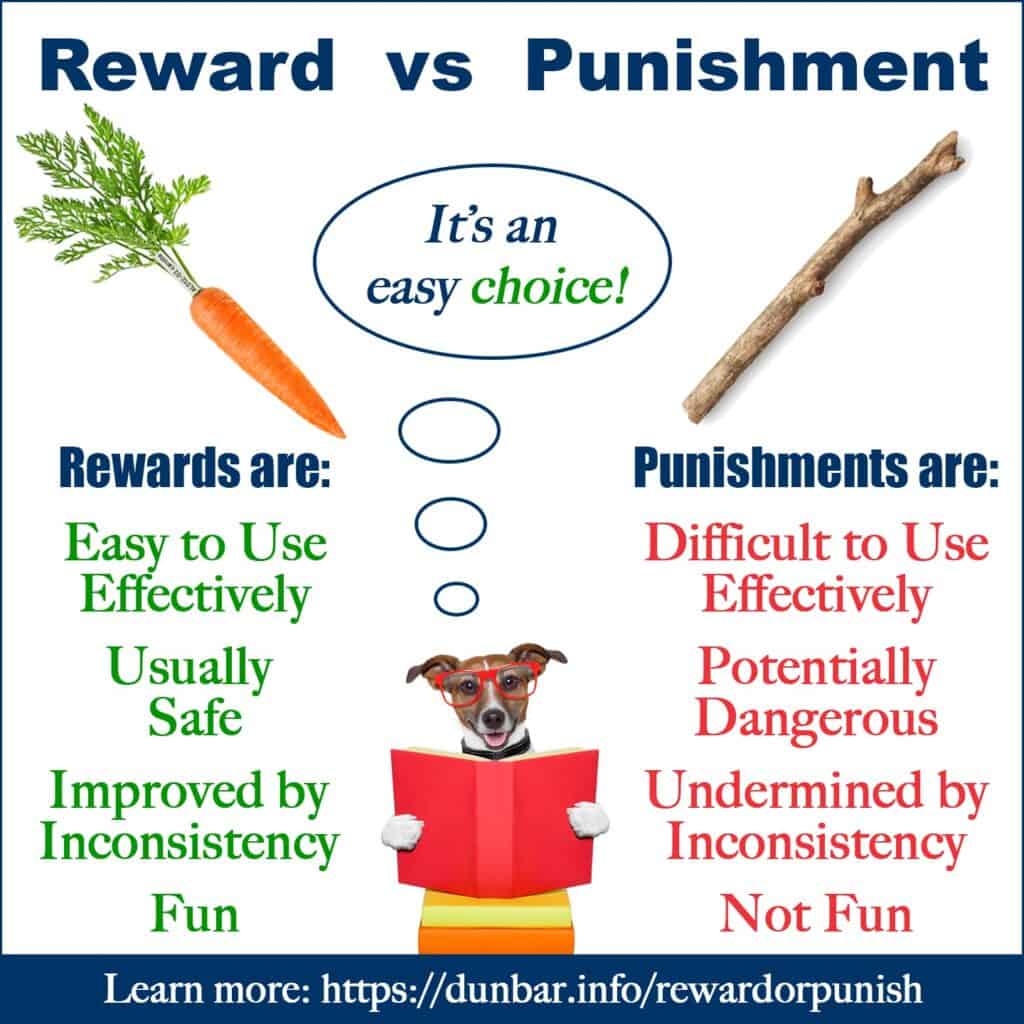
Should I punish my dog?
Let’s think about what a dog actually learns if he’s punished.
Dr. Karen Overall puts it like this: “Consider the universe told you that everything you did was wrong. That’s what punishment does. You punish the dog until he gets the right answer.
“Consider, instead, telling dogs what’s right and when their decision is taking them away from the right answer. To change behavior, you must script a detailed path to success. Telling someone what will not work or is not desired is of minimal utility in a world of a million choices, and 999,999 of them will be wrong.
“How many of us have never asked a question in our lives? Yet that is what we expect dogs to do.”
The idea that you need to “dominate” your dog and show him who’s the “alpha” or “pack leader” (not to mention all the associated tools available on the market designed to make dogs “comply” by causing pain and fear) is really just an excuse to punish your dog.
As conscientious and loving pet owners, surely that’s the last thing we want to do?
Not to mention, if your dog is fearful or anxious, his emotional arousal levels will be too high for him to be able to process and learn new information.
This great little graphic from the Dunbar Academy, headed by legendary dog trainer and behavior expert, Ian Dunbar, sets out the basics:
Final thoughts
The perception that you need to show dominance to your dog is both inaccurate and inappropriate in the dog-human relationship, as has been shown by the scientific research and confirmed by multiple canine behavior experts.
Instead, focus on motivating your dog with things important to him— food, praise, attention, toys, games, and play. By working together as a team, you’ll build a stronger bond with your furry friend and create a better relationship built on trust and mutual respect.
You’ll be glad you did and your dog will be forever thankful.
READ NEXT
Resources
- Alpha status, dominance, and division of labor in wolf packs – David Mech
- Current Trends: Beyond Dominance and Discipline. Pet Professional Guild Summit Keynote Presentation, Tampa, FL. In S. Nilson. (2017, January). #PPGSummit 2016: Beyond Dominance
- Danger! Dominance Theory! Why Every Mention of “Alpha Dogs” or “Dominant Dogs” is Dangerous to All Dogs – Pat Miller
- Debunking Dominance Theory – Karen Pryor
- Does letting your dog on the sofa make them dominant? [Video] – Chirag Patel
- Dog Behavior: Modern Science and Our Canine Companions – James C. Ha and Tracey L. Campion
- Dumbed down by dominance, Part 1 – Dr. Karen Overall
- Dumbed down by dominance, Part 2 – Dr. Karen Overall
- Expression Studies on Wolves; Captivity Observations – Rudolph Schenkel
- Pet Training and Behavior Consulting: A Model for Raising the Bar to Protect Professionals, Pets and Their People – Niki Tudge, Susan Nilson, Debra Millikan & Louise Stapleton-Frappell
- Four Feet on the Floor: Jumping Up Behaviour in Dogs and Puppies – Chirag Patel
- Position Statement on the Use of Dominance Theory in Behavior Modification of Animals – American Veterinary Society of Animal Behavior
- The Culture Clash – Jean Donaldson
- The Social Wolf – Living with Wolves
NEED A DOG TRAINER OR BEHAVIOR EXPERT?

If you need more help dealing with a training or behavior issue, please find professional help from a force-free dog trainer who can consult with you either in person or remotely.

GOOD PLACES TO START ARE:
- COAPE Association of Pet Behaviourists and Trainers
- Pet Dog Trainers of Europe
- International Companion Animal Network
- Institute of Modern Dog Trainers
- Pet Professional Guild

All dog owners deserve to have successful relationships with their canine companions!
