
Your Cat’s Behavior FINALLY Makes Sense (Cat Psychology 101)

Has your cat ever done something that seemed, honestly, a bit mean? Scratched your new sofa. Peed on your bed. Bitten you mid-petting with zero warning. And your first thought was: why would they do that?
Here’s the thing. Your cat isn’t trying to annoy you. Your cat isn’t trying to get revenge. And your cat definitely isn’t “being a jerk.”
Every single behavior your cat displays, every scratch, every hiss, every mysterious disappearance under the bed, has a reason. It doesn’t happen in a vacuum. And once you understand that, everything changes.
Why Emotional State Is Everything
When I assess a cat’s behavior professionally, I don’t start with the behavior itself. I start with one question: what is this cat feeling when they’re doing the behavior?
That might sound obvious. But most of us do the opposite. We see the pee on the floor, or the scratch marks on the armchair, and we react to the action, not what caused it.
Here’s why that matters. A cat who is fearful, stressed, or anxious will express that in their behavior. A cat who is bored or frustrated, with no outlet for natural behaviors like climbing, hiding, hunting, or scratching, will express that too. The behavior isn’t the problem. The behavior is the symptom. The emotional state underneath it is what you actually need to change.
This is a genuinely different way of thinking about cat behavior than most of us grew up with. We’re used to a simpler model: good behavior gets rewarded, bad behavior gets corrected, and eventually the bad behavior disappears.
That model works reasonably well for teaching a dog to sit. It works very badly for a cat who is peeing outside the box because of pain, or scratching furniture because they have nowhere appropriate to scratch, or hiding because their environment feels unpredictable. In all of those cases, punishing the behavior (please don’t do this!) does nothing for the emotional state driving it, and often makes that emotional state worse.
And the goal isn’t complicated. Your aim is that your cat is in a calm but positive emotional state as much as possible. That’s it. Every decision you make, whether you pick them up (or not), how you introduce a new cat, what toys you buy, what enrichment you provide, should serve that goal.
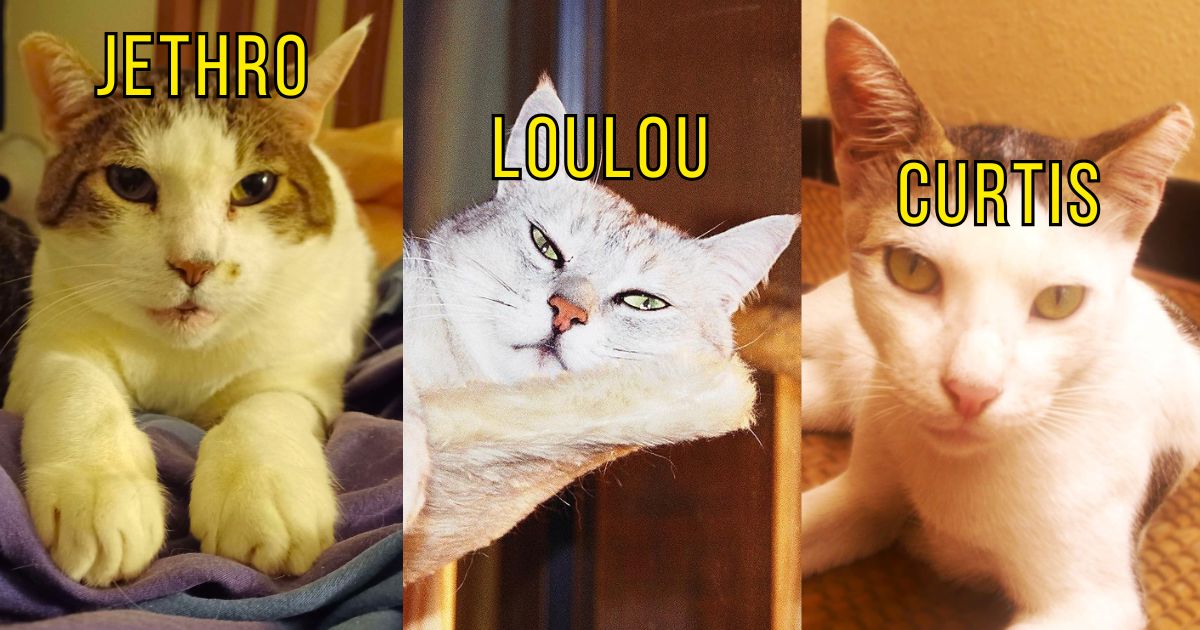
Let me show you what I mean with three of the rescue cats I’ve lived with over the years.
Loulou: When the Litter Box Isn’t the Real Problem
When my rescue cat Loulou was seven years old, she suddenly started urinating outside the litter box. Not occasionally, consistently. It was frustrating. It was messy. And the easy explanation, the one a lot of people reach for, is that she was acting out. Being difficult. Maybe even getting back at me for something.
None of that was true, of course. A vet check revealed oxalate crystals in her bladder. This meant that urinating was physically painful for her. And cats are masters of association, so Loulou began to associate the litter box itself with that pain, and started avoiding it. It wasn’t about me. It wasn’t about revenge. It was a completely logical response in her eyes.
A special diet corrected the crystals. But that was only half the battle. We then had to work on getting Loulou to use the box again, because avoiding it had become a learned behavior, even after the pain was gone.
The lesson here is bigger than litter boxes. If your cat suddenly changes their behavior, the first question should not be “why are they doing this to me?” It should be “what has changed for them?”

Curtis: The Feisty Street Cat Who Surprised Everyone
Then there’s our Curtis.
Curtis was a big bruiser of a street cat. He lived under our car for an entire month before we could even get near him, a hardened outdoor survivor. When he finally waltzed into our home one day as if he owned it, he went straight upstairs, found the spare room, and passed out on the bed.
We had four resident cats at the time. And honestly? I braced myself for conflict. A street cat with that kind of history, suddenly sharing space with four very docile, established cats, I was more than aware of the importance of gradual introductions. Potential aggression, territory battles, weeks of careful management. But events overtook us.
Luckily, none of it happened. Curtis wasn’t interested in fighting. He wasn’t interested in hassling the other cats. He just wanted a safe, cool place to sleep. He was secure enough in himself that he didn’t feel the need to be aggressive, not once.
Curtis’ calm emotional state, I believe, came from the sheer relief of being off the street, out of the heat, in a safe quiet place, finally able to relax fully and let his guard down for maybe the first time ever. And relief is its own reward. Think about the rush you feel right after a bungy jump, once the fear of the unknown passes and you realize you’re safe. That flood of relief comes from the same feel-good endorphins as any other reward.
For Curtis, simply being safe was enough. A cat who feels safe, secure, and emotionally settled is far less likely to engage in unwanted behaviors because the underlying reasons for those behaviors have been removed. There was no spraying, no tension with the other cats, and no aggression. Not because Curtis had been “trained,” but because he already had everything he needed and his emotional state was one of calm.

Jethro: How Another Cat Built His Confidence
Finally, there’s Jethro, our textbook scaredy cat.
Jethro came from a hoarding situation. He was absolutely terrified of people. I mean genuinely terrified. He wouldn’t come near me on his own. He’d freeze. He’d retreat. He’d hide for hours. This wasn’t a cat who needed a few days to warm up. This was deep, hardwired fear from his earliest experiences.
But here’s what happened. Jethro became best friends with our resident cat Magnus. And when Magnus was there, relaxed and walking around the yard with me, Jethro would join us. He’d let me pet him. He’d even purr profusely and rub his head against me. He was a completely different cat.
What was going on? Magnus, who was deeply bonded with me, was providing something called social buffering. Having another cat present, one who was calm, confident, and clearly safe with me, gave Jethro permission to feel safe too. Magnus showed Jethro that I was safe to be around. He was confident and relaxed, so Jethro felt that he could be too. It’s exactly the same process that helped my terrified new rescue dog Florence gain confidence by watching my other dog, Roman.
It didn’t happen overnight. It took a couple of years. Eventually Jethro would interact with me when he was alone, but only sometimes, and entirely on his terms. And I respected that. Because the goal wasn’t to make Jethro into a lap cat. The goal was for him to feel calm. Safe. In control of his own environment.

What This Means for Your Cat: The Consent Test
All three of these stories point to the same thing: your cat’s behavior makes sense when you look at their emotional state. And respecting that state, rather than overriding it, is what builds trust.
This is where the consent test comes in. It’s simple. When you go to pet your cat, offer your hand, pause, and watch their response:
- A “yes” looks like moving toward you, rubbing against your hand, a relaxed body, tail up.
- A “no” looks like moving away, ears flattening, tail flicking, a tense body.
- A “maybe” looks like hesitation or conflict. Your cat may want the interaction but also feel uncertain or uncomfortable—for example, wanting a treat but being too worried to come forward. A “maybe” should be treated it as a “no.”
If it’s a “no,” don’t try to persuade them otherwise. Respect their choice and let them decide if they want to re-engage later. It doesn’t mean your cat doesn’t love you. It doesn’t mean they’re unfriendly or antisocial. It means in this moment, for whatever reason, they don’t feel like interacting. Giving your cat that choice helps them feel safe and in control of what’s happening to them. And having that sense of control is one of the most powerful stress-reducers going.
Combine this with mental enrichment, the right scratching posts in the right locations, daily hunting games, hidey holes, and vertical space, and you’re actively building your cat’s emotional resilience. You’re not just managing behavior. You’re changing the emotional state that drives it.
Putting It All Into Practice
If you take one thing away from Loulou, Curtis, and Jethro’s stories, let it be this: the next time your cat does something that you don’t want them to do, or seems out of character, resist the urge to feel annoyed or frustrated. Ask what might have changed instead.
A few practical starting points:
Rule out pain first: Sudden litter box avoidance, aggression, or withdrawal often has a medical cause, exactly as it did with Loulou. A vet visit should always come before a behavior plan.
Don’t assume the worst about a new cat’s history: Curtis’s backstory suggested conflict, but his behavior told a different story. Watch the cat in front of you, not the cat you’re expecting.
Let confidence be borrowed, if it needs to be: If you’re introducing a fearful cat, a calm, confident resident cat (or even a calm, confident you) can offer the same social buffering that helped Jethro.
Practice the consent test daily: It takes seconds, and over time it teaches your cat that their signals are noticed and respected, which is the foundation of trust.
Treat enrichment as prevention, not extras: Scratching posts, puzzle feeders, and vertical space aren’t luxuries. They’re how you give a cat’s natural behaviors somewhere appropriate to go.
None of this requires perfection or a huge investment of time. It just requires starting from the right question.
The Bottom Line
Behavior doesn’t happen in a vacuum. It happens for reasons driven by emotions. Start there, and everything else starts to make sense.
