
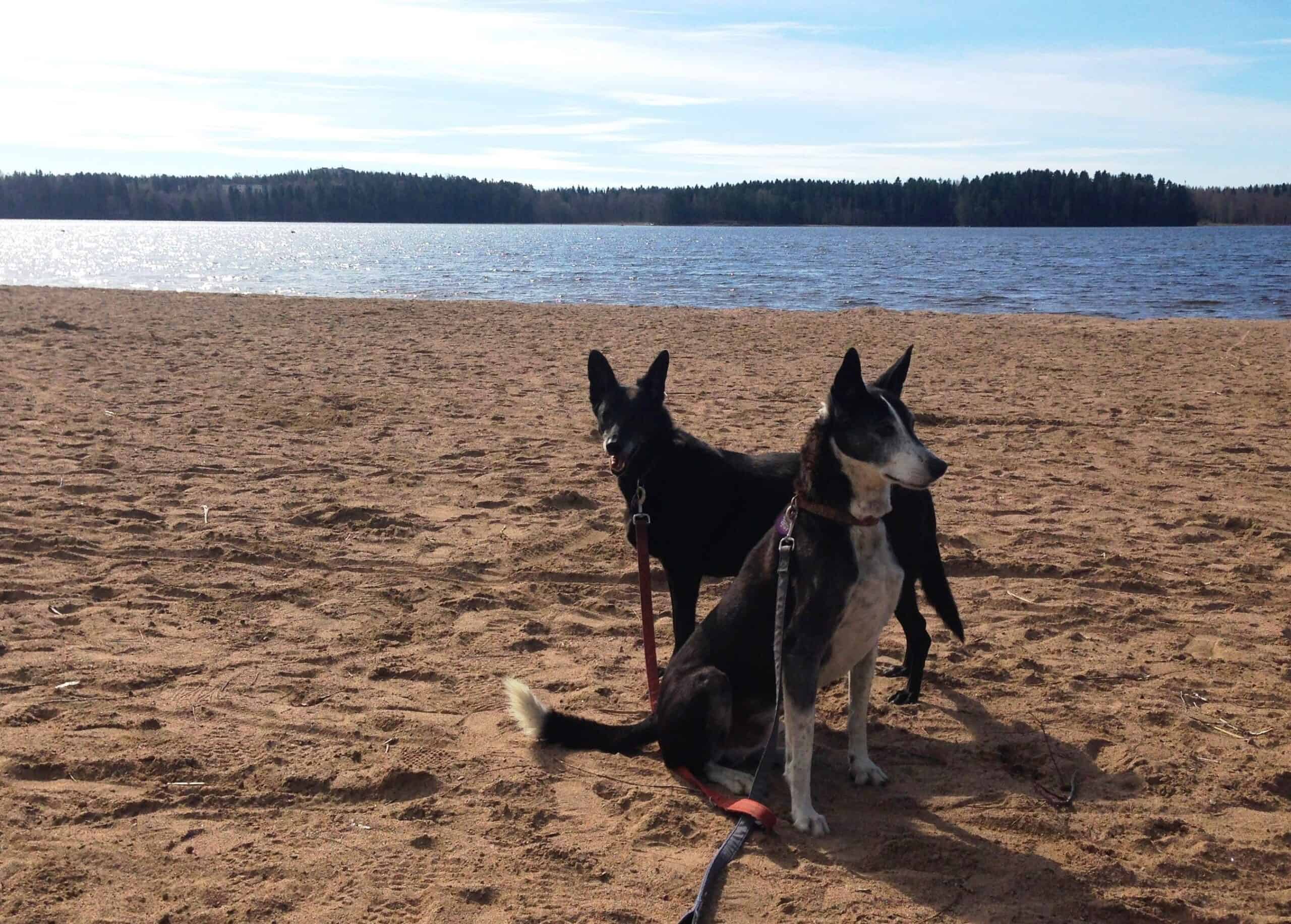
Does Your Dog Hate Meeting New People? Here’s Why

Dogs can be scared of strangers for many reasons, including genetics, lack of socialization, or past negative experiences.
So when your dog feels anxious or scared, he might become aggressive if he feels there’s no other option—think “fight or flight.”
This behavior is not only risky for others but also indicates that the dog is in distress.
8 Common Causes of Fear Aggression in Dogs Towards Strangers
Dogs are known to have a number of fears and phobias.
Here are eight of the most common reasons dogs are scared of people they don’t know and behave aggressively towards them.
#1. Quantity and Quality of Socialization as a Puppy
Dogs that haven’t been exposed to a variety of people during their formative puppyhood (specifically between 3-14 weeks), or haven’t had positive experiences with them, may become fearful and respond aggressively if they feel threatened in any way and can’t escape.
It’s especially common for dogs to be scared of men, for a variety of reasons.
On the other hand, puppies that interact with a wide range of humans in positive contexts are less likely to develop aggressive tendencies towards strangers later on.
#2. Sex and Neuter Status
Some studies suggest that unneutered male dogs are more likely to show certain types of aggression than those who have been neutered.
Other studies show no clear link, however, or suggest that neutering might even increase the risk of some aggressive behaviors.
In reality, the effects of neutering on aggression also depend on factors like the dog’s age when neutered, his breed, and the specific type of aggression.
Not only that, but a dog’s behavior is influenced by hormones, genetics, socialization, training, and his environment.
So, while dogs that haven’t been neutered might be more prone to some aggressive behaviors, the overall impact of neutering on aggression isn’t yet clear.
#3. Breed Group
Certain breed groups may be more predisposed to fear-based aggression due to specific genetic factors that influence their nervous system responses to perceived threats.
Here’s what the research tells us:
- Long-Haired Collies, Toy, Miniature and Medium Poodles, and Miniature Schnauzers show high levels of fearfulness and aggression towards unfamiliar people.
- Smaller breeds like Shih Tzus, Poodles, and Miniature Schnauzers are more likely to display aggressive behaviors than larger breeds, though their aggression is often seen as less threatening.
- Spanish Water Dogs, Shetland Sheepdogs, and mixed-breed dogs are among the most fearful, with fearfulness strongly linked to aggressive behaviors.
Identifying these breed-specific genetic markers can help dog parents predict and manage potentially aggressive behaviors.
#4. Where the Dog Is Kept When Left Alone
Dogs that are isolated or confined may find their situation to be highly aversive and stressful, making them more prone to react aggressively out of fear when confronted with unfamiliar people.
Research suggests that social pain—such as the distress experienced from social isolation or the loss of a social bond—can be as significant as physical pain for social animals like dogs.
This can have profound effects on their overall well-being, potentially causing social pain that is comparable to physical pain in its impact on their health and behavior.
On the other hand, dogs that are left in a stimulating and comfortable environment with access to toys and enrichment activities may feel more secure and less anxious.
These positive environmental factors can help mitigate the effects of social isolation by providing opportunities for mental stimulation and physical exercise.
Both are crucial for a dog’s health and well-being.
Regular positive social interactions can also reinforce a dog’s sense of security and confidence, reducing the likelihood of fear-based behaviors.
#5. Aversive Training Methods
Harsh training methods and devices (e.g. shock collars, prong collars, choke chains, citronella ‘anti-bark’ collars, etc.) or a history of physical/verbal abuse can contribute significantly to fear aggression.
For example, a dog who is punished with a spray bottle every time he barks may learn to bite his owner’s hand the next time they reach for the spray bottle.
Not because he’s an “aggressive dog,” but because he’s scared of the unpleasant experience (i.e. being sprayed) and actively wants to avoid it.
#6. History of Abuse
In the same way, dogs that have been punished or abused may associate people in general with negative emotions and experiences, including fear and pain.
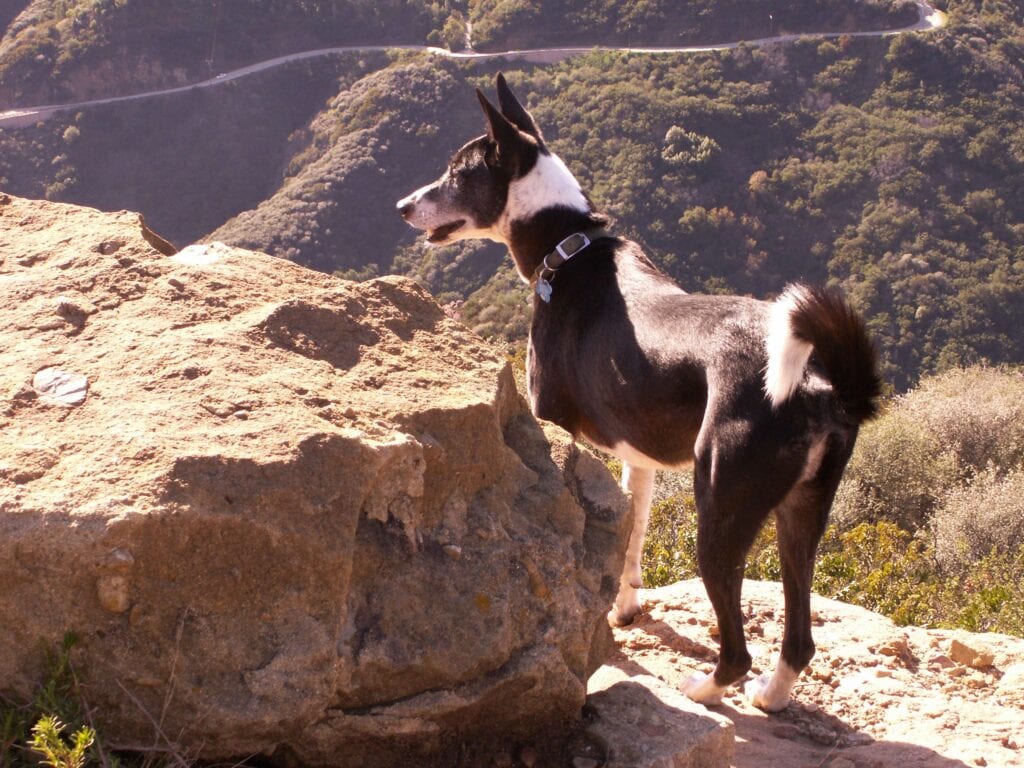
Our Saluki-cross rescue, Louis, had a rough start in life and was terrified of new people, sometimes snapping at them when he felt overwhelmed.
We quickly learned to read his warning signals and remove him from stressful situations before they escalated.

#6. Non-Social Fear
Non-social fears, such as fear of new environments or situations, or when a dog feels threatened by an unfamiliar setting, can cause dogs to act aggressively towards people they don’t know.
For example, Louis would often growl at the veterinary professionals who were trying to examine him.
Before he was rescued, Louis had spent the first two years of his life chained up in the desert, and was wary whenever you clipped on a collar or leash, or had your hands anywhere around his head or the back of his neck.
In the early days, before I was aware of this, he snapped at my hand on more than one occasion.
I knew there was always the risk that he would feel compelled to snap or bite if what he saw as a threat to his personal safety (like a vet poking and prodding him), didn’t stop or go away.
To overcome this, we used veterinary-prescribed sedatives and our fabulous vets would come outside and examine him in the car, which was a lot less stressful for all concerned.

New E-Book
👉 My new E-book, The Fearless Fido Formula: 15 Mistakes Smart Dog Parents Never Make Again is officially live!
👉 If you’re a dog parent, especially of a fearful pup, this is for YOU!
👉 AND…you’ll get 4 amazing bonuses for FREE!
Not sure if this is right for you and your dog? Get more info here
#7. Role of Owner Demographics and Personality
Research shows that dogs regard their owners as a “secure base,” much like children do with their parents.
Unsurprisingly, then, a dog owner’s behavior and personality can have a huge impact on how their dog behaves around strangers.
Research tells us the following:
- Dogs owned by women are 73% less likely to exhibit aggression towards strangers compared to dogs owned by men.
- Conscientious owners are linked to less stranger-directed aggression over time.
- Dogs with more extroverted owners showed decreased non-social fear and touch sensitivity, reducing aggressive behaviors.
- Owners using aversive training methods had dogs with more behavior problems, including aggression, whereas positive training approaches were linked to fewer issues.
This means that we, as dog parents, need to be aware of our own behavior and how it might influence our dog’s reactions to new people.
In my experience, the calmer you are, the better.
And if you feel anxious, try not to show it!

#8. Impact of Age Acquired
Older dogs may be more set in their ways.
This means that dogs who are rehomed or adopted at an older age might already have ingrained behaviors that contribute to their fear of strangers.
These established habits can make it more challenging to modify their reactions and introduce new, positive experiences.
However, with patience, consistent training, and gradual exposure to new people, even older dogs can learn to feel more comfortable and reduce their fear-based behaviors.
When Fear Aggression Is a Learned Behavior
Recognizing the signs of learned fear, as well as understanding its causes, is important when it comes to effectively addressing and modifying your dog’s response to strangers.
Identifying Learned Behavior in Dogs
Genetic Predispositions/Breed Characteristics: A dog’s breed and genetics may automatically cause him to be wary of strangers, which can be considered normal behavior for some breeds. In contrast, behavior that develops due to environmental factors or owner interactions typically indicates learned behavior.
Triggers: Closely observe your dog’s body language. Signs like growling, tucked tail, ears back, stiff posture, bared teeth, raised hackles, or cowering are all signs of discomfort.
Focus: Look for consistency in your dog’s reactions. A dog that reacts negatively to all strangers (as opposed to selective individuals, like tall men or kids on bicycles) could be displaying learned behavior.
Know Your Dog
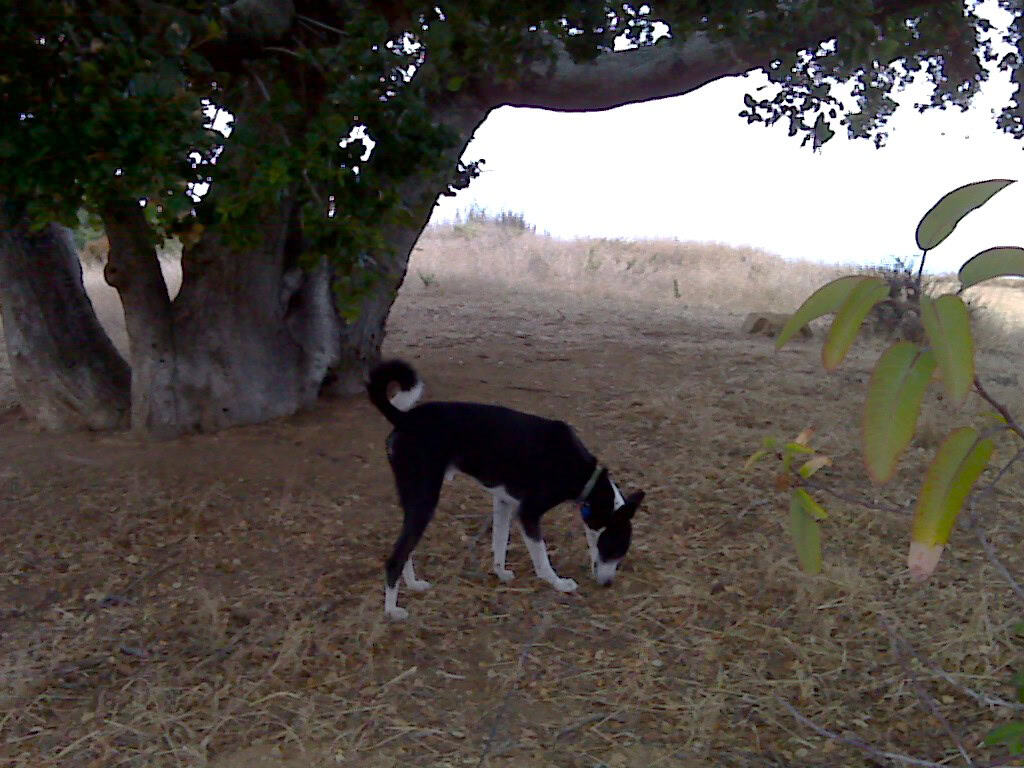
Thanks to our lovely Louis, I’m all too aware that fear aggression towards strangers can be a daunting challenge for dog parents.
Having said that, not all dogs are social butterflies, and they don’t have to be.
We were perfectly happy with Louis the way he was.
By allowing him to be himself and giving him the space he craved, he felt safe and learned that he could trust us.
We often took a management-type approach.
This meant that we tried to avoid situations where Louis felt threatened and might start acting out because he was scared of something (like meeting a stranger).
If something happened that we couldn’t control, we’d distract him or move him away as calmly and quickly as possible.
It’s always best to keep your dog away from situations that scare him and might make him feel the need to act aggressively.
The goal is to keep everyone safe and make sure your dog doesn’t get too stressed out.
When you can understand what makes your dog uncomfortable and take action to respect his needs, you can create an environment where he feels more safe, calm, and confident.
And always remember: your dog is not trying to give you a hard time.
He is having a hard time, and his behavior is the consequence of that.
READ NEXT
Resources
- Aggression toward Familiar People, Strangers, and Conspecifics in Gonadectomized and Intact Dogs – Parvene Farhoody, Indika Mallawaarachchi, Patrick M. Tarwater, James A. Serpell, Deborah L. Duffy, & Chris Zink
- Aggressive Behaviour Is Affected By Demographic, Environmental And Behavioural Factors In Purebred Dogs – Salla Mikkola, Milla Salonen, Jenni Puurunen, Emma Hakanen, Sini Sulkama, César Araujo, & Hannes Lohi
- Associations between owner personality and psychological status and the prevalence of canine behavior problems – Nicholas H. Dodman, Dorothy C. Brown, & James A. Serpell
- Factors associated with dog behavior problems referred to a behavior clinic – Simona Cannas,
Zita Talamonti, Silvia Mazzola, & Michela Minero - Highly heritable and functionally relevant breed differences in dog behaviour – Evan L. MacLean, Noah Snyder-Mackler, Bridgett M. von Holdt, & James A. Serpell
- Owner Personality, Owner-Dog Attachment, and Canine Demographics Influence Treatment Outcomes in Canine Behavioral Medicine Cases – Lauren Powell, Darko Stefanovski, Carlo Siracusa, & James Serpell
- Relationships among morphological, environmental, social factors and aggressive profiles in Brazilian pet dogs – Flavio Ayrosa, Carine Savalli, Natalia Albuquerque, & Briseida Resende
- The Importance of the Secure Base Effect for Domestic Dogs – Evidence from a Manipulative Problem-Solving Task – Lisa Horn, Ludwig Huber, & Friederike Range
- The Psychobiology Of Social Pain: Evidence For A Neurocognitive Overlap With Physical Pain And Welfare Implications For Social Animals With Special Attention To The Domestic Dog (Canis Familiaris) – Franklin D. McMillan
NEED A DOG TRAINER OR BEHAVIOR EXPERT?

If you need more help dealing with a training or behavior issue, please find professional help from a force-free dog trainer who can consult with you either in person or remotely.

GOOD PLACES TO START ARE:
- COAPE Association of Pet Behaviourists and Trainers
- Pet Dog Trainers of Europe
- International Companion Animal Network
- Institute of Modern Dog Trainers
- Pet Professional Guild

All dog owners deserve to have successful relationships with their canine companions!
