

The Vet Told Me to Euthanize My Dog. Here’s Why He Was Wrong

A veterinarian once told me to euthanize my beautiful rescue dog Louis, because he growled at him. I’ve never forgotten it, and I want to tell you what actually happened that day, because it changed the way I’ve handled every vet visit since.
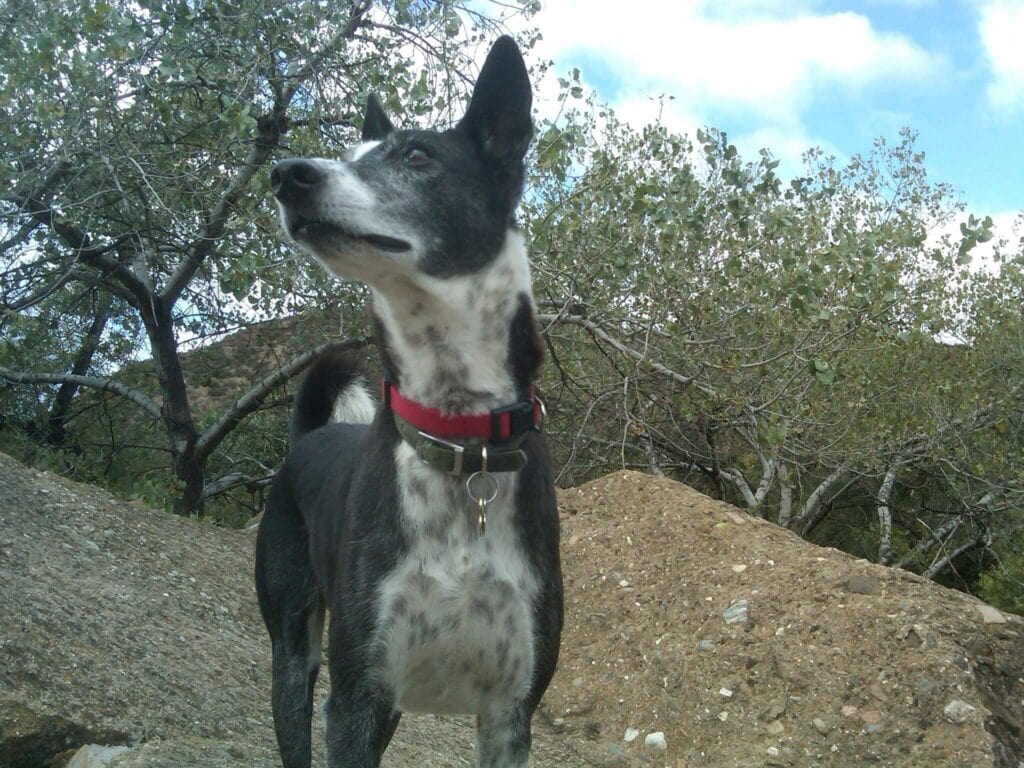
Saluki-cross Louis had spent the first two years of his life chained up and poorly treated before he was rescued and we adopted him. His bad start in life left its mark in many ways, including the fact that he was terrified of anything happening around his head or neck.
Clipping on a leash, especially if he could see it coming, was enough to send him over the edge, and he would snap at your hand, sometimes hard enough to draw blood. That didn’t mean he was aggressive. It meant he was scared, and he was doing the only thing he knew how to do to keep himself safe.
After a few times of this (ouch!) I started to pay closer attention and to learn Louis’ language. Whenever he felt unsafe, he would give the slightest, barely there curl of his top lip. That was his tell. So all I had to do was back off the second I saw it, and he’d never feel the need to escalate.
Even better, I’d make sure he never felt the need to give me the warning signal at all, because I’d never put him in that position again. Poor Louis wasn’t looking for a fight. He was just looking for the fear to stop.
The Vet Appointment That Changed Everything
One day I took Louis to a new vet for his annual vaccinations. Unfortunately, our usual vet wasn’t there and I felt something immediately off with this man. Louis seemed to feel the same way, because he growled at him. Because he was frightened. It was a stressful, unfamiliar situation with a not very friendly person trying to invade his space.
People often think of growling as an aggressive behavior, but it’s an incredibly useful signal. It says, please back off, I’m not feeling safe right now. Frankly, any professional working with animals should know the difference.
This vet didn’t. He marched over to Louis and bent right over him as he cowered in the corner of the room. This is about the worst thing you can do to an already terrified animal. Louis growled again, louder this time. The vet turned back around and said, quite plainly, that Louis should be euthanized because he was “aggressive.”
I took Louis and walked out.
Louis went on to have a long, happy life with us. From then on, we always found vets who actually worked with us instead of against us. Vets who saw a frightened dog who needed a different approach rather than an ignorant, judgmental, potentially dangerous one.

What That Day Taught Me
I should be grateful to the vet really, because he taught me to always advocate for my dog.
We’re conditioned to defer to vets, and that trust is (usually) well placed. Vets know medicine in a way we never will. But they don’t know our dogs. That’s on us. We’re the ones who notice the lip curl, the freeze, the way their eyes go wide before anything else happens, and no professional, however qualified, has the right to tell a devoted dog parent that their frightened animal deserves to die for being frightened.
From that day on, I never walked into a vet’s office cold again. I’d speak to the vet beforehand, every time, and we’d build a plan together to keep Louis’s visits as low-stress as possible. Some of the vets we found went to genuinely remarkable lengths for him.
One came out to see him in the car, where he felt safe enough to relax. Another vaccinated him from behind while we held and gently distracted him from the front, so he never even saw it coming. None of it was complicated. It just took someone willing to meet him where he was.
The Vet Who Should Have Known Better
If I could see that first vet again now, I’d tell him exactly what I think of him: that he had no right to speak to a loving dog owner that way. An owner who is just trying to do their very best for their dog. Judging a snapshot of a terrified animal’s behavior in the middle of the most stressful moment of their day isn’t expertise, it’s ignorance dressed up in a white coat. He should have known better. It was his job to know better.
But here’s what I keep coming back to, all these years later. Louis’s story only ended well because I refused to accept what I was told that day. If I’d trusted the vet over my own read of my own dog, he wouldn’t have gotten the rest of his life, the long hikes in the canyons, the always meeting him where he was at, the many years of good days that followed.
To Every Rescue Dog Parent Reading This
You are allowed to question a professional. You are allowed to walk out of a room. You are allowed to say “that doesn’t sound right for my dog,” and mean it.
A growl is not a verdict. A snap born of fear is not a character flaw. And no one, however many letters they have after their name, gets to write off your frightened dog because they didn’t take the time to see what was really going on.
Trust your instincts. Trust what you’ve seen with your own eyes, day after day, in the quiet moments no one else witnesses. That’s not sentiment. That’s expertise too, and it’s yours.
If Louis’ story sounds familiar… Introducing The Rescue Dog Decompression Roadmap
If you’re living with a dog who shuts down, freezes, or reacts out of fear or anxiety, you might already know how exhausting it is to constantly explain, defend, and advocate for them. Here’s the good news: You don’t have to figure it out alone.
The Rescue Dog Decompression Roadmap is a 6-week program I’m building specifically for fearful, hypervigilant, and shut-down rescue dogs, and the parents who love them. The doors aren’t open yet, but the Priority List gets you first access, plus the details as soon as they’re ready.
Thanks for reading, and for everything you’re doing for your dog. I’d love to have you with us.
