
The Outdated Myth That’s Ruining Your Relationship With Your Fearful Dog

Imagine you’re trying to comfort a friend who’s struggling with anxiety.
Would you bark orders, assert your superiority, or physically force them into submission?
Of course not.
Yet, surprisingly, many well-intentioned dog parents are still being advised to do just that with their anxious canine companions.
Fortunately, the world of dog training has evolved dramatically in recent years, leaving behind outdated concepts that were once widely thought to be accurate.
Not so fortunately, among these, the notion of “dominance” in dog behavior stands out as particularly persistent—and problematic.
This antiquated theory, popularized by certain television personalities and old-school dog trainers, has seeped into the public consciousness, often with detrimental effects on our relationships with our four-legged friends.
As a long-time parent to multiple anxious rescue dogs, this really bothers me.
So I’m going to explain why this myth is not just inaccurate, but potentially harmful, especially when it comes to dogs struggling with anxiety (plus what you can do instead).
Key Takeaways
- Dominance theory is an outdated and debunked theory of dog behavior.
- Fearful behaviors are often misinterpreted as “dominance.”
- By recognizing stress signals and responding appropriately, dog owners can help their fearful dogs feel safe, alleviating feelings of anxiety.
- Positive reinforcement and understanding the dog’s wants and needs are crucial for managing fear and anxiety.
- Avoiding aversive training techniques is essential for building a healthy relationship with dogs.

New E-Book
👉 My new E-book, The Fearless Fido Formula: 15 Mistakes Smart Dog Parents Never Make Again is officially live!
👉 If you’re a dog parent, especially of a fearful pup, this is for YOU!
👉 AND…you’ll get 4 amazing bonuses for FREE!
Not sure if this is right for you and your dog? Get more info here
Unmasking the Alpha Myth
Dominance theory is the idea that dogs are looking to gain higher social status over their human family members through “dominant” or aggressive behaviors.
That they’re trying to assert their position as the “alpha dog” or “pack leader.”
Typical examples you’ll always read about are things like:
- Jumping up on the sofa or bed (He just wants to be near you and rest in a cozy, safe, elevated spot).
- Barging through the doorway before you (He’s just excited to get out there and see what the world has to offer today).
- Pulling on the leash? (He’s just excited to be out and about and see what’s around the next corner. Plus he probably hasn’t been fully trained to walk on a loose leash).
There are many more examples, but you get the idea.
Why Your Dog Isn’t Plotting a Household Coup
The thing is, dogs don’t understand this kind of thinking.
They are not trying to “dominate” their owners.
They just do what they do to get what they need or want.
If we don’t want our dogs to jump up on the sofa/bed, barge past us when we open the front door, or pull on the leash, all we have to do is train them not to.
You’re Already “The Boss”
Think about it like this.
You already control just about everything your dog does.
What he eats, how much he eats, when he eats, where he eats, where he sleeps, when he goes out for bathroom breaks, when he goes for a walk, when he gets to socialize with his friends (dogs or humans), when he goes for a health check-up, and when it’s playtime.
You already control every single aspect of his life.
So there’s no need to try to establish some kind of old-fashioned pack hierarchy amongst human and canine family members.
The sad thing is, when unsuspecting dog parents buy into the idea that their dog is trying to dominate them and take over the household, it often leads to harmful training techniques involving pain, punishment, or physical force.
Reframing Fears
Feeling depressed yet?
Me too.
But luckily, it’s not all gloom and doom.
All we have to do is shed the whole dominance concept, and adopt a more compassionate, collaborative (aka 21st century) approach.
In other words, instead of seeing it as a power struggle, we learn to recognize our dogs’ actions as the communications they really are – attempts to express needs, fears, or desires.
This allows us to address the root causes of their anxiety rather than add to it.
What’s Making Your Dog Anxious?
Here are some of the most common reasons for anxiety in dogs:
Phobias
Like humans, dogs suffer from all sorts of fears and phobias.
More specifically, dogs can develop intense fears of specific stimuli, such as loud noises (like thunderstorms or fireworks) or certain people, places, or objects.
Past Trauma
Dogs that have experienced harsh treatment, neglect, or traumatic events may develop persistent fear responses, anxiety, or even symptoms similar to post-traumatic stress disorder (PTSD) in humans.
Lack of Socialization
Dogs that haven’t been properly socialized during their critical developmental period (typically between 3-16 weeks of age) often struggle with anxiety in unfamiliar situations or with new people.
In the Genes
Studies show that when mother dogs are stressed during pregnancy, it can cause their puppies to be more anxious, fearful, and easily stressed out.
This is because the mother’s stress hormones can change how her puppies’ brains develop before they’re even born.
Think of it like this: the puppies’ stress system gets turned to a higher volume while they’re still in the womb.
Because of this, when they face stressful situations later in life, their reactions tend to be stronger and last longer compared to other dogs.
As these puppies grow into adult dogs, they might:
- Get upset or aggressive more easily.
- Be extra sensitive to being touched or handled.
- Have trouble in social situations with other dogs or people.
- Be more likely to develop other stress-related problems.
- Get very anxious when left alone (separation anxiety).
Separation Anxiety
Separation anxiety is a common issue in dogs, characterized by distress, panic, and destructive behaviors when left alone or separated from their primary caregiver.
Negative Experiences
Negative experiences, like being abused or injured, can have a lasting impact on a dog’s behavior, potentially leading to fear responses in similar future situations.
This is a learned fear response, where the dog associates certain people, places, or situations with negative outcomes.
Tell-tale Signs Your Dog is Anxious
Recognizing the signs of fear in your dog is an important skill.
One of the most obvious signs is trembling.
A fearful dog might cower or try to avoid certain people or situations.
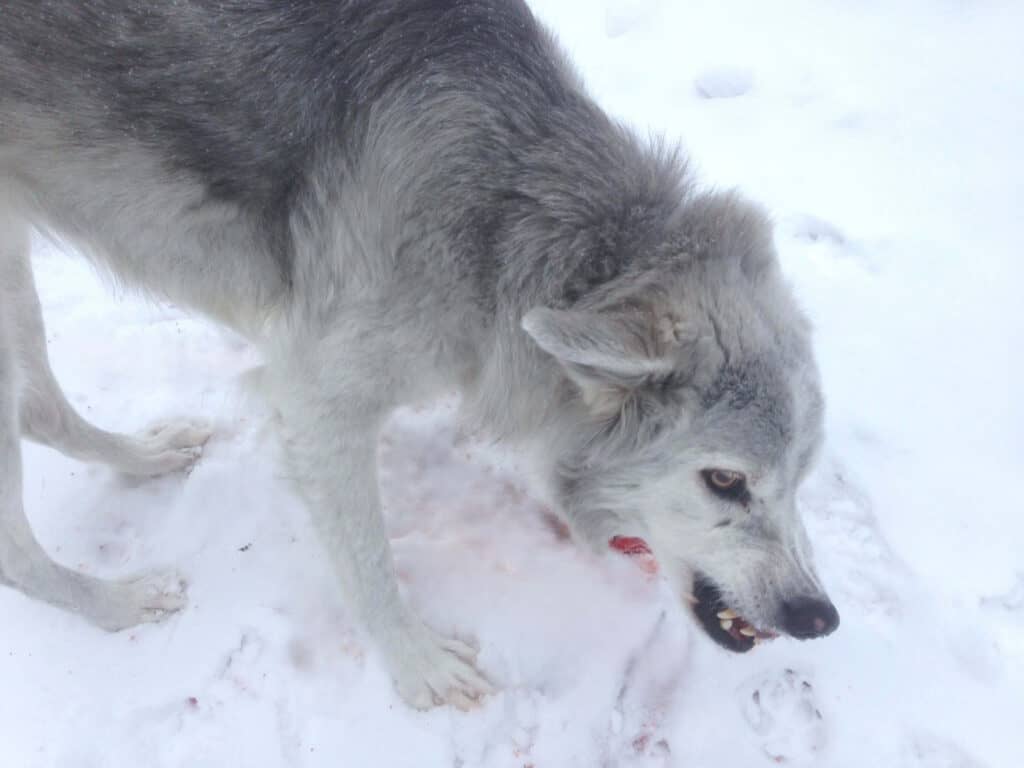
Growling, barking, and snarling are also common warning signs that a dog is scared or feels threatened.
Body language can provide clear clues too: a dog with a tucked tail, flattened ears, or a low body posture is showing signals of fear, anxiety, or stress.
Freezing in place or lunging at perceived threats are signs of a dog in distress.
Other signs include licking lips, tongue flicking, yawning, panting, excessive barking, and even inappropriate mounting due to their heightened emotional state.
If you can understand these behaviors, it can help you respond appropriately and take steps to reduce your dog’s anxiety.
Reframing “Dominant” Behaviors as Anxiety
Anxious or fearful dogs sometimes use aggressive behaviors as a way to protect themselves.
When faced with a threat (real or perceived), they might:
- Growl or bark
- Show teeth or snarl
- Bite
These behaviors are often mistaken for dominance or a desire to control resources.
While the latter may apply in a dog-dog interaction, with humans they are generally defensive actions stemming from fear and anxiety.
In other words, when a dog feels his early warning signals are being ignored and there’s no other chance of escape, or to make the scary situation end.
Unsurprisingly, training techniques that punish fear-based responses like this can worsen the dog’s stress and lead to more severe aggression over time.
How Punishment Can Shatter Your Dog’s Confidence
Verbal punishment, physical force, and intimidation can all increase a dog’s feelings of fear and stress.
This is the last thing we want to do for any dog, much less one that is already struggling with fear or anxiety.
Here’s what happens if you use punishment:
- Fear and Anxiety Increase: Dogs may associate the punishment with their surroundings or even with their owner, making them more anxious.
- Aggression Escalates: Fearful dogs can become aggressive as a defense mechanism.
- Lack of Trust: The bond between you and your dog suffers. Trust is essential for a healthy relationship, and punishment erodes this.
Training Traps: Harmful Methods to Leave Behind
There are several techniques that are particularly harmful, not to mention equipment that works by causing pain and fear, including:
- Alpha Rolls and Pinning: Placing your dog on his back or pinning him to the ground can cause immense stress and fear. Dogs may react with aggression to defend themselves.
- Hard Eye Contact: Staring into a dog’s eyes is regarded as hostile, potentially a challenge, and can make him feel threatened and compelled to respond.
- Choke Chains, Prong Collars, Anti-Bark Collars, and Shock Collars: These tools work by inflicting pain and fear. They can cause physical injury and long-term psychological damage.
For all these reasons, veterinary associations and certified professional dog trainers worldwide strongly advise against using aversive tools and punitive techniques, citing substantial evidence of their harmful effects on canine behavior and welfare.
The Fallout of Punishment
Dominance-based training methods can have severe negative impacts on a dog’s behavior and emotional well-being.
A dog subjected to these techniques may:
- Become emotionally shut down, offering no behaviors at all
- Develop heightened aggression towards unfamiliar dogs or people
- Display redirected aggression, attacking someone or something else due to frustration or fear
Misinterpreting fear-based aggression as dominance and applying harsh training methods comes with serious risks, including:
- Increased fear and anxiety
- Escalated defensive behaviors, potentially leading to long-term aggression
- Erosion of the bond and trust between the dog and owner
These outcomes not only fail to address the underlying issues but can also create new, more complex behavioral problems.
It’s crucial to recognize that most aggressive behaviors in dogs stem from fear or anxiety, not a desire for dominance.
Positive Paths to Building Confidence in Anxious Dogs
Now we’ve looked at all the negatives, like any good training session, let’s end on a positive note.
Current scientific research consistently demonstrates that positive reinforcement is more effective in the long term for helping anxious dogs, not to mention that it’s a far more humane approach.
By focusing on rewarding desired behaviors rather than punishing unwanted ones, we can build our dogs’ confidence and create positive associations with things they may find scary.
This helps alleviate anxiety and builds that crucial trust between dog and owner, leading to a happier, more well-adjusted pet.
Here’s how that looks in practice:
Positive Reinforcement Training
Positive reinforcement involves rewarding your dog for displaying calm and confident behavior.
By using treats, praise, or play as rewards, your dog learns to associate good behavior with positive outcomes.
- Consistency in rewards helps him understand which behaviors are preferred.
- Short training sessions help keep his attention without causing stress.
- Nothing can go wrong; the worst that can happen is that your dog doesn’t get a reward. This encourages him to try harder, problem-solve, and make good decisions.
Proper training through positive reinforcement truly is a game changer for boosting an anxious dog’s confidence.
Reward-Based Techniques
Reward-based training techniques work by focusing on encouraging desired behaviors using positive incentives.
Think of it like going to work and earning a salary.
Here’s how it works:
- Identify what motivates your dog, such as his favorite treats, game, or toy. Or maybe it’s praise and petting that he loves the most.
- Implement his favorite reward immediately after he does the desired behavior to create a clear connection.
- Use rewards for small achievements, gradually leading to more complex ones.

Gradual Desensitization
All this means is slowly exposing your dog to whatever makes him anxious in a controlled, systematic manner.
Maybe it’s thunder or fireworks.
Maybe it’s a trip to the vet or meeting an unfamiliar person or dog they don’t know.
Maybe he’s anxious around specific subsets of people, like men or children, or in new environments.
The process begins with presenting the fear-inducing stimulus at such a low intensity, duration, or distance that it doesn’t trigger anxiety, then slowly increasing each one (not all at once!) over time as your dog remains calm.
This gradual approach allows him to build tolerance and confidence, ultimately reducing or even eliminating their fearful response to the trigger.
- Start with short exposures.
- Use frequent short sessions to prevent overwhelming your dog.
- Stay calm and patient, offering praise and high-value treats for calm behavior during exposure.
- Always go at your dog’s pace and don’t be tempted to rush the process.
Building Trust
Building a trusting relationship between you and your dog is another important piece of the puzzle.
By establishing trust, your dog will feel more secure, leading to reduced fear and anxiety.
- Consistent routines and training methods help create a sense of security.
- Regular, gentle social interactions allow your dog to feel safe around you and others.
- Avoid unpredictable behavior, as consistency builds confidence and trust in your dog.
- Provide a safe space where your dog can retreat any time he feels overwhelmed or wants some alone time.
- Avoid forcing him to do something he doesn’t want to do.
When to Seek Professional Guidance
If your dog’s anxiety is severe and despite your best efforts, you don’t feel like you’re progressing or helping, it’s often a good idea to enlist the help of a professional (see my recommendations below).
Signs to Look For
- Constant Aggression: If your dog shows repeated aggressive behaviors like snapping or biting.
- Fear Responses: Excessive fear in everyday situations, such as meeting new people or encountering other animals.
- Unpredictable Behavior: Sudden and unpredictable reactions.
Benefits of a Professional Trainer
A professional training and behavior specialist will provide a structured approach, using positive reinforcement techniques to encourage good behavior without causing additional stress.
What they offer:
- Diagnosis: Identify the root causes of your dog’s behavior problems.
- Customized Training: Tailored training plans address specific issues your dog may have.
- Consistency: Ensure that techniques are applied consistently, which is critical for success.
Seeking Veterinary Help
Lastly, in some cases, a vet may need to be consulted.
Medical issues can sometimes masquerade as behavioral problems, so a comprehensive check-up might be necessary.
READ NEXT
Resources
- Behavioral and Psychological Characteristics of Canine Victims of Abuse – Dr. Franklin McMillan, Deborah Duffy, Stephen Zawistowski, & James Serpell
- Dominance – Dogs’ Trust
- Dominance – when an outdated theory won’t go away – Improve Veterinary Practice
- Dominance and Dog Training – Association of Pet Dog Trainers
- Maternal Stress and Puppy Development – United States Department of Agriculture
NEED A DOG TRAINER OR BEHAVIOR EXPERT?

If you need more help dealing with a training or behavior issue, please find professional help from a force-free dog trainer who can consult with you either in person or remotely.

GOOD PLACES TO START ARE:
- COAPE Association of Pet Behaviourists and Trainers
- Pet Dog Trainers of Europe
- International Companion Animal Network
- Institute of Modern Dog Trainers
- Pet Professional Guild

All dog owners deserve to have successful relationships with their canine companions!
