

Fireworks Freaking Out Your Dog? Here’s What to Do

Do you ever feel like New Year’s Eve or the 4th of July is more of a nightmare than a celebration? If you have a noise-phobic dog like I do, you’ll know exactly what I mean. Our poor rescue dog Lennox had a complete meltdown last New Year’s Eve. We’re talking panting, pacing, drooling, the works. And this was with a 50-yard buffer and a line of tall pines between us and our neighbor’s firework extravaganza.
We tried everything – a Thundershirt, blocked windows, food puzzle toys, chewies, calming music, petting – and although they helped, our boy was still shaken up for weeks after. Every night he’d go and stand at the window, waiting for the scary thing to happen again.
Here’s the kicker: Lennox isn’t alone in his firework fears. Up to 50% of dogs suffer from noise phobias, including fireworks. That means that half of all dogs might be going through what Lennox experienced. But don’t worry, it’s not all doom and gloom. Here are some tricks you can keep up your sleeve to help your dog cope with those booming celebrations.
Immediate Steps to Help Your Dog During Fireworks
When you know that fireworks are imminent, there are several things you can do to try to help your dog feel safer and more comfortable.
Day-of Strategies
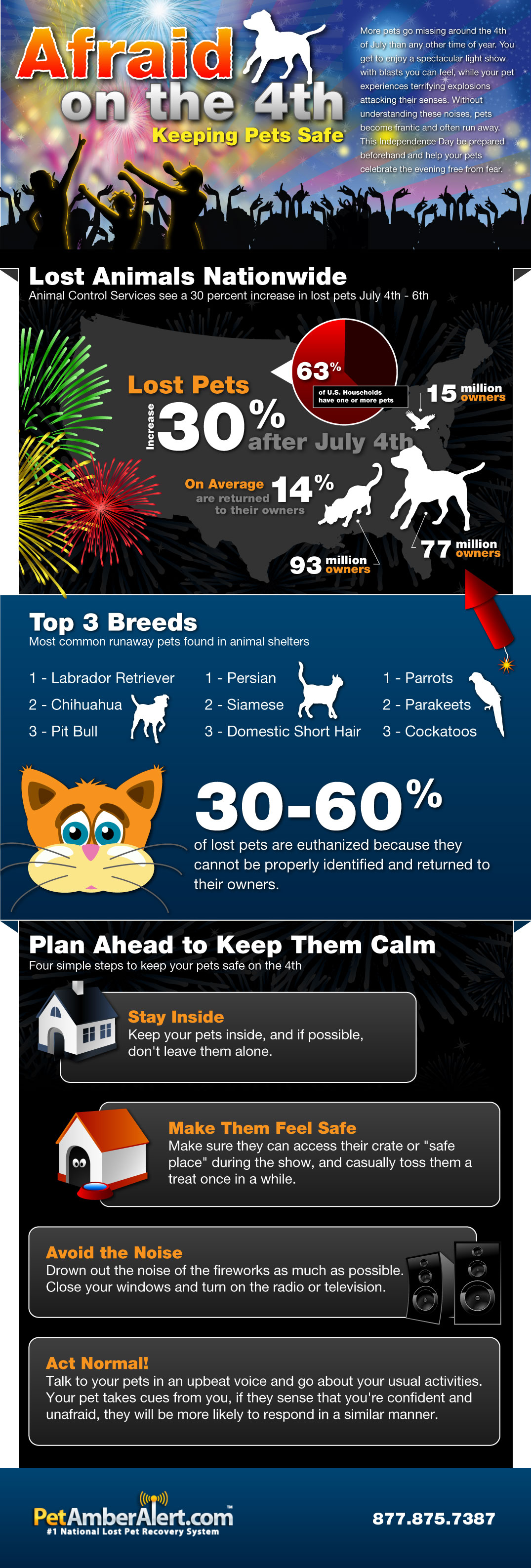
When the big day arrives, start with a nice long walk or fun play session. A tired dog is (usually) a calmer dog, after all. Just make sure you’re back home before the sun sets and the fireworks start. Once the festivities begin, keep your dog indoors. Close those windows and curtains to muffle the noise and block out the flashes.
Try to stay calm yourself too. Dogs are experts at reading human body language. Like children, they look to their “parents” as a secure base to see how they should react to something if they’re not sure. So if you’re cool as a cucumber, it’ll help your dog stay relaxed too.

New E-Book
👉 My new E-book, The Fearless Fido Formula: 15 Mistakes Smart Dog Parents Never Make Again is officially live!
👉 If you’re a dog parent, especially of a fearful pup, this is for YOU!
👉 AND…you’ll get 4 amazing bonuses for FREE!
Not sure if this is right for you and your dog? Get more info here
Set Up a Calm and Cozy Space for Your Dog
When the fireworks are about to start booming, your dog will need his own little oasis. Always make sure your dog has access to his cozy hiding spot, but don’t force him into a confined space if he doesn’t want to go. A quiet, interior room such as a bathroom, closet, or spare bedroom are all ideal.
If your dog has a crate and likes being in it, that’s another good option – especially if you cover it with a blanket or towel. Alternatively, consider hanging out in your basement. Any of these options will help minimize your dog’s exposure to the sound and light effects of fireworks.
Another of our rescue dogs, Louis, always used to make his way into a bathroom with no windows during fireworks (or a thunderstorm, for that matter). Whereas Lennox prefers to take refuge in his travel crate. So let your dog make his own choices as to where he feels most comfortable.

Scent Combinations
Whatever safe space your dog prefers, grab some padding (a couple of extra comforters, for example) to muffle those scary noises. Toss in his favorite soft bedding, an irresistible chew toy, and an item of your clothing that you’ve worn and has your scent. Something you’ve slept in or worn to the gym is ideal. The combination of both your scents will act like a security blanket for your pup, with his powerful sense of smell.
Turn Up the Lights
You might think dimming the lights would help, but it’s often the opposite that can help the most. Brightening up the room can actually counteract those startling flashes.
White Noise
Another trick is to keep your home buzzing with some low-level noise. Pop on the TV or some soothing classical music. There’s even music made specifically for dogs. You can find plenty of playlists on YouTube and they work like a charm for Lennox. It’s like creating a sound bubble that helps keep all the scary noises at bay.
The Art of Mind Games
When the fireworks start, it’s time to distract your dog by becoming the world’s most interesting human. For instance, keep his mind off the mayhem with a fun game or play session.
Sniffing games are great too. Simply scatter some treats around the place for your dog to forage for. Sniffing is a highly rewarding activity that lowers heart rate and blood pressure, helping dogs to stay naturally calm.
In the same way, activities like licking and chewing are natural stressbusters for dogs. So if you have any food puzzle toys lying around, now’s their time to shine. Nothing says, “What fireworks?” like a peanut butter-filled KONG*. Don’t be stingy with the treats either. Your goal is to start associating those firework booms with something more positive.
*Always make sure peanut butter is xylitol-free; xylitol is toxic for dogs

Cuddles Are Not a Crime
I’m going to bust the myth wide open: comforting your scared pup is NOT going to make him a permanent scaredy-cat. That old saying about reinforcing fear? Toss it out the window. When your dog’s feeling scared, a little TLC can go a long way. But here’s the catch. Every dog is different. Some dogs turn into Velcro dogs during fireworks, while others might find touch overwhelming.
So watch your dog’s body language. If he’s leaning into your petting, keep it coming. If he seems to tense up, try just sitting nearby and speaking in a soothing voice. It’s all about finding what works for your dog.
With Lennox, it helps him calm down if I firmly but gently place my hands either side of his ribcage. This has a similar effect to an anxiety wrap. Louis was completely different. He found comfort in my presence, but didn’t want me to touch him. If he approached me, I’d scratch his ears, which he loved. But if he didn’t, I respected that. This is a great way to show your dog how much he can trust you.

Best Calming Products to Help Your Dog Relax
When it comes to calming your dog during fireworks, several products can help reduce feelings of anxiety and fear. While not everything will work for all dogs, it’s worth experimenting to see what your dog responds to, if anything.
ADAPTIL Pheromone Diffuser: Releases calming pheromones that can help reduce anxiety. It’s a good idea to start using the diffuser a few days before fireworks season and keep it plugged in continuously.
ADAPTIL Spray: Works in the same way as the diffuser, but can be sprayed on your dog’s bedding or collar.
Thundershirt: This snug-fitting wrap applies gentle pressure that can have a calming effect. Introduce the Thundershirt in advance, using treats to build a positive association with wearing it.
Puzzle Toys: Toys like a KONG or Buster Cube filled with high-value treats can keep your dog occupied. Lickimats and snuffle mats are also effective, although highly anxious dogs might ignore them.
Calming Chews: Calming treats can also help reduce stress. Make sure to check with your veterinarian to ensure that these types of treats are safe for your dog and to determine the correct dosage.
Herbal Remedies: Products like Pet Remedy or Rescue Remedy use natural ingredients such as chamomile and valerian root to ease anxiety. Again, it’s always best to consult your vet before trying these to find the right dosage.
Complementary Therapies: Acupuncture and massage therapy can be effective ways to reduce anxiety. These therapies should also be discussed with your vet to ensure they suit your dog’s health needs.
Calming Music: As I’ve mentioned, dog-specific music or white noise can help mask the sound of fireworks and create a more relaxing environment for your dog.
Mutt Muffs: If your dog is comfortable wearing ear covers, Mutt Muffs can help reduce the noise from fireworks, potentially lowering his stress levels.
The Long Game
Managing your dog’s fear of fireworks and other loud noises involves both immediate and long-term strategies. We’ve talked about immediate. Not let’s look at the long term. Long-term management focuses on reducing your dog’s overall anxiety and improving his quality of life. So if you really want to help your dog become a fireworks pro, start working on desensitization well before the fireworks season.
Desensitizing Your Dog to Fireworks
Desensitization simply means helping your dog get used to something he is scared of or bothered by. For a dog scared of fireworks, desensitization involves exposing him to the sounds of fireworks gradually and in a controlled way.
You can start by playing a video of fireworks at a very low volume and short duration that your dog can handle without getting scared. Over time, you slowly increase the volume and the length of exposure as he becomes more comfortable. When he stays calm, shower him with high-value treats (ideally something he absolutely loves but doesn’t usually get) and praise. It’s like saying, “See? Firework sounds equal yummy snacks!” The goal is to help him build a positive association with the sound of fireworks so they no longer cause as much fear or anxiety.
It’s a bit like training for a marathon. It takes time and patience, but the results are worth it. The biggest key to success here is to go at your dog’s pace. Always watch for signs of stress and stop immediately if he starts to get nervous. Next time you try, go back a couple of steps and start from there.
Anti-Anxiety Medications
If your dog’s anxiety is more severe than a case of the jitters, it might be worth chatting with your vet. They might recommend some anti-anxiety meds that would help your dog feel calmer.
Microchip and ID
Here’s a tip that could be a lifesaver: make sure your dog is microchipped and wearing a collar with up-to-date ID. It’s like giving your pup a return address, just in case he decides to make a run for it during the fireworks.
Make sure too that your home and property’s boundaries are all secured. It’s a sad fact that more dogs are lost on the 4th of July than at any other time of year. Even worse, only about 14% of these missing pets are successfully reunited with their owners. It goes without saying that it’s best to do everything you can to stop that from happening.
FidoAlert.com is a free nationwide pet alert network using FidoID QR tags and real-time SMS alerts to reunite missing pets with their families. Backed by a million-strong community and 40,000 success stories, it’s an invaluable safety net for every pet owner. Explore the network and register your pet here.
How Noise Phobia Affects Your Dog
It’s also crucial to be able to spot the signs that your pup is stressed.
Understanding Your Dog’s Distress Signals
You know your dog best, so keep an eye out for any unusual behavior. Is he panting more than usual? Pacing around like he can’t settle? Is his posture hunched or stiff? Is he cowering, shaking like a leaf, drooling more than usual, or can’t stop whining? Some dogs will try to hide or squeeze into an impossibly small space, while others might stick to you like glue. These are all pretty big red flags. In other words, your dog is saying, “Hey, I’m not okay with this!”
Be aware too that some dogs might go from 0 to 100 really quickly. One minute your dog might be just a bit antsy, and the next he’s in a complete panic, barking up a storm or trying to dig his way to Australia through your sofa. Some dogs experience even more intense physical reactions, like vomiting or diarrhea. It’s not their fault – they’re just really, really scared! The good news? Now that you know what to look for, you’re already one step closer to helping your dog feel safer.

Why Are Dogs Scared of Fireworks?
Dogs are particularly sensitive to fireworks for several reasons.
#1. Why Fireworks Sound So Intense to Dogs
Dogs have a different hearing range than humans. Humans can typically hear sounds from 20 Hz up to about 20 kHz. This includes everything from the low rumble of a train to the high-pitched squeal of a whistle.
While humans and dogs have similar hearing abilities for low sounds, dogs excel with high-pitched sounds. They can hear up to 70-100 kHz, whereas humans can only hear up to about 20 kHz. This means dogs can hear sounds that are at least three times higher in pitch than we can.
Dogs have over a dozen muscles in each ear, meaning they can move and rotate their ears independently. This helps them accurately pinpoint the source of sounds. They can also hear quieter sounds and noises from much farther away than we can, even more than half a mile away. This all combines to make dogs highly sensitive to loud noises.
Think of your dog’s ears like built-in amplifiers, so when those fireworks boom, it’s like someone cranked the volume to 11 right next to his ear. Not pleasant at all.
#2. Why Fireworks Startle Your Dog More Than You Think
Think about how you’d feel if someone suddenly popped a balloon behind you. Startling, right? That’s how fireworks feel to your dog, but multiply that feeling by a hundred. It’s not just the sudden, unexpected noise, it’s those sudden flashes of light too. Your dog’s instincts instantly kick into overdrive, telling him there’s danger afoot.
When these instincts kick in, your dog’s body floods with adrenaline, increasing heart rate and stress levels. In other words, fight or flight. Again, this is not a pleasant state to be in.
#3. Why Fireworks Can Be More Anxiety-Inducing Than Thunderstorms
Unlike thunderstorms, which typically come with atmospheric cues like changes in barometric pressure, fireworks are like ninja attacks. They come out of nowhere with no warning whatsoever. Your dog doesn’t get a chance to prepare himself mentally, which can ramp up his anxiety even more.
#4. Why It Might Be in the Genes
Lastly, some dogs are just born worriers. It’s in their DNA. Specifically, certain breeds, like Border Collies and other herding dogs, are more prone to getting the jitters, and factors like age and early experiences can play a part too. All these elements together create a perfect storm of stress and fear for many dogs during fireworks displays. But don’t worry – understanding why he’s scared and following the tips in this article are the first steps in helping your dog feel better.
READ NEXT
Resources
- Dogs and fireworks (30+ proven techniques to eliminate noise phobia) – Dr. Karolina Westlund
- How Far Away Can Dogs Smell And Hear? – Dr. Susan Hazel
- July 4th Fireworks – Keeping Your Pet Safe – Pet Amber Alert
- More Pets Are Lost on July 4th Than Any Other Day of the Year – Pet Amber Alert
- What Can We Learn From The Hair Of The Dog? Complex Effects Of Endogenous And Exogenous Stressors On Canine Hair Cortisol – Rowena M. A. Packer, Alexander M. Davies, Holger A. Volk, Holly L. Puckett, Sarah L. Hobbs, & Robert C. Fowkes
NEED A DOG TRAINER OR BEHAVIOR EXPERT?

If you need more help dealing with a training or behavior issue, please find professional help from a force-free dog trainer who can consult with you either in person or remotely.

GOOD PLACES TO START ARE:
- COAPE Association of Pet Behaviourists and Trainers
- Pet Dog Trainers of Europe
- International Companion Animal Network
- Institute of Modern Dog Trainers
- Pet Professional Guild

All dog owners deserve to have successful relationships with their canine companions!
