

When Dogs Get the Blues: Understanding Canine Depression

Just like humans, dogs experience a wide range of emotions.
While their feelings may not match human clinical depression, they can still suffer from emotional distress that closely mirrors it.
Even without words, dogs express their emotions through behaviors, often showing signs of sadness, listlessness, or even grief.
What Science Tells Us About Dogs and Depression
Studies on shelter dogs have provided valuable insights into potential signs of canine depression.
Researchers identified a behavior called “awake but motionless” (ABM), where dogs remain still conscious.
On average, the shelter dogs in the study dogs spent 3.1% of their time in this state.
Notably, dogs surrendered by their owners exhibited higher levels of ABM compared to strays, suggesting that owner relinquishment may significantly impact a dog’s emotional well-being.
However, the relationship between ABM and depression wasn’t clear-cut.
Interestingly, dogs who spent more time in ABM also engaged in longer play sessions with toys.
As a result, when experts evaluated the dogs’ behavior, they associated ABM more closely with boredom rather than depression.
We’ll talk more about boredom a bit later.

Symptoms of Dog Depression
So where does this leave us?
Because dogs can’t tell us how they feel, we must look for behavioral clues instead.
Behavioral Symptoms
Behaviorally, you might notice your dog losing interest in activities she once enjoyed, like playing fetch or going for walks.
Changes in sleep patterns are common, with depressed dogs often sleeping more than usual, even during typically active times.
Appetite changes can also occur, with some dogs eating less when sad, while others might eat more for comfort.
Keep an eye out for any significant changes in your dog’s eating or drinking habits.
Social withdrawal is another key indicator and you may find your dog hiding under furniture or in quiet corners, avoiding interaction with family members or other pets.
Emotional and Physical Signs
In terms of emotional and physical signs, a dog’s body language always tells us a lot about how they’re feeling.
A depressed dog might exhibit a sad demeanor, with soft ears and a lowered tail.
She may avoid eye contact or seem less responsive to your voice or touch.
Some dogs become more clingy when they’re sad, following you around more than usual, or seeming needier.
Others may show signs of anxiety, like pacing, whining, or trembling.
Physical symptoms can include excessive licking or changes in grooming habits, with some dogs licking or chewing their paws or engaging in scratching behaviors as a way to self-soothe.
You may also notice changes in your dog’s energy levels, with your pup seeming more tired or lethargic than usual.
It’s important to remember that symptoms like these can also indicate other health issues, so it’s always best to consult with your veterinarian for a proper diagnosis.
RELATED: Top Stress Signals in Dogs Every Owner Should Know
Causes of Dog Depression
Dogs can experience depression for various reasons but here are some of the most common:
Loss of a Companion: When Grief Strikes
Dogs are social animals who form incredibly strong bonds with their family members, both human and canine, and can experience grief just as deeply as humans do.
The death of another pet or a family member can trigger a profound sense of loss, so keep an eye out for these signs of mourning:
- Searching for the missing companion
- Decreased appetite
- Sleeping more than usual
- Being unusually clingy or withdrawn
During this difficult time, your dog may need extra TLC.

Environmental Changes: When the World Turns Upside Down
Dogs thrive on routine and familiarity.
It helps them feel in control of their environment, thereby reducing stress levels.
When major shifts occur in their environment, it can throw them for a loop and potentially lead to depression.
Think of it as canine culture shock.
Some common triggers include:
- Relocating to a new house
- Bringing home a new baby
- Adding another pet to the family
- A stay-at-home owner taking a job
- Being rehomed
These changes can make your dog feel insecure or anxious.
To help ease the transition, try to maintain consistency in other areas of her life.
For example, keep mealtimes and walks at the same time, even if everything else is in chaos.
A little stability can go a long way in boosting your dog’s mood.
Health-Related Issues: When the Body Affects the Mind
Just as physical ailments can dampen our spirits, the same is true for our dogs.
Chronic pain, illness, or the aftermath of surgery can all contribute to a case of the canine blues.
Keep an eye out for potential health issues that might be bringing your pup down, like:
- Arthritis or joint pain
- Thyroid problems
- Infections
- Recovery from major surgery
If you notice any sudden changes in your dog’s behavior or mood, once again, don’t hesitate to consult your vet.
Addressing underlying health issues can often work wonders for your dog’s emotional state, helping her bounce back to her usual happy self.
Dominance Myths: How Outdated Training Can Affect Mood
Imagine being constantly scolded for actions you don’t understand, or having your best friend suddenly give you the cold shoulder for no apparent reason.
You’ve probably heard those old chestnuts: “Don’t let your dog go through doors first!” or “Never greet your pup when you get home!”
These misguided rules stem from the mistaken belief that dogs are constantly trying to climb the social ladder and dominate their human “pack“.
But your dog really isn’t plotting a coup every time she jumps on the sofa or pulls on the leash.
She’s just being a dog, doing what comes naturally to get her wants and needs met.
When we respond with confusing, seemingly arbitrary rules, we’re not asserting our own dominance – we’re simply creating a recipe for canine confusion and distress.
Think about it: you already control every aspect of your dog’s life, from mealtimes to vet visits to walks to bathroom breaks.
There’s no need to establish some kind of old fashioned dictatorship that your dog won’t understand.
As authors Ha and Campion explain, “Dogs must find rules such as these confusing at best and at worst, the root cause of anxiety and depression.”
Treatment and Support for a Depressed Dog
When your dog is feeling blue, a multi-faceted approach combining medical care, physical activity, mental engagement, routine, and affection can help lift her spirits.
Here’s how you can support your pup through her tough times:
Consult Your Veterinarian
First stop: A thorough check-up can rule out any underlying health issues that might be masquerading as depression.
Your vet may recommend blood tests or other examinations to get a complete picture of your dog’s health.
If necessary, they might prescribe medication to help balance your dog’s brain chemistry, though this isn’t always the go-to solution.
Your vet may also suggest alternative treatments, such as dietary changes or natural supplements, tailored to your dog’s specific needs.
Engage Your Dog’s Senses
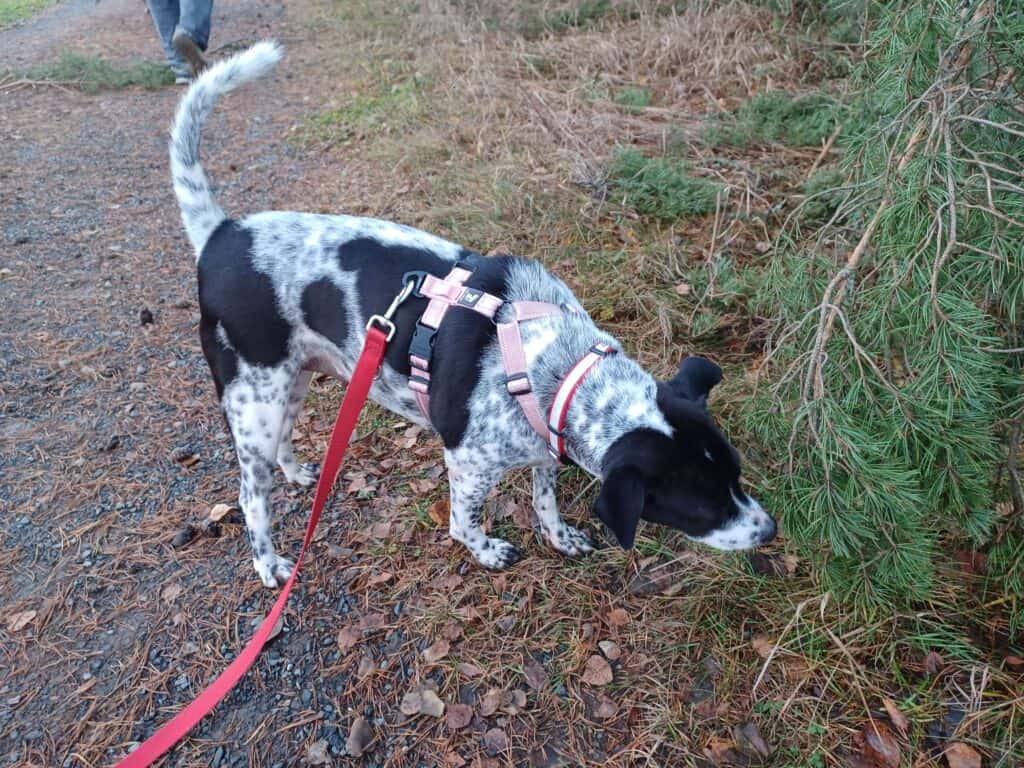
As I just mentioned, exploring new environments during walks can also perk up your dog’s spirits, offering exciting new scents and sights to investigate.
Engaging her senses can be a powerful tool in combating depression.
Sniffing, for instance, is not just a way for dogs to explore their environment—it’s also a natural stress-reliever.
Research has shown that the act of sniffing actually lowers a dog’s heart rate, making it an inherently calming activity.
You can even try setting up some scent games in your home or yard, scattering treats for your dog to sniff out.
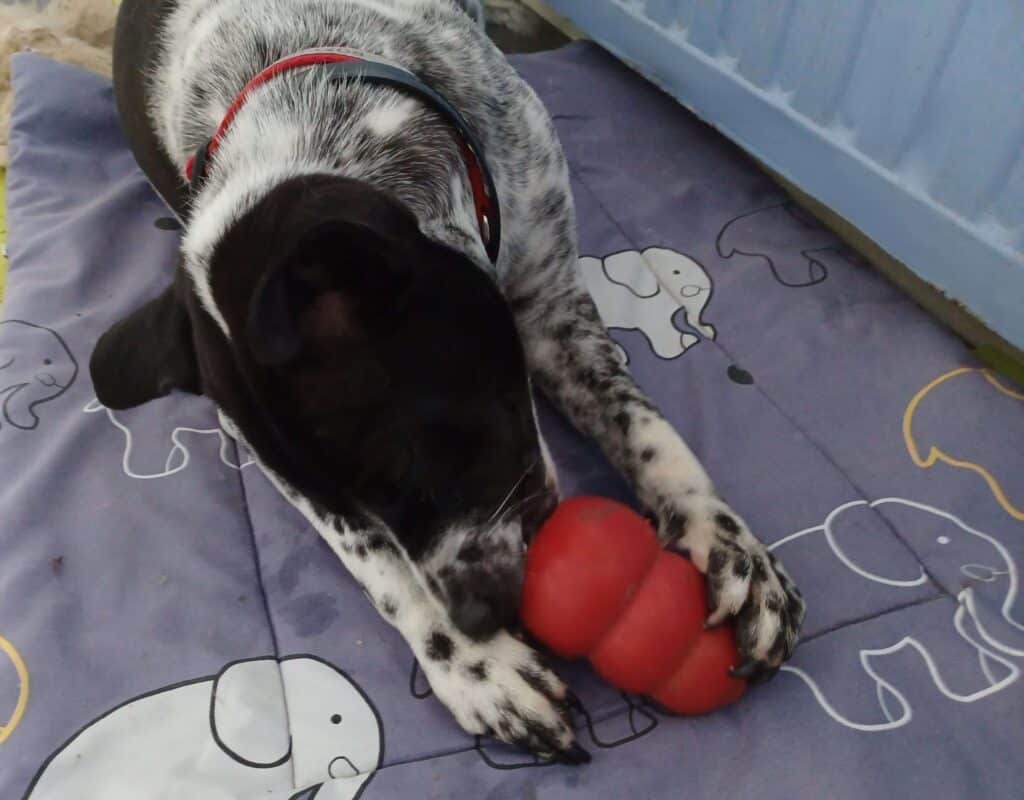
Similarly, licking and chewing, behaviors often stimulated by those aforementioned food puzzle toys, can have a soothing effect.
These repetitive actions release endorphins, promoting a sense of well-being and contentment.
By providing opportunities for these instinctive behaviors, you’re offering your dog healthy, enjoyable ways to self-soothe and reduce her anxiety.
Increase Physical Activity
Exercise is a powerful mood-booster for dogs, just as it is for humans.
It triggers the release of endorphins, nature’s feel-good chemicals.
Try extending your dog’s walks, exploring new routes, or increasing the frequency if appropriate for her fitness level.
Playtime is equally important – engage her in games of fetch, tug-of-war, or chase for at least 30 minutes daily.
If she’s a water lover, swimming can provide a joint-friendly, full-body workout and make her feel absolutely great.
These activities not only get your dog moving but also stimulate her mind, countering negative emotions.
Provide Mental Stimulation
A bored dog can easily become a sad dog, so mental exercise is crucial.
Puzzle toys, like treat-filled KONGs, lick mats, and snuffle mats can keep her mind engaged and provide a fun challenge.
Regular training sessions, whether learning new behaviors or practicing old ones, can give your dog a sense of purpose and help build her confidence.
Create a Consistent Routine
I alluded to this earlier, but dogs thrive on predictability.
Establish a steady routine for feeding, walking, and playing time.
This structure helps your dog feel secure by giving her a sense of control over what happens and when.
Try to maintain this schedule even on weekends.
At the same time, remember to include quiet times in the routine, allowing her to rest and recharge.
A balanced mix of activity and downtime is ideal for your dog’s mental health.
Show Extra Attention
Sometimes dogs just need an extra dose of TLC.
If your dog’s into it, increase your snuggle sessions, and consider gentle massages if she enjoys them.
Speak to her in a soft, cheerful voice to help lift her spirits and assure her that everything is okay.
However, be mindful of her needs – if she seems to want space, don’t force attention.
Let her come to you whenever she feels like it.
Again, this will give her a sense of control over her surroundings, which helps alleviate feelings of stress and anxiety.
If your dog is grieving the loss of a close dog friend, your presence can be especially comforting.
In some cases, introducing a new dog might help, but this decision requires careful consideration and needs to be done slowly and gradually.
Increase Social Interaction
If your dog is dog-friendly, or has one or two dog friends, setting up a few playdates can help her feel less lonely.
Play is one of the ultimate mood elevators and can go a long way in lifting a depressed dog’s spirits.
Just make sure to watch the dogs closely to keep things safe and fun.
If your dog seems stressed or she’s not yet ready to interact with other dogs, end the playdate early.

Provide a Comfortable Environment
Always make sure your dog has a safe, quiet space to rest, ideally a cozy bed in a quiet part of your home.
Put some of her favorite toys in there and play calming music or use a white noise machine to block out sudden sounds.
Using Pheromone Products
Pheromone products offer a natural way to soothe anxious dogs by mimicking the chemical signals they use to communicate.
These products come in various forms, each suited for different situations.
Dog Appeasing Pheromone (DAP) replicates the calming scent a mother dog releases when nursing puppies.
While odorless to humans, these pheromones can significantly impact a dog’s behavior by triggering a special organ in their nose that sends signals to the brain.
Three main types of pheromone products are available:
- Diffusers: Ideal for home use, these plug into wall outlets and release pheromones into a specific area, typically one room.
- Collars: Perfect for dogs on the go, these provide constant pheromone release close to the dog’s nose, making them useful for vet visits or travel.
- Sprays: Offering quick relief in specific situations, these can be applied to bedding, cars, or used during stressful events like thunderstorms.
By using pheromone products, you can help your dog feel safe and relaxed, potentially easing anxiety and stress in various environments and situations.
How to Tell If Your Dog Is Depressed or Just Bored
We’ve already talked about all the signs of canine depression, but what if your dog is just bored?
Bored dogs often act out in ways that can be frustrating for pet parents.
You might find your dog chewing on furniture, digging holes in the yard, or tearing up household items.
Excessive barking or whining can also be a sign of boredom.
Your dog may be trying to get your attention or release pent-up energy.
Some bored dogs become escape artists, finding clever ways to get out of the yard or house.
You might notice your dog pacing or seeming restless, or she may follow you around more, looking for something to do.
Bored dogs sometimes lick themselves excessively or chase their tails as a way to stay occupied.
Differentiating Between Boredom and Depression
To tell if your dog is depressed or just bored, look at the bigger picture.
While depression often follows a major life change, boredom usually stems from a lack of mental or physical stimulation.
Timing matters too.
Boredom behaviors often crop up when your dog isn’t getting enough exercise or attention.
Depression tends to be more constant, affecting your dog’s mood even during normally fun times.
- Try offering your dog a favorite toy or treat.
- A bored dog will usually perk up and engage, while a depressed dog might show little interest.
- Pay attention to how long the behavior lasts.
Boredom often improves with added exercise and playtime, but depression may need more time and sometimes professional help to resolve.
READ NEXT
Resources
- Could Greater Time Spent Displaying Waking Inactivity in the Home Environment Be a Marker for a Depression-Like State in the Domestic Dog? – Naomi D. Harvey, Alexandra Moesta, Sarah Kappel, Chanakarn Wongsaengchan, Hannah Harris, Peter J. Craigon, & Carole Fureix
- Dog Behavior: Modern Science and Our Canine Companions – James C. Ha and Tracey L. Campion
