

Canine Grief Is Real: How 4 in 5 Dogs Mourn Their Canine Friends

Dogs are social animals that form strong bonds with their companions, whether human or canine.
A study of dogs’ reactions to losing a canine housemate found that 86% showed grief-like behaviors (Uccheddu et al., 2022).
When dogs lose a close dog friend, they often grieve, displaying signs of mourning strikingly similar to those of human grief.
As someone who recently experienced the sudden loss of a beloved dog, I’ve seen firsthand how the remaining dogs in the household can be affected.
The emotional attachments dogs form are real and meaningful, and should not be underestimated.
How Grief Affects a Dog’s Behavior
Grief can change a dog’s behavior in many ways.
If your dog has recently lost a canine companion, you might notice:
- Decreased appetite or refusal of food
- Changes in sleep patterns, often sleeping more than usual
- Reduced interest in play or previously enjoyed activities
- Increased vocalization (whining, barking, howling)
- Becoming more clingy or withdrawn
- Searching for the lost companion
- Waiting by the door or in familiar spots
- Apparent confusion near empty beds or food bowls
- Increased anxiety or fearfulness
- Changes in confidence levels
- Depression-like symptoms
- Lethargy or decreased energy
- Increased neediness for attention
- Changes in social interactions with other pets or humans
These reactions are all normal and indicate that your dog is processing the loss.
Many of them are behaviors that mirror human grief reactions, and they may vary in intensity and duration.
It all depends on the individual dog and the nature of their relationship with the lost companion.
Dogs who were close friends or had a parent-child relationship often show stronger reactions to the loss.

Case Study: Roman and Florence
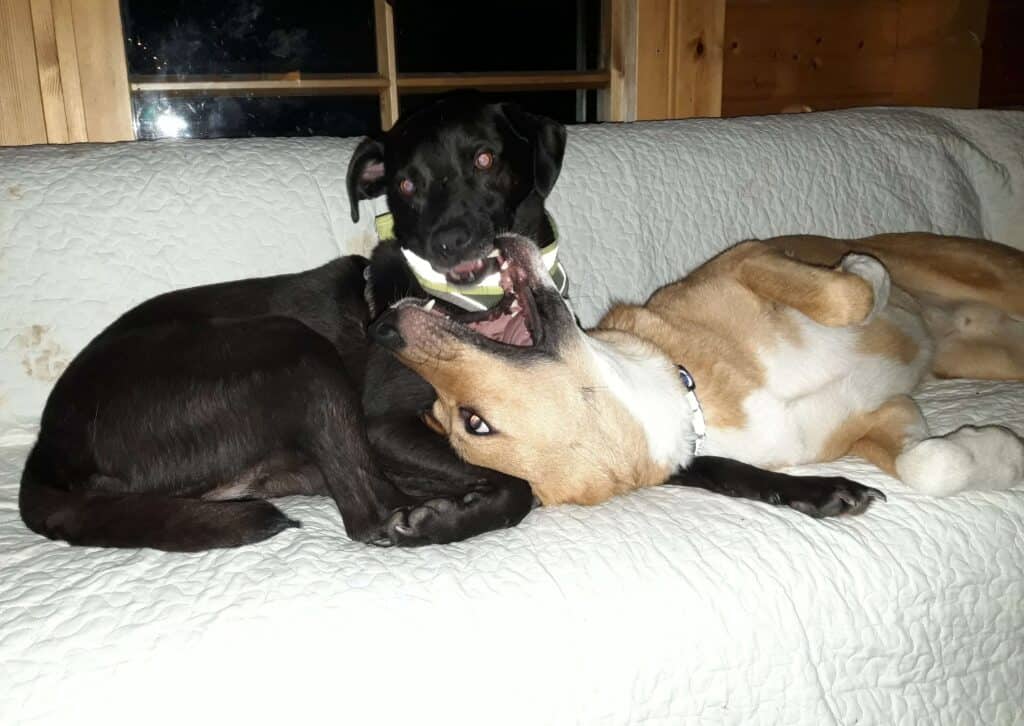
When our beloved Romanian rescue dog, Florence, passed away suddenly and unexpectedly, her bonded best friend, Roman (another Romanian rescue dog), was profoundly affected.
During the nearly four years we had Florence, Roman played a crucial role in her transformation, helping her overcome her fears, teaching her to play, and showing her that humans could be trusted.
Every day they’d go for their walks together, hang out on the sofa together, and chase each other around the yard.
When Florence fell critically ill without warning one Saturday night, Roman’s distress, along with that of our other dogs, Lennox and Esme, was evident.
But the urgency of Florence’s condition meant we had to rush her to the vet, leaving little time to comfort the remaining dogs.
When we came home three hours later without her, there was a huge empty space where she used to be, and we all felt it.
Roman’s grief manifested in various ways over the following weeks:
- Unusual behavior during walks, often hesitating, putting on the brakes, changing his mind about where he did and didn’t want to go, and changing direction unexpectedly.
- Lying in Florence’s spot on the sofa, which still carried her scent.
- Irritability towards Lennox and Esme.
- General lethargy and lack of enthusiasm.
It took approximately five months for Roman to fully return to his normal self, highlighting the depth of the bond he shared with Florence and the significant impact of her loss on his emotional well-being.
Duration of Grieving Behaviors
As we’ve just seen with Roman, grieving behaviors in dogs can last from a few days to several months.
Every dog is different, and the length of the grieving period can vary widely.
Research shows that about 25% of dogs display grieving behaviors for six months or longer.
Unsurprisingly, this long-term grief is more common in dogs who had a close bond with the deceased pet.
Many dogs, however, start to adjust to the loss within a few weeks to a couple of months.
Factors Influencing How Dogs Mourn
Dogs grieve in different ways.
The bond with the deceased dog, personality traits, and changes at home all play a role.
Relationship with the Deceased Dog
Dogs who were best friends often show more signs of sadness.
Playmates may miss their fun times together, while working partners might feel lost without their companion by their side.
A special bond can have a big impact. For example, a confident dog might have helped a shy one overcome their fears, like Roman did with Florence.
But if the shy dog is the one left behind, she may have a harder time coping with the loss of her friend and mentor.
Personality and Temperament
Some dogs are more emotional and may show clear signs of sadness.
Others might seem to bounce back faster.
Shy or anxious dogs often have a harder time with loss and may become even more fearful or clingy.
Confident dogs might adjust more quickly, but can still feel the loss deeply.
Age matters too.
Older dogs who have lived through losses before may cope better.
Young dogs who lose their first friend might be more confused and upset by the change.
Environmental Factors
Losing a dog can shake up the whole household.
If the deceased dog was a kind of anchor or steadying force, like our Florence was, the remaining dog (or dogs) might feel unsure about their new role.
Daily routines, such as walks and mealtimes, can all feel markedly different.
The first time I walked Roman without Florence was heartbreaking for both of us, and it took considerable time to adjust.
Other pets in the home can influence the grieving process in various ways:
- They may offer comfort or cause stress as the group dynamics shift.
- In our case, despite Roman’s occasional annoyance with Lennox and Esme, their playful interactions in the yard helped elevate his mood.
- Rotating walking companions also proved beneficial for Roman.
How you react matters too.
- Dogs pick up on human emotions and may get stressed or anxious if you are falling apart.
- Changes in attention can significantly affect a grieving dog.
- Some dogs may require extra affection during this time, while others might prefer space.
Watching for these cues helps you support your dog best.
By being attuned to his needs, you can help your dog navigate through the grieving process more effectively

Helping a Dog Cope with the Loss of a Companion
Here are some ways to support your dog during this difficult time.
Maintain Routine and Stability
Keeping things normal helps your dog feel safe and secure.
As best you can, stick to the same feeding times and walks as before.
This gives your dog a sense of comfort even though other things have changed.
Keep taking your dog out for his regular walks, even if you don’t feel like it.
Daily walks are good for both of you.
They help you both stay active and can help lift the mood by releasing endorphins to make you (and your dog) feel good.
Try to keep other parts of your dog’s day the same too.
If you always played fetch after dinner, keep doing that.
These familiar activities remind your dog that some things stay the same and help him feel more in control of his environment. Thereby reducing stress levels.
Mental and Physical Stimulation
Engaging your dog’s mind with fun toys and games can be an effective way to help him cope with grief.
Puzzle toys, in particular, offer excellent distraction and mental stimulation.
Try filling a KONG toy with treats for your dog to extract, or spreading peanut butter (make sure it’s xylitol-free) or cream cheese on a lick mat and then freeze it before giving it to your dog.
These types of activities provide your dog with a challenging mental workout.
Plus, activities like licking and chewing are inherently relaxing for dogs, so they have a natural calming effect.
When your dog engages his thinking brain to focus on solving a food puzzle, it helps inhibit the emotional part of his brain, potentially alleviating feelings of anxiety or sadness.

Engage in Extra Exercise and Play
Play is a great mood booster for dogs and can help turn negative feelings into positive ones.
Throw a ball, play tug-of-war, or play any other game your dog loves.
You can also try new types of play to see what works best to keep him engaged.
One of my favorite options is to hide treats around the house or yard for my dogs to find.
This encourages them to use both their nose and brain, providing them with another enjoyable mental workout.
Plus, sniffing is known to lower dogs’ pulse rates, so is another inherently calming activity you can use to help your pup feel less stressed and more relaxed.
Find Another Dog Friend
If your dog enjoys the company of other dogs, arranging playdates or introducing new walking companions can significantly boost his mood during the grieving process.
These interactions can offer numerous benefits, including:
- Social stimulation: Provides much-needed interaction, helping to fill the void left by the lost companion.
- Physical exercise: Encourages activity, releasing endorphins and improving overall mood.
- Mental distraction: Diverts attention from grief, even if only temporarily.
- Normalcy: Helps maintain a sense of routine for dogs used to canine companionship.
- Stress relief: Positive interactions can reduce anxiety and provide comfort.
- Confidence boost: Successful social encounters can help rebuild confidence shaken by the loss.
- Environmental enrichment: Encourages exploration of new areas, providing mental stimulation.
- Emotional support: The presence of other dogs can offer comfort during the grieving process.
- Socialization maintenance: Helps preserve important social skills.
- Preventing overdependence: Can prevent your dog from becoming too reliant on one person or routine.
- Mood elevation: The energy and enthusiasm of canine companions can lift spirits.
- New experiences: Provides fresh sensory stimulation and opportunities for positive interactions.
Remember to choose playmates carefully, ensuring they’re well-matched in terms of energy levels and play styles.
Make sure too, to introduce new walking companions gradually, and always supervise any intra-dog interactions to ensure a positive experience for all dogs involved.

Provide Emotional Support
Your dog may need extra love and attention right now.
If that’s the case, invest more time petting and hanging out with him, and make more time for one-on-one attention.
At the same time, talk to your dog in a calm, upbeat voice.
Even if he doesn’t understand the words, he can read your body language and your tone will be soothing.
This can all help him feel safe and reassured.
Monitor for Prolonged Grieving
Watch for signs that your dog is having a hard time coping.
If he stops eating or seems very sad for a prolonged period of time, it’s time to get help.
It’s always best to call your vet if you notice big changes in your dog’s behavior.
Your vet might suggest special medication to help your dog’s mood and can also check if there are other health issues causing problems.
Memorializing the Deceased Dog
Let your remaining dog (or dogs) sniff items belonging to his deceased companion.
Dogs experience the world primarily through their remarkable sense of smell, and familiar scents can be incredibly powerful for them.
If you offer your grieving dog access to his lost friend’s collar, harness, blanket, or favorite toy, it can:
- Provide a sense of connection to their lost friend.
- Offer comfort through familiar scents.
- Help with the grieving process by gradually adjusting to the absence.
Be mindful of your dog’s reactions, however.
Some may find solace in these scented items, while others might become more distressed.
Observe your dog’s behavior and adjust accordingly, always prioritizing his emotional well-being.
If feasible, you might also want to allow your dog to see and smell their deceased companion’s body or cremains.
This can provide closure for some dogs but may be distressing for others.
We allowed all three of our remaining dogs to sniff the urn with Florence’s ashes, and their reactions were notably different:
- Roman, Florence’s closest companion, showed intense interest. He sniffed the urn thoroughly and then lay down next to it, remaining there for several minutes.
- Lennox approached the urn cautiously, sniffed it briefly, and then walked away, but kept a close watch on it from the safety of his bed.
- Esme, our youngest dog, initially showed curiosity towards the urn but quickly became distressed. She whined and pawed at it before retreating to a corner of the room.
Sometimes grieving pet parents also choose to involve their grieving dog in a small memorial ceremony.
You might plant a tree or flowers in your yard in memory of your deceased pet, or erect a memorial plaque or stone marker.
In the meantime, creating a memorial for your deceased dog can help you process your own loss.
One option is to set up a small photo display in your home and include your dog’s favorite toy or collar in the memorial.
This gives you a physical space to connect with your lost dog.
Should You Get Another Dog?
Deciding to get a new dog after losing one is a big step.
It’s important to consider the timing and find the right match for your existing dog.
Timing is Key
Wait before bringing a new dog home.
Your surviving dog needs time to grieve.
Watch for signs that your dog is becoming more like his old self, including:
- Returning to normal eating habits.
- Showing greater interest in toys and play.
- Seeking attention and affection and becoming more sociable.
Whatever you do, don’t rush this process.
Bringing in a new dog too soon could cause stress for your grieving pet and may even lead to behavioral problems or conflicts between the dogs.
Finding the Right Match
Look for a dog that fits well with your current dog.
Consider:
- Age: A younger dog might be too energetic for an older pet.
- Size: Similar-sized dogs may get along better, but it also depends on what your dog is used to.
- Energy level: Match activity levels for harmony.
- Gender: Sometimes, but not always, dogs prefer a companion of the opposite sex.
This will all depend on your individual dog, his temperament, his previous experiences, and his own preferences.
READ NEXT
Resources
- Domestic dogs (Canis familiaris) grieve over the loss of a conspecific – Stefania Uccheddu, Lucia Ronconi, Mariangela Albertini, Stanley Coren, Gonçalo Da Graça Pereira, Loriana De Cataldo, Anouck Haverbeke, Daniel Simon Mills, Ludovica Pierantoni, Stefanie Riemer, Ines Testoni, & Federica Pirrone
