
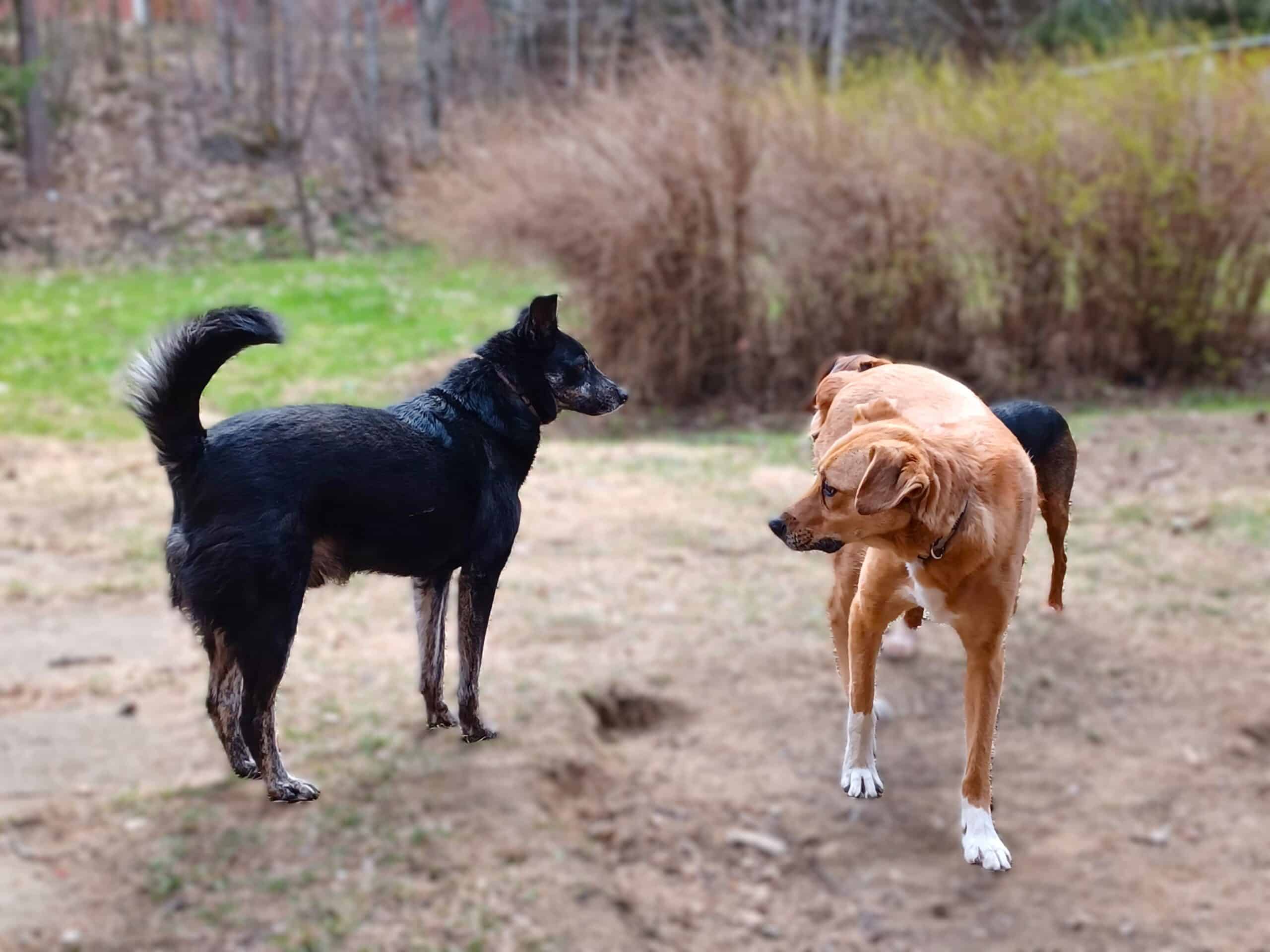
How to Spot the Real Meaning Behind Your Dog’s ‘Aggressive’ Signals

Are you misinterpreting your dog’s behavior?
People often mistakenly label a dog’s behavior as ‘aggressive.’
But what if there’s more to the story?
Those signals might not be aggression at all—they could simply be your dog’s unique way of trying to communicate.
1. The Common Misunderstanding of Dog Aggression
The concept of canine aggression tends to get oversimplified.
What appears aggressive to us might merely be our dog expressing fear or uncertainty.
A growl might mean a lot of things ranging from, “Please, I need some space,” to “I’m in pain.”
So instead of focusing on labels, it’s better if we try to ask the right questions.
Is there a pattern?
Is there something specific that triggers your dog?
2. A Quick Intro to Canine Communication
Dogs have their own language—a combination of postures, sounds, and expressions.
Tuning into this language requires a bit of observation and fine-tuning your radar.
Our canine friends have evolved from wolves, and their instincts are deeply rooted in social dynamics.
It’s time to discover the hidden clues your pooch is leaving at every corner.
3. Recognizing Fear-Based Behavior in Dogs
Fear often masquerades as aggression in dogs.
A sudden growl or a snarl may signal fear rather than hostility.
It’s a plea for reassurance—and a very useful communication signal that we need to pay attention to.
Notice how your dog reacts to unfamiliar objects or loud noises.
My Romanian rescue dog Roman once growled at a traffic cone—turns out, it was more confusion than aggression.
He had no idea what it was!
Understanding this can help you provide comfort and build trust, transforming those fearful growls into a happy wagging tail.
4. Addressing Resource Guarding
Has your dog ever growled over a favorite toy or bone?
This is known as resource guarding.
It’s a natural instinct deeply embedded since their ancestors roamed in the wild.
Dogs often consider certain possessions as their most treasured items, akin to us with our gadgets!
Resources guarding requires careful management and may need the help of a professional to show your dog that sharing is caring.
5. Decoding Play Aggression
Ever see dogs play and wonder if they’re fighting?
That’s play aggression—an essential part of canine interaction, boundaries, and bonding.
Despite the barks or playful biting, this is their version of a party at dog prom.
By supervising these interactions, you can ensure safety while allowing them to enjoy their canine cake and eat it too.
6. The Growl: Not Always a Warning
The growl is a fascinating part of dog communication but is often misunderstood.
For dogs, it’s akin to us saying, “Hey, hang on a sec, not feeling too comfy with that.”
A growl can be a request for ‘social distancing’ from a doggy perspective.
Assure them you respect their moods, and you’ll see fewer grumpy growls.
Think of it as your dog passing a calm yet assertive memo about his boundaries.
7. Tuning into Subtle Changes in Body Language
Body language tells us more than a bark.
Ears pinned back, tail tucked—these aren’t just yoga poses but critical cues about how your dog feels.
Next time your dog pretends to be the perfect canine centaur, pay attention.
Master his signals, and they’ll help transform miscommunication into a thing of the past.
8. Breathing Patterns: Barking to Snorting
Dogs’ breathing rates vary—rapid breathing may indicate stress; slow and steady often means relaxation.
Everything from soft, contented sighs to a snort can convey joy or irritation.
Developing an ear for these varied sounds provides insights that words never could.
9. Understanding the Importance of Context
Dog signals can’t be read in isolation.
A bark in the park differs vastly from one at the vet’s.
Context is everything and gives communication its full meaning.
Like a detective, evaluate the scene and settings:
- What happened just before?
- Any environmental changes?
- Who was there at the time?
- Any loud noises?
Through this type of mindful investigation, you can align with your dog’s world, bringing clarity beyond his barks and woofs.
10. The Role of Breed in Behavioral Traits
Different dog breeds carry their own distinctive traits.
Understanding these nuances can explain why a Chihuahua’s behavior may differ from a Golden Retriever’s in the same situation.
From herders to guarders, breeds often act just like their duties—brave, bold, loyal or loveable.
Exploring these traits can help you decode why your pup acts like a regal house lion or a quirky court jester.
11. Dogs’ Signals During Walks
Walks reveal a lot about your dog’s insights and interests.
Observing his reactions to his surroundings can uncover social, territorial, or exploratory signals.
It’s like a treasure hunt with occasional ‘Argh, a squirrel!’ moments.
By picking up on these nuances, you’ll craft walkies into a shared adventure, not just a routine trot.
12. Dogs’ Signals at Play
When dogs are having fun their communication often boasts of bows and barks—an invitation to play rather than hostility.
Spotting these signals makes sure playtime stays playful, ensuring everyone leaves the playground satisfied.
13. Recognizing the Subtle Art of Fear
A dog rolling over isn’t generally a sign of sheer joy or seeking a belly rub.
Often, it’s a display of fear or appeasement.
Understanding this gesture is pivotal for recognizing contentment versus vulnerability.
This helps improve connections, depicting a pact of trust between you and your dog.
14. Avoiding Common Triggers of ‘Aggression’
Recognizing your dog’s triggers like the garbage truck, an unfamiliar environment, strange people, or other animals can help reduce aggressive displays.
Like humans, every dog seeks comfort amidst the chaos of novelty.
Try to plan and pace changes in your dog’s settings to circumnavigate spontaneous, potentially combustive, encounters.
15. Seeking Professional Help and Training
Sometimes, despite our best attempts, we need to call in the cavalry—a trainer or behavior specialist.
Professionals bring a wealth of expertise that helps bridge the gap between growling misunderstanding and harmony.
Just make sure you hire a qualified professional who uses positive reinforcement training methods.
Remember, getting help isn’t an admission of defeat—it’s a leap toward progress.
READ NEXT
NEED A DOG TRAINER OR BEHAVIOR EXPERT?

If you need more help dealing with a training or behavior issue, please find professional help from a force-free dog trainer who can consult with you either in person or remotely.

GOOD PLACES TO START ARE:
- COAPE Association of Pet Behaviourists and Trainers
- Pet Dog Trainers of Europe
- International Companion Animal Network
- Institute of Modern Dog Trainers
- Pet Professional Guild

All dog owners deserve to have successful relationships with their canine companions!
