

10 Secret Enrichment Ideas Trainers Use to Help Anxious Dogs

This post may contain affiliate links, which means we may receive a commission, at zero cost to you, if you make a purchase through a link. Please see our full disclosure for further information.
Is your dog constantly on edge?
Are you constantly trying to think of ways to transform your anxious pup into a more relaxed, content canine?
The key lies in a powerful yet often overlooked approach: enrichment.
Enrichment isn’t just a buzzword—it’s a game-changer in helping your anxious dog.
By providing physical, mental, and environmental enrichment, you can:
- Help reduce anxiety
- Improve overall behavior
- Boost mental well-being
- Build confidence
- Elevate overall mood state
Why Enrichment Matters
When dogs engage in mental challenges that require them to use their brains to problem-solve and make decisions, it helps keep their emotional responses in check.
This can lead to a calmer dog all around, reducing the likelihood of behavioral issues driven by boredom, frustration, and stress.
Examples include:
- Physical Enrichment: Encourage movement through walks, play sessions, and scent trails.
- Mental Enrichment: Challenge your dog’s brain with puzzle toys, training sessions, and problem-solving games.
- Environmental Enrichment: Introduce variety with new toys, different walking routes, and safe outdoor spaces. Incorporate sensory stimuli too, like different textures, sounds, and scents.
Now we’ve got the idea, here are 10 practical, easy-to-implement strategies that can make a world of difference for your anxious dog.
#1. Lick Mats and Stuffed KONGs
As a long-time parent of anxious rescue dogs, Lick mats and KONGs are two of my go-to dog enrichment toys.
Lick mats can be smeared with soft foods like peanut butter*, cream cheese, or yogurt.
This encourages your dog to engage in soothing licking, which can help reduce stress.
I particularly like the LickiMat Wobble, which does exactly what it says on the tin.
Benefits of Lick Mats
- Promote Calmness: The licking action can have a calming effect on your dog.
- Slow Feeding: Helps slow down fast eaters by making them work for their food.
- Dental Health: The rubbing action can help clean your dog’s tongue and gums.
Tips for Using Lick Mats
- Freeze for Longer Engagement: Spread the food and freeze the mat to make the activity last longer.
- Variety: Use different types of soft foods to keep it interesting for your dog.

Stuffed KONGs are another highly engaging option for dogs.
Because of their unusual shape, they bounce around unpredictably, like prey, triggering your dog’s inner predator.
I like to fill my dogs’ KONGs with tasty treats like peanut butter*, cream cheese, or yogurt and freeze them overnight to create a more challenging and long-lasting treat.
They each get a KONG when I leave the house, meaning they are excited for me to leave!
This can be especially helpful for dogs with separation anxiety or who get stressed when left alone.
The KONG Extreme Fetch and Chew Toy in particular is one of my favorites.
Benefits of Stuffed KONGs
- Mental Stimulation: Encourages problem-solving as your dog figures out how to get the food.
- Chewing Satisfaction: Provides a safe outlet for dogs who love to lick and chew, both natural stress busters.
- Longevity: Frozen KONGs can provide extended enrichment opportunities.
Tips for Stuffing KONGs
- Layering: Layer different foods to keep your dog motivated.
- Freezing: Freeze the stuffed KONG for a more challenging and longer-lasting treat.
Incorporating high-value treats makes these tools even more effective.
I often include chunks of ham, sausage, and cheese, all of which my dogs absolutely love.
So experiment with different fillings and configurations to find what works best for your dog.
*always make sure peanut butter is xylitol-free; xylitol is toxic for dogs

#2. Snuffle Mats
Snuffle mats are perfect for giving your dog a chance to use her natural instincts in a constructive manner, making them a valuable tool in managing anxiety.
They are specially designed to mimic natural foraging behaviors, which helps engage your dog mentally.
When she finds a treat, she gets a lovely boost of endorphins to make her feel on top of the world.
I recommend this snuffle mat as a great way to get your dog started in the world of snuffling.
Benefits of Snuffle Mats
- Mental Stimulation: Sniffing out hidden treats keeps your dog’s brain active, which can tire her in a healthy way.
- Calming Effect: The act of foraging can soothe an anxious dog, reducing stress levels.
- Slows Down Eating: For dogs that eat too quickly, snuffle mats can serve as a slow-feeding tool.
How to Use a Snuffle Mat
- Hide Treats: Place treats or kibble throughout the mat. Use pockets, flaps, and folds to hide the goodies.
- Encourage Foraging: Let your dog explore and find the treats. This self-rewarding activity can keep her engaged for a long time.
Features to Look For
- Durability: Look for snuffle mats made with strong, tear-resistant fabric.
- Size: Ensure the mat is appropriately sized for your dog.
- Ease of Cleaning: Mats should be easy to wash to maintain hygiene.

#3. Puzzle Toys
Puzzle toys are another effective way to keep your dog’s mind busy, especially if she struggles with anxiety.
These toys make your dog think and solve problems to get treats or rewards.
Types of Puzzle Toys
- Interactive Toys: Often have compartments or moving parts that your dog must figure out to get a treat. There are many great options available, but my dogs particularly like the Trixie Flipboard Strategy Game.
- Food Puzzles: These are designed to hold food or treats. Your dog has to work to release the food, which can keep him occupied for a long time. A slow feeder like the Outward Hound Fun Feeder Slo Bowl is a great choice.
- Plush Puzzle Toys: These involve hiding smaller toys inside a larger one. The Outward Hound Hide-a-Squirrel Plush Puzzle Toy is a popular option for keeping dogs entertained and mentally stimulated.
Benefits of Puzzle Toys
- Reduced Anxiety: Engaging in problem-solving activities can distract your dog from anxious behaviors.
- Mental Stimulation: Keeps your dog’s brain active and healthy.
- Boredom Buster: Provides entertainment, preventing boredom-related behaviors like chewing on furniture or excessive barking.
Things to Consider
- Choose the right difficulty level for your dog’s skill set.
- Supervise play to ensure safety, especially if your dog is an aggressive chewer.
- Clean the toys regularly to keep them hygienic.
#4. Sniff Walks
This is one of my favorites.
Sniff walks (aka “sniffaris”) can be a fantastic way to provide enrichment for your anxious dog.
Wherever it’s safe to do so, rather than following a strict path, let your dog take the lead.
Dogs don’t walk in straight lines like humans do.
They tend to meander and zigzag, depending on where their nose takes them.
So if you can, allow your dog to sniff freely and make her own choices about exploring her surroundings.
Benefits of Sniff Walks
- Mental stimulation: Sniffing engages your dog’s brain, reducing anxiety and stress.
- Physical exercise: Even though your dog is not constantly moving, sniffing at different spots provides bursts of activity.
- Relaxation: Sniffing can help lower your dog’s heart rate and blood pressure, making her feel more at ease.
To maximize the benefits, try walking in quiet, natural settings as these are generally less stressful.
Leash Tips
- Long leash or off-leash: If possible, use a long leash or let your dog off-leash in a safe area. This gives her the freedom to explore more thoroughly. Research shows that dogs sniff for longer when they are free roaming or on a longer line.
- Short leash: If a long leash isn’t an option, be patient and allow extra time for sniffing even on a shorter leash.
By incorporating sniff walks into your routine, you’ll help your dog enjoy her walks more and feel less anxious.

#5. Scent Work
Dogs have a powerful sense of smell and scent is one of the main ways they experience the world.
Scent work taps into this, providing both mental stimulation and fun.
Begin by hiding treats around your house or yard.
It doesn’t have to be anything fancy. For instance:
- Use little cardboard boxes, egg cartons, or muffin tins with tennis balls to hide treats and create a series of mini-challenges for your dog to extract the treats.
- Place the boxes in different locations to encourage sniffing and foraging behaviors.
Activities like this can be very calming for an anxious dog.
If your dog is okay with being around other dogs, you could even try scent detection classes.
These classes teach dogs to locate specific scents or objects.
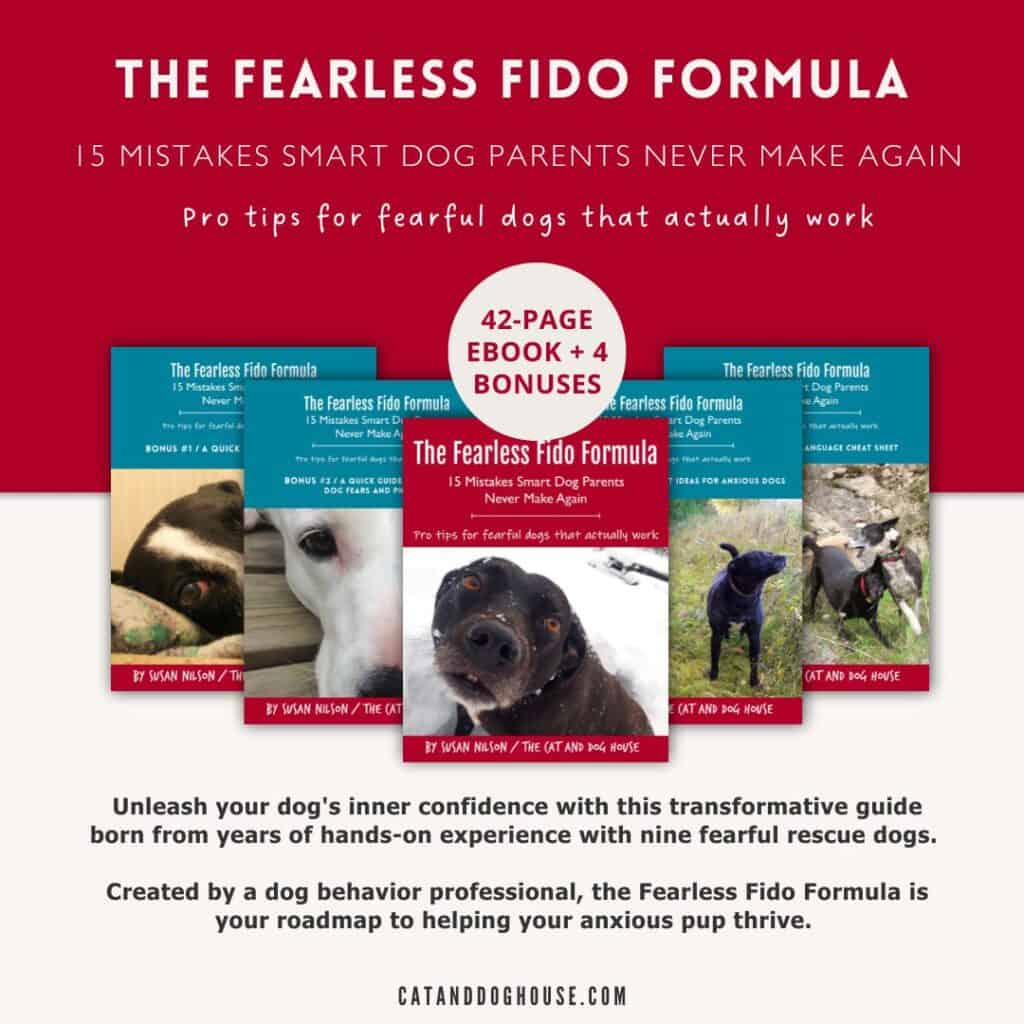
New E-Book
👉 My new E-book, The Fearless Fido Formula: 15 Mistakes Smart Dog Parents Never Make Again is officially live!
👉 If you’re a dog parent, especially of a fearful pup, this is for YOU!
👉 AND…you’ll get 4 amazing bonuses for FREE!
Not sure if this is right for you and your dog? Get more info here
#6. Clicker Training
Clicker training is another one of my favorite tools when it comes to building confidence in my anxious dogs.
By associating the sound of a clicker with a reward, your dog learns to repeat desired behaviors.
What Is A Clicker?
- A clicker is a small, plastic handheld device, usually shaped like a circular- or rectangular-type box, which makes a distinct clicking sound when the metal tongue is pressed.
- The click sound is paired with a treat or other high-value reward to mark a desired behavior in the dog.
- A clicker is used as a precise and consistent way to mark a specific behavior at the exact moment it occurs.
Steps to Get Started with Clicker Training
- Introduce the Clicker
- Call your dog’s name.
- As soon as she looks at you, click the device.
- Immediately offer a treat.
- Repeat several times until your dog associates the click with getting a reward.
- Practice Basic Cues
- Teach cues like “sit,” “stay,” and “come.”
- Use the clicker to mark the exact moment your dog performs the behavior.
- Provide a treat right after the click to reinforce the action.
- Short Training Sessions:
- Keep sessions brief to maintain focus and enthusiasm.
- Aim for 5-10 minutes, a few times a day.
- End each session on a positive note.
- If your dog (or you!) get bored, tired, or frustrated, take a break and go back to it again later.
Training ‘Sit,’ ‘Stay’
Watch renowned certified dog trainer Emily Larlham train her dog to sit and stay in this video:
Training ‘Come,’ ‘Here’
And here’s Emily training a recall (i.e. come back when called):
Benefits for Anxious Dogs
- Confidence Building: Training sessions that teach new cues or tricks build your dog’s confidence. She gets to make her own decisions and gets rewarded for making good choices. It’s a learning environment that sets dogs up for success.
- Counterconditioning and Desensitization: Clicker training can be used to gradually expose your dog to anxiety triggers (e.g. thunder, fireworks, other dogs, strangers, men, children, unfamiliar environments, etc.). Pairing the trigger with the sound of the clicker and a treat helps reduce fear over time.
- Positive Environment: In clicker training, the worst outcome for your dog is that she doesn’t get a click. This creates a safe space where she feels free to experiment and learn. This is empowering and promotes a positive emotional state.
Professional Guidance
If you’re unsure about how to start or progress with clicker training, consider consulting a professional dog trainer.
Always make sure they use positive reinforcement training methods (see my recommendations below).
Expert guidance can make the process smoother and more effective, catering specially to the needs of an anxious dog.
#7. Games and Playdates
If your dog likes other dogs or has one or two preferred dog friends, organizing playdates can be a great way to ease her anxiety.
Invite a calm, confident dog for a visit in a controlled environment.
Choose a neutral territory like a closed-in backyard or a quiet park to keep stress levels low.
Tips for a Successful Playdate
- Keep the dogs on a long leash until they are comfortable.
- Monitor their behavior closely.
- Avoid busy dog parks, as these can be overwhelming.
If your dog is not social with other dogs, there’s plenty of fun to have solo.
Playing games in your yard can be just as rewarding.
Solo Activities
- Play fetch with a favorite ball or toy.
- Engage in a game of tug-of-war.
- Hide treats around the yard for a game of hide and seek.
For more focused engagement, try agility exercises. Set up a simple course using items like:
- Cones
- Hoops
- Tunnels
These activities help to burn off excess energy and reduce anxiety.
Dog sports are another excellent outlet. If feasible, involve your dog in:
- Obedience trials
- Flyball
- Frisbee competitions
These sports require physical effort and mental focus, which can calm an anxious dog.
Remember, the primary goal is to build positive experiences.
Tailor the activities to what your dog enjoys most and always watch for signs of stress or discomfort.

#8. The Relaxation Station
Creating a relaxation station inside the home can significantly improve your anxious dog’s overall well-being and reduce stress.
Here’s how you can set up a cozy and calming space:
Choose the Right Spot
- Select a quiet area in your home where your dog can feel safe.
- Avoid high-traffic areas and consider spots away from windows to reduce exposure to anything that might cause anxiety (like lightning, or sudden booming sounds and flashes from fireworks).
Comfortable Bedding
- Provide a soft, plush bed that feels secure and comforting.
- Consider a blanket that carries your scent to help alleviate separation anxiety.
Calming Scents
- Use lavender or other dog-friendly calming scents to promote relaxation.
- Pheromone diffusers like Adaptil or Pet Remedy can also help reduce anxiety.
Toys and Enrichment
- Include safe chew toys to keep your dog engaged in a relaxing chewing activity.
- Don’t forget to add in those KONGS, lick mats, and/or puzzle feeders I mentioned earlier.
Reduce Visual and Auditory Stimuli
- Make sure your dog has access to her safe space whenever she feels overwhelmed or simply wants to retreat for some alone time.
- If you have children or other pets, teach them to respect the space and not bother the dog when she’s relaxing there. If you have cats (or other dogs for that matter), you may need to close the door or use a dog gate/baby gate to restrict access.
Additional Tips
- Consistent routines can help reduce anxiety in dogs by providing a predictable environment.
- Consult your veterinarian about aromatherapy or supplements like omega-3 fatty acids that might aid in relaxation.
- Keep an eye on signs of stress like pacing, yawning, panting, and drooling, which might indicate high anxiety levels.

#9. Massage and Gentle Touch
Not all dogs like to be touched, but if your dog enjoys petting and attention, regular massage is another good way to reduce anxiety.
Focus on gentle strokes and specific pressure points to relieve tension.
This not only relaxes muscles but also strengthens the bond between you and your pup.
When our senior dog Bertie was getting up there in years, I found that Galen Myotherapy massage was particularly helpful in easing his joint pain.
It also helped alleviate his growing feelings of anxiety due to his loss of hearing and general cognitive decline.
Benefits of Massage
- Reduces anxiety: Calm and relax your dog.
- Promotes bonding: Increases the release of oxytocin, the bonding hormone.
- Eases muscle tension: Helps with physical relaxation.
Steps for a Gentle Massage
- Find a quiet spot: Ensure there are no distractions.
- Use a yoga mat, rug, or other non-slip mat: This helps your dog feel more secure.
- Use gentle strokes: Start from the neck and work down the shoulders and back.
- Apply light pressure: Avoid any sudden or harsh movements.
- Observe reactions: If your dog seems uncomfortable, ease up or try a different area.
TTouch (Tellington TTouch)
TTouch is a specific technique designed to help with stress and anxiety in dogs.
This method involves circular touches and gentle lifts.
TTouch Benefits
- Balances emotions: Helps reduce stress and anxiety levels.
- Improves behavior: Can lead to less nervous behavior.
- Enhances focus: Helps anxious dogs concentrate better on tasks.
How to Perform TTouch
- Begin with circular motions: Gently move your fingers in small circles on your dog’s skin.
- Include gentle lifts: Lightly lift the skin in various areas.
- Be consistent: Regular sessions can help your dog adjust and benefit more.

#10. Calming Music or White Noise
Just like humans, dogs are prone to dealing with a range of fears and phobias, and they are often particularly stressed by loud noises like thunderstorms or fireworks.
This is where your auditory enrichment comes in.
Believe it or not, studies show that classical music or dog-specific music can help reduce canine stress levels.
Our thunder-phobic rescue dog Lennox always calms down when we put on one of YouTube’s music playlists specifically for dogs.
Benefits of Calming Music
- Soothes Anxiety: Calming music, like classical or dog-specific music, helps reduce feelings of anxiety.
- Improves Sleep: Gentle tunes can help your dog fall asleep more easily.
- Reduces Barking: Music can mask background noise that might otherwise trigger barking.
White Noise for Dogs
White noise is another way to provide consistent sound that can cover up sudden loud noises.
Examples of White Noise
- Fans
- Humidifiers
- White noise machines
Practical Tips
- Length of Music: Use extended playlists to ensure continuous soothing sounds.
- Different Types: Your dog may prefer different sounds. Experiment with calming music, classical tunes, or white noise.
- Provide a Way Out: Your dog should always have the option to leave the room if she gets fed up with the background noise, or doesn’t like it for some reason. The last thing you want to do is add to her anxiety.
- Keep the Volume Low: Dogs have excellent hearing, so there’s no need to blast out music at top volume.
Tools to Use
- A sound machine like the Easysleep White Noise Machine is a popular option for its range of soothing background sounds.
Have you tried an enrichment idea that I haven’t covered here? Drop me a line and let me know!
READ NEXT
Resources
- Dog Music Therapy [Video] – Altina Wickstrom
- Dog Training Recall Game – Come! Come When Called [Video] – Dog Training by KikoPup
- How To Train Your Dog To Come Back When Called – Dogs Trust
- How To Train Your Dog To Stay – Dogs Trust
- The Easiest, Most Reliable SIT STAY – Sit Stay Training! Sit Stay Fun! [Video] – Dog Training by KikoPup
NEED A DOG TRAINER OR BEHAVIOR EXPERT?

If you need more help dealing with a training or behavior issue, please find professional help from a force-free dog trainer who can consult with you either in person or remotely.

GOOD PLACES TO START ARE:
- COAPE Association of Pet Behaviourists and Trainers
- Pet Dog Trainers of Europe
- International Companion Animal Network
- Institute of Modern Dog Trainers
- Pet Professional Guild

All dog owners deserve to have successful relationships with their canine companions!
