
Tired of Seeing Your Dog Struggle with Anxiety? These 12 Proven Strategies Can Help!

Is your dog keeping you up at night with his anxious antics?
You’re not alone—and you’re definitely not without solutions.
Many assume that dog anxiety is just something to manage, not solve.
But that’s far from the truth!
I’m here to break those myths wide open and offer you a clear path to a happier pup.
This isn’t your average dog advice.
We’re diving into science-backed insights that will help leave your canine friend feeling more confident and relaxed.
Understanding Anxiety in Dogs
Before we tackle anxiety, we need to understand it.
Anxiety in dogs is often overlooked, mistaken for just “bad behavior.”
But, it’s more than just excessive barking or chewing on the furniture.
It’s a genuine condition that needs attention.
Seeing it from your dog’s perspective changes everything and is key to opening the path to healing.
Canine Fears and Phobias
Like humans, dogs experience a range of fears and phobias, from loud noises like fireworks and thunderstorms to unfamiliar environments, strangers, or even specific objects.
These fears can manifest in various ways, such as trembling, barking, hiding, or attempting to escape.
Understanding and addressing these fears is essential to help your dog feel safe and supported, allowing him to navigate the world with greater confidence.
Identifying the Signs of Anxiety
Dogs express anxiety in many ways: pacing, whining, and even shaking.
Sound familiar?
Look for changes in appetite, sleep patterns, activity levels, or unusual repetitive behaviors, as well.
Noticing these signs early can lead to more effective interventions.
Common Myths About Dog Anxiety
You might’ve heard people say things like, “he’ll outgrow it” or “it’s just a phase.”
But these myths do more harm than good by delaying necessary interventions.
Let’s debunk these and pave the way for constructive approaches.
The Science Behind Dog Anxiety
Science shows that dog anxiety has both genetic and environmental triggers.
Understanding these can empower us with strategies to alleviate it.
To really get to the root of the issue, you first need to understand the cause.
Proven Techniques to Calm Your Dog
At the same time, there are a number of effective techniques to help calm your anxious pup.
From soothing music to anxiety wraps, the options are plentiful.
All you have to do is find what works best for your dog.
1. Exercise and Play: Natural Stress Relievers
Exercise serves as a natural stress reliever.
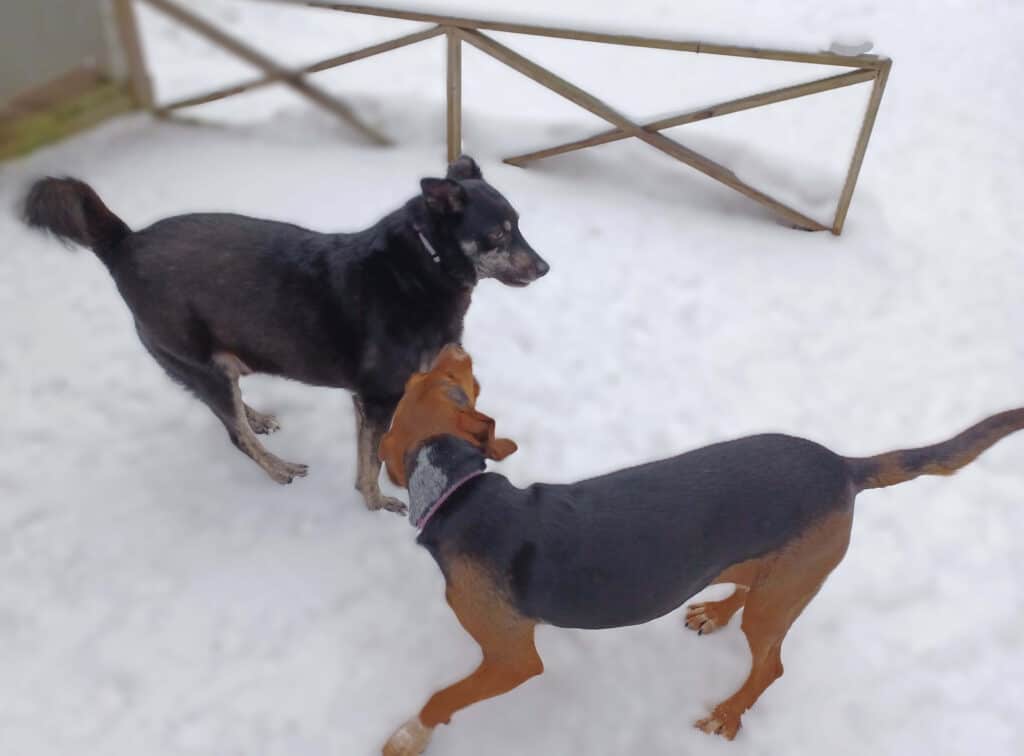
Daily walks, playtime with other dogs, or a fun game of fetch can do wonders.
Play acts as a natural stress buster, providing a healthy boost of endorphins that make your dog feel great.
2. The Role of Diet in Managing Anxiety
Nutrition plays a crucial role in managing anxiety, as certain nutrients can support brain health and emotional well-being.
Omega-3 fatty acids, found in fish oil and other sources, are known to reduce inflammation and promote healthy brain function.
They can help regulate mood and support a calmer, more balanced state of mind.
Adding omega-3s to your dog’s diet may be a natural way to help ease his anxiety.
3. Sniffing to Promote Relaxation
Sniffing has been scientifically proven to lower a dog’s pulse rate, meaning it’s an inherently calming activity for your pup.
The more freedom dogs have to sniff (off-leash in a safe environment, or on a long line), the more they sniff and the calmer they feel.
So try scattering some treats around your home or yard for your dog to sniff out.
And don’t forget to let him sniff to his heart’s content when you’re our for a walk!

4. Creating a Safe Space
A safe space acts as a refuge for an anxious dog.
This can be a spare room or a quiet corner of the house.
Add comfort items like a blanket with your dog’s scent on (provides a sense of security) and his favorite toys.
Let him retreat to his safe space whenever he wants some alone time to chill out and relax.
A small, familiar place can make all the difference.
5. Socialization: Just Keep It Positive
Socialization is more than playing with other dogs.
It’s meeting different people, experiencing new environments, and building confidence.
Gradual exposure can ease anxiety over time.
But there’s a caveat: make sure that experiences are short and positive.
If you’re dog is scared or anxious about a new experience, it defeats the purpose and you’ll be back to square one.
6. Puzzle Toys to Alleviate Boredom
Boredom often fuels anxiety.
A lack of mental stimulation can leave your dog restless and prone to nervous behaviors.
This is where puzzle toys can be a game-changer.
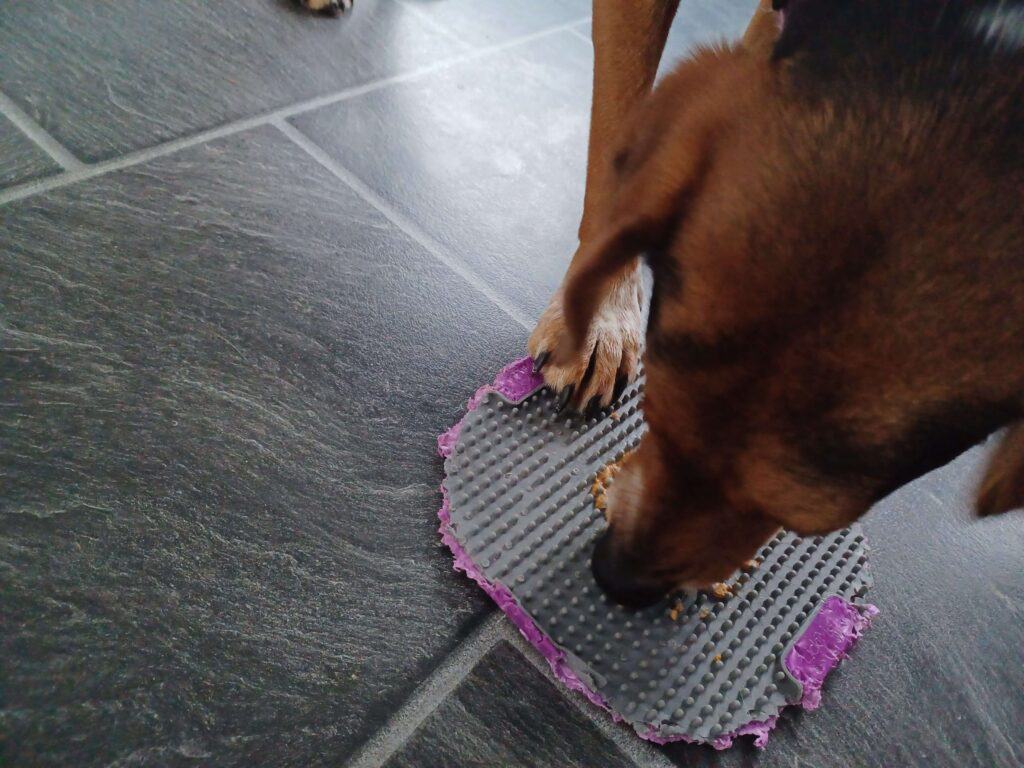
Toys that challenge your dog’s mind, like KONGs filled with treats (or soft foods – think cream cheese, yoghurt, cat food, xylitol-free peanut butter*, etc.), and lick mats spread with his favorite spreadable food, provide both entertainment and a calming outlet.
Make it more of a challenge for your dog by sticking your KONG or lick mat in the freezer overnight.
Treat balls and snuffle mats are other great options for this.
Like sniffing, activities likes chewing and licking are naturally calming for dogs.
They keep your dog’s brain busy, help reduce stress by channeling his energy into something positive and rewarding, and inhibit negative feelings like anxiety.
*NB: Xylitol is toxic for dogs

7. Music for Relaxation
Certain types of music, especially classical or specially designed calming tracks for dogs, can lower their heart rate and reduce stress levels.
Playing soft, soothing music during stressful situations like thunderstorms or when leaving your dog alone can mask outside sounds and create a sense of comfort and security.
It can help ease his anxiety too.
You can find some great playlists on YouTube – just search for calming dog music, or music for dog anxiety and take your pick.
8. Anxiety Wraps for Stressful Situations
Anxiety wraps, like the popular ThunderShirt, can provide gentle, consistent pressure that helps calm dogs during stressful situations.
This pressure mimics the soothing effect of their mother’s touch, which can help reduce feelings of fear and anxiety.
Whether it’s during fireworks, thunderstorms, vet visits, or car rides, these wraps can be a simple yet effective way to comfort your dog and help him feel more secure.
A Thundershirt worked wonders for our Romanian rescue dog Lennox, who is terrified of fireworks and thunder, as shown in this quick video:
9. Medications and Supplements
Sometimes, medication or supplements, like calming chews, can assist in severe cases of anxiety.
Consult your vet for the best approach for your dog’s needs and what’s appropriate for him.
Remember though, medication is a part of a comprehensive plan, not a solo solution.
10. Building a Routine
Routines offer predictability that creates comfort for anxious dogs.
Regular feeding, walking, and bedtime can drastically improve your dog’s mood.
Like people, animals feel safer when they are in control of their environment.
So if your dog knows what to expect and when to expect, he can relax in the knowledge that nothing unpredictable is going to happen.
11. The Importance of Consistency
In the same way, consistency in training and behavior creates a sense of stability and predictability for your dog, which is crucial in reducing anxiety.
Responding in the same way every time, like asking him to sit if he jumps up at visitors, or cueing him to get down if he climbs onto the sofa (only if you don’t want him to, of course!), helps establish clear expectations.
This eliminates confusion, making sure your dog learns what you would like him to do in specific situations, rather than leaving him confused and hanging.
By creating a steady structure he can rely on, you provide a sense of security and build trust.
This helps alleviate stress and foster a calmer, more confident companion.
12. Calming Pheromones: A Mother’s Scent
Calming pheromones can be another helpful tool.
These synthetic versions of natural pheromones mimic the scent that mother dogs release to soothe their puppies.
Products like diffusers, sprays, or collars infused with calming pheromones create a comforting environment that helps dogs feel secure and relaxed.
They can be particularly effective during those stressful situations, such as moving to a new home, loud events like fireworks, or visits to the vet.
While they’re not a standalone solution, combining pheromones with other calming techniques can help your dog stay calm and stress-free.
Working with a Professional Trainer
A professional trainer can provide personalized strategies that are specifically tailored to address your dog’s unique needs and triggers.
Their experience and expertise allow them to identify subtle behaviors and patterns that may not be immediately obvious.
This helps them craft a customized approach to manage your dog’s anxiety effectively.
By addressing the root causes of his stress—whether it’s noise sensitivity, separation anxiety, or fear of other dogs—they can help you build a clear plan for progress.
Enlisting the help of a professional can be a game-changer, offering new perspectives and proven techniques to support your dog’s well-being.
It’s a step worth considering if other methods have stalled.
Tracking Progress with Your Dog
Documenting your dog’s journey can highlight successes and areas for improvement.
Track behaviors, triggers, and symptoms regularly for best results.
Keeping a journal is an invaluable tool for understanding and growth.
