

12 Unexpected Reasons Why Your Puppy Sleeps On Your Head

Have you ever woken up to the delightful surprise of your puppy snuggled up close and personal, sleeping on your head? It’s an undeniably adorable occurrence – but why do our canine friends choose this prime spot?
In this article, I’ll explore 12 possible reasons behind this cute behavior to help you decode why your puppy loves napping on your noggin!
#1. Warmth
Many dogs love a bit of warmth and comfort, whether it’s snuggling up by a cozy fire or basking in the sun. So it’s only natural for them to seek out their owner’s body heat to stay nice and snug – especially in cold weather.
Puppies are particularly vulnerable to cold temperatures, especially when they are young and still developing their ability to regulate their body temperature.
To stay warm and cozy, they may seek out the warmest spot available – and what could be better than the top of your head in your comfortable bed?
Curling up next to you is also a great way to keep his vital organs warm and toasty.
#2. Comfort and Security
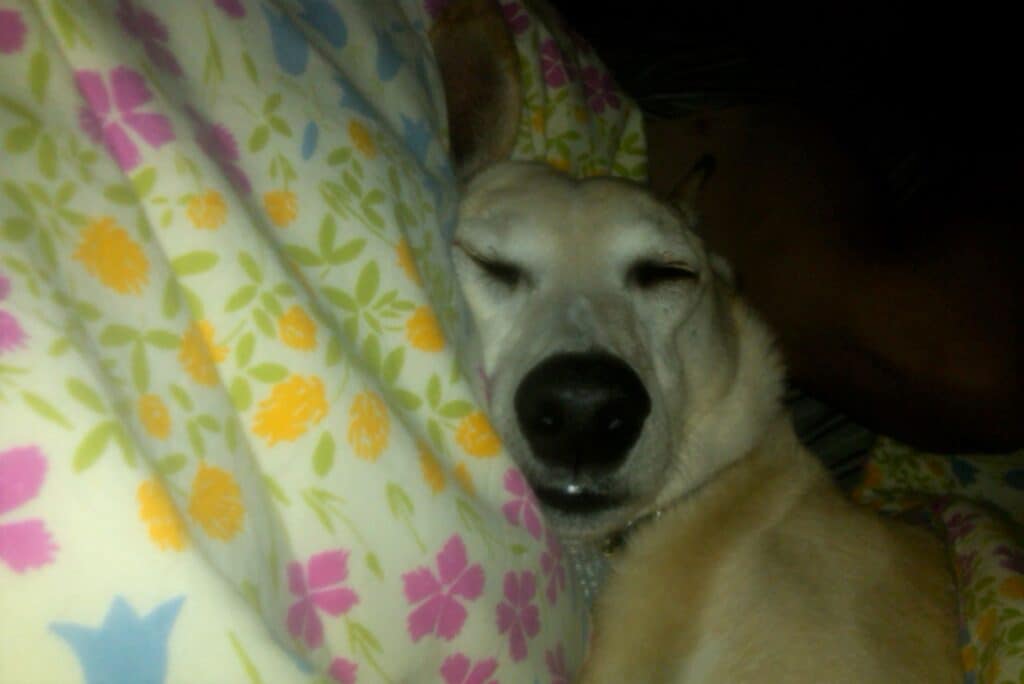
Cuddling up with their owners can bring both comfort and security to dogs, allowing them to sleep more peacefully.
Puppies, in particular, may find it especially comforting to sleep on their owner’s head. Physical contact can also provide a sense of security – similar to the way children feel with their parents.
Dogs often use their owners as a “secure base” and in addition to feeling protected, your pup will be the first to know if you get up and move away.
#3. Safety
By being elevated and off the ground, puppies have a better vantage point to see any potential threats approaching.
This allows them to be more aware of their surroundings and feel protected from any danger.
For puppies, who are still learning about the world, this can be especially important, giving them the added sense of protection they need to rest easy through the night.
#4. Affection
Dogs are social animals by nature and one of the most endearing things about them is the way we form friendships and such special bonds with them.
When your puppy sleeps on your head it can be a sign he trusts you and wants to be close to you.
Not only is it a sign of affection, it also helps you both bond emotionally and creates a stronger connection.
#5. Attention
Being the social creatures that they are, dogs can form close associations with other dogs, humans, and other species of animals too.
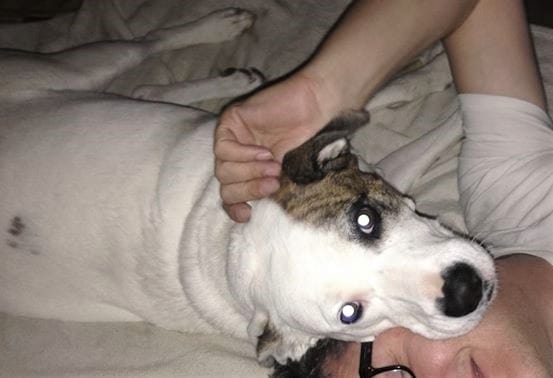
This means they often like just hanging out with their buddies. If your puppy is not getting enough attention, however, he may come and sleep on your head as a way to get noticed and spend some quality time with you.
I’m deliberately avoiding saying that dogs are “pack animals” because – contrary to popular belief – when given the choice (as seen in free-ranging dogs), dogs often form loose, more transitory associations rather than move around en masse in one large “pack” (Donaldson, 2013).
#6. Being Sociable
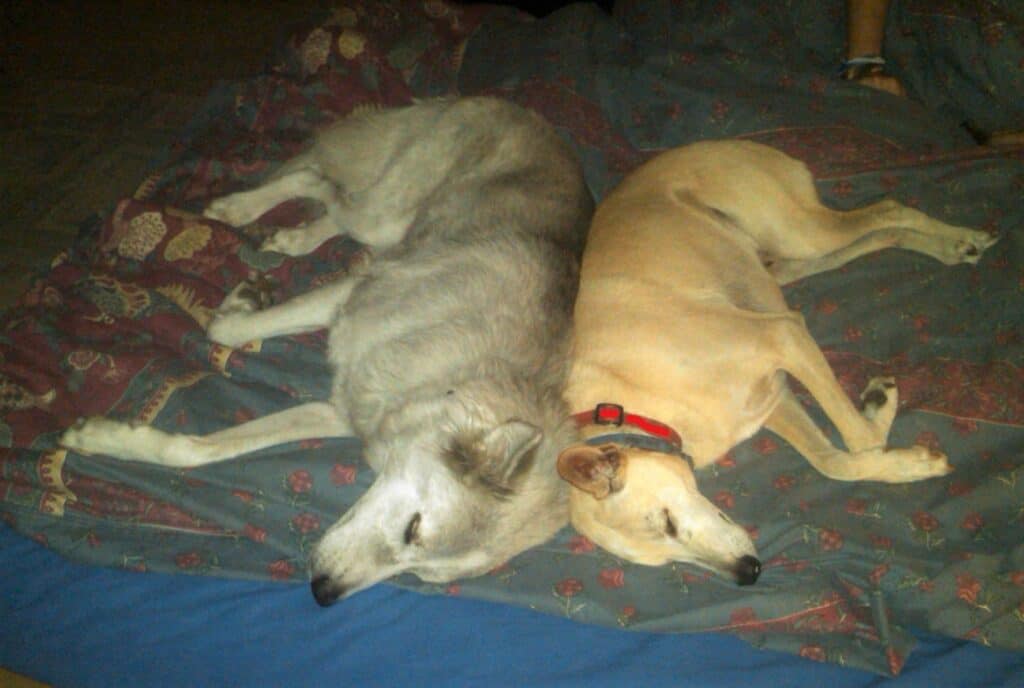
Sleeping close to others is a natural instinct for dogs, as seen in wild dogs who often sleep huddled together.
Puppies also sleep with their mother and littermates, providing warmth, comfort, security, and opportunities to bond and learn important social skills.
Co-sleeping can also help reduce stress levels and promote feelings of security, so it’s no surprise that many pup parents wake up with their furry friend snoozing on their heads.
Studies have shown that human-animal co-sleeping can be beneficial to both owners and pets. In fact, around half of cat and dog owners allow their pets into their bedrooms and/or onto the bed (Smith et al., 2017).
#7. Scent
Dogs are known for their keen sense of smell, and they rely heavily on it to navigate their environment, form social bonds, and communicate with each other.
So, it’s no surprise that puppies find comfort in their owner’s scent, which brings them a sense of familiarity and security.
Some dogs may also enjoy the smell of your shampoo – or the fabric softener on your sheets and pillowcase.
For puppies, the familiar scent of their owner can be incredibly calming and reassuring, especially when they are feeling anxious or lonely.
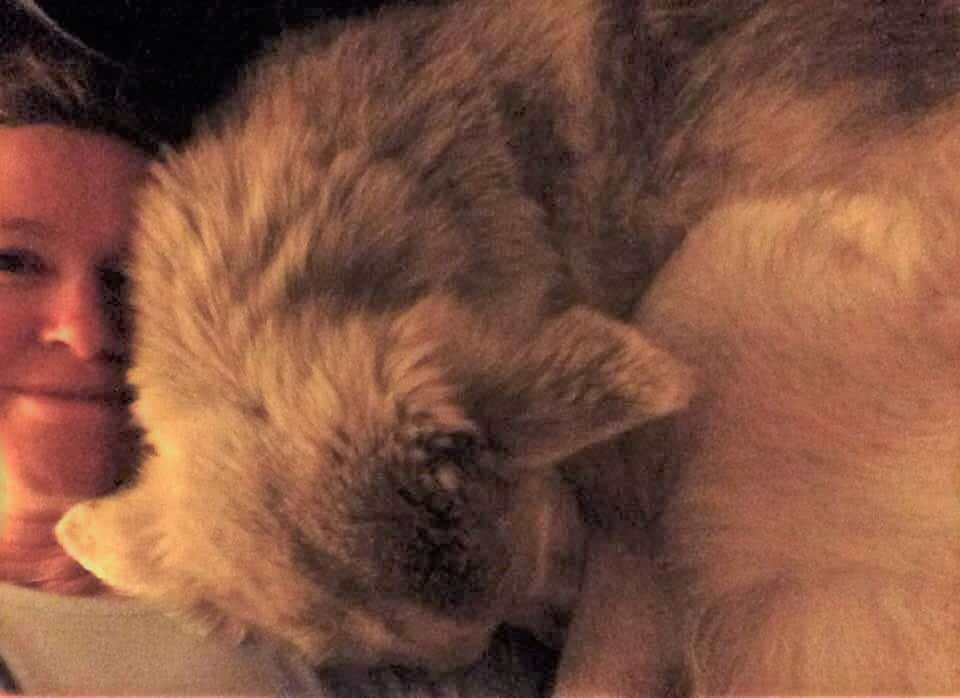
Our rescue dog Daisy was a perfect example of this – she would always lick my freshly washed hair before she settled down for a nap on my head or shoulders!
#8. Anxiety
Puppies can experience stress and anxiety just like us, and sleeping on their owner’s head may provide a calming effect.
This could be because they have been newly separated from their mother and littermates and don’t want to be alone, or simply because they feel unsafe in an unfamiliar environment.
Additionally, dogs may become anxious due to changes in their environment such as a new dog in the home, being left alone for extended periods, or having house guests.
By sleeping on their owner’s head, anxious dogs can gain solace from the familiar scent and comforting presence of their human companion.
Help! My New Puppy Is Anxious
When a puppy is first adopted into a new home, it’s understandable for him to feel anxious and nervous.
He may also be feeling a sense of separation from his mother and littermates, who he had formed close bonds with and who are all he has ever known.
He also finds suddenly himself in a new place full of unfamiliar sights, sounds, and smells – maybe after a long, scary car ride – with people he doesn’t know and has yet to form a bond with.
Worst of all, he doesn’t yet know if he’s safe.
All these factors can be overwhelming and cause your pup to feel anxious and stressed.
It’s important for new pet parents to be patient and understanding with their new furry friend as he adjusts to his new surroundings and gets to know his new family members.
With time, patience, and reassurance, your puppy will feel much more comfortable and at ease in his new home.
In the meantime, if sleeping on your head helps him feel better, by all means just go with it!
Alternatively, if you prefer him to sleep in a crate or in his own dog bed, check out these articles which have a ton of helpful tips and advice:
RELATED
#9. Separation Anxiety
Dogs struggling with separation anxiety can experience extreme distress when left alone.
According to CertaPet (2021), an estimated 75% of dogs in the United States experience some level of separation anxiety.
The condition can be very distressing for dogs, making it difficult for them to cope when left alone, even for just a few minutes.
While there are many reasons why your puppy may choose to sleep on your head, if you suspect he is struggling with separation anxiety, it’s important to seek the help of a specialist. I’ll list three of my favorites at the end of the article.
Other common separation anxiety behaviors to be aware of include excessive barking or howling, urinating or defecating indoors, destruction of objects or property, chewing bedding, chewing shoes, clothing, or furniture, excessive digging, pacing, and trying to escape.
Separation anxiety won’t go away on its own, and a professional can provide you with the tools and guidance you need to help your pup feel more comfortable and secure when you’re not around.
#10. Fear
Dogs can become frightened by all sorts of things, including (but not limited to):
- Loud noises such as thunderstorms, fireworks
- Noisy construction work or heavy machinery
- New people
- Unfamiliar environments
- Vacuum cleaners
- Sudden movements or sounds
- Other animals
- Being left alone
Puppy Fear Periods
Puppy fear periods are a normal part of their development, during which they become more sensitive to the world around them.
There are two fear periods, the first happening at 8-11 weeks and the second at 6-14 months.
During these periods, puppies may become scared or anxious about new experiences -even those they previously enjoyed.
If he’s feeling scared for any reason, your puppy may find comfort in sleeping on your head as it’s a secure and familiar place where he can feel safe.
Should I Ignore My Dog When He Is Scared?
It’s common advice to ignore your dog if he exhibits unwanted behaviors such as barking, howling, or whining due to fear. However, this approach is not only incorrect but also unkind. Ignoring your dog will not change the way he feels.
Instead, it’s essential to provide your puppy with reassurance and comfort if you see him showing signs of fear or anxiety.
Fear is an emotion, not a behavior. So comforting your puppy when he’s scared is not a reward that will reinforce his fearful behavior. Instead, it can help him feel more secure and build his confidence over time.
It’s really important to provide your puppy with the emotional support he needs, as it can help him learn to cope with his fears and anxieties in a healthy way.
#11. Learned Behavior
If your pup has been rewarded with attention or yummy treats for sleeping on your head, his behavior has already been positively reinforced and it is highly likely he will repeat the behavior in the future.
Even if no intentional reward was given, simply being close to you in a warm, safe, and cozy spot may be enough of a reward for your pup to keep repeating the behavior.
Positive Reinforcement
Positive reinforcement is a type of learning process where a behavior is reinforced by adding something pleasant or rewarding when the behavior is performed, to increase the likelihood of that behavior being repeated in the future.
It’s a powerful training tool used in various settings, including dog training, to encourage desired behaviors and create positive associations between actions and rewards.
Examples of positive reinforcement in dog training include treats, praise, and playtime.
Dogs learn very quickly which behaviors get rewarded, and those are the ones that get repeated.
#12. It’s Genetic
Certain dogs have been selectively bred to stay close to their owners.
For instance, herding dog breeds like Border Collies and Shetland Sheepdogs were required to stay near their handlers who would tell them what they wanted them to do next.
Meanwhile, small dogs such as Maltese, French Bulldogs, Chihuahuas, and Pugs were specifically bred for companionship (The Kennel Club, 2022).
So your puppy’s sleeping habit might be due to his innate predisposition to be near his human companion.
Is My Puppy Sleeping On My Head To Establish His Social Status?
The act of your puppy sleeping on your head is in no way an indication of submission to you as the so-called “leader of the pack.” Likewise, it is not an attempt to assert “dominance” or achieve some kind of perceived status. These outdated notions have been disproven by science and are no longer relevant.
Anyone who suggests otherwise hasn’t been keeping up with the current findings and research into canine behavior.
Having said that, you’ll still find plenty of articles telling you that dogs are allegedly trying to establish their social status by sleeping on your head. They’re all wrong!
Don’t just take it from me either. Here’s what top dog training and behavior expert Pat Miller has to say:
“Trainers who adamantly oppose dogs on the bed mostly fall into the old-fashioned training camp, and often, they also buy into all the dominance stuff that’s been pretty much discredited by behavioral scientists.
The dog who wants to sleep on your bed isn’t trying to take over the world. He just wants to be close to his humans -and comfortable!”
So please forget all that old-fashioned nonsense and get back to snuggling with your pup!

Should My Dog Sleep In My Bed?
The decision of whether or not to let your dog sleep on your bed is entirely up to you. It’s a matter of personal preference, and there is no right or wrong answer.
According to a survey by the American Kennel Club, 45% of dog parents allow their dogs to sleep in bed with them, so it’s a popular choice.
On the other hand, some dogs prefer to sleep in their own bed, in a crate, on the sofa, or some other preferred spot – even when given the choice to sleep on their owner’s bed (or head!)
Sleep Disruptions
Having said that, sleep disturbances caused by pet sleeping arrangements are a common issue for pet owners.
Pets fidgeting or moving around in the night, taking up too much room in the bed, invading your personal space, digging their front legs into your back, and making noise (like snoring or barking in their sleep) are all commonly reported disruptions (The Sleep Foundation, 2022).
The dog’s size is a significant factor too. Great Danes will obviously take up far more space than smaller dogs.
Pets can also suffer from sleep disorders such as insomnia, sleep apnea, narcolepsy, and REM (i.e. rapid eye movement) behavior disorder, which can cause further disruptions to both humans and animals (PetCareRX, 2022).
Finally, some pups might possess less than pleasant traits – like passing gas. If your pup is one of those, you may not want to be near him anyway!
Ultimately, the most important thing is to do what works for you and your pup. Getting a good night’s sleep is important for everyone’s health and well-being.
Why Is My Puppy Aggressive When Sleeping?
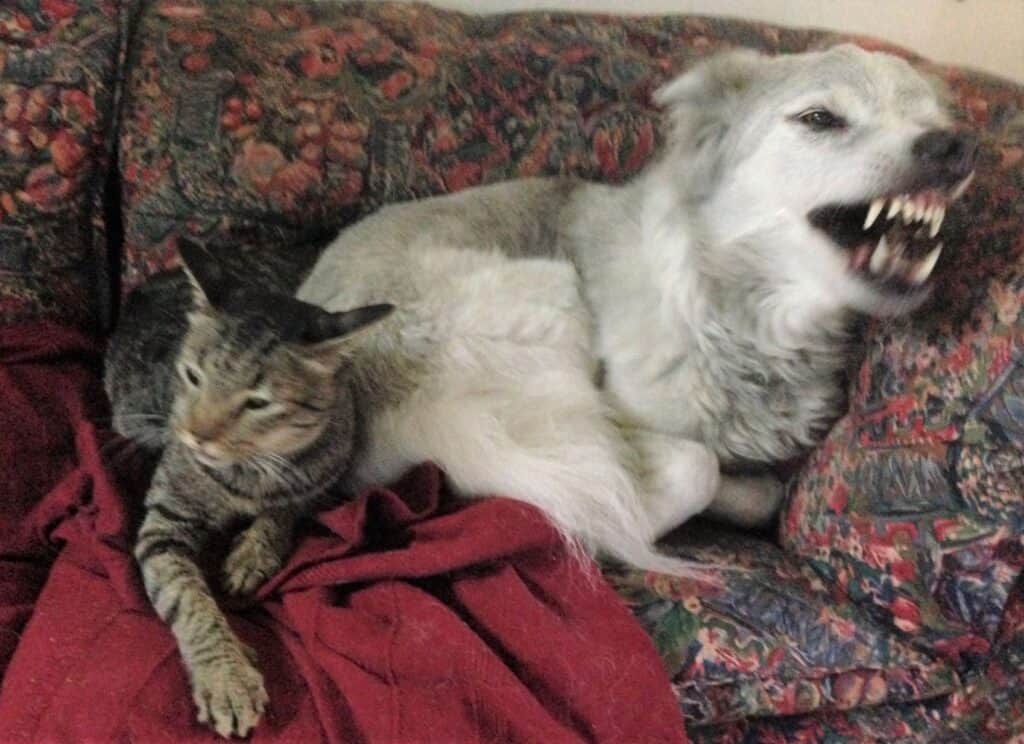
If you roll over or move and unintentionally disturb your sleeping pup, he may react defensively if he’s in a deep sleep until he realizes what’s happening.
Sleep Startle In Dogs
Like all animals, a startle reflex is a dog’s brain and body’s way of helping protect him from potential danger.
If your pup has suddenly been woken out of a deep sleep by his brain telling him he is in danger, it’s understandable that he may react in a fearful and potentially negative way.
This is known as sleep startle or sleep aggression.
According to Battersea Dogs & Cats Home, the sleep startle reaction can occur in dogs of any age, size, or breed and is often seen in dogs who haven’t lived around many people, or who haven’t been properly socialized during their early development.
This is why it’s particularly common in ex-racing greyhounds who have come from professional kennel environments, as well as former street dogs, and dogs and puppies who have come from puppy farms.
READ THIS: Why Is My Dog Growling At Me If He’s Moved When Sleeping?
Resource Guarding
Some dogs may guard their sleeping area as a way of protecting themselves from potential threats, which is known as resource guarding.
This can happen if someone tries to take away (or gets too close to) something the dog values, such as food, a toy, or their favorite chew.
Not only do some dogs guard specific items they are attached to, they may also guard specific areas, like their bed or a resting area. This includes your bed, your pillow, or even their human.
If your dog starts growling or shows any other kind of aggressive behavior when you get too close, or you accidentally disturb him while he’s sleeping, a certified professional dog trainer who uses positive reinforcement training methods can help you address the behavior.

Before You Go…
Now we’ve got why your puppy sleeps on your head covered, have you ever wondered what he’s trying to “say” when he puts his paw on you?
Pet parents often ask me why their dogs do this, so I wrote an article about it. Don’t miss out on learning more about your beloved pup – check it out now!
Canine Separation Anxiety Specialists
Here are my recommendations for specialized separation anxiety trainers. Even better, they all do online consults so geography doesn’t matter!
Resources
- A Multispecies Approach to Co-Sleeping – Bradley P. Smith, Peta C. Hazelton, Kirrilly R. Thompson, Joshua L. Trigg, Hayley C. Etherton, & Sarah L. Blunden
- Are Dogs Pack Animals? – Jean Donaldson
- Common Dog Sleep Disorders Sleep Problems that Can Affect Dogs – Sora Wondra
- Puppy Fear Periods: Why Is My Puppy Suddenly Afraid? – Sassafras Lowrey
- Separation Anxiety in Dogs & Dog Owners in 2021 – CertaPet
- Should Your Dog Sleep on the Bed with You? – Pat Miller
- Sleep Startle In Dogs – Battersea Dogs & Cats Home
- Sleeping with Pets – The Sleep Foundation
- Where Do Dogs Sleep at Night? – Erika Mansourian
- Why does my dog follow me everywhere? – The Kennel Club
NEED A DOG TRAINER OR BEHAVIOR EXPERT?

If you need more help dealing with a training or behavior issue, please find professional help from a force-free dog trainer who can consult with you either in person or remotely.

GOOD PLACES TO START ARE:
- COAPE Association of Pet Behaviourists and Trainers
- Pet Dog Trainers of Europe
- International Companion Animal Network
- Institute of Modern Dog Trainers
- Pet Professional Guild

All dog owners deserve to have successful relationships with their canine companions!
