

8 Reasons Why Your Dog Is Chewing His Bed

Quick Answer
Dogs of all ages are natural chewers and they need to be able to engage in the behavior.
It’s a way for them to relax and relieve stress, and it also exercises and tones the jaw muscles.
Back in the day, dogs needed to be able to tear meat from the bone so they could eat.
Puppies tend to chew more because they’re teething and it’s painful.
And some dogs are just heavy chewers period.
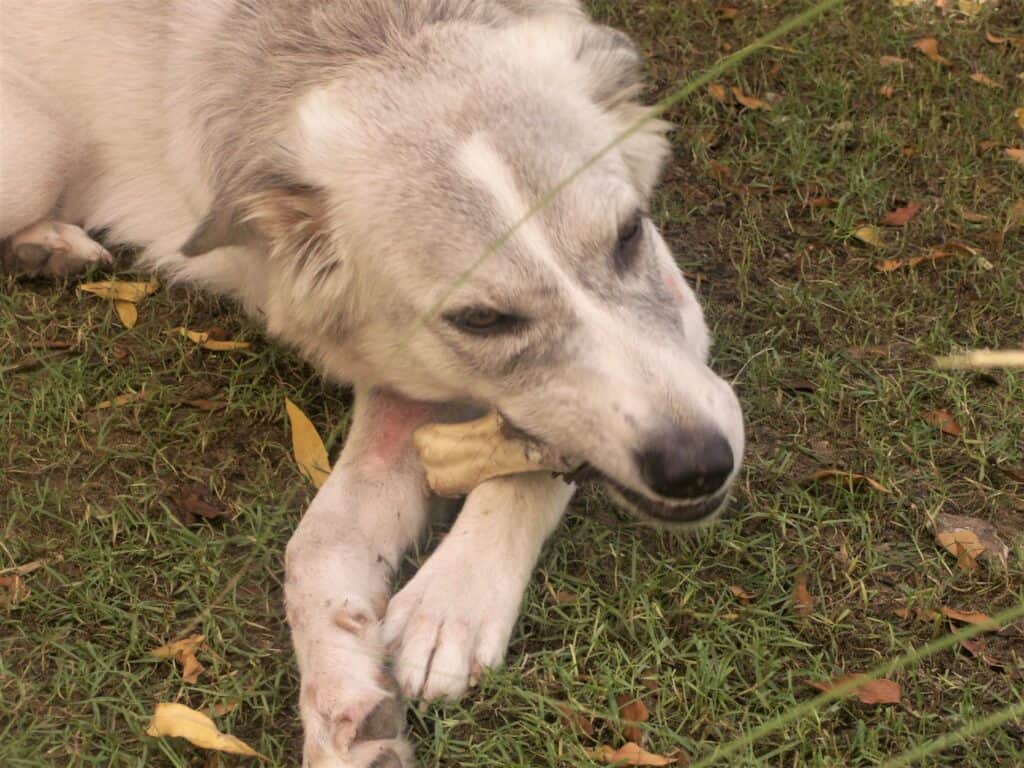
What does research say about dogs chewing?
A study surveyed 1,439 owners about how they manage their dog’s chewing habits and found that:
- 2.5% of dogs chew on soft household objects daily.
- Dogs up to 1 year of age chew on soft household objects more frequently.
- Other common objects for daily chewing include resting places (2.2%) and clothes/shoes (1.4%).
- Chewing on objects was reported to occur in contexts that may cause negative emotional states, such as leaving the dog alone or changes in routine activities.
- 94% of dog owners provided their dogs with edible chewing material (e.g., rawhide, dried innards, meat).
- 83% provided their dogs with inedible chew toys.
- 73% provided chew toys filled with food.
- 51% provided hard chewing material (e.g. wood, antlers).
- 67% stated their dog never had a problem caused by the use of chewing material.
- 3.6% reported their dog had required veterinary treatment due to a problem with their chewing material (Arhant et al., 2021).
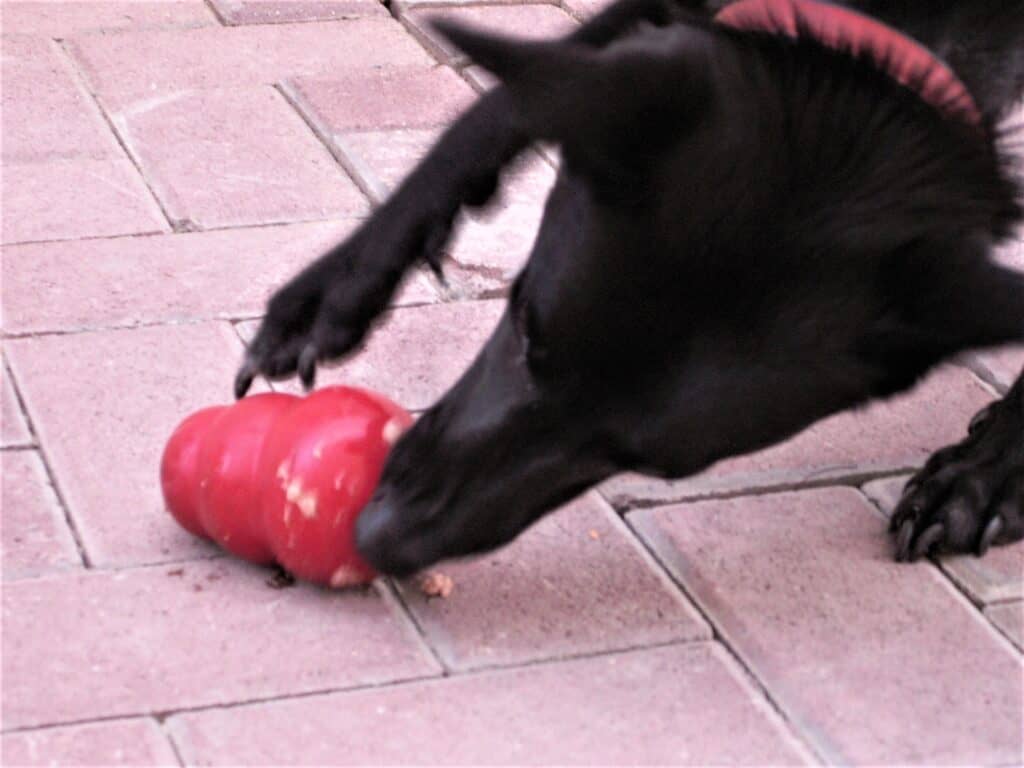
Why does my dog chew his bed?
As you can see, the research shows that a small percentage of adult dogs chew on soft household objects – including resting places such as their bed – so there’s nothing unusual about your pup’s behavior.
Before we can address why your dog is chewing his bed, the first step is to figure out why he’s doing it.
#1. He has separation anxiety
Dogs that are left alone for long periods may chew as a way to cope with their stress and loneliness.
In such cases, you’ll need to work with your dog on his separation anxiety issues – preferably with the assistance of a certified separation anxiety specialist. I’ll list three of my favorites* at the end of the article.
Separation anxiety is common in dogs, with up to three-quarters of them experiencing it at some point in their lives.
The most common symptoms are:
- Excessive barking or howling
- Urinating or defecating indoors
- Destruction of objects or property
- Chewing shoes or clothing.
- Digging.
- Chewing furniture.
- Trying to escape when left alone (CertaPet, 2021).
In such cases, unfortunately, your dog’s anxiety is not going to go away on his own, so the sooner it’s addressed the better – for both you and your pup.
#2. He’s bored
A bored dog who doesn’t have enough stimulating activities to keep him occupied during the day may start chewing his bedding just for the sake of something to do.
You can help reduce his boredom by making sure he gets plenty of exercise and mentally engaging stimulation, such as puzzle toys or interactive games and play.
#3. He’s stressed or frustrated
When dogs are stressed out, chewing on something releases endorphins—their natural feel-good hormones.
This explains why some dogs find relief by gnawing away at a shoe, the furniture, or indeed, their bedding.
It’s the same reason humans chew gum, by the way.
Same with frustration.
By chewing, dogs burn off excess energy “and redirect feelings of frustration via the teeth and mouth,” says dog training and behavior expert Sarah Whitehead.
At the same time, it helps them calm down, a self-soothing mechanism if you will.
#4. He’s teething
When puppies are teething, they may chew on things – including your furniture, your favorite pair of shoes, and their nice new bed – as a way to relieve the discomfort of their growing teeth.
Teething typically takes place from the age of about 2 weeks to 8 months.
“Losing teeth at this stage makes the gums itchy and irritable, and chewing can definitely help to ease these symptoms,” says Whitehead.
#5. He’s hungry
Sometimes your dog just might be hungry and looking for a quick snack. This can lead to destructive chewing behaviors as he eats or tries to chew on objects that aren’t edible.
It’s important to feed your dog at regular intervals and make sure he gets enough to eat.
You may also want to consider investing in a tough chew toy or puzzle feeder that will keep him entertained and engaged while eating.
#6. He’s engaging in normal dog behavior
Some dogs just like chewing things and pulling them apart. I know because I live with two of them.
Fancy orthopedic dog bed with lovely comfy memory foam?
Ripped apart.
Worn out old mattress perfect for a dog to sleep on?
Pulled apart.
There’s nothing like gathering up a pile of decimated foam rubber every morning before you start the day.
The dogs in question were both rescued from the street so didn’t have much experience of life in a home.
We’re still working on it!
Meanwhile, we’re looking into more durable options.
#7. He’s not getting enough exercise or mental stimulation (or maybe he’s getting too much)
If your dog isn’t getting enough of a physical or mental workout, it can also lead to destructive chewing.
Conversely, if he’s over-exercised or stimulated he may be too wired to calm down when he’s in his bed.
#8. He’s engaging in a compulsive behavior
Some puppies, when deprived of the opportunity to nurse from their mother, will later suckle on blankets and other objects for comfort and security.
These dogs don’t always outgrow the habit and it’s pretty harmless.
However, there is a type of sucking behavior – flank sucking – that can be harmful.
Some dogs suck on fabrics or their flanks as a coping relaxation behavior, while others do it because they find it comforting.
So if your dog sucks on or chews his bed obsessively, it could be worth speaking to your vet or a dog behavior expert to see if there are any underlying psychological causes for this type of compulsive behavior.
Ready to end the bed-chewing saga?
Now you have a better idea of why your dog might be chewing on his bedding, the next step is to train him to chew on something more appropriate instead.
I talk all about this in my article, How To Stop Your Dog Chewing His Bed In His Crate (8 Expert Tips) so be sure to have a read to discover actionable steps for redirecting your pup’s habits.
Don’t wait – start paving the way today for a bed-chewing-free zone (and saving your wallet)!
READ NEXT
Separation Anxiety Specialists
*These are my personal recommendations for specialized separation anxiety trainers. Even better, they all do online consults so geography doesn’t matter!
Resources
- Chewing behaviour in dogs – A survey-based exploratory study – Christine Arhant, Rebecca Winkelmann, & Josef Troxler
- Crate Training Basics – Kelly Fahey / Kong Classroom
- Destructive Chewing – ASPCA
- Separation Anxiety in Dogs & Dog Owners in 2021 – CertaPet
- Teach Drop [Video] – Dog Training by KikoPup
- The truth about chewing – Sarah Whitehead
- Tips for crating dogs with separation anxiety – Annie Moore
- Your Puppy Blueprint – Kelly Fahey
NEED A DOG TRAINER OR BEHAVIOR EXPERT?

If you need more help dealing with a training or behavior issue, please find professional help from a force-free dog trainer who can consult with you either in person or remotely.

GOOD PLACES TO START ARE:
- COAPE Association of Pet Behaviourists and Trainers
- Pet Dog Trainers of Europe
- International Companion Animal Network
- Institute of Modern Dog Trainers
- Pet Professional Guild

All dog owners deserve to have successful relationships with their canine companions!
