

What Does It Mean When Your Dog’s Tail Is Down? Understanding Canine Body Language

Quick Answer
Dog tails are a powerful communication tool and they can tell us a lot about how the dog is feeling.
When a dog’s tail is down, it often means the dog is feeling sad, stressed, anxious, or scared.
This, however, depends on the tail’s normal position, as well as the dog’s body language and the overall context.
How does a dog feel when her tail is down?
If a dog’s tail normally rests down between the back legs (e.g. as you’d see in a German shepherd), then she may simply be feeling calm and relaxed.
But if the dog’s tail is normally upright (e.g. as you’d see in a beagle), then a lowered tail indicates the dog is fearful or unsure about something.
Dogs may also put their tails down if they don’t feel well, or are uncertain of their environment.

How does a dog feel when her tail is tucked under?
A dog with her tail tucked right under is usually feeling scared or threatened; she’s experiencing a very negative emotional state.
Tucking their tails under is a natural response for dogs when they feel scared – it’s their way of trying to make themselves as small as possible so they don’t look like a threat.
A tucked tail can also mean the dog is deferring to another dog or offered as an appeasement gesture to subdue any potential tension.
If you see your dog’s tail tucked under, it’s a good idea to give her some space or remove her from the scary situation and give her some time to calm down.

Miscommunications between dogs and humans: 2 real-life examples
When I collected Florence from the dog rescue organization, she was so scared she lay on her back with her tail tucked right up against her stomach. A well-meaning lady came along and started scratching her stomach, thinking she was asking for a belly rub.
Poor Florence was catatonic with fear. I politely asked the lady to back off and removed Florence from that situation as quickly as possible.
On another occasion, we took our dog Maggie into the pet store to try on harnesses. When the shop lady was sitting on the ground alongside her doing up the clasps, poor Maggie was extremely uncomfortable.
She hunched herself over and stuck her tail right between her rear legs. She was scared and hating every minute of it.
I explained to the shop assistant that she was frightened and that we’d come back another day instead, and we left.
I measured Maggie at home and used her measurements to buy the right harness so she didn’t have to go back to the store.
In both cases, the dogs were frozen with fear, but there’s always the risk that if the situation continues they may feel they have to resort to biting to get themselves out of there. And that’s not good for anyone.
As dog guardians, it’s up to us to recognize when our dogs are feeling stressed, scared, or anxious and manage the environment accordingly. If that means being a bit abrupt with people, well, so be it!
First and foremost, we have to advocate for our dogs and make sure we don’t unwittingly subject them to situations or experiences they are uncomfortable with.
What do other dog tail positions mean?
High tail
A dog holds her tail high when she’s feeling alert, happy, excited, curious, or confident.
So if you see your dog wagging her tail happily and her tail is high, it usually means she’s feeling good and is a relaxed, happy dog ready for a game.
Wagging tail
A dog’s tail wags are widely interpreted as a dog who is happy and friendly. But there can be several different meanings.
- “A low-hung wagging tail could mean: ‘I am scared or unsure,'” explains animal behavior consultant and certified dog trainer Sherry Woodard.
- “A high, stiff wag can mean: ‘I am agitated, unsure or scared, but not submissive. I might bite you or your dog.’ If the dog’s body is stiff, he is staring, and his ears are up use caution. Keep the dog out of trouble because he may be about to make a bad decision.”
- “A loose wag – not really high or really low – normally means: ‘I am comfortable and friendly.'”
Finally, a tail wagging in a circle, which is what a dog parent often sees when they come home and their dog is ecstatic to see them, means a dog is feeling happy and friendly. You’ll often get a full body wag in this situation!
Direction of the wagging
A study by Italian researchers found that dogs respond differently to the direction of another dog’s tail wag. If it wags to the left side of the body, they find it more stressful, whereas if it wags to the right side of the body, they are more relaxed.
So watch for this too any time your dog is meeting another dog..
Stiff, upright tail
When a dog has a stiff, upright tail, it usually means she’s on high alert or feeling some sort of tension. This could be because of positive feelings (e.g. excitement and readiness to play) or negative feelings (e.g. agitation and potential for aggressive behavior).
Medium tail
If the dog’s tail is waving around gently, it’s generally a sign that the dog is friendly and feeling relaxed.
If the tail is wagging fast at a medium carriage it can also mean the dog is happy and friendly or may be an appeasing gesture.
Our Saluki-cross, Louis, had an upright curly tail, but when he was at full sprint his tail would level out behind him in a semi-horizontal position. In this case, he was just having a great time and it was a natural position for him to hold his tail in when he was running around.

Dog body language
When looking to interpret your dog’s tail position as an indicator of how she’s feeling, you’ll also need to take the rest of the dog’s body language and facial expressions into account.
For example, a dog who is wagging her tail but is also barking or growling and has her hackles up is likely feeling threatened or agitated.
A dog standing tall with her legs braced and tail high, body leaning forward is feeling confident, but may also be making herself look bigger in the presence of a potential threat. Depending on the situation, this could boil over into aggression.
Dogs may also stand like this, stock still, when they’re about to launch into a game with another dog.
If your dog is avoiding eye contact altogether then she’s most likely fearful, whereas a hard stare can be a sign of being ready to play or impending aggression.
If she’s licking her lips or yawning she may be stressed, whereas if she’s curling her lips and snarling, it’s a warning sign.
“The various parts of your dog’s body work together to tell the complete story, and unless you read them all and interpret them in context, you’ll miss important elements of the equation,” says renowned dog trainer Pat Miller.
Careful observation is key at all times.
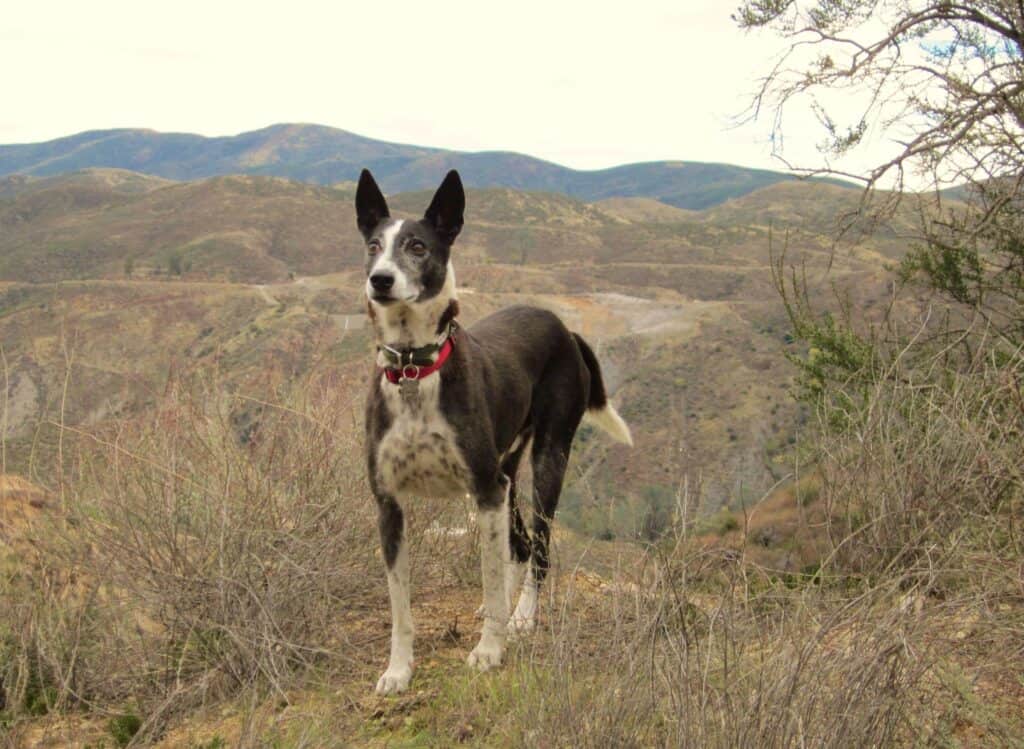
What are the different types of dog tails?
Different breeds and different types of dogs have different types of tails.
The most common is a downward tail that hangs about halfway down the dog’s back legs when in a neutral position.
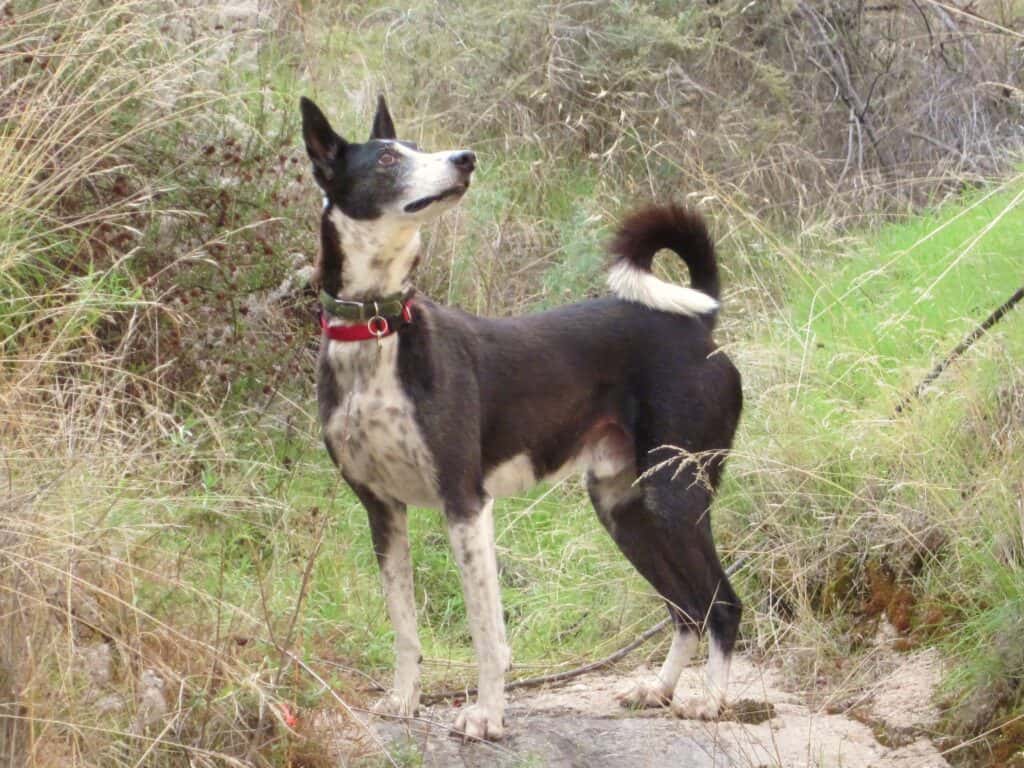
But some dogs have an upright curly tail, a short bobtail (this means the tail grows unusually short or is missing completely due to a mutated gene – Wikipedia, 2022), or a docked tail (a procedure where part of the tail is removed – this is illegal in many countries unless recommended for health or safety reasons).
Each type of tail will express a dog’s feelings differently.
What if my dog’s tail is always down?
There are several reasons why a dog’s tail might always be down. It could be a sign that the dog is feeling sick, or it could be due to an injury.
A dog who has had her tail docked may also have a tail that hangs down.
Some dog breeds, such as the aforementioned German shepherds, naturally have tails that hang down. And some dogs may simply prefer to keep their tails down.
In most cases, a dog with a down-turned tail is not a cause for concern. But if you notice your dog’s tail is suddenly hanging down when it normally wouldn’t be, or if she seems to be in pain, it’s time to consult with your vet.
When our rescued street dog Daisy was getting older and dealing with arthritic back legs, she started to carry her tail lower instead of its usual mid-range position. She was on a pain management protocol overseen by our veterinarian, but it just seemed to be more comfortable for her that way.
Limber tail
Sometimes, when a dog suddenly has a limp tail, it might be because of a medical condition called limber tail syndrome (aka cold water tail or swimmer’s tail). This is when the dog’s tail feels floppy and she might seem to be in pain.
According to the American Animal Hospital Association, a limber tail is often “due to a muscle sprain or strain in a dog’s tail. These injuries are associated with overuse, but also can be due to swimming, prolonged crate confinement, exposure to cold weather, excessive exercise without proper conditioning, or climate changes…
“While swimming, dogs [especially breeds such as Labrador retrievers] use their tails to help with balance and steering, resulting in overexertion compared with their dry-land activities.”
Final thoughts
Dogs use their tails to communicate a variety of things, including how they’re feeling and whether or not they feel comfortable around other people or animals. Different tail positions can mean different things in different contexts, so it’s important to take the entire body into account to try to figure out what the dog is trying to tell you.
If your dog’s tail is always down, it might be worth taking her to the vet to make sure she’s not sick or injured.
If your dog has a permanently low tail carriage because she’s anxious or scared, you might want to check out these 20 Tips On How To Get A Scared Dog To Trust You so you can work on building her confidence and helping her feel more safe and secure.
And if in doubt, consult a professional positive reinforcement dog trainer to help you!

New E-Book
👉 My new E-book, The Fearless Fido Formula: 15 Mistakes Smart Dog Parents Never Make Again is officially live!
👉 If you’re a dog parent, especially of a fearful pup, this is for YOU!
👉 AND…you’ll get 4 amazing bonuses for FREE!
Not sure if this is right for you and your dog? Get more info here
READ NEXT
Resources
- Beware of the Dog – Pat Miller
- Dog Body Language – Sherry Woodard
- Natural bobtail – Wikipedia
- Seeing Left- or Right-Asymmetric Tail Wagging Produces Different Emotional Responses in Dogs – Marcello Siniscalchi, Rita Lusito, Giorgio Vallortigara, & Angelo Quaranta
- What is limber tail in dogs? – American Animal Hospital Association
