

What Every Dog Owner Needs to Know About Holiday Safety

The holiday season is full of joy, celebrations, and family gatherings, but for dogs it can also be a time of stress and even potential dangers.
Here’s how to help your dog navigate the holiday chaos while keeping everyone safe.
1. Establish a Safe and Calming Environment
Creating a designated safe space is essential for your dog’s comfort, especially amidst holiday commotion.
Here’s how to set it up:
- Choose the Right Spot: Select a quiet area in your home, away from heavy foot traffic and loud noises. This could be a spare bedroom, a cozy corner, or a familiar crate.
- Furnish the Space: Equip the area with your dog’s favorite bed, blankets, toys, and access to fresh water. Including items with familiar scents can provide additional comfort.
- Add Calming Activities: Provide a stuffed KONG, puzzle toy, or safe chew toy to offer mental stimulation (engaging in a mental challenge helps inhibit negative emotions) and encourage relaxation through licking or chewing.
- Incorporate Calming Aids: Consider using a calming pheromone diffuser, dog-specific music, or white noise machines to create a soothing environment.
- Introduce the Space Gradually: Encourage your dog to spend time in her safe haven before the holiday activities begin, so she associates it with positive experiences.
- Maintain Consistency: Keep this space accessible at all times, allowing your dog to retreat whenever she feels overwhelmed.
2. Supervise Interactions with Visitors
Holiday gatherings can be overwhelming for dogs, particularly with the presence of unfamiliar guests and children.
To ensure harmonious interactions:
- Educate Guests: Inform visitors, especially children, about appropriate ways to approach and interact with your dog. Emphasize the importance of gentle petting—only if your dog wants to engage—and respecting the dog’s space when she doesn’t.
- Monitor Body Language: Stay vigilant for subtle signs of discomfort in your dog, such as lip licking, yawning, “freezing” or panting. If these signs appear, intervene promptly to prevent escalation.
- Explain Boundaries: If your dog is prone to resource guarding, make sure you tell your guests, especially children, not to approach her while she’s eating, sleeping, playing with her toys, or chewing on a bone/chew toy.
- Active Supervision is Key: Always monitor interactions between your dog and visitors. Even brief unsupervised moments with children can lead to accidents or a stressful situation for your dog.
- Limit Exposure: Consider scheduling breaks for your dog away from the festivities to prevent overstimulation.
- Use Barriers if Necessary: Employ baby gates or playpens to create physical boundaries, allowing your dog to observe without direct interaction.

3. Safety Around Children
Many people don’t realize that dogs can be fearful of babies and children.
Your dog may have had negative experiences with kids in the past, or may just be completely unfamiliar with children, finding their unpredictable movements and loud cries particularly startling.
Some dogs will find children’s natural behavior overwhelming, causing sensory overload, and this can be especially true during the holiday period when there might be more children around than usual.
4. Manage Resource Guarding
Resource guarding, or possessive aggression, is a natural canine behavior but can become problematic if visitors inadvertently approach your dog’s prized possessions.
- Identify Triggers: Dogs may guard food, toys, their bed, or even family members. Be proactive in recognizing what your dog values most.
- Feed Separately: To avoid conflicts, feed your dog in a quiet area where she won’t be disturbed by guests or children.
- Communicate with Guests: Again, make sure visitors understand not to approach your dog while she’s eating, resting, or near her prized possessions. Be aware that some dogs will even guard items that are on the other side of the room.
5. Recognize Canine Stress Signals
Understanding your dog’s body language is essential to preventing stress and discomfort during the holidays.
Watch for the following cues:
- Physical Signs:
- Tucked Tail: Indicates fear or anxiety.
- Pinned Back Ears: Suggests discomfort or submission.
- Dilated Pupils: Can be a sign of stress or arousal.
- Excessive Panting or Drooling: May indicate anxiety, especially in the absence of physical exertion.
- Stiff Posture: If your dog “freezes,” it’s a sure sign of discomfort.
- Head Turning: This is a classic canine calming signal – if your dog turns her head away as if she’s showing the side of her neck, she’s telling you she’s not a threat and would rather be left alone.
- Behavioral Changes:
- Avoidance Behaviors: Such as turning away (head and/or body), trying to leave the area, or hiding.
- Displacement Behaviors: Like yawning, scratching, or sniffing the ground inappropriately.
- Increased Vocalization: Whining or barking more than usual.
- Changes in Appetite: Loss of interest in food or overeating.
- Escalated Signals: If ignored, subtle body language cues may turn into growling, snapping, or even biting.
- Act Quickly: If you notice any stress signals, calmly remove your dog from the situation and allow her to relax in her safe space.
It’s important to note that a dog’s stress signals can be quite subtle and happen quickly – sometimes within nanoseconds – making them challenging to spot to the untrained eye.
For this reason, it’s always better to err on the side of caution.
Many dogs will be far more comfortable in their designated safe space rather than being forced to endure situations where they feel unsafe or uncomfortable.
6. Facilitate Positive Socialization
Socialization is a gradual process of exposing your dog to various people, animals, environments, and experiences.
The key principle of proper socialization is that it should always be a positive experience.
Each exposure to the new thing should only last as long as your dog remains comfortable, and it’s essential to end sessions before any signs of stress appear.
- Gradual Introductions: Allow your dog to approach new people and situations at her own pace. Never force interactions, as this can lead to stress or fear-based reactions.
- Use Positive Reinforcement: Reward your dog with treats, praise, or her favorite toy whenever she displays calm or positive behavior in new situations. This helps build positive associations with new experiences.
- Let Your Dog Set the Pace: Allow your dog to approach new people or situations at her own speed. Never force interactions.
- Keep Interactions Short: Limit exposure to new environments or guests. Watch for signs of discomfort and end the interaction before stress escalates.
- Create Predictable Routines: Dogs thrive on routine, and holidays can disrupt that. Try to keep mealtimes, walks, and playtimes as consistent as possible, so your dog feels secure despite the changes around her.
- Avoid Overcrowding: If you’re hosting a large gathering, consider keeping your dog in a quieter area of the home with supervised breaks for interaction. Too many people at once can overwhelm even the most social dogs.
7. Be Aware of Holiday Hazards
The festive season introduces various items that can pose risks to your dog’s health.
- Toxic Foods: Many holiday treats are harmful to dogs. Notable items to avoid include:
- Chocolate: Contains theobromine, which is toxic to dogs.
- Grapes and Raisins: Can lead to kidney failure.
- Onions and Garlic: May cause gastrointestinal irritation and red blood cell damage.
- Alcohol: Even small amounts can be dangerous.
- Fatty Foods: High-fat foods like gravy and certain meats can cause pancreatitis.
- Cooked Bones: Can splinter and cause internal injuries.
- Xylitol: A sugar substitute found in many baked goods, candies, and peanut butter, highly toxic to dogs.
For a comprehensive list, refer to the ASPCA’s guide on people foods to avoid feeding your pets.
- Decorations: Be cautious with:
- Tinsel and Ornaments: Can cause intestinal blockages if ingested.
- Electrical Cords: Pose a risk of electrocution if chewed.
- Holiday Plants: Plants like poinsettias, mistletoe, and holly can be toxic if ingested.
- Secure the Christmas Tree: Anchor the tree to prevent it from toppling, and consider using a pet barrier to restrict access.
- Dispose of Wrappings Properly: Ribbons and wrapping paper can be enticing but dangerous if swallowed.
8. Maintain Control During Walks and Outings
Holidays often mean more walks and outings to festive events.
Keep these safety tips in mind:
- Leash Training: Use a sturdy leash and harness to ensure your dog stays close to you. This is especially important in crowded areas where she could get spooked or distracted.
- Avoid Crowded Events: Fireworks displays, parades, markets, and other loud holiday celebrations can be stressful for dogs. If you do take your dog along, provide noise-canceling support like ear covers or stay at a safe distance. Consider leaving your dog at home instead, where she will feel safe and secure.
- ID Tags and Microchips: Ensure your dog has up-to-date identification in case she gets lost during holiday outings and especially New Year’s Eve fireworks. Bear in mind that more dogs get lost on New Year’s Eve (and 4th of July) than any other day of the year. Embroidered ID collars and microchips are a great backup to physical tags, but make sure your dog’s microchip is registered.
- Carry Essentials: Bring along water, poop bags, and a few treats to keep your dog comfortable and rewarded during outings.
9. Plan for Fireworks and Loud Noises
Holidays often come with loud noises like fireworks, which can terrify many dogs.
Here’s how to help:
- Prepare a Safe Space: Before the fireworks start, ensure your dog has access to their quiet area with comforting items like blankets and chew toys.
- Distract with Activities: Offer a stuffed KONG, puzzle toy, or interactive game to keep your dog engaged and distracted from the noise.
- Use White Noise or Music: Play calming dog-specific music or use a white noise machine to mask the sound of fireworks.
- Block Windows: Close blinds and curtains to minimize stress from sudden flashes of light from fireworks.
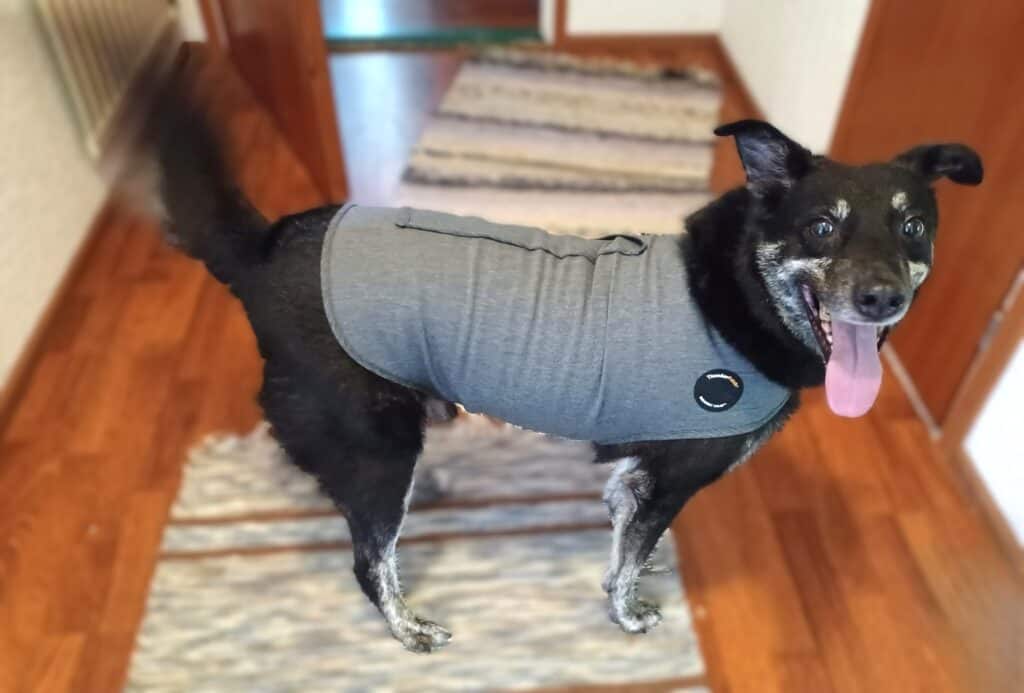
- Calming Wraps: An anti-anxiety jacket like a Thundershirt can be extremely helpful for dogs with noise phobias.
- Avoid Punishment: If your dog reacts fearfully, do not scold or punish her. Forget inaccurate advice to ignore her and instead comfort her, calmly providing reassurance. Fear is an emotion and not a behavior, and cannot be reinforced, so don’t worry about that. Just be there for when she needs you.
Preparation Is Key
By following these 9 tips, you can help your dog stay safe, calm, and stress-free during the holiday season.
A little preparation goes a long way in making the holidays enjoyable for everyone—including your dog.
Happy Holidays!
