
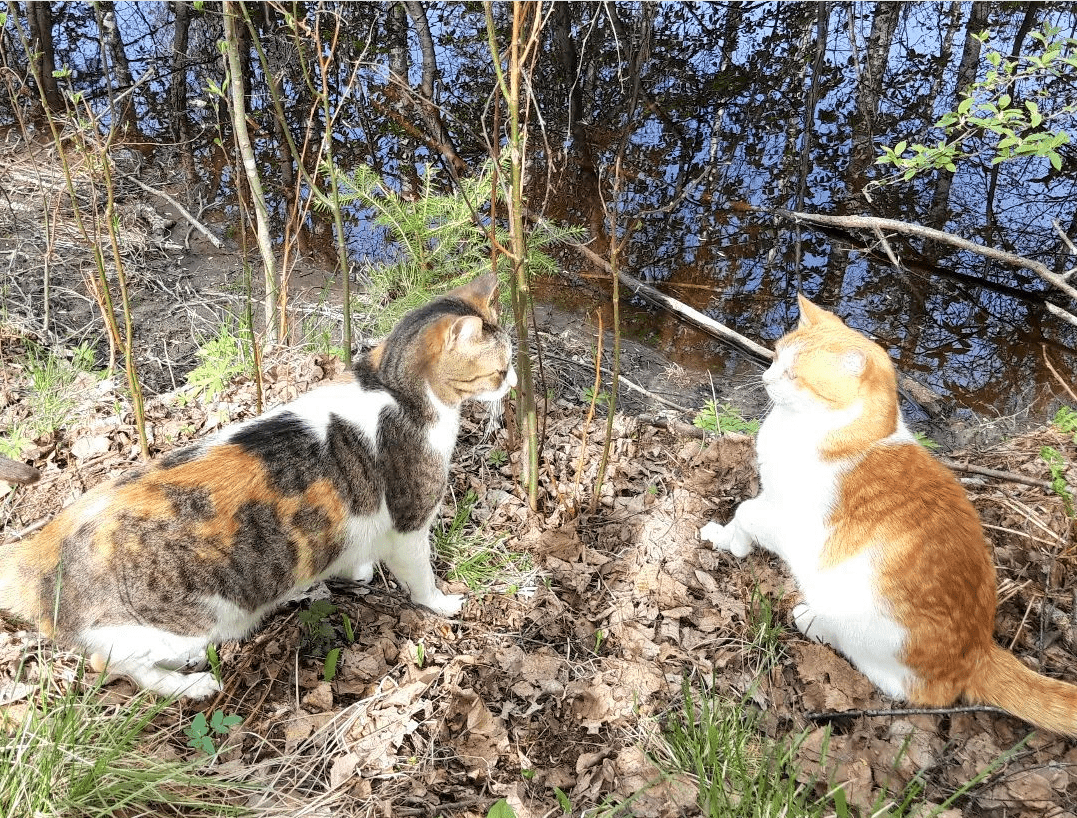
Why Your Cats’ Playtime Could Be a Fight Waiting to Happen

Cats can be full of energy and drama, especially when they’re interacting with each other.
But when the hissing starts or the wrestling gets rough, it can be hard to know if they’re just having fun or if things are getting too serious.
Key Differences Between Playing and Fighting in Cats
Cats use body language and vocalizations to communicate how they feel, which can help you distinguish between when they’re playing and when they’re fighting.
Body Language
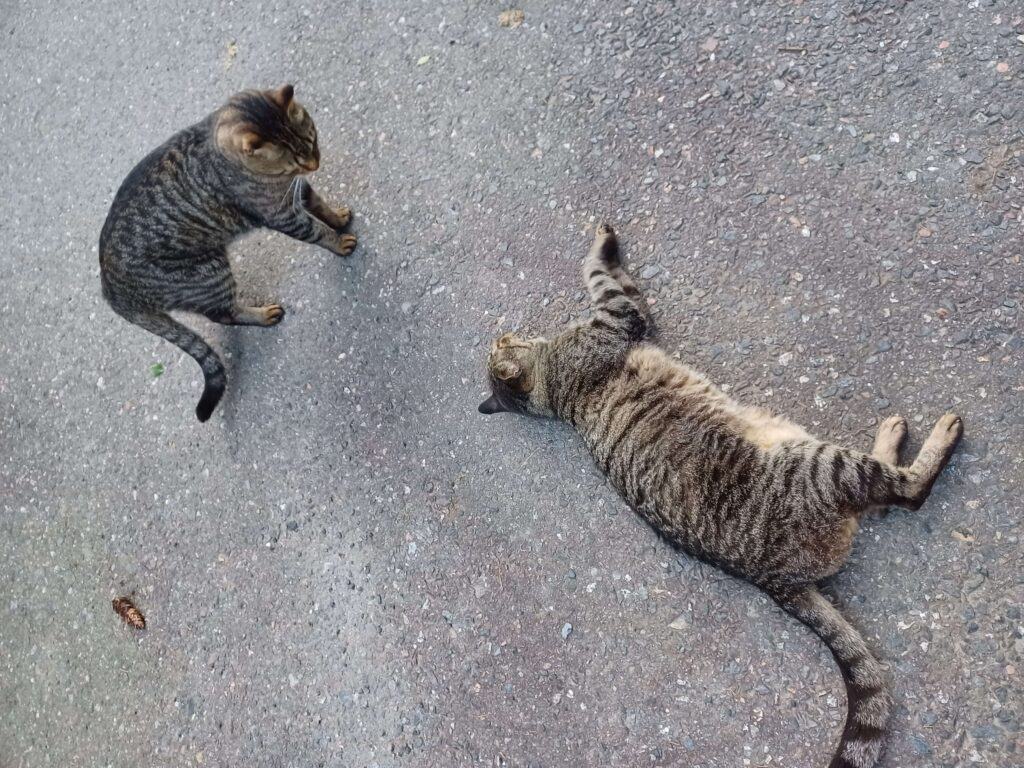
Playful cats display relaxed body postures with smooth, fluid movements, often taking turns chasing or pouncing on each other.
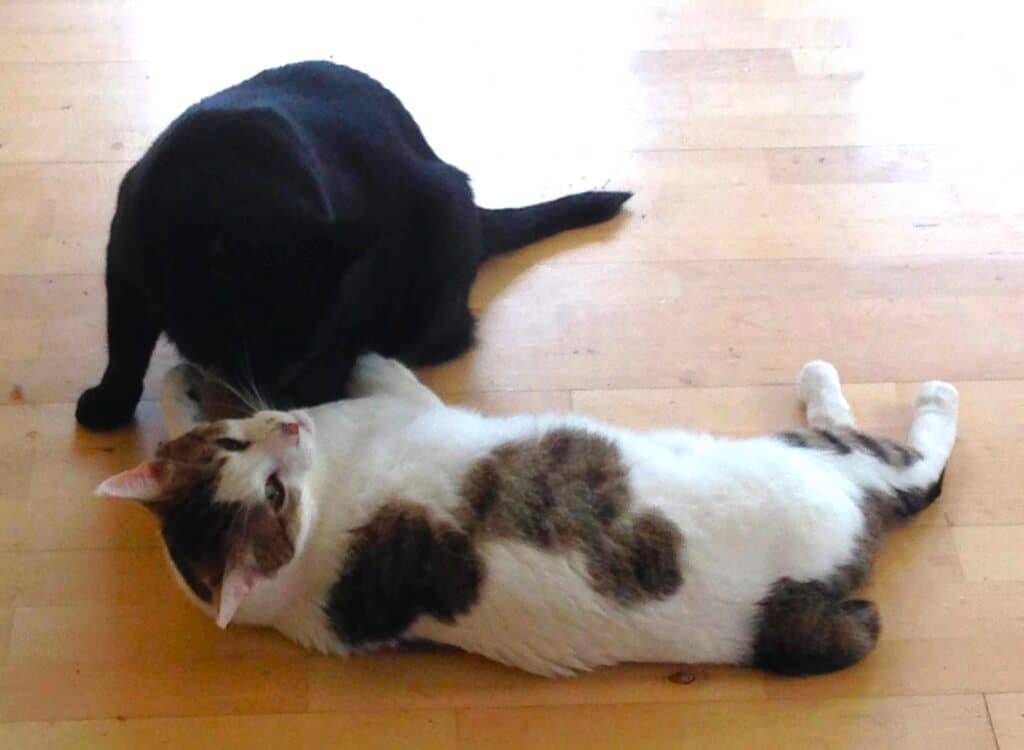
Their ears stay upright or slightly forward, tails are held high or twitching with excitement, and they may even roll around freely as part of the fun.
This shows how relaxed they are.
In contrast, fighting cats appear tense and rigid, ready to pounce or defend themselves.
Their fur may puff up along their back and tail to appear larger and more intimidating.
Pinned-back ears, a low-hanging or aggressively lashing tail, and stiff, defensive stances all signal that the interaction has turned hostile.
Vocalizations
The sounds cats make can reveal exactly how they’re feeling.
During play, you might hear soft chirps or trills—happy noises that indicate your cats are enjoying themselves.
In contrast, fighting cats are much louder, often producing serious sounding hisses, growls, or yowls—clear warnings of aggression or distress.
Playful cats tend to be quieter overall, with only occasional soft growls, while fighting cats vocalize more intensely and frequently.
Physical Interaction
Pay attention to how your cats touch each other during their interactions.
Playful cats use gentle nips and soft paw swats, taking turns being “in charge” during wrestling.
Importantly, their claws usually stay sheathed, minimizing any harm.
Fighting cats, however, bite hard and use extended claws, often with one cat bullying or even dominating the other instead of taking turns.
This behavior increases the risk of injury.
If you see this, it’s a strong indication that play has shifted into aggression.
Behavioral Patterns
Chasing is common in both play and fights, but the context matters.
In play, cats chase each other equally, taking turns in the “chaser” role.
During fights, the chasing is one-sided, with one cat pursuing the other relentlessly.
Play sessions tend to have a natural rhythm of starting and stopping.
Cats will often take breaks to rest, groom themselves, or simply pause before resuming their game.
Fights, on the other hand, once they’ve started, tend to be more continuous and intense, lacking these natural pauses.
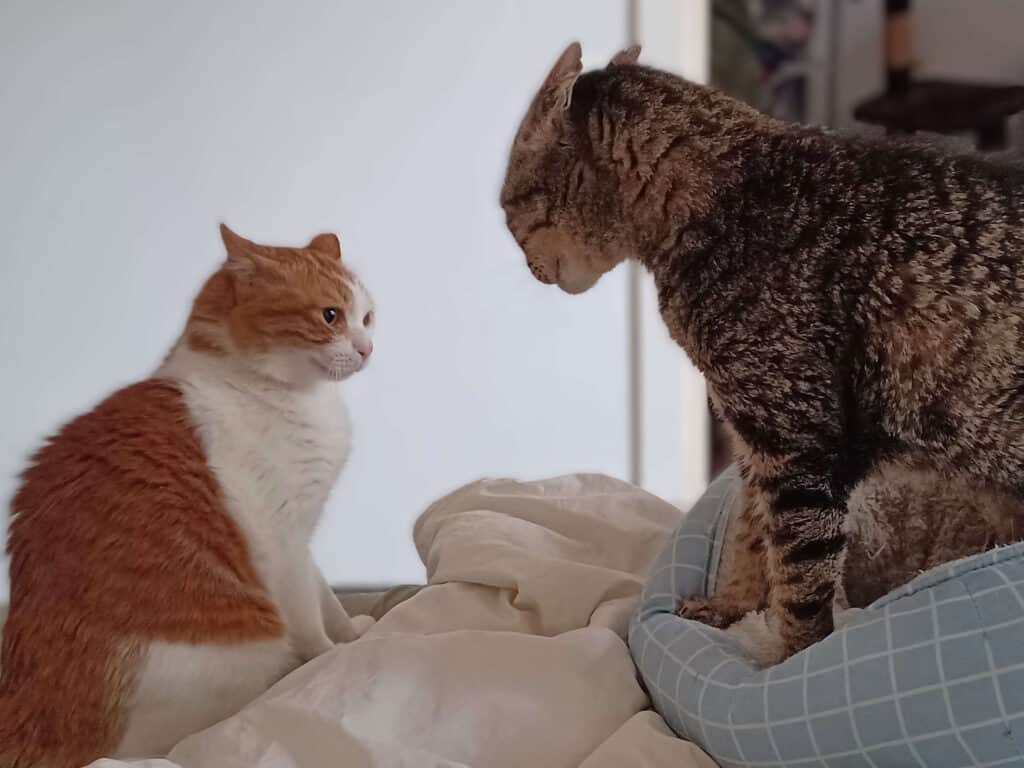
In the build-up, you might notice one cat taking on the role of the aggressor.
He may lean forward and yowl in the other cat’s face, while the other cat leans back and freezes in an attempt to de-escalate the situation.
In some cases, the passive cat may simply walk away, but he might also fight back when he’s had enough.
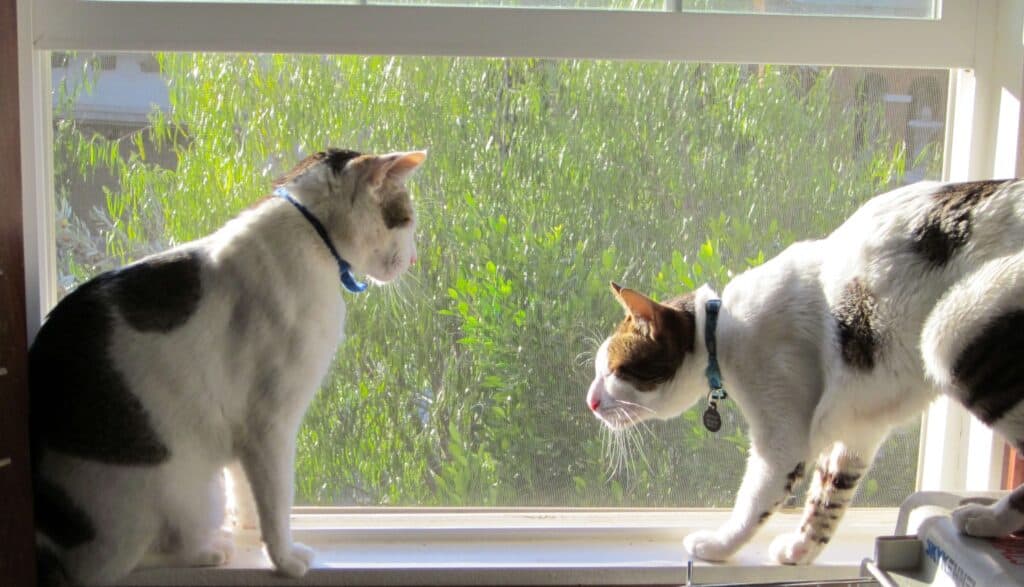
Sometimes, both cats will sit at a close distance (1-2 feet) and stare at each other, yowling loudly for several minutes before one finally decides to back down and retreat.
You can also gauge intent by observing your cats’ eyes.
Playful cats maintain a relaxed gaze, while fighting cats often stare intensely with dilated pupils, signaling heightened emotional arousal and readiness for conflict.
Playtime serves an important role in building social skills, teaching cats to interact without causing harm.
Fights, however, can strain relationships and create a lot of stress among the cats in the household.
What Science Says About Feline Interactions
A group of scientists have studied cat interactions to help us understand whether they’re playing or fighting.
They found three main types of interactions: playful, aggressive, and something in between (Gajdoš-Kmecová, 2023) and made the following observations:
Playful Cats
- Playful cats often wrestle without making noise.
- If you see lots of back-and-forth action, it’s probably play.
Aggressive Cats
- Aggressive interactions involve chasing and loud meows.
- When cats fight, you might hear hissing or growling.
“In-Between” Cats
- The in-between category is more tricky. These interactions have some playful and some aggressive parts.
- You might see pauses in the action or hear some vocalizing.
The scientists also pointed out that cat relationships can change quickly.
Cats that are friends one day might have a small fight the next, but this doesn’t necessarily mean they’re no longer friends.
It may simply be a conflict over a resource (like the best place to sleep), or frustration at something another cat has done (like walking over them instead of around them).
To tell if cats are friends, look for these signs:
- Rubbing against each other
- Grooming each other
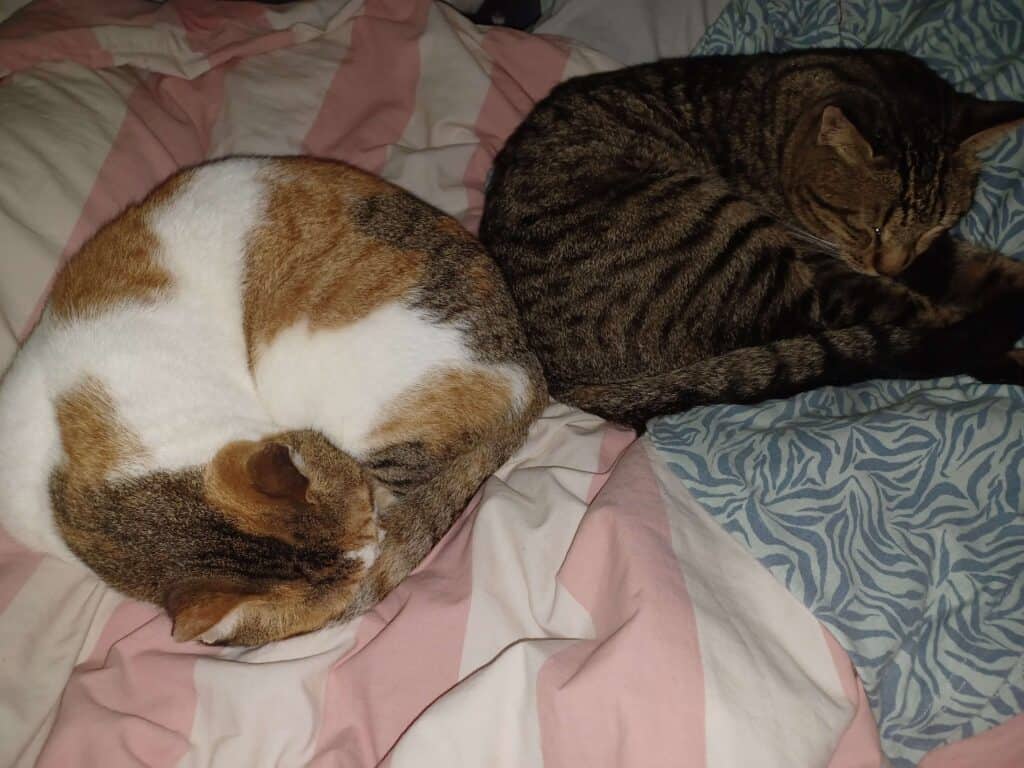
- Sleeping close together
- Sharing food and toys
If you see these behaviors, your cats are probably bonded and get along well.
Even if they have small fights sometimes, it’s usually not a big deal.
Signs Your Cats Are Escalating from Play to Fighting
Cat interactions can quickly change from playful to aggressive.
It is thought that cats may be more easily aroused and take longer to calm down after an angry episode due to their brain structure.
A cat’s frontal lobes, which play a role in regulating and inhibiting emotions, are smaller compared to those of, say, dogs.
This size difference suggests that a cat’s mechanism for emotional control may be less efficient than their canine counterparts.
This potentially explains their heightened and prolonged emotional reactions during hostile interactions.
When to Intervene
It’s always best to avoid a cat fight – cats have sharp teeth and claws and can cause each other a lot of damage.
If you notice play is getting rougher, it’s time to separate them.
- Because play involves taking turns, it’s usually best to break things up if one cat is chasing the other without a break as he may be bullying.
- Another time to intervene is when there are no pauses in the action. Playful cats usually take breaks to rest or groom, while constant activity without stopping can mean they’re fighting.
- Separate the cats too if one seems scared or stressed. If one cat tries to run away or hide, he’s not having fun anymore and it’s time to end the interaction.
Behavioral Changes to Watch For
It’s always safest to interrupt and end an interaction before things get too heated.
If you see any of these warning signs, it could be time for you to intervene:
- Loud growling, hissing, yowling, wailing, or screaming
- Tense posture, often with arched backs and puffed-up fur
- Flattened ears indicate they may feel threatened
- A twitching or swishing tail
- Puffed-up tail (known as piloerection)
- Prolonged staring/direct eye contact
- Dilated pupils
- Tense or hunched body posture
- Swatting at another cat with the paws
- Stalking and chasing (combined with tense body language)
- Blocking and ambushing
- Hiding or running away

Best Ways to Distract Cats if Play Escalates to Fighting
Knowing how to break up a cat fight safely is an important skill for any cat owner.
Quick action can prevent injuries and keep everyone’s stress levels to a minimum – both yours and the cats’.
Effective Techniques to De-Escalate
- Creating a barrier is a safe way to stop cats from fighting. You can use a broom, a cushion, a cutting board, or anything else you have to hand to gently separate them. This keeps your hands safe and redirects their focus.
- Toys can be very helpful in changing the mood. Wave a wand toy or drag a string on the ground. This can turn their energy from fighting to playing.
- Treats are another good option. Scatter some irresistible treats in opposite directions to shift their attention. This gives them something positive to focus on instead of each other.
- Catnip can be useful, but be careful. Again, scatter it in two separate spots to lure the cats apart. Remember, not all cats react to catnip, and it may make some cats more excited.
- Stay calm yourself. Your cats can pick up on your mood. If you stay relaxed, it can help reduce tension in the room.
Emergency Interventions
In serious cases, you may need to take stronger action.
One option is to throw a towel or blanket over the cats to avoid handling them and risking injury to yourself.
Usually, this provides a sufficient distraction and disorientation for them to pause fighting.
If you absolutely have to handle one of the cats, use a pair of thick heat-resistant gloves designed for welding or barbecuing.
While the gloves may restrict your movement and feel a little clunky, they will help protect your hands, wrists, and lower arms from being bitten or scratched by a cat in a high state of emotional arousal.
I don’t recommend spraying cats with water or making a sudden loud noise as this may just add to their stress and make things worse.
Remember those small frontal lobes?
That’s exactly why.
Post-Intervention Steps
If you find yourself in the unfortunate position of having to break up a cat fight, it’s important to take the right steps to prevent future conflicts.
Separate and Calm the Cats
Put the cats in different rooms to let them cool off.
This break gives them time to relax and reset.
Check each cat for injuries like scratches or bite marks.
If you find any wounds, clean them gently with warm water.
For serious injuries, call your vet right away.
Reassess the Environment
Look at your cats’ living space.
Make sure each cat has their own food bowl, water dish, sleeping place, scratch post, and litter box.
This cuts down on competition over resources that can lead to fights.
Create more vertical space with cat trees or shelves.
Cats often feel safer up high.
Add hiding spots like boxes or cat caves too as these are known stress-relievers.
Give your cats plenty of mental stimulation with toys and games.
Puzzle feeders, wand toys, and hunting games all provide outlets for a cat’s predatory instincts and encourage them to use their “thinking brain.”
This helps inhibit the “emotional brain,” leading to a calmer cat overall.
How to Tell if Your Cat Is Scared or Threatened During Play
Some cats may get frightened or feel threatened, even during play.
Key Signs of Fear or Threat
Watch for changes in your cat’s body language.
If he crouches low with his fur standing on end, it may signal discomfort.
Pay attention to his ears – if they’re flattened or turned sideways, he might be feeling scared.
Your cat’s tail can tell you a lot too.
A lowered tail that’s lashing back and forth often means he’s upset.
Wide eyes with big pupils are another clue that your cat is on edge.
If your cat tries to hide or run away, or freezes in place, he’s likely feeling threatened.
Why It’s Important to Tell Play from Fighting
Understanding whether your cats are playing or fighting is essential, not only to their safety, but to keeping them “below threshold” emotionally.
Staying Below Threshold
Below threshold means keeping your cats in a state where they feel calm and in control of their emotions.
When a cat goes above threshold, he may become overwhelmed by stress, fear, or excitement, making it harder for him to respond rationally to situations.
Staying below threshold helps prevent conflicts from escalating and helps keep things calmer in a multicat home.
Plus, it keeps stress levels lower, which is always better for everyone.
Knowing the Difference
Mistaking playful interactions for aggression might cause you to separate your cats unnecessarily, disrupting the bonding that’s going on while they’re playing.
On the flip side, failing to recognize real fights can be dangerous and cats may get injured if aggressive behavior goes unchecked.
By learning to read your cats’ body language and behavior, you’ll know when to let them interact naturally and when to step in.
Individual Personalities
Finally, bear in mind that every cat is different.
What looks like aggression in one pair might be normal play for another.
Pay attention to your cats’ individual personalities and the dynamics of the social group to make the best judgment calls.
READ NEXT
Resources
- An ethological analysis of close-contact inter-cat interactions determining if cats are playing, fighting, or something in between – N. Gajdoš-Kmecová, B. Peťková, J. Kottferová, V. Halls, C. Haddon, L. Santos de Assis & D. S. Mills
