
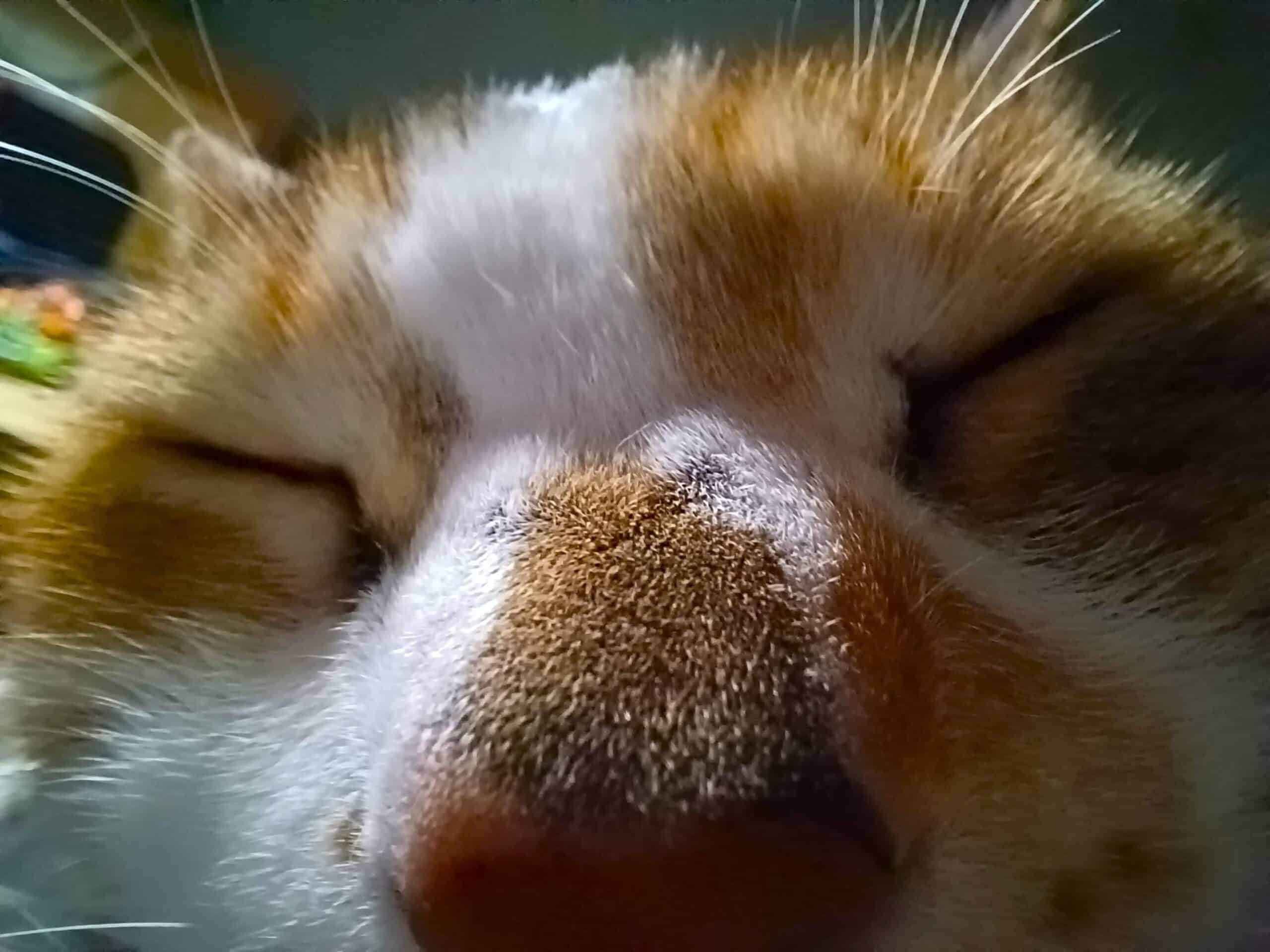
Silent Conversations: Unlocking the Secrets of Cat Body Language

Ever wondered what your cat is really saying?
Cats are master communicators, even without words.
Understanding their body language helps you strengthen your bond and improve your cat’s well-being.
Ignoring these signals?
Risk misunderstandings!
Decoding cat body language isn’t just for fun; it leads to a more harmonious home.
No more guessing games or side-eye stares from your furry friend.
Curious yet?
Let’s turn those enigmatic gestures into clear messages!
The Telltale Tail: Emotions and Movements
The tail tells all!
A puffed up tail means excitement, fear, or agitation, while a twitching tail signals stress.
Notice an upright tip?
Your cat’s feeling friendly and ready for play!
Ever see the infamous “question mark” tail?
That’s pure curiosity in action and a sign of a friendly greeting.
Your cat’s tail is a mood ring.
Swipe right for happy vibes, but back off if it’s twitchy.
Decoding Ear Positions
Pointy ears?
Someone’s on the hunt for gossip!
Flat ears indicate fear or aggression—approach with caution.
Ears that swivel like mini-radars?
Your cat is on high alert or super intrigued by something (maybe you!).
The ears are your cat’s secret antennae, broadcasting her vibes.
Tune in for a clearer channel of communication.
Paw Language: Kneading to Boxing
Those adorable kneading paws?
Your cat may be reminiscing about kittenhood when she’d knead on her mom’s stomach to get more milk.
Paw swats, on the other hand, signal a playful or defensive stance, depending on context.
Paws are not just for walking either—they speak volumes in the cat world.
Because their paws have scent glands, cats also use scratching to mark their territory to leave communication signals for other cats.
Reading The Eyes: Blinks, Stares, and More
Sly blink from your cat friend?
That’s feline lingo for “I trust you.”
A prolonged stare?
Might be a sign of hostility.
The wider the eyes, the more interested (or surprised) your cat is.
Large pupils can mean excitement or fear, but context is always key.
Ever wonder about the slow blink?
It’s a sign of trust, or sometimes a sign saying “I’m not a threat.”
Send one back and see what happens!
Posture Says It All: Relaxed vs. Tense
A lounging kitty is a happy kitty.
If your cat is curled up and cozy, she’s calm and content.
Arched back?
Either she’s ready to pounce—or she’s spooked.
Context means everything here.
Vocalizations and Their Role
While mainly non-verbal, cats do enjoy the occasional chat.
Chirps and trills are friendly greetings, whereas deep growls spell caution.
Meows have a wide range—from demanding to affectionate.
Yes, your cat really is talking to you.
If your cat won’t stop meowing, then something might be wrong.
Take some time to figure out what it is.
Listening to your cat’s vocal cues complements understanding her body language—together, it’s the complete package.
Facial Expressions Decoded: Whisker Language
Whiskers give away more than you’d think.
Forward whiskers indicate interest or curiosity.
Approach with care; your cat could be feeling anxious or on the defensive.
Whiskers aren’t just for navigation—they’re the sneaky facial indicators of your cat’s inner world.
Tummy Time: The Yin and Yang of Trust
Exposing the belly can be the ultimate display of trust—but it’s not always an invitation to touch.
Rolling over shows comfort but you may tempt fate if you assume all’s well and go in for a quite scratch.
I wouldn’t recommend it.
Belly-up?
Yes, your cat trusts you.
But remember, pet that tummy at your own risk!
Understanding Play and Social Interactions
Play stalking, pouncing, and chasing are practice for those predatory instincts and express excitement.
Play varies—cats might wrestle gently with their humans but get serious with other felines.
Respecting how your cat plays fosters trust and understanding in your special partnership.
The Role of Grooming in Communication
Grooming’s about more than cleanliness—it’s how cats show affection and social bonding.
A cat grooming another is a sign of their deep bond, akin to us giving hugs.
Over-grooming, however, can indicate stress or discomfort; watch for changes in habits.
The Context of Scent and Marking Behaviors
Scent-marking through rubbing or scratching is your cat’s way of saying, “This is mine!”
This behavior can create a familiar environment but can also signal territory warnings.
Why Context is Key in Interpretation
Body language doesn’t exist in isolation; notice the overall picture, not just a single trait.
Environment and other cues often reshape what your cat’s behavior truly means.
Combine gestures, postures, and cues for a holistic understanding of feline communication.
Key Takeaways
Understanding your cat’s body language helps transform the human-feline bond into an even more fulfilling partnership.
Every wag, blink, or ear twitch is a secret waiting to be unlocked by those in the know.
Watch, learn, and engage—the rewards are a deeper understanding and a more harmonious home life.
