
5 Simple Ways to Make Your Cat’s Life More Enriching

Your cat has food, water, a clean litter box, and a warm place to sleep. By all measures, he’s got everything he needs. So why does he seem… bored?
Here’s what comfort doesn’t automatically include: the ability to hunt, climb, hide, observe, and make choices. These aren’t luxuries for cats—they’re fundamental needs that shape their overall physical and mental well-being.
Cats often live in environments designed entirely for human convenience. When enrichment is missing, they can become restless, disengaged, or stressed even when nothing seems obviously “wrong.”
The solution isn’t complicated or expensive. It’s about making small, thoughtful changes that support what cats are naturally wired to do. This guide walks you through five simple ways to make your cat’s life more enriching, changes that work in any home and don’t require a major renovation or a shopping spree.
#1. Add More Vertical Space
Cats are naturally drawn to height. Being able to climb, perch, and look down on their environment helps them feel calmer and safer.
Why Vertical Space Matters to Cats
From a higher vantage point, your cat can:
- Observe his surroundings without being disturbed
- Avoid unwanted interactions
- Monitor activity while remaining at rest
Feeling in control of their environment plays a major role in helping cats feel secure. When your cat knows where he can rest, hide, or move away if he needs to, it’s much easier for him to relax. Without that sense of security, stress often shows up in other less desirable ways, like excessive meowing, destructive scratching, or avoiding the litter box..
Easy Ways to Add Vertical Space
You don’t need fancy built-in cat furniture to create vertical options.
Simple ideas include:
- Clearing space on sturdy bookshelves or cabinets
- Adding wall-mounted shelves or window perches
- Positioning furniture to create safe climbing routes
Even one well-placed perch can dramatically change how your cat navigates his territory.
Vertical Space in Multi-Cat Homes
In multi-cat homes, vertical space is especially important. Adding height expands the cats’ territory without taking up floor space, giving each of them more room to rest and retreat. This reduces competition for key resources like sleeping spots and hiding places, helping lower tension and support more peaceful coexistence.
#2. Create More Hiding Opportunities
Hiding isn’t a sign that your cat is shy, unfriendly, or unhappy. It’s a natural behavior that helps him manage stress and maintain control over what happens to him. When cats don’t have appropriate places to hide, they may feel exposed or on edge, even in familiar surroundings.
Providing hiding spots gives your cat a way to retreat without leaving the room or the home.
Why Hiding Is So Important for Cats
Having the option to hide is enormously calming.
Cats use hiding to:
- Reduce sensory overload
- Avoid conflict or unwanted interaction
- Feel secure while they rest or observe
- Retreat when they feel unsafe or threatened
Simple Ways to Add Hiding Spaces
Hiding spots don’t need to be elaborate.
Easy options include:
- Cardboard boxes placed on their side
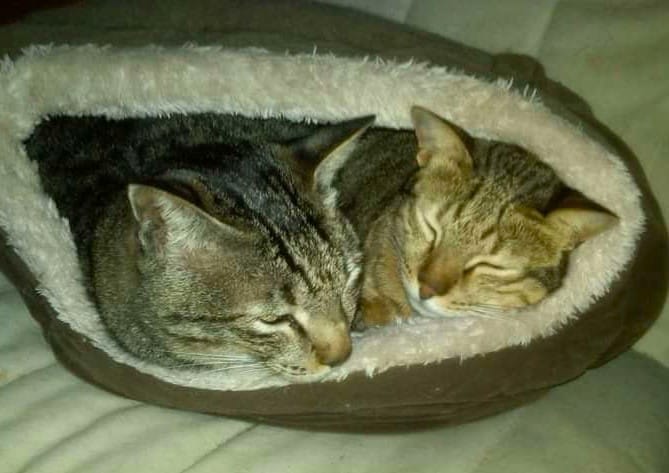
- Covered cat beds or soft tunnels
- Space under furniture with enough clearance
The key is that the space feels enclosed on at least two sides and allows your cat to choose when to enter or leave.
Hiding in Multi-Cat Homes
In multi-cat homes, hiding spaces allow cats to avoid conflict by disengaging on their own terms, helping keep overall stress levels lower.
#3. Offer Food-Based Enrichment
Food isn’t just fuel for cats. It’s one of the most powerful ways to meet their mental and emotional needs. In the wild, they spend significant time searching, stalking, and working for their food. But when meals are delivered instantly in a bowl, that entire process disappears.
Food-based enrichment brings back that natural hunting sequence.
Why Food Enrichment Works
Using food as enrichment helps cats:
- Engage their hunting and problem-solving instincts
- Focus their attention and use their brain
- Experience the satisfaction of “seeking” and finding
This activates the brain’s “seeking system,” which releases feel-good endorphins. For many cats, this kind of mental effort is deeply satisfying and can help counter negative emotions like fear, anxiety, frustration, and boredom.
Food Puzzle Feeders
Food puzzle feeders encourage your cat to use his thinking brain, which helps quiet the part of the brain responsible for big emotions like fear and frustration. When your cat is focused on figuring something out, there’s less mental space for stress to take over. That shift can leave him feeling relaxed and settled once the activity ends. Just like how, for humans, it’s harder to feel anxious when you’re concentrating on a task.
Simple Ways to Add Food Enrichment
You don’t need to replace every meal with a puzzle feeder. Even small changes can make a difference.
Easy options include:
- Using simple puzzle feeders or DIY food puzzles
- Scattering dry food in a small area so cats have to search
- Hiding a few treats around the room for your cat to find
- Using a slow feeder bowl
The goal isn’t to make food difficult to access, but to slow the experience down. By stretching out one of the most rewarding moments of your cat’s day, food puzzles help create longer-lasting satisfaction, which can positively influence his overall mood and stress levels.
Why This Matters for Indoor Cats
Indoor cats often have fewer opportunities to express natural hunting behaviors. Without a proper outlet, that unused energy often has nowhere productive to go. Again, this can manifest in a range of unwanted behaviors. It’s much easier to prevent that from happening in the first place, than try to fix it once it’s started.
#4. Incorporate Play Sessions
Because cats are natural predators, play should tap into their instinct to stalk, chase, and pounce. Offer a variety of toys, such as interactive wand toys, puzzle feeders, catnip mice, and whatever else your cat enjoys.
Why Play Is So Important
Play is essential part of your cat’s emotional well-being. Because it helps shift his emotional state away from negative emotions like fear or anxiety and toward something more positive, it acts as a natural buffer against stress. Over time, this helps create a calmer cat overall, reducing the likelihood that stress will spill over into those unwanted behavior issues I mentioned earlier.
If your cat seems uninterested in playing, leave toys available rather than trying to force him to interact. Many cats play when no one is watching. Even when a cat tracks a moving toy with his eyes only, it can trigger the release of feel-good endorphins.
That quiet engagement still provides mental stimulation and stress relief, making it a valuable starting point, especially if you have a nervous cat or have just adopted a cat who is unsure of his new surroundings.
Take Note of Your Cat’s Preferred Play Style
Not all cats play the same way. Some like to hide and leap out at their “prey,” while others are drawn to quick, fast-moving toys they can chase. Observing these preferences helps you tailor play to what your cat actually enjoys.
Rotate the toys regularly to keep things interesting.
Interactive Cat Toys
When it comes to interactive toys, the options are endless. From simple DIY creations like a ping pong ball in an empty cardboard box to more sophisticated automatic cat toys that move and make noise, there’s something for every cat’s preference.
#5. Make Observation Easy
Not all enrichment involves doing something. For some cats, watching can be just as engaging as playing or hunting. Observation allows them to stay mentally connected to their environment while remaining physically at rest—a combination that many cats find deeply satisfying.
Providing opportunities to observe helps your cat feel included without pressure.
Why Observation Is Enriching for Cats
Cats are natural watchers. From a safe vantage point, they can take in movement, sounds, and changes without needing to react.
Observation helps cats:
- Engage their curiosity without overstimulation
- Feel connected to their surroundings
- Relax while still being mentally occupied
This kind of low-key engagement is especially valuable for cats who become overwhelmed by too much activity or interaction.
Window Perches and Safe Viewing Spots
A perch near a window gives your cat a front-row seat to the outside world.
From a window ledge, he can:
- Watch birds, people, and passing activity
- Track movement and light changes
- Engage his senses in a calm, controlled way
For indoor cats in particular, a window perch can become a highly enriching part of the home, especially when paired with vertical space and nearby resting options.
Observation in Multi-Cat Homes
In homes with more than one cat, observation spots also provide neutral shared space. The cats can occupy the same room without needing to directly engage with one another.
Less Can Feel Like More
An enriching environment isn’t about adding more; it’s about adding the right things. Cats do best when their space offers clear choices, predictable patterns, and appealing options for natural behaviors like climbing, hiding, hunting, and resting.
Enrichment doesn’t need to be constant or complicated. Small, intentional changes are often more effective than overstimulation. When cats feel safe and able to make their own decisions, more relaxed behavior tends to follow on its own.
