
7 Quick and Easy DIY Cat Toys Your Cat Will Love!

Your cat played with that $15 feather wand for three days, then decided the twist-tie from the bread bag was more interesting.
Here’s the thing about cats: they don’t care about price tags or marketing claims. They care about movement, texture, sound, and whether something triggers their instinct to hunt. A crumpled piece of paper can be more engaging than an expensive electronic toy if it moves unpredictably and makes the right crinkly noise.
Making your own cat toys lets you test what your cat actually responds to without spending money on things they’ll ignore. You probably already have everything you need. Materials like fabric scraps, cardboard boxes, paper rolls, bottle caps can become wand toys, chase toys, and puzzle toys that work just as well as store-bought options.
This guide shows you how to make seven different types of cat toys that tap into natural hunting behaviors. You’ll learn what makes toys engaging, how to match toys to your cat’s play style, and how to keep homemade toys safe.
What Makes A Toy Engaging For Cats
Cats are natural hunters, and the best toys tap into those instincts. Your cat wants to stalk, chase, pounce, and “catch” just like they would in the wild.
Movement is what triggers the hunting response. Toys that dart, flutter, or roll unpredictably hold your cat’s attention because they mimic how real prey behaves. A toy that sits still rarely holds interest for long.
Control matters too. Cats enjoy toys they can capture and “kill” after the chase. This completes the hunting sequence and gives them a sense of accomplishment.
Here’s what makes toys irresistible to cats:
- Erratic movement patterns that mimic prey behavior
- Different textures like feathers, fabric, or crinkly materials
- Appropriate size that fits in their mouth or can be batted around
- Interactive elements that respond to their touch or swats
The best toys let your cat complete the full hunting sequence: watch, stalk, chase, grab, and bite. Without this complete experience, your cat may lose interest quickly.
DIY Wand-Style Toys
Wand toys are a great way to tap into your cat’s hunting instincts. They also provide excellent exercise because they encourage cats to jump, stretch, reach, and fully extend their bodies, helping them build strength, flexibility, and coordination. You can make effective wand toys with basic household materials in just minutes.
#1. Fabric Strip Wand
You need a wooden dowel or stick about 12 to 18 inches long, fabric strips, and string or yarn. Cut old t-shirts or fabric scraps into strips about 1 inch wide and 8 to 12 inches long.
Tie a piece of string to one end of the dowel, making it about 2 to 3 feet long. Gather 5 to 8 fabric strips together and tie them securely to the end of the string. You can also braid the fabric strips before attaching them for a different texture.
The fabric strips will flutter and move when you wave the wand, mimicking prey movement. Make sure all knots are tight so the fabric doesn’t come loose during play. You can use different fabric types like cotton, fleece, or denim to create various textures your cat might prefer.
Store the wand in a safe place when not in use to keep your cat interested during playtime.
#2. Paper Streamer Toy
This simple wand uses tissue paper or crepe paper streamers. Take a stick or dowel and attach a 2 to 3 foot piece of string to one end.
Cut tissue paper or crepe paper into strips about 1 inch wide and 10 to 15 inches long. Bundle 6 to 10 strips together and tie them to the string end with a secure knot. The lightweight paper creates interesting crinkly sounds and quick movements that attract cats.
You can add a small bell to the attachment point for extra sound stimulation. Paper streamers wear out faster than fabric, so keep extra materials ready for replacements. Always watch your cat during play to make sure they don’t eat the paper.
Replace the streamers when they become torn or too short to be engaging.
Bat-And-Chase Toys
These simple toys tap into your cat’s urge to bat at moving objects and chase them across the floor—perfect for quick bursts of active play.
#3. Crumpled Paper Balls
Take any piece of paper from your recycling bin and crumple it into a tight ball. The crinkling sound catches your cat’s attention and the unpredictable movement triggers their prey drive.
Paper balls work well because they’re light and bounce erratically when batted. They roll, skitter, and change direction across hard floors in ways that keep cats engaged.
Different types of paper create different sounds and textures. Newspaper makes a softer crinkle, while printer paper stays firmer and holds its shape better. Parchment paper or tissue paper adds extra noise that many cats find irresistible.
Replace paper balls when they get torn or too flat to roll properly. Most cats will shred them after several play sessions.
#4. Bottle-Cap Sliders
Clean plastic bottle caps from milk jugs or soda bottles make excellent sliding toys. Their flat bottom and light weight let them glide smoothly across tile or hardwood floors.
Toss a cap across the room and watch your cat chase after it. The caps spin and slide in unexpected directions when batted, which keeps your cat engaged. Their small size makes them easy for cats to pick up and carry in their mouths too.
You can collect caps in different colors and sizes. Some cats prefer larger caps from juice bottles, while others like smaller ones from water bottles.
Safety Note: Check that caps don’t have sharp edges and supervise play to make sure your cat doesn’t swallow them.
#5. String/Ball Of Wool
A ball of yarn or wool gives your cat something to grab, kick, and chase. Loosely wind yarn into a ball about the size of a tennis ball or smaller.
Your cat can bat the ball around and watch it unravel as they play. The trailing string adds movement and encourages pouncing behavior. Some cats will carry wool balls in their mouths or toss them in the air.
Important Warning: Never leave your cat alone with string or yarn. Cats can swallow string, which causes serious digestive problems requiring emergency vet care. Always supervise these play sessions and put the yarn away when you’re done.
Consider using thicker yarn or rope that’s harder to break into small pieces. Natural fibers like cotton or wool work better than synthetic materials.
Solo Play Toys
Cats need toys they can enjoy on their own when you’re busy or away. These simple DIY options keep your cat mentally stimulated without requiring your constant attention.
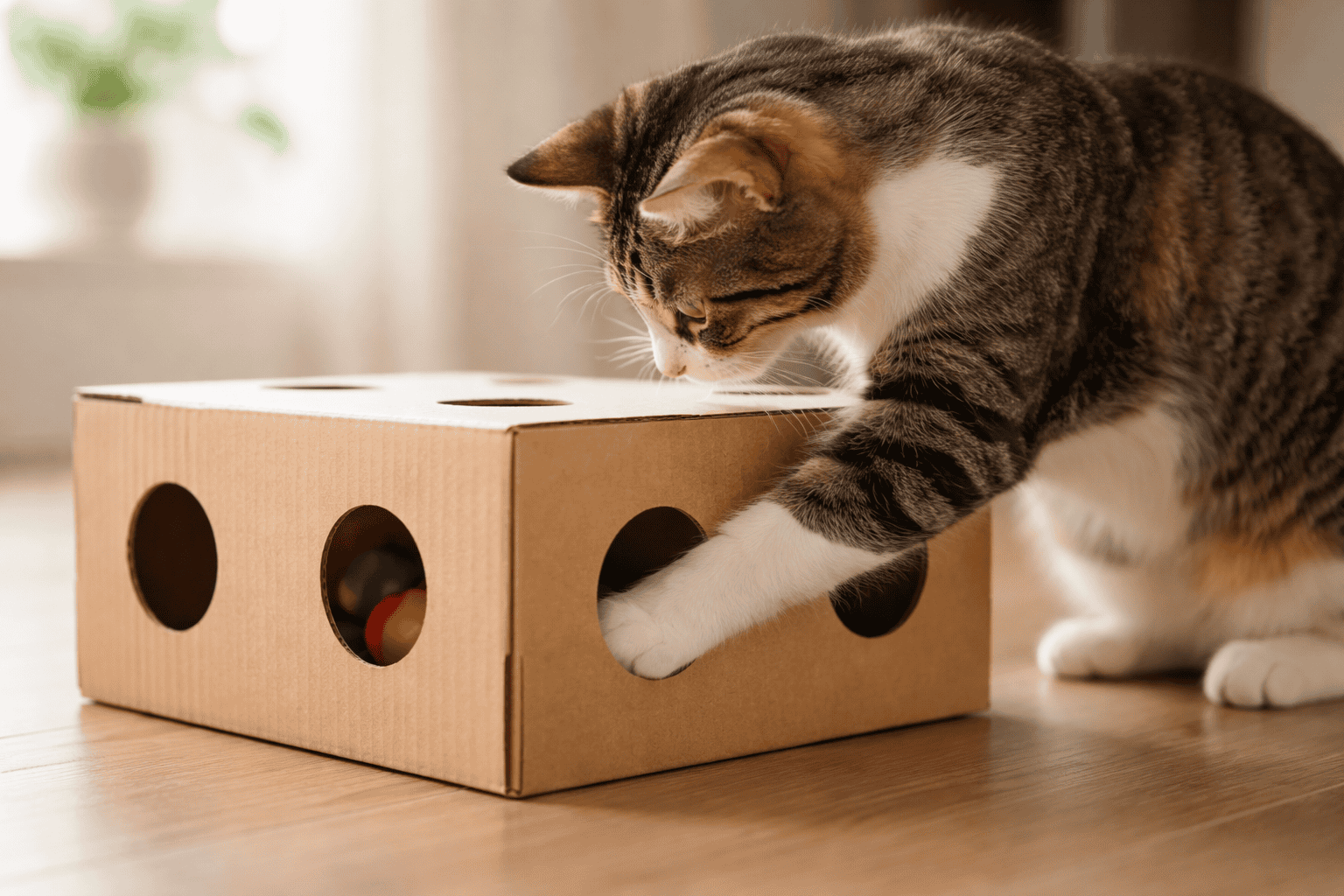
#6. Box-And-Hole Toys
Take a cardboard box and cut several holes in different sides. The holes should be about 2-3 inches wide so your cat can fit their paw through easily. Drop small toys, crinkled paper balls, or treats inside the box.
Your cat will spend time trying to fish out the items through the holes, which taps into their predatory instincts. You can use any box size, from small tissue boxes to large shipping boxes.
Materials you need:
- Cardboard box (any size)
- Scissors or box cutter
- Small toys or treats
Cut the holes at different heights to make the puzzle more interesting. Tape the box closed if you want to increase the challenge.
#7. Sock-And-Paper Toys
Fill a clean sock with crumpled paper or newspaper. Tie the open end in a knot to keep everything inside. Your cat can kick, toss, and carry this toy around the house.
The paper inside makes a crunching sound that cats find appealing. You can add dried catnip to the paper before stuffing it in the sock to make the toy more attractive.
Use socks without holes and make sure the knot is tight. Replace the toy when it starts to fall apart. You can make several of these toys in different sizes using various sock types. Add in a sprinkle of catnip to make it even more enticing.
Toy Safety Tips
Watching your cat play and rotating toys regularly prevents accidents and keeps them interested in playtime.
Supervision And Rotation
Never leave your cat alone with toys that have small parts, strings, or materials they could swallow. Watch your cat during play sessions to catch any signs of wear or damage. Remove toys immediately if pieces start breaking off or threads begin to loosen.
Store toys away when you’re not around to supervise. This is especially important for toys with feathers, ribbons, or yarn that could cause choking or intestinal blockages if eaten.
Rotate your cat’s toys every few days to maintain their interest. Keep three to five toys available at a time while storing the rest. This rotation makes old toys feel new again and prevents boredom.
Check each toy before giving it back to your cat. Look for loose parts, sharp edges, or damaged areas. Throw away any toy that shows signs of significant wear or poses a safety risk.
Why Is Play So Important?
Play keeps your cat mentally sharp and physically healthy. Regular play sessions let cats use their natural hunting skills in a safe environment, maintaining muscle tone and keeping them fit.
But the benefits go beyond physical health. Cats that play regularly show fewer signs of stress and anxiety. Play creates positive experiences that help your cat feel more relaxed throughout the day.
Here’s what play does for your cat:
- Reduces stress and promotes calmness
- Prevents boredom-related behaviors
- Keeps weight at healthy levels
- Sharpens natural instincts
- Builds confidence
- Promotes a positive mood state that helps act as a buffer against negative emotions like fear and anxiety
Daily play sessions don’t need to be long. Even 10-15 minutes of active play can make a noticeable difference in your cat’s mood and behavior.
Different Play Styles
Every cat has their own preferred way of playing. Understanding what your cat enjoys most helps you create toys that will actually hold their interest.
Some cats are natural hunters who love to chase moving objects across the floor. Other cats prefer to stalk and pounce, hiding behind furniture before leaping out at their target. Certain cats enjoy batting at toys that dangle or float in the air, while some are more interested in toys they can wrestle with or kick using their back legs.
Common play styles include:
- Chasers – Run after toys that move quickly across surfaces
- Pounce-and-Hide – Stalk toys from a hidden spot before attacking
- Batters – Swat at hanging or suspended objects
- Wrestlers – Grab toys with front paws and kick with back legs
- Puzzle Solvers – Figure out how to get treats from interactive toys
Watch how your cat interacts with their current toys. Notice which movements catch their attention and what makes them lose interest. Does your cat prefer fast or slow movements? Do they like toys that make noise or stay quiet?
Different breeds and ages may show tendencies toward certain play styles, but each cat is an individual. Offering a variety of homemade toys that match your cat’s preferred play style makes playtime as rewarding and enriching as possible.
