
8 Mental Enrichment Ideas for Indoor Cats (Easy & Low Effort)

Your cat sleeps 16 hours a day, stares out the window for two more, and spends the rest knocking things off counters or yowling at 3 a.m. for no apparent reason.
Here’s what many cat owners miss: boredom doesn’t always look like chaos. Sometimes it looks like a cat who’s just… existing. No obvious distress, no destructive behavior—just a quiet lack of anything interesting to do.
Cats are ambush predators hardwired to hunt, stalk, and problem-solve. When indoor life offers none of that, they don’t necessarily act out, they just disengage. Or they channel that energy into behaviors you’d rather they didn’t, like attacking your ankles at dawn or ripping up the couch.
The good news? Mental enrichment for cats doesn’t require expensive cat trees, laser pointers, or dedicated playtime. Small, intentional changes, things that take two minutes to set up, can make a huge difference in how engaged and content your cat feels.
This guide walks you through easy mental enrichment ideas for your indoor cat that work with real life. These ideas are low-effort, budget-friendly, and designed for cats who don’t play the way Instagram cats do. Whether you have a curious climber, a quiet observer, or a cat who ignores every toy you’ve ever bought, you’ll find simple ways to add mental stimulation without rearranging your entire home.
Brain Games for Cats at Home
Brain games give cats a chance to think, figure out solutions to puzzles, and “hunt,” even when they’re indoors. These activities don’t need to be high-energy or toy-driven. In fact, many cats engage more readily when the challenge is subtle and low-pressure.
The goal isn’t to exhaust your cat; it’s to activate their curiosity.
#1. Food-Based Brain Games
Food is one of the easiest ways to add mental stimulation, especially for cats who aren’t enthusiastic about toys.
Simple ideas include:
- Scatter feeding: Instead of placing all meals in one bowl, scatter small portions across a safe area so your cat has to search and sniff.
- DIY puzzle setups: Place treats inside an empty egg carton, paper towel tube (ends folded), or a shallow box with crumpled paper.
- Hide-and-seek feeding: Hide small food portions in predictable spots your cat can learn to seek out.
These activities slow down eating and engage your cat’s natural hunting and foraging instincts.
They also make one of the highlights of your cat’s day (food) last longer. By stretching out an already highly rewarding activity, you can improve your cat’s overall mood state and reduce frustration-related behaviors without adding stress.
#2. Hunting Games Without Toys
Not every cat wants to chase wand toys or bat plastic balls. Some cats prefer quiet, controlled hunting-style activities.
Try:
- Rolling a crumpled paper ball slowly across the floor
- Creating a short “treat trail” using dry food or freeze-dried treats
- Letting your cat “find” hidden treats after watching you place them
- Pull a piece of string under the corner of a rug
For some cats, simply watching the movement or anticipating the reward (finding or “catching”) is mentally enriching on its own.
Keep sessions short and optional. Ending the activity while your cat is still interested helps prevent frustration and keeps these games engaging over time.
Cat Enrichment Without Toys
Some cats ignore toys entirely, and may be more interested in spaces, scents, textures, and observation than chasing objects. The good news is that mental enrichment doesn’t require a growing pile of cat toys.
Some of the most effective enrichment ideas use things you already have.
#3. Using Household Items
Everyday household items can become engaging enrichment when used intentionally.
Ideas to try:
- Cardboard boxes: Leave one open, flip one on its side, or stack two to create options. Novelty often matters more than complexity.
- Towels or blankets: Loosely fold or drape them to create tunnels, hiding spots, or gentle obstacles.
- Paper bags (handles removed for safety): These provide sound, texture, and the opportunity to hide, three things many cats absolutely love.
Rotate items occasionally rather than leaving everything out at once. A familiar object can feel new again after a short break.
#4. Environmental Enrichment Ideas
The environment itself is one of the richest sources of mental stimulation for cats.
Simple environmental enrichment includes:
- Window access: Watching birds, people, or a rotating mobile can be deeply engaging.
- Scent enrichment: Introduce safe new smells occasionally, such as a cloth rubbed on a different surface (e.g. tree bark, fresh grass) or a small pinch of cat-safe herbs like catnip or valerian.
- Sound variety: Brief exposure to soft outdoor sounds or quiet music can add novelty for some cats.
- Bring the outdoors in: Rotate safe natural items like small branches, bark pieces, pinecones, cat grass, or dried leaves to provide new textures and scents. Note: Always check first, as some plants and flowers are toxic to cats.
Not every cat enjoys every option. The goal is choice, not constant stimulation. Offering opportunities and letting your cat decide is what makes enrichment effective. Pay attention to what your cat likes, and offer more of that. This, of course, with cats being what they are, may change over time.
Low-Effort Cat Enrichment Ideas
Mental enrichment doesn’t have to mean adding more tasks to your day. Some of the most effective enrichment ideas fit easily into routines you’re already following. For many cats, small, predictable interactions are more valuable than long play sessions.
#5. Enrichment for Busy Cat Owners
If your time or energy is limited, focus on enrichment that requires little setup and minimal supervision.
Low-effort ideas include:
- Moving food bowls: Change the location slightly from day to day so your cat has to search and orient.
- Leaving out one “novel” item: Rotate a single box, bag, or blanket every few days.
- Timed observation: Open a curtain or window blind during peak activity times for visual stimulation.
These changes take seconds but can significantly increase mental engagement. Note: some cats may find change stressful, so watch carefully as this option may not be suitable for all cats.
#6. Daily Enrichment You Can Stack
“Stacking” enrichment means pairing it with things you already do.
Examples:
- Scatter a portion of your cat’s breakfast while making your coffee
- Hide a few treats before sitting down in the evening
- Add a short observation window before bedtime
By linking enrichment to existing routines, it becomes sustainable, and consistency matters more than intensity.
Mental Stimulation for Cats That Don’t Like Toys
If your cat isn’t interested in hunting-type activities, it doesn’t mean they’re uninterested or unmotivated. Some cats prefer low-energy, observation-based activities that allow them to engage without pressure.
For these cats, enrichment works best when it’s subtle and optional.
#7. Observation-Based Enrichment
Observation is a powerful form of mental stimulation for cats. Watching is not “doing nothing.” Think of it rather as “information gathering.”
Ideas to support this include:
- Providing clear views of the outdoors from window ledges or safe vantage points
- Chat to your cat as they watch you move through daily routines and follow you around
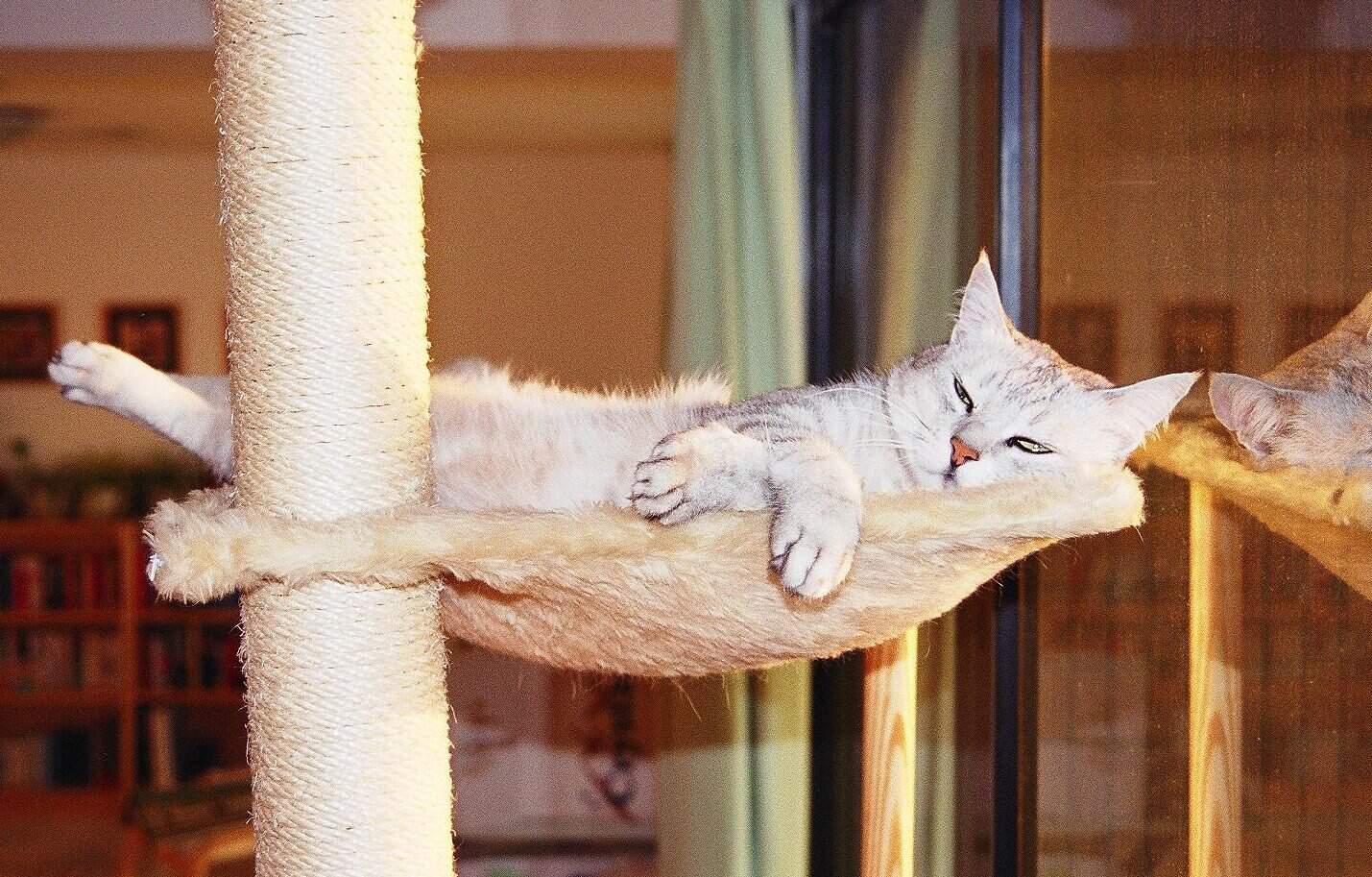
- Creating elevated resting spots where your cat can observe without being disturbed
These setups allow cats to engage mentally while remaining physically relaxed.
#8. Choice-Based Enrichment
Choice is a form of enrichment in itself. When cats can decide whether to engage, they’re more likely to feel safe and confident, and more in control of their environment. This acts as a powerful buffer against negative emotions like fear, anxiety, and stress.
Try:
- Offering multiple resting spots instead of guiding your cat to one
- Placing enrichment options nearby rather than directly in front of your cat
- Letting your cat walk away without re-engaging them
Forcing interaction often leads to disengagement. Respecting your cat’s choices helps enrichment feel rewarding instead of overwhelming.
How to Start Using These Ideas (Without Overdoing It)
When it comes to mental enrichment, more isn’t necessarily better. The most effective enrichment routines are simple, flexible, and led by your cat’s preferences. Starting small helps your cat stay curious without becoming overstimulated.
Start Small
Choose one idea from this list and try it for a few days before adding anything new. This gives your cat time to explore and adjust, and it makes it easier for you to notice what they enjoy most.
Even small changes, like moving a food bowl or adding a new observation spot, can make a noticeable difference.
Let Your Cat Lead
Every cat engages differently. Some will jump in right away, while others observe from a distance before participating. Even if it looks like your cat isn’t interested, you may find them tracking a toy with their eyes or showing small signs of engagement, like ear or tail movement. This is a great starting point.
Pay attention to:
- Where your cat spends time
- What they return to repeatedly
- When they walk away
Enrichment should feel like an invitation, not an expectation. When cats are allowed to opt in and out, they’re more likely to stay engaged over time.
Why Indoor Cats Need Mental Enrichment
Indoor cats may have food, warmth, and safety, but mental stimulation is often the missing piece. In the wild, cats spend a large part of their day observing, problem-solving, hunting, and making choices. When those needs aren’t met indoors, boredom can creep in quietly.
Mental enrichment doesn’t mean keeping your cat busy all day or turning your home into an obstacle course. It’s about giving your cat opportunities to think, explore, and engage with their environment in small, manageable ways.
For indoor cats especially, mental enrichment helps:
- Break up long stretches of inactivity
- Add novelty without stress
- Support confidence and emotional balance
- Make daily life more interesting, even in small spaces
The key is simplicity. Many effective enrichment ideas don’t involve toys at all. They rely on decision-making, curiosity, and natural cat behaviors like watching, sniffing, and searching.
Indoor Cat Enrichment That Reduces Boredom
Boredom in indoor cats doesn’t always look dramatic. Sometimes cats appear calm and relaxed even though they’re quietly lacking mental engagement. Over time, this can lead to restlessness, over-sleeping, or increased frustration. That’s when you can start to face issues like destructive scratching, excessive meowing, and litter box problems.
Mental enrichment helps by adding purpose and variety to your cat’s day without overwhelming them.
Signs Your Cat May Need More Mental Stimulation
You don’t need to see obvious “problem behaviors” to realize that your cat may need more enrichment. Subtle signs can include:
- Long periods of inactivity with little environmental interaction
- Frequent pacing between rooms
- Intense interest in minor changes or sounds
- Repeated checking of the same areas
These are often signs that your cat is seeking engagement, not attention.
Why Mental Enrichment Works Long-Term
Consistent mental stimulation supports more than momentary entertainment. Over time, enrichment can:
- Encourage curiosity and exploration
- Support emotional regulation by promoting a calmer, more positive emotional state
- Help cats feel more confident in their environment
- Reduce stress and counter negative emotions like fear, anxiety, and aggression
- Help prevent behavior problems
When cats have regular opportunities to think and choose for themselves, they’re less likely to seek stimulation in ways that feel disruptive or confusing to their humans.
