
“My Dog Can’t Relax.” These 10 Enrichment Ideas Will Change That

If your dog seems constantly on edge, enrichment might be the missing piece you’ve been looking for. Far from being just a buzzword, enrichment is one of the most effective ways to help dogs manage anxiety, build confidence, and feel more grounded.
These 10 trainer-approved strategies go beyond the basics to support your pup emotionally and mentally. Whether your dog is new to the family, fearful of the world, or just needs help winding down, these ideas can make a huge difference.
1. Lick Mats and Frozen KONGs
These two tools are go-to calming aids for a reason. The repetitive licking action helps soothe the nervous system, while frozen KONGs provide long-lasting engagement.
Spread soft food like peanut butter or canned dog food onto a lick mat, or stuff a KONG and freeze it. It turns stressful moments—like being left alone—into positive, predictable experiences.
2. Snuffle Mats
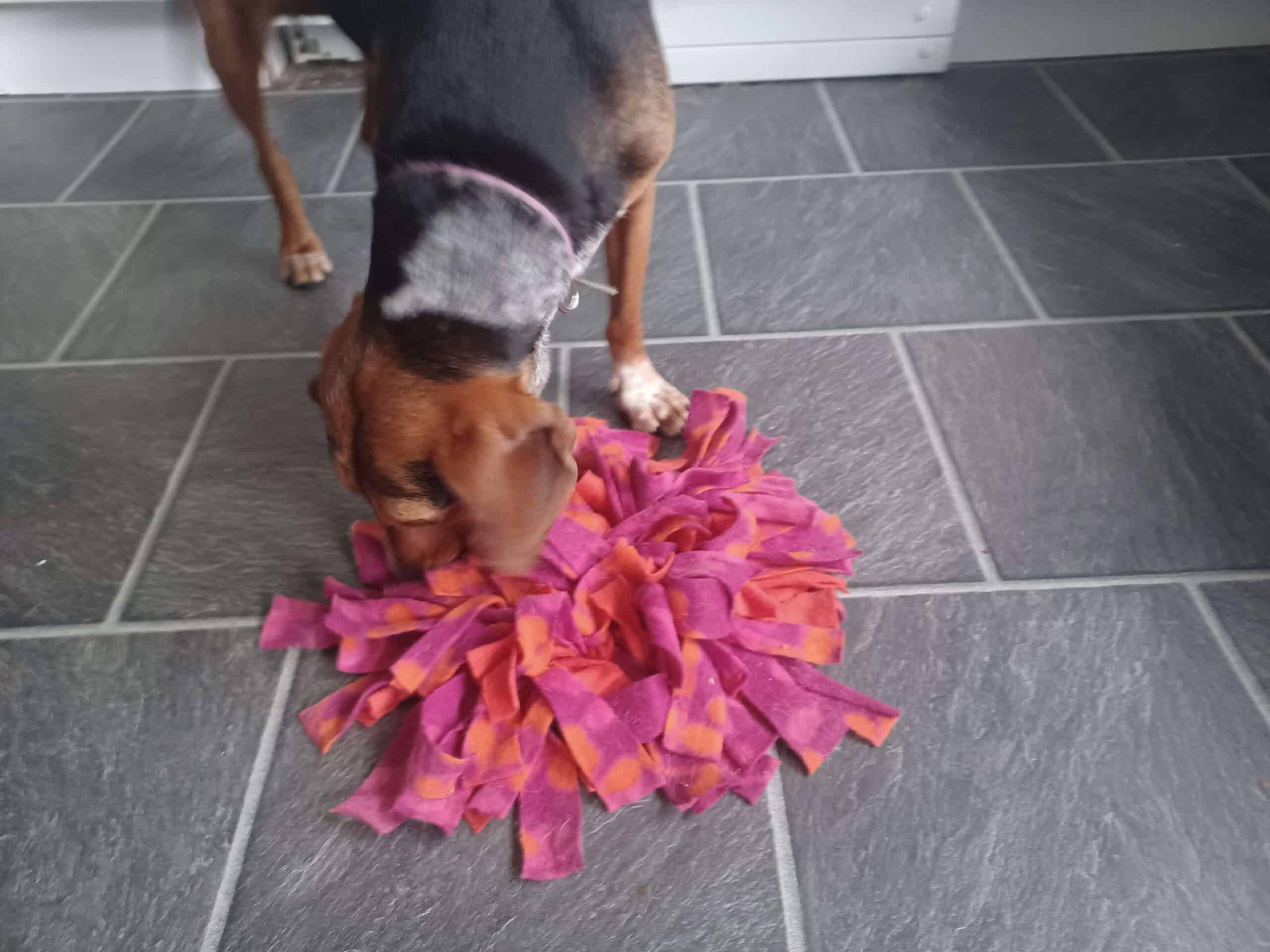
Snuffle mats mimic a dog’s natural foraging behavior and offer a mentally stimulating way to search for treats. It’s calming, engaging, and especially helpful for anxious eaters or dogs who need something to do (see image of Esme, top of page).
A few minutes of focused snuffling can reduce stress and redirect nervous energy into something constructive.
3. Puzzle Toys
Think of these as brain games for your dog. Puzzle toys require problem-solving, which not only builds confidence but also distracts from anxiety.
Choose interactive toys that allow your dog to nudge, lift, or roll pieces to reveal hidden treats. It’s a gentle, effective way to encourage curiosity over fear.
4. Sniff Walks (“Sniffaris”)
Instead of leading the way, let your dog guide the walk with their nose. These unhurried, dog-led outings are rich in sensory input and naturally calming. There’s no goal except exploration. It’s a simple shift that turns a routine walk into a deeply enriching experience.
Research shows that sniffing lowers a dog’s blood pressure, making it an easy way to help your dog relax.
5. Scent Work
From basic treat-hiding games at home to formal scent detection training, scent work gives anxious dogs a clear job and a confidence boost. The mental focus involved can quiet anxious minds, especially in high-energy or easily overwhelmed dogs.
6. Clicker Training
Positive reinforcement training with a clicker helps anxious dogs learn predictability and build self-assurance. Every click marks success—and success feels safe. Even short, simple training sessions can give your dog a sense of control and make scary environments feel more manageable.
7. Games and Playdates
Whether it’s solo fetch or a gentle game of tug, play is a powerful stress reliever. If your dog is comfortable with others, carefully chosen playmates can offer valuable social enrichment too. No pressure, just fun movement and bonding.
8. Create a Relaxation Station
Set aside a cozy, quiet spot where your dog can go to unwind. Think soft bedding, gentle lighting, calming scents, and a few familiar toys. This kind of safe retreat can give your dog a sense of control and predictability during times of stress.
9. Massage and Gentle Touch
Massage can be incredibly grounding for anxious dogs. Gentle strokes reduce tension and increase oxytocin, aka “the bonding hormone.”
Techniques like Galen Myotherapy and TTouch use circular motions to help calm the nervous system. The result? A dog that feels more secure in their body and environment.
10. Calming Music or White Noise
Music really does soothe the soul, even canine ones. Play calming classical music or specially designed dog playlists to ease anxiety caused by noises or overstimulation. White noise can also help mask sounds like fireworks, thunder, or barking dogs, creating a more peaceful environment.
The Takeaway
Adding even one of these ideas to your routine can support your dog’s emotional well-being. Over time, these simple, intentional activities build resilience, confidence, and calm, one enrichment moment at a time.
Curious to learn more? Explore a more in-depth version of this article here:
