
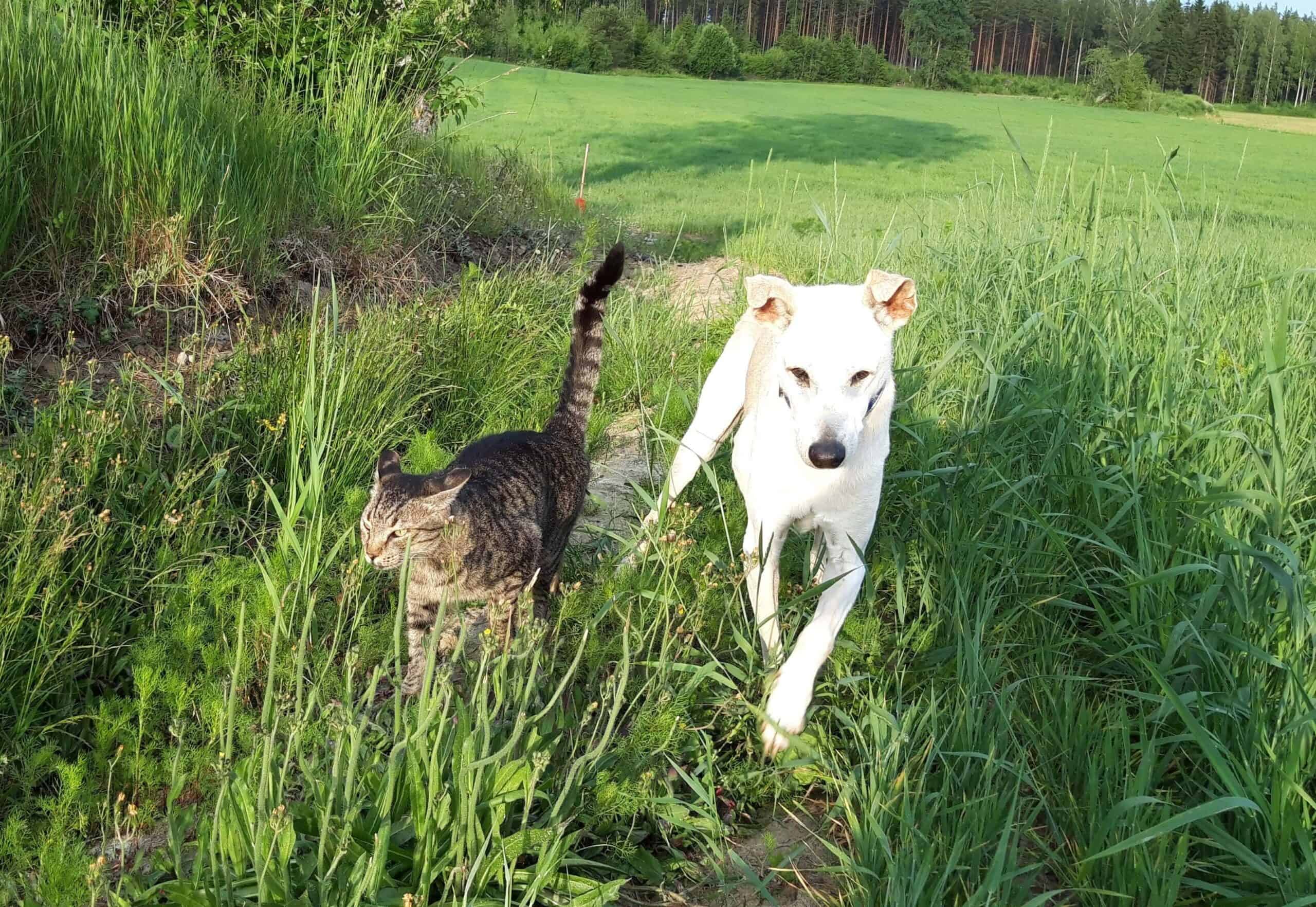
Galen Myotherapy: A Game-Changer for Senior Dogs (Real-Life Review)

SUMMARY: Galen Myotherapy vastly improved our 18½-year-old dog Bertie’s mobility, strength, and quality of life, despite his grand age and increasingly stiff, arthritic joints. As part of a holistic approach to his health and well-being, we implemented Galen Myotherapy exercises for him at home, guided by a certified therapist, and saw improvements almost immediately.
According to Canine Arthritis Management, osteoarthritis affects a significant portion of dogs, with 80% of those aged 8 years and above.
Potentially, up to 35% of dogs of all ages experience this painful condition.
Those figures are quite the eye-opener.
From my own experience, the signs of osteoarthritis can initially be subtle.
These may include a gradual slowing down on walks, occasional balance issues on uneven ground, or difficulty getting up after an extended period of rest.
I began noticing all of these signs in our beloved Dubai desert dog, Bertie, once he got up into his mid-teens.
Once the most athletic of canines, Bertie’s explosive sprints and joyful ‘figure-of-8’ zoomies almost imperceptibly started morphing into slower, more labored movements.
While his spirits remained high and he never complained, his discomfort was obvious.
Like most devoted dog parents, I was ready to do everything possible to help him maintain the best quality of life possible in his golden years.
This is where Galen Myotherapy came in.
It turned out to be a decision that would open a new chapter in Bertie’s journey, one that helped him regain mobility, build up strength, and enjoy a renewed lease of life for another three years.
If you’re curious about the transformative potential of therapeutic massage for dogs facing the challenges of aging and arthritis, I hope Bertie’s story will inspire you.
Understanding Galen Myotherapy
What is Galen Myotherapy?
Galen Myotherapy is a specialized type of manual therapy for dogs that focuses on:
- Treating and managing chronic muscular pain
- Relieving discomfort
- Improving function and mobility
- Promoting the health of the dog’s muscular system
- Enhancing a dog’s overall quality of life
The Principles Behind Galen Myotherapy
Galen Myotherapy is all about understanding and manipulating the muscular system to promote healing and prevent further injuries.
It’s a science-backed approach that involves targeted massage techniques and rehabilitative exercises tailored to the individual needs of each dog.
Specifically, it can help address issues stemming from old injuries, arthritis, and other musculoskeletal conditions.
Think of it as physical therapy tailored for the unique anatomy of dogs.
By focusing on areas that are tense, swollen, or painful, Galen Myotherapy eases the body into a state of relaxation and facilitates the healing process.
Benefits of Galen Myotherapy for Dogs
According to the official website, Galen Myotherapy delivers effective and measurable results within 1-3 sessions for many chronic conditions and situations.
These include:
- Pain management for conditions such as osteoarthritis, hip dysplasia, subluxating patellas, elbow dysplasia, cruciate issues, spondylitis, Canine Degenerative Myelopathy, soft tissue injuries, repetitive strain injuries, ongoing lameness, and whiplash caused by speed impacts
- Behavioral issues related to pain
- Elderly dogs
- Dogs showing reluctance to be active or slowing down
- Enhancing the health and performance of sporting dogs
- Supporting puppy development
Treatment takes place without restraining the dog, and is always done on the floor or at a low level for the dog’s maximum comfort.
This means the dog has the option to walk away if he wants to, making him an active participant in his treatment.
Overall, Galen Myotherapy is a gentle, non-invasive treatment that can provide immense relief and improve the well-being of dogs of all ages and sizes.
Bertie’s Galen Myotherapy Journey
Background and History
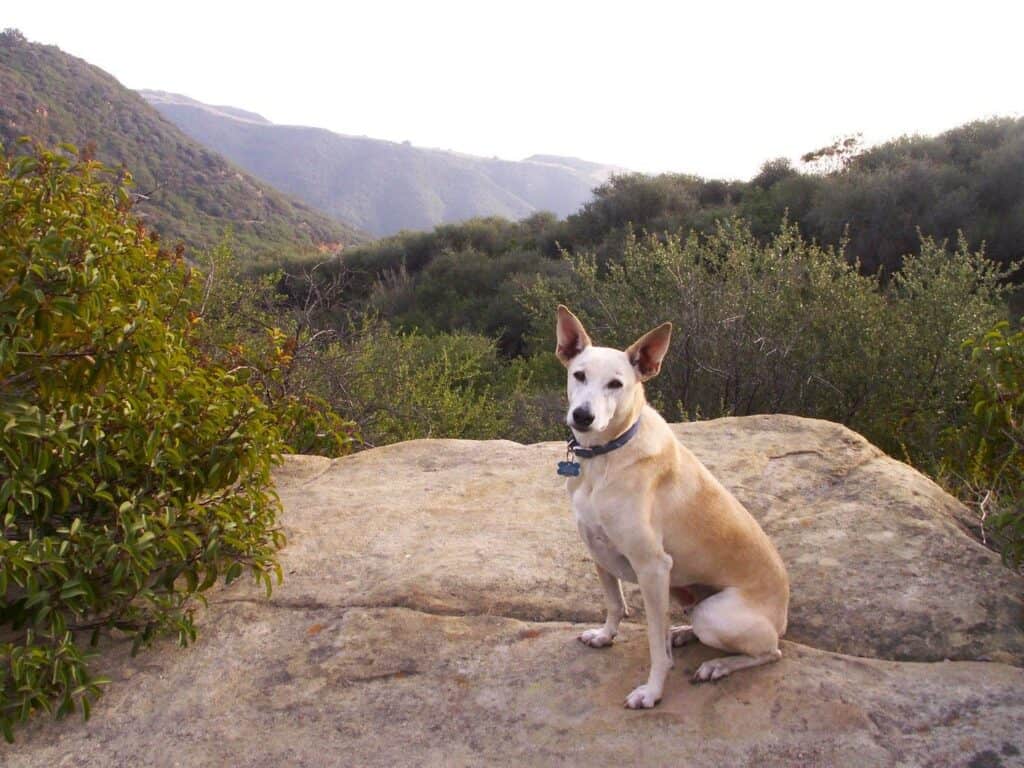
Our journey with Bertie, an athletic desert dog who could run like the wind, started in Dubai, where we were living at the time.
Bertie had been dumped in the shelter as a 6-month-old puppy for “destructive behavior” (apparently, he was left home alone all day).
There he remained for the next 3½ years, where he was overlooked time and time again in favor of more ‘attractive’ breeds.
With his charming little stumpy tail and a brave, gentle spirit that refused to be daunted by his long wait, we immediately chose Bertie to become part of our family—simply because he was the shelter’s longest stayer at the time.
He turned out to be calm, kind, quirky, loving, and so much more besides.
Everyone else’s loss was very much our gain.
When the time came for us to relocate from Dubai to Los Angeles and, a few years later, to Northern Europe, Bertie and his canine siblings were an integral part of the process and accompanied us every step of the way.
Identifying the Need for Galen Myotherapy
Fast forward several years, and I began to notice a general slowing down in Bertie when he was about 15½-16 years old.
He started lagging behind on walks, was moving more stiffly in general, and would sometimes lose his balance altogether in the rough forests where we often walked.
He was also struggling to bend down to eat from his food bowl and to get up after sleeping.
On top of that, he became clumsy, frequently bumping into things because he was so focused on reaching his destination rather than on how to best navigate there.
Sadly, Bertie’s once effortless grace was becoming overshadowed by increasing discomfort.
It was time to take action.
First up, a visit to the veterinarian, where it was confirmed that Bertie’s joints were getting stiff and painful due to old age and arthritis.
Our vet immediately devised a pain management plan which helped a lot, but I wondered what else I could do to help him.
I did my research and came upon Galen Myotherapy as one potential contender.
I was particularly drawn to the Distance Support Program (DSP), which meant I could do the treatment at home, sparing Bertie the hassle of daily trips for therapy sessions.
What Is the Galen Myotherapy Distance Support Program?
The Distance Support Plus Program is a tailored 6-week rehabilitative and functional exercise regimen aimed at addressing specific weaknesses and improving overall mobility, flexibility, and strength.
Through remote, personalized guidance from a dedicated and experienced Galen Myotherapist, owners receive a detailed analysis of their dog’s posture and movement based on the photos and videos they supply.
This breakdown identifies areas of weakness and compensation in the dog’s biomechanics.
Owners are then guided toward implementing environmental and activity changes, along with learning targeted massage techniques to improve their dog’s musculoskeletal health.
Detailed instructions are provided, and owners are supported to ensure they are executing the techniques correctly.

Sign Me Up!
This all sounded good to me, so I immediately reached out to find out more about how the Distance Support Program could help us.
This was my initial inquiry:
I have a senior desert dog who has always been super fit, but is now showing many signs of arthritis, is quite lame in his back right leg, can’t jump anymore, curved spine, etc. He is on pain meds but I would like to help him be more mobile, if possible. Sometimes, once he has warmed up he can still run around and jump over things but gets quite stiff afterwards. He quite happily allows me to massage his back, neck and legs. Do you think you might be able to help him via a remote consult?
Verity Brighton from Galen Myotherapy responded promptly, professionally, and warmly.
Our first step was to complete the enrollment process.
In return, the program promised a full postural assessment and to equip me with tools to alleviate Bertie’s discomfort through massage and environmental adjustments.
Following this, a thorough assessment of Bertie’s condition would be conducted.
Enrolling in the Distance Support Program
Step 1
Our first task was to provide comprehensive information about Bertie’s history, living environment, and activity level.
This involved completing a detailed questionnaire covering various aspects, such as:
- Previous injuries/accidents
- Types of flooring in the home
- Steps or stairs in the home environment
- Types of surfaces encountered on dog walks
- Length of walks
- Play activities
Step 2
The second requirement was to complete the Galen Myotherapy Comfort Scale, which included things like:
- Physical signs of discomfort (e.g. difficulty getting up from lying down, general clumsiness)
- Behavioral signs of discomfort (e.g. scratching, gnawing, or licking a part of the body, no longer wagging tail)
- Eating and digestion
- Other indicators (e.g. dry nose, dry coat, sleeping with head hanging down)
Step 3
Lastly, I had to provide a range of videos and photos capturing Bertie from multiple angles, including:
- Behind view
- Front view
- Overhead view
- Side view
- Close-up of the feet
- Toileting
- Eating/drinking
- Walking
- Shaking off
It might sound a little daunting, but once I got started, the process was actually quite straightforward.
I knew all this gathered information would play a vital role in ensuring an accurate assessment, so the more comprehensive I could be, the better it would be for Bertie.
Once I had everything together, all I had to do was transfer the files to Verity via WeTransfer.
Quick and easy.
This initial step was an eye-opener, and I was impressed throughout with Galen Myotherapy’s professional approach, as well as the personalized care and attention provided.
Bertie’s Assessment
Within two weeks of submitting all of Bertie’s information, I received Verity’s custom recommendations.
Her 10-page assessment included:
- Annotated versions of the photos I’d provided of Bertie, highlighting problem areas.
- A complete breakdown of Bertie’s overall body condition, including walking gait, leg alignment, paws, head and tail carriage, and top line.
- A detailed plan for massage sessions and gentle exercises tailored specifically to Bertie’s needs.
I was highly impressed with the meticulous attention to detail presented in the assessment.
On the downside, it really brought it home to me just how uncomfortable Bertie was feeling.
Verity had assessed Bertie’s discomfort level at a lowly 30%, indicating what a significant impact his joint issues were having on his daily life, both physically and psychologically.
Overview and Observations
Bertie’s personalized assessment highlighted specific issues:
- Signs of stiffness throughout the body, especially in the hindquarters.
- Uneven load distribution on the feet, with splayed toes on the front left foot attempting to disperse the weight.
- Right hind leg barely bearing weight, while the left took most of the load.
- Bertie was pacing with his right legs moving together followed by his left, instead of walking in a four-beat pattern. Verity pointed out that this type of pacing is often seen in dogs when the traditional gait is uncomfortable for their backs.
- Nodding of the head while walking indicated compensation for an inability to engage the tail effectively.
- Neck appeared restricted during actions like walking and pooping, leading to strain on the shoulders and transmitting load to the head and cheeks.
- The deep postural muscle known as the psoas, situated beneath the lower back, was identified as the main area of restriction. Verity explained that injuries to these muscles can cause them to shorten, resulting in the hindquarters appearing tucked under and limiting hind limb movement. This can also lead to a dorsal tilt of the pelvis, affecting hind limb function and placing strain on the lower back.
- Tight and dehydrated skin on the face and head.
- The photos I had provided revealed shortened postural muscles affecting posture, foot placements, and leg alignments.
Even though he was already on a pain management plan, Bertie’s assessment showed a clear need for attention to his overall physical well-being.
As dog parents, it can be challenging to notice these subtle signs in our furry companions.
That’s why it’s essential to seek professional help from experts like Verity.
Implementing Galen Myotherapy for Bertie
Galen Myotherapy Techniques Employed
To help alleviate Bertie’s muscular imbalances and discomfort, Verity recommended two highly effective massage techniques to form the foundation of his therapy:
Effleurage
Effleurage is a massage technique that involves gentle, rhythmic stroking movements applied to the body using the palms of the hands or fingertips.
It is commonly used to warm up the muscles, increase blood flow, and reduce tension and stress in the body.
Effleurage strokes are typically performed in a smooth, gliding motion.
Skin Rolling
Skin rolling is a massage technique that involves gently grasping and lifting the skin away from the underlying tissue and then rolling it between the fingers or palms.
It is used to promote circulation, release tension in the connective tissue, and improve lymphatic drainage.
Skin rolling can help to loosen tight muscles, reduce swelling, and increase flexibility.
Verity explained that when a dog overuses his shoulders, the load can reflect into his head and cheeks.
She was confident that rolling the skin over Bertie’s head could provide relief for him.
Getting Started
Verity provided me with a link to a comprehensive video tutorial to make sure I mastered these techniques correctly, and then we were ready to go.
It was recommended that we start with just 5 minutes a day, but we soon increased to 10 minutes, with a maximum of 40 minutes in a week.
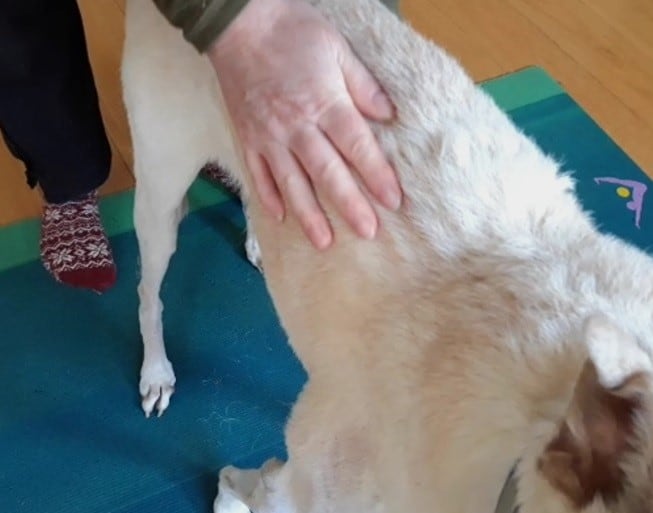
From the very first session, Bertie happily stood on my yoga mat so his feet wouldn’t slip, and he loved every moment of his treatment.
The skin and fur across his shoulders had been extremely stiff, but the area started to show signs of loosening almost immediately once I began the skin rolling technique.
Overall, I noticed an improvement right away, reporting back to Verity that his face looked “softer” and less pained afterward.
No Restraint
As I mentioned earlier, one of the core principles of Galen Myotherapy is that dogs will not be forcibly restrained.
I loved this because it meant Bertie had autonomy and could leave at any point if he chose to do so (he never did!).
Giving him control like this was empowering, as it enabled him to decide for himself whether he wanted to participate or not.
This is a great way to bolster a dog’s confidence, especially senior dogs who may be less confident than they once were.
In the same way, during our massage sessions, I carefully monitored Bertie’s responses, treating the entire process as a consent test.
This allowed me to adjust the pressure accordingly if I noticed any signs of discomfort, such as tense muscles or twitching tendons.
Environmental Adjustments
Implementing Galen Myotherapy into our daily routine required more than just the application of the massage techniques.
It also involved creating an environment that would support Bertie in every way possible.
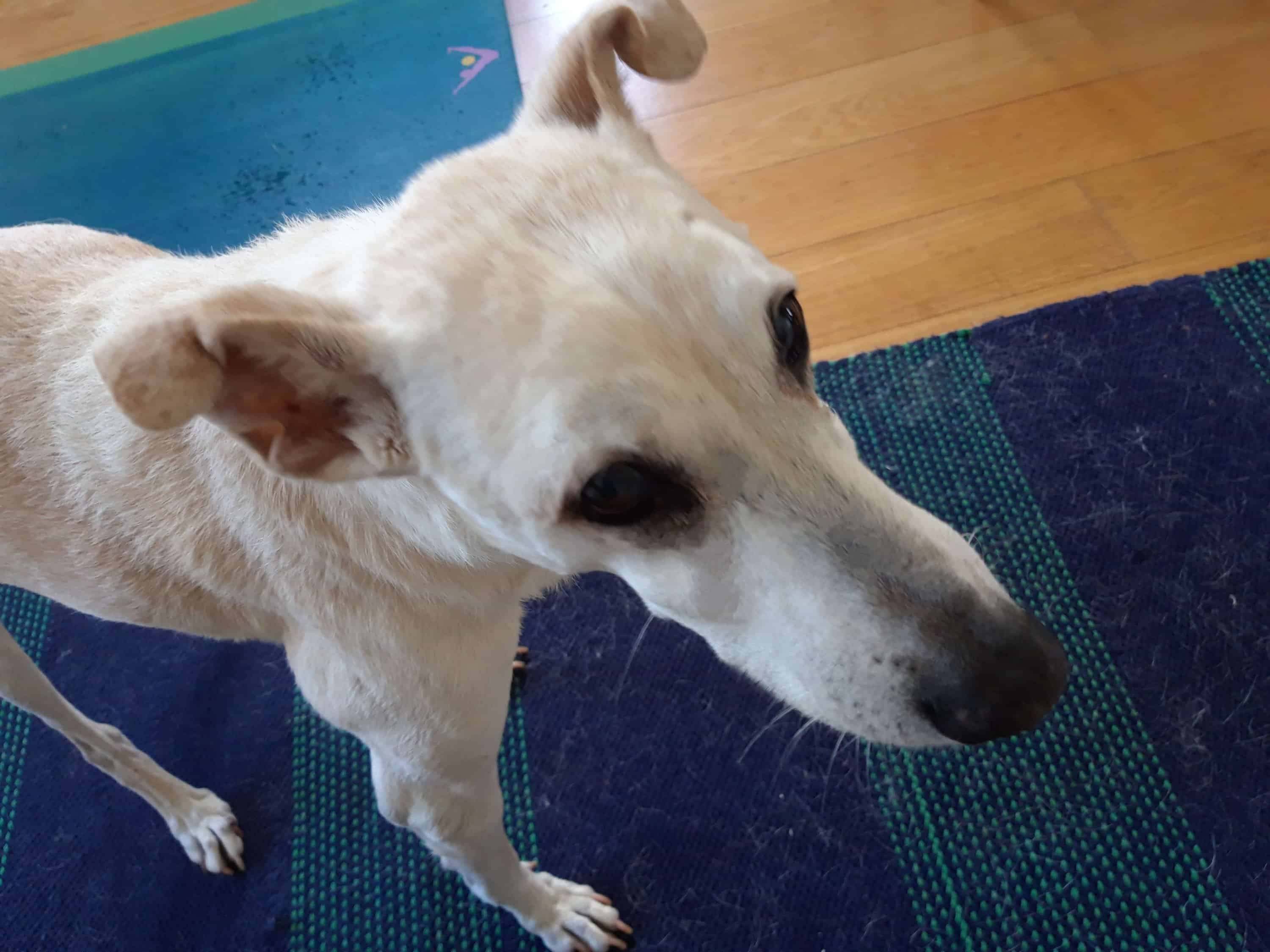
First, we bought some additional yoga mats and several rugs to provide better traction on our slippery hardwood floors.
Following Verity’s advice, we raised Bertie’s food and water bowls to ease the strain on his neck and joints, and provided a pillow for added neck support when sleeping.
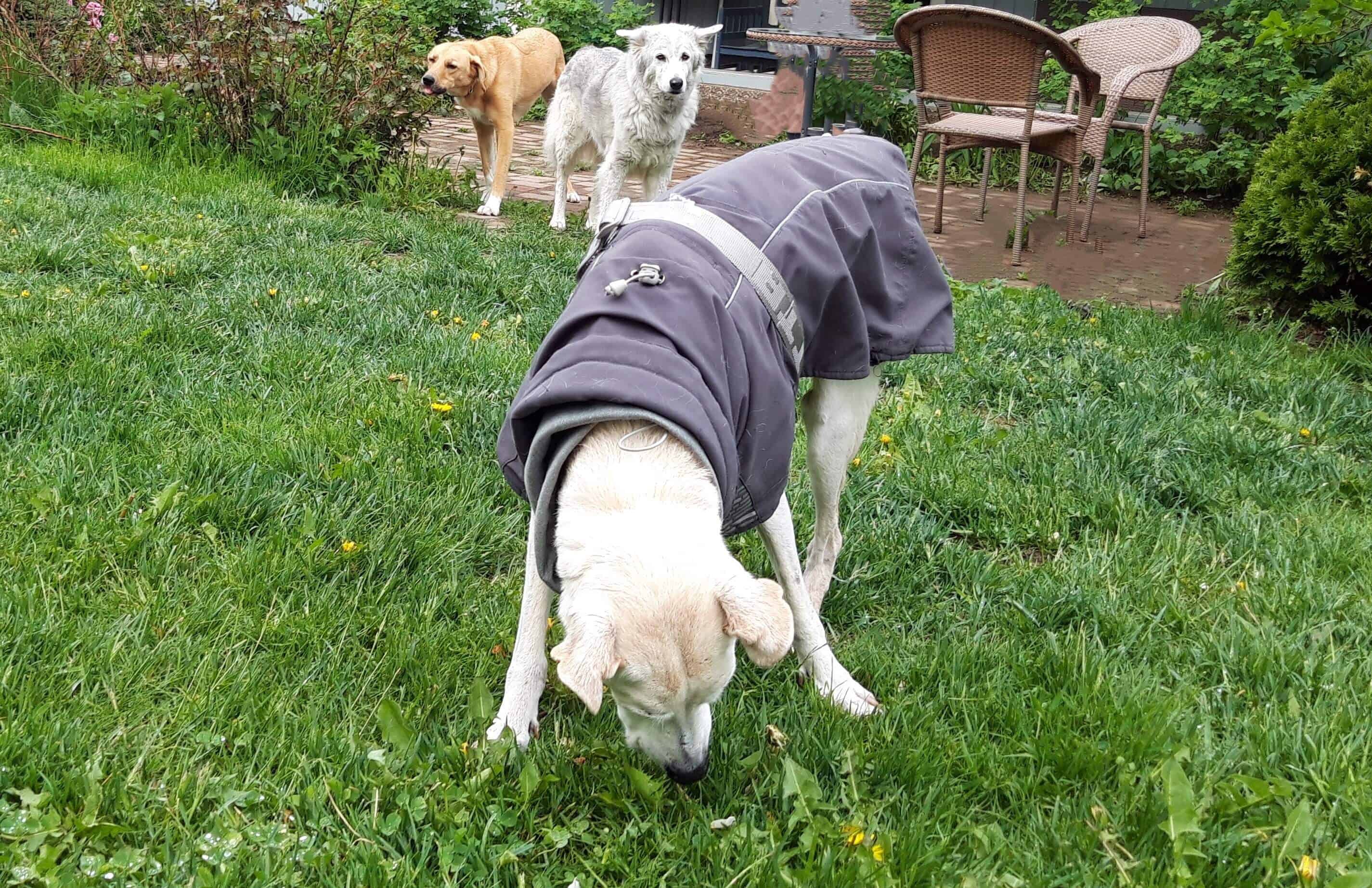
We had already invested in a high-quality coat to keep his aching joints warm at all times, and a special orthopedic dog bed to make sure he slept as comfortably as possible.
We also combined Bertie’s prescribed pain medication with a YuMove joint supplement, a vitamin B supplement (recommended by the vet), a ramp to help him go up and down steps, and a Doggie Stylz support harness to provide much-needed support for his back legs when walking.
Every adjustment contributed significantly to Bertie’s overall comfort and rehabilitation.
Once we had all the parts in place, we noticed a marked improvement in his mood and overall well-being.
Results and Observations
Ongoing Support
Keen to make sure I was applying the massage techniques correctly, I shared a video of my routine with Bertie with the team at Galen Myotherapy.
Certified therapist Julia Robertson provided a response that was both affirming and instructive.
She kindly praised my “excellent” application of the techniques and offered a suggestion to adjust my hand positioning for better coverage, a tip I was more than happy to incorporate.
Improvements in Mobility
About two weeks after starting our massage sessions, we brought Bertie in for another checkup with the vet.
She noted a significant improvement compared to his previous visit about a month ago.
Six weeks into our treatment, I shared a video of Bertie walking with our vet.
She described it as the best she had seen him and said it was “quite remarkable” how much better he was doing.
I sent Julia the same video, and her view was that his walking definitely appeared “less labored.”
Julia was thrilled about Bertie’s progress and our vet’s comments, emphasizing that it is often the small but highly significant changes that demonstrate a dog is feeling generally better.
Improvements in Comfort Levels
The impact of Galen Myotherapy on Bertie’s quality of life, coupled with supportive veterinary care and the lifestyle adjustments we made, was profound.
In addition to his improved gait when walking, I noticed several other positive changes:
- His little stumpy tail was noticeably more relaxed compared to its previously rigid state.
- His spine appeared less hunched, and his back feet seemed slightly straighter.
- Although his back right leg still appeared to be experiencing lameness and he avoided putting weight on it, Bertie became hugely enthusiastic about going for short walks. He started trotting along quite briskly, and I had to run to keep up with him. He even started trotting up and down steps, which I tried to avoid as I didn’t think that would be at all good for him!
But his joy at being able to move more easily was clear to see.
Long-Term Effects
Through our holistic approach combining pain management, Galen Myotherapy massage therapy, environmental adjustments at home, joint supplements, and the use of a support harness, we continued to observe significant improvements in Bertie’s condition.
In fact, his back leg muscles got so much stronger, that we were able to discontinue the use of his support harness entirely.
This all combined to grant Bertie a new lease of life and enrich our lives immeasurably with his presence.
Eventually remaining by our sides until the ripe old age of 18½ years, Bertie’s story is one of hope, resilience, and the profound bond between pets and their caregivers.
His legacy serves as a poignant testament to the profound impact compassionate care, paired with the guidance of empathetic professionals, can have on the happiness and well-being of our furry family members.
FAQs
How easy is it to follow the video tutorial and to make sure I am doing everything right?
Following the video tutorial for Galen Myotherapy techniques was surprisingly straightforward.
With the clear instructions and visual demonstrations provided, I felt equipped to start applying the techniques to Bertie almost immediately.
Of course, the initial hesitation was there—am I doing this right?
But sending a video to Julia for feedback provided that extra layer of assurance.
It’s a learning process that becomes more intuitive with practice and guidance, especially as you get more in tune with your dog’s responses.
What is the daily commitment for Galen Myotherapy massage sessions?
The beauty of Galen Myotherapy is its flexibility.
Starting with just 5 minutes a day makes it a manageable commitment for both you and your dog.
As you both become more comfortable with the routine, you may find that extending the duration or adding sessions enhances the benefits.
However, the maximum recommended time allotment is 40 minutes a week.
How soon can improvements be seen with Galen Myotherapy?
Every dog is unique, so their response to Galen Myotherapy will vary.
In Bertie’s case, we started seeing small but significant changes almost immediately.
The little victories, like a more relaxed facial expression or a bit more zip in your dog’s step, give you an indication of any early signs of improvement.
For us, the most profound effects, especially on mobility and comfort, unfolded over a period of 1-2 months based on consistent application.
Is Galen Myotherapy suitable for all dogs?
Galen Myotherapy is broadly beneficial, catering to a wide range of needs—from aging dogs like Bertie struggling with joint issues to active dogs looking to maintain optimum muscular health.
However, it’s always wise to consult with a professional to ensure it’s suitable for your dog’s specific health conditions and needs.
What other environmental modifications can I make to help my dog?
Making your home more dog-friendly can greatly enhance his quality of life, especially as he ages or recovers.
Simple changes like adding rugs or yoga mats to slippery floors, ramps to go up and down steps or to access furniture, elevating food and water bowls, and investing in an orthopedic bed can make a world of difference.
These modifications, coupled with Galen Myotherapy, help create a comprehensive approach to supporting your dog’s well-being.
Resources
- What Is Arthritis? The Basics – Canine Arthritis Management
- What Galen Myotherapy Can Help With – Galen Myotherapy
