
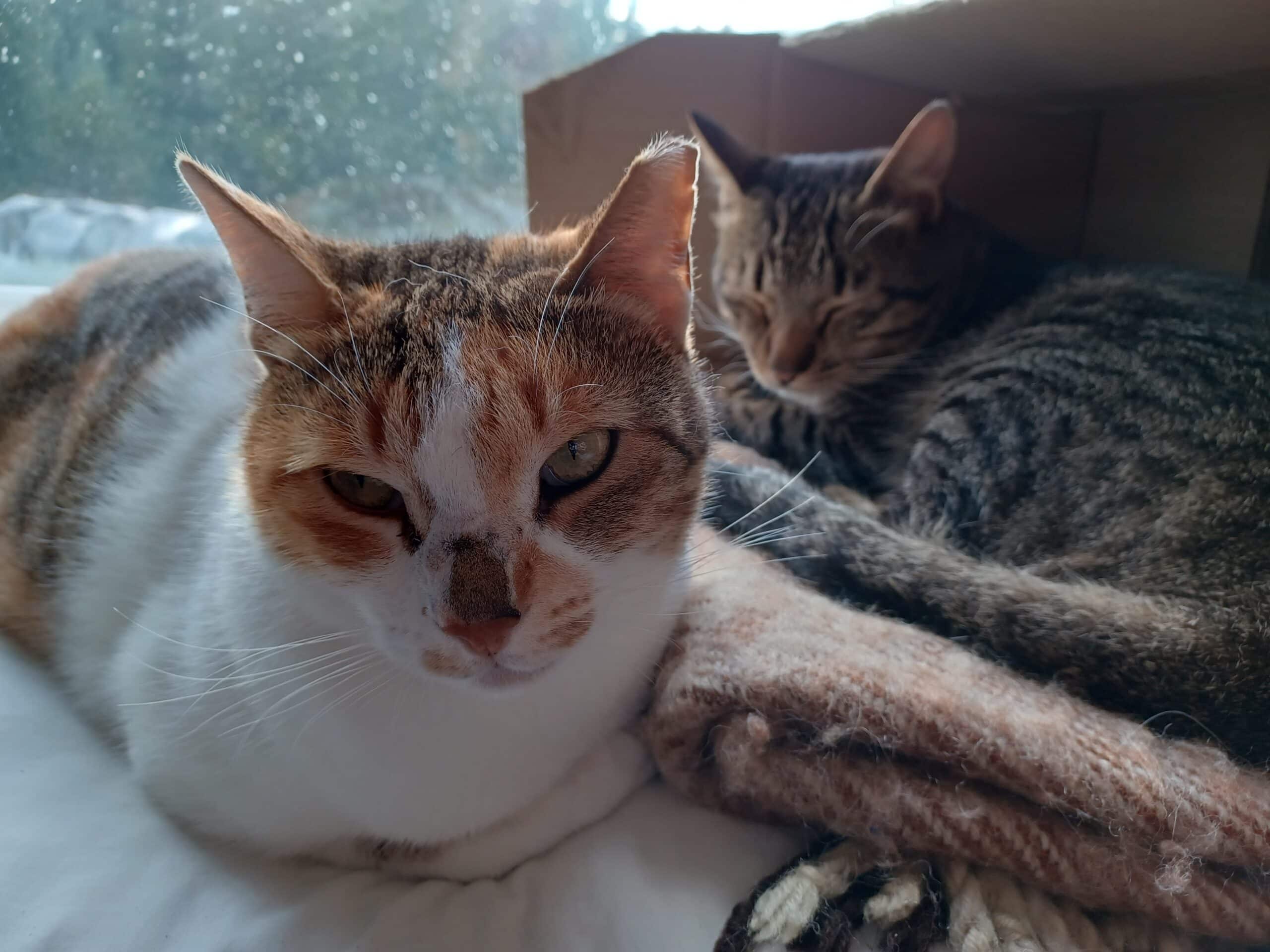
Your Cat May Be Telling You “No.” Are You Listening?

If you share your home with a cat, you already know they have opinions. Strong ones. About when (and where) they want to be petted, and when they absolutely don’t. About whether now is a good time for brushing, and whether it will ever be a good time for the cat carrier. About the precise moment a perfectly pleasant interaction has gone on approximately ten seconds too long.
What you may not know is that your cat has been communicating all of this to you, clearly and consistently, for as long as you’ve lived together. The signals are there. Some of us just haven’t learned to read them.
That’s where the consent test comes in. It’s the practice of asking your cat whether they’re okay with something before you do it and then actually listening to the answer. I use it every single day, with every cat (currently five) I live with, and it has transformed not just how I interact with them but how much they trust me. Which, if you know cats, you’ll understand is no small thing.
What a consent test looks like with a cat
The principle is the same as with dogs: you offer your cat a genuine choice. Ask yourself if they are saying yes, no, or maybe, and then respect whatever they tell you. The difference is in the language. Cats communicate differently from dogs, and reading their signals accurately requires understanding a set of cues that are often subtle, sometimes fleeting, and occasionally contradictory.
The good news is that once you know what to look for, it becomes second nature. And the better news is that cats, when they know their signals are being heard, become significantly more willing to trust you. The consent test, practiced consistently, creates a feedback loop: the more you listen, the more they tell you.
What “yes,” “no,” and “maybe” look like in cats
Yes
Your cat approaches you, rubs against your leg, headbutts your hand, or rolls onto their side when you reach toward them. Their body is relaxed with a soft posture, tail up with the tip slightly curled, ears in a natural forward position, and slow blinking eyes. A cat who is saying yes tends to initiate contact rather than simply tolerate it.
Be aware, however, that just like humans, cats can change their minds. Sometimes very quickly, and a yes can soon become a no.

Maybe
A maybe in cats often looks like hesitation or conflict. They want to engage because they’re interested in the treat you’re holding, or curious about what you’re doing, but something is making them uncertain. They might take a step toward you and then pause. They might look at you and then look away. They might approach close enough to sniff and then back off without making contact.
Just as with dogs, a maybe should always be treated as a no. A cat experiencing conflict is already under some degree of stress, and pushing through that conflict increases it. Toss the treat toward them rather than waiting for them to come all the way. End the interaction. Give them space. The goal is always to leave them in a positive emotional state, and a conflicted cat is not a cat in a positive emotional state.
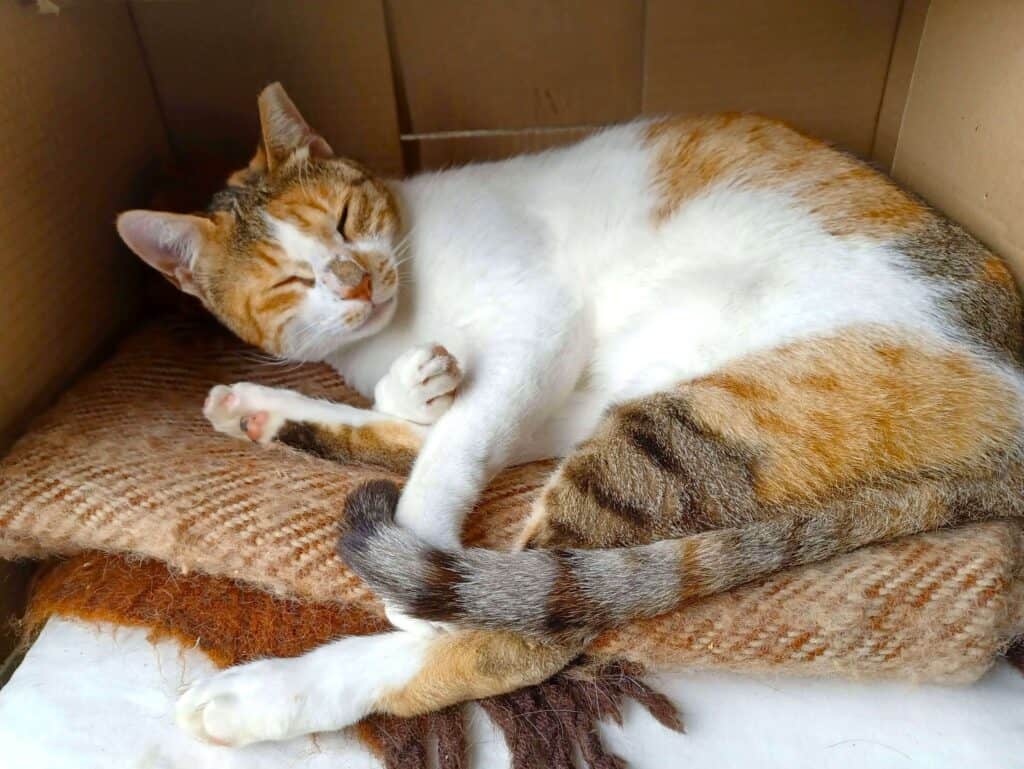
No
A no from a cat can range from extremely obvious to almost invisible, and it’s the almost invisible ones that cause the most problems.
Obvious signals: walking away, hiding, hissing, swatting, and growling.
Subtler signals: a flick or lash of the tail, ears rotating back or flattening, a slight stiffening of the body, skin twitching, pupils dilating, a direct stare, or turning the head away.
The tail is often the earliest indicator. A tail that begins to swish or lash while a cat is being stroked is a cat who is done, even if the rest of their body hasn’t caught up yet. If I see one of my cats’ tails start to move during any interaction, I stop immediately, before anything else changes. That’s the signal I watch for most closely.

How I use consent testing in practice
Petting and contact
The most basic consent test I do with my cats is the one I do before I touch them at all. I extend one finger toward them at nose level and wait. If they move toward it and touch it or rub their face against it, that’s a yes. If they look away or step back, that’s a no. If they sniff once and then turn away, that’s a maybe, and I treat it as a no.
This takes about three seconds. What it communicates to my cats, repeated hundreds of times over months and years, is that contact is always their choice. They will never be petted against their will. And because of that, every single one of them — including Jasmine, who spent her first two weeks with us wedged into a cat tree hidey hole and barely moved — has eventually chosen to seek contact out.
During petting, I watch continuously for skin twitching, tail movement, a shift in ear position, a slight stiffening. If I see any of these and I stop. I don’t try to finish what I started. I don’t do “just one more stroke.” I stop, and I wait. If they want more they’ll tell me.
Grooming sessions
I show my cats the brush before every grooming session and watch their response. If they stay where they are — or better still, lean toward it — that’s a yes. If they walk away, I don’t follow them. I put the brush down and try again later.
During the session itself, the tail is my constant reference point. The moment it begins to swish, the session ends. Not in a few more strokes. Right then. This keeps every grooming session a positive experience, which means my cats are willing to engage with the brush in the first place, which is a considerably better outcome than a cat who hides the moment they see it coming.
The cat carrier
The cat carrier is one of the most consent-test-resistant situations there is because it almost always means something the cat doesn’t want, like a vet visit, a car journey, and disruption to their daily routine. Many cats learn very quickly what the carrier means and disappear before it’s even fully open.
The approach I use is to leave our cat carriers out permanently, accessible and open, lined with comfortable bedding, and occasionally with treats placed inside. The carrier becomes a piece of furniture rather than a threat. When it’s time to actually use it, I always give my cats time to go in voluntarily first, throwing in some treats and waiting, never forcing it. With some cats, particularly those who have come to associate carriers with frightening experiences, this takes patient, careful rebuilding of the association over weeks or months.
Picking up
Picking up a cat without checking in first is one of the most common ways that well-intentioned owners inadvertently damage their cat’s trust in them. Some cats genuinely enjoy being picked up and held. Many don’t, or enjoy it only on their own terms, in specific circumstances.
Before I pick any of my cats up, I check their body language. I’m always looking for that soft posture, relaxed tail held upright, easy ear position, or slow blinking. Those are the signs that suggest this might be a good moment. Dilated pupils, a stiff posture, ears rotating back, or a tail that’s low or lashing are all signs to steer well clear.
Timing matters too. A cat who is eating, sleeping, playing, or in the middle of a conflict with another cat is not a cat who wants to be picked up, regardless of what their body language might otherwise suggest. Context is part of the consent test.
When I do pick up one of my cats, I watch for the moment they want to be put down. If they start to squirm, push away with their paws, or start swishing their tail, I put them down immediately, calmly, without making it a big deal. The message is always the same: you can trust me to stop when you say stop.
Introducing something new
Any time I introduce something new to my cats, like a new toy, a new cardboard box, a new food, or even a new person, I use the same principle. I make the new thing available and let them decide when, whether, and how much to engage with it.
The more your cat feels in control of their environment and able to make their own choices, the more confident and secure they become. That sense of control can help buffer against negative emotions like fear, stress, and anxiety. And a calmer, more confident cat is less likely to develop stress-related problem behaviors, from destructive scratching to more serious issues like litter box avoidance.
Why cats respond so strongly to consent testing
Cats are, by nature, animals who need to feel in control of their surroundings. This isn’t a personality quirk; it’s a biological reality rooted in their status as both predator and prey. Research consistently shows that cats who have agency over their environment are less stressed, more relaxed, and more likely to seek positive social contact, which is why even small, repeated acts of consent testing can shift the dynamic between you and your cat significantly over time.
There’s a reason cats always make a beeline for the one person in the room who isn’t trying to pet them. That person is the safest option because they’re making no demands and not forcing unwanted contact or attention. The goal of consent testing is to become that person for your cat: the one they choose, because they know they can always choose otherwise.
The small moments that build the big relationship
Consent testing doesn’t require grand gestures or lengthy training sessions. It happens in the space of seconds, dozens of times a day. What those moments build, accumulated over weeks and months and years, is something that can’t be rushed or forced: a relationship in which your cat genuinely trusts that their signals will always be heard.
Jasmine, who was rescued from the streets of Dubai and spent her first two weeks barely moving, is now one of the most friendly and affectionate cats I’ve ever known. Not because I won her over with persistence. Because I consistently let her decide and she decided, eventually, that she wanted to be close.
That’s the consent test. And that’s what it’s worth.
Quick reference: Consent testing with your cat at a glance
Yes: Approaches you, rubs against you, headbutts your hand, relaxed posture, tail up, slow blinking. Proceed, but keep watching.
Maybe: Hesitates, half-approaches, sniffs and withdraws. Treat as a no. Remove the conflict, give space, try again later.
No: Looks or walks away, tail lashing, ears back or flattening, skin twitching, stiffening, hiding, hissing, swatting. Stop immediately.
Key moments to use it: Petting, grooming, carrier introduction, picking up, meeting new people, introducing anything new.
The rule that never changes: Watch the tail. A maybe is always a no. A yes can quickly become a no. Stop before you’re asked to.
This article draws on the principles explored in other articles on my site, including:
- 25 Tips for Helping Your New Shy or Fearful Cat to Adjust
- Why Does My Cat Growl When I Pick Her Up? (Explained!)
- Why Do Cats Purr And Then Suddenly Bite You? (Explained!)
For more on building trust with a rescue cat, see Your Rescue Cat Isn’t “Taking Too Long” to Adjust
For the dog version of this daily practice, see What Happens When You Let Your Dog Say “No”
