
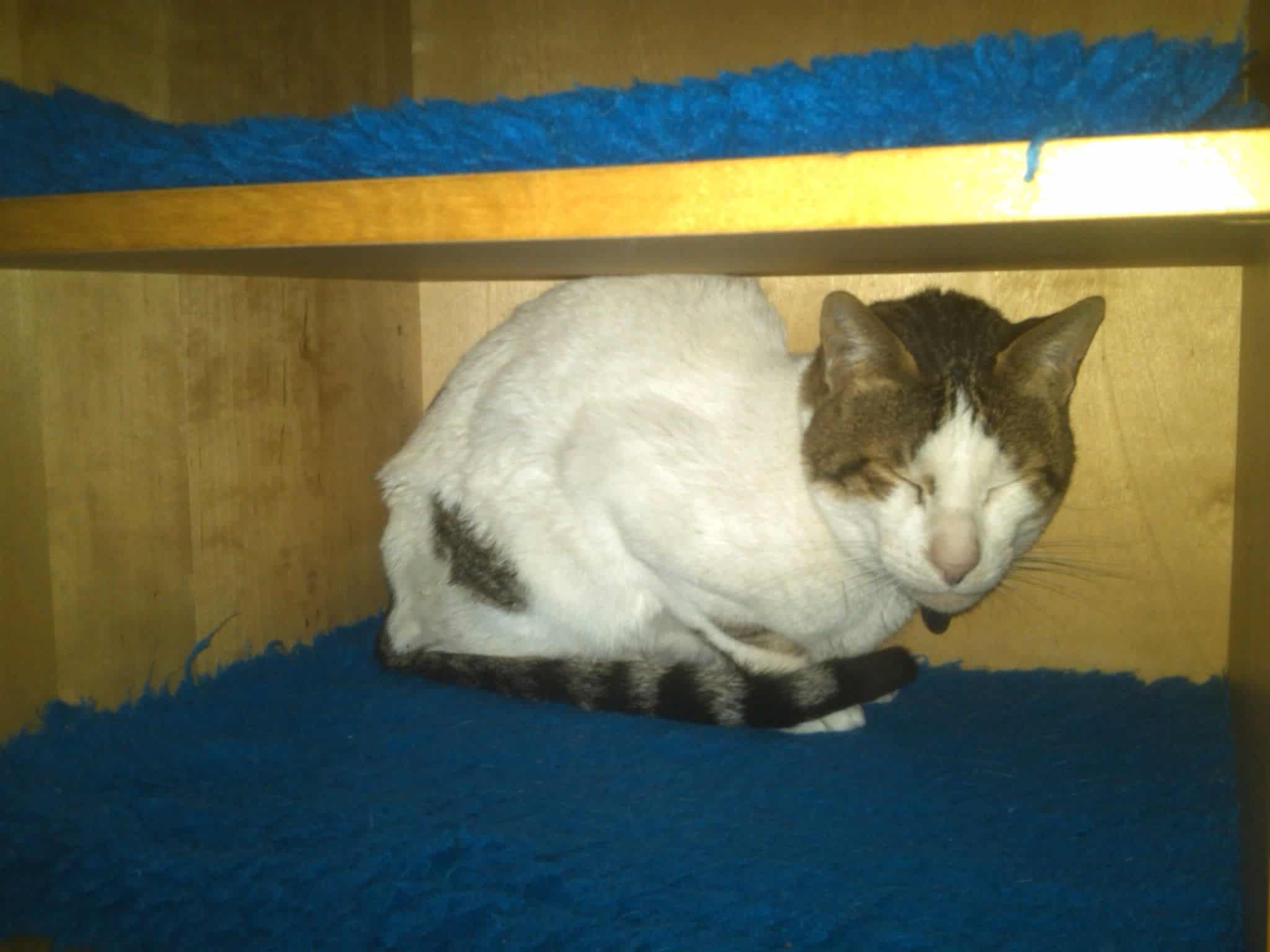
How to Create Simple DIY Cat Hiding Places Using Household Items

Your cat’s been squeezing behind the couch again. You’ve caught him wedged under the dresser. He’s claimed the back corner of your closet as his personal bunker.
Here’s the thing: your cat isn’t being weird. He’s being a cat. And that instinct to hide? It’s hardwired. It’s how cats feel safe, decompress, and keep their sanity in a world full of vacuum cleaners and unexpected doorbell rings.
The good news? You don’t need to buy expensive cat furniture or turn your home into a feline fortress. You already own everything you need to create hiding spots your cat will actually use. We’re talking cardboard boxes, old blankets, and that laundry basket you’ve been meaning to replace for three years.
Here’s how to turn your household junk into cat hideaway gold.
Cardboard Box Hideouts (Done Right)
That Amazon box sitting in your recycling? Don’t toss it yet.
Cut a 6-inch entrance hole on one side. Leave the top flaps intact or crack them open slightly so your cat has an escape route. Toss in a soft towel or old t-shirt you’ve slept in so it’s got your scent on it. Done.
The box should be big enough for your cat to turn around but small enough to feel cozy. Medium shipping boxes nail this for most cats.
Want to get fancy? Tape multiple boxes together for a connected tunnel system. Just avoid boxes with chemical smells or glossy finishes. And when it gets ratty or starts collapsing, simply replace it.

Blanket and Towel Dens
Two chairs plus one blanket equals an instant cat tent.
Place two chairs a few feet apart and drape a blanket over them so it reaches the floor on at least two sides. Add towels underneath for cushioning. Fleece works better than cotton because it holds its shape.
You can also pile 2-3 towels in a corner behind furniture to make a padded nook.
Set this up in quiet areas away from high-traffic zones, and keep one side open so your cat doesn’t feel trapped.
Laundry Basket and Storage Bin Caves
Flip a plastic laundry basket upside down and cut an entrance hole. Line it with a folded towel. The ventilation holes keep air flowing while your cat stays hidden.
Storage bins with lids work even better for shy cats. Cut a side entrance and add bedding. Go for bins at least 18 inches long so your cat can stretch.
Tuck these under tables or in closets for extra privacy. They’re easy to clean with soap and water. Just don’t use bins that stored cleaning products because that smell lingers and will be a turn-off for many cats.
Paper Bag and Soft Carrier Hideaways
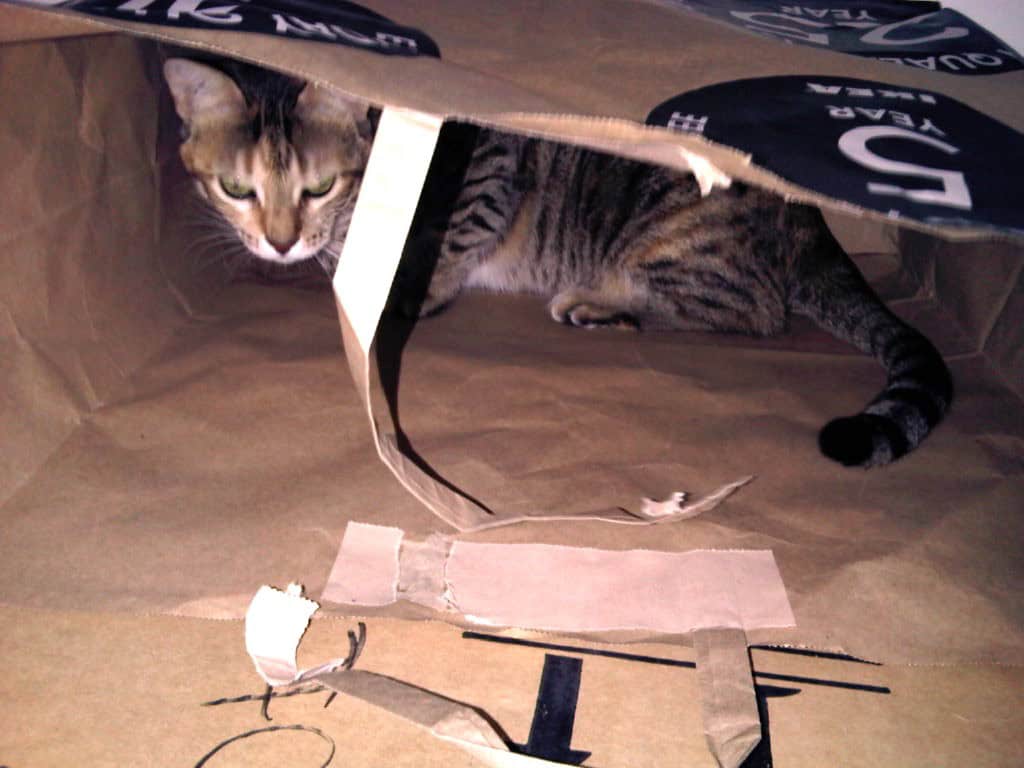
Paper grocery bags (handles removed) make instant hiding spots. Never use plastic bags because of the suffocation risk.
Alternatively, leave your cat’s soft-sided carrier open on the floor as a permanent hideaway. Remove the door or prop it fully open and add a familiar blanket inside.
Scatter bags and carriers in multiple rooms so your cat has options. Replace paper bags when they tear. The crinkly sound is half the appeal anyway.
Small Apartment Solutions
Small space? No problem. You can always use vertical space and existing furniture instead of floor space.
Under-Bed Hideaways
Slide a cardboard box under your bed and cut an entrance on one side. Add a towel inside.
Low bed? Attach fabric around the bed frame with Velcro strips to create a curtained hideaway. Leave one corner open.
Storage bins work great here too. Cut a side entrance, add bedding, push it against the wall. Dust-free and enclosed.
Consider using bed risers if you need more clearance underneath.
Sofa and Chair-Based Hiding Spots
Drape a blanket over your couch to create a covered den underneath. Secure it with furniture weights or tuck it between cushions.
Got a gap behind or beside your couch? Stick a cardboard box there. Cut an entrance and line it with fabric.
For chairs, put a small box or pet tent underneath. An old t-shirt stretched over a wire hanger frame works too.
End tables with lower shelves? Add a cushion to the bottom shelf and hang fabric from the tabletop.
Vertical Hiding Places
Cats often feel safer when they can observe from above while staying close to a secure hiding spot.
Shelf-Based Hiding Boxes
Install floating shelves at different levels, spacing them 12–18 inches apart for easy jumping. Use sturdy brackets rated for at least 20 pounds.
Attach enclosed boxes, crates, or fabric cubes, cutting a 6-inch entrance facing away from main traffic. Line the inside with soft fabric so your cat can climb up, tuck in, and watch from above.
Corner layouts work especially well for L-shaped climbing paths.
Vertical Hiding Solutions for Tight Spaces
Wall-mounted shelves save floor space. Just add a covered basket or box to create an instant hideaway.
Wall tunnels provide enclosed pathways without using any floor area.
Bookcases can double as vertical hides: clear one shelf and place a fabric cube inside. Corner shelves also work well. Stack two or three and add bedding to the middle level for a cozy elevated retreat.
Closet and Wardrobe Hideaways
Install small shelves or platforms inside your closet at staggered heights. Leave the door cracked or install a cat door.
Top shelf: covered bed or box for maximum privacy. Mid-level: perch with partial covering. Bottom: simple cardboard box or leave it clear.
Secure anything that could fall. Make sure hanging clothes won’t spook your cat.
Note: If your cat likes to climb up your clothes like mine do, then it’s probably best to skip this option!
Window-Adjacent Hiding Spots for Confidence Building
Cats often gain confidence faster when they can watch the world from a safe, elevated spot.
Try installing a cat tree or wall shelves beside a window, then add enclosed boxes at one or two levels. Position the entrance so your cat faces the window. That way he can control how much he sees while feeling protected.
Use non-toxic materials and secure all wall mounts. Add cushions inside to make it cozy.

For Anxious, Fearful, or Shy Cats
Anxious cats in particular need hiding spots in quiet areas where they won’t be disturbed.
Low-Traffic, Low-Noise Areas
Think bedrooms, spare rooms, and quiet corners rather than the kitchen or living room.
Avoid spots near noisy washing machines, dryers, or TVs. Stay away from frequently opening doors.
Use cardboard boxes in your quiet zones. Cut an entrance, add towels, and drape an old t-shirt over the top to block visual stimulation. Stack two boxes with connecting holes for multiple escape routes.
Scent-Safe Hiding Spots
Use materials that already smell like home. New plastic or freshly washed fabrics smell unfamiliar and may even be overwhelming for anxious cats.
Again, add an unwashed t-shirt or towel that smells like you. Your scent = security. Don’t wash the bedding too often if you can help it. Cats like their own scent markers. Being surrounded by their own scent is a powerful stress-reliever for cats.
How Many Hiding Places Your Cat Really Needs
At minimum: one hiding place per floor of your home. Ideally, several options so your cat can choose. For multiple cats, the rule of thumb is one spot per cat plus one extra. Anxious cat? 3-5 hiding options spread throughout your home at different heights is a good place to start.
Start with cardboard boxes and add more as you learn what your cat prefers. Watch where he naturally hides and put more DIY spots around there.

What Makes a Good Cat Hiding Spot
Not all hiding spots are created equal. The best ones balance protection with escape routes, sit at the right height, and match your cat’s individual preferences.
Enclosed Vs. Covered Spaces
Enclosed spaces (boxes, cat caves) have walls on all sides with one or two openings. These give maximum security—your cat feels protected from all angles.
Covered spaces (blankets over furniture, low tables) only provide overhead shelter. Your cat gets some privacy but can still watch the room.
Many cats prefer enclosed spaces when stressed or sleeping, and covered spaces when resting but staying alert. Your cat’s needs change throughout the day, so provide both.
Height, Visibility, and Escape Routes
Ground-level spots work best for older cats or those with mobility issues. Elevated spots appeal to cats who feel safer observing from above.
Place spots where your cat can exit and reach other areas without obstacles. Your cat should be able to see approaching people or pets from inside, even if others can’t see him. This lets him decide whether to stay hidden or come out.
Quiet vs. Social Hiding Spots
Quiet spots sit away from loud appliances, foot traffic, and activity. Spare bedrooms, closets, calm corners, and so on. These help anxious cats or those who want uninterrupted sleep.
Social spots let your cat stay near family while feeling protected. Living rooms, home offices—anywhere your cat can observe daily life. A bed under your desk or covered spot near the couch works.
Often, you need both. Shy cats may spend more time in quiet locations but still benefit from social options. Confident cats may use social spots more but retreat when overwhelmed.
Common DIY Mistakes That Make Cats Avoid Hiding Spots
- Too exposed or too enclosed: Many cats prefer covered spaces with overhead protection, some like to have two exits so they have an escape route.
- Poor placement: Avoid busy, noisy areas (doors, hallways, appliances, litter/food zones) and choose quiet corners or elevated spots.
- Only one hiding spot: Cats like to make their own choices so they feel more in control of their environment (= less stressful), so multiple options around the home is the way to go.
- Strong or unfamiliar smells: Air out new items, use familiar-scent materials like worn fabric or cardboard, and avoid fragranced cleaners.
How to Encourage Your Cat to Use a New Hiding Place
Place the new spot in a quiet area where your cat already hangs out. Leave it accessible but don’t draw attention to it. Your cat may ignore it for days or weeks. This is normal. Cats investigate on their own schedule, usually when you’re not watching.
Don’t move it once positioned. Cats build mental maps and prefer consistency. Keep the entrance visible and unobstructed.
Don’t Force It
Hiding places help cats escape stress. When you force your cat to explore, you risk turning the spot into a source of anxiety. Picking him up and placing him inside defeats the purpose. He needs to choose when, if, and how he enters.
Use Scent, Bedding, and Smart Placement
Rub a soft cloth on your cat’s cheeks and chin to collect facial pheromones, then wipe it inside the new hiding place. This makes the space smell familiar. You can also place an unwashed piece of your clothing inside and add bedding your cat already uses.
Why Cats Need Hiding Places (It’s Not “Antisocial”)
Cats hide as a natural response, not because they dislike you. This behavior helps them manage emotions and stay safe in overwhelming situations.
Understanding Fear, Stress, and Safety
Hiding is an ancient survival instinct. When your cat tucks into a box or under the bed, he’s using a method wild cats have relied on for thousands of years.
Your cat’s brain treats many everyday things as potential threats. Loud noises, unfamiliar people, routine changes, new furniture—all can trigger stress. Hidden spaces let him observe without being exposed.
What happens when your cat hides:
- Heart rate slows
- Stress hormones decrease
- Senses get a break from constant input
- He regains control
Your cat can’t tell you he’s scared or ask for alone time. A hiding spot is his personal safe zone for processing what’s happening without forced interaction.
When Hiding Is Healthy vs. a Problem
Normal hiding happens during specific triggers and your cat comes out on his own terms. During vacuum cleaning, when guests visit, after vet visits. This is healthy emotional self-protection.
Healthy hiding:
- During known stressors
- Cat still comes out for meals and water
- Uses litter box normally
- Plays or socializes at other times
Problem hiding:
- Cat stays hidden most of the day, skips meals, avoids the litter box, or hides without clear triggers.
This can signal illness, pain, or severe anxiety. Watch for any sudden changes in your cat’s behavior. Any sudden, unexplained increase in hiding should be treated as a warning sign and checked by a vet promptly.
