
Collar vs. Harness? What’s Best For Your Dog Walks (And Why)

This post may contain affiliate links, which means we may receive a commission, at zero cost to you, if you make a purchase through a link. Please see our full disclosure for further information.
When I first became a dog parent, I used to walk my four rescue dogs on flat collars.
Even though the pups were well-trained, they would still pull on the leash if they got particularly excited about something in the environment.
Sometimes when they did this, it made them cough, and I would always worry about the strain it was putting on their necks.
So after not too long, I decided to switch to harnesses for walking instead.
Not only did my dogs seem more comfortable during their walks, but I also had better control in those situations where they were tempted to pull.
It turns out that a collar vs. harness isn’t just a personal preference, but it can greatly impact our dogs’ (and our) walking experience.
Let’s find out how.
Key Takeaways
- Harnesses offer better control and can be more comfortable for dogs, especially those with respiratory issues or neck injuries.
- Collars are generally more suitable for well-mannered dogs with no health concerns who never pull on the leash.
- If a dog wearing a flat collar pulls on the leash, it could lead to neck strain or even tracheal damage.
- Ideally, a dog will wear both a collar for identification purposes and a well-fitted harness for walks.
Types Of Dog Walking Equipment
There are two primary types of dog walking equipment for attaching the dog’s leash: collars and harnesses.
A collar is a band of material that fits around the dog’s neck, while a harness is a set of straps that fits around the dog’s torso.
Both come in various styles and materials, and each has its own unique benefits.
What Is A Dog Collar?
Collars may be the traditional choice for dog walking, but they are not a one-size-fits-all solution.
For well-mannered dogs who walk calmly and do not pull on leash, a collar can be an acceptable option.
Collars are easy to put on and take off and provide a place to attach those all-important identification tags.
They are often less expensive than harnesses too.
Types Of Dog Collar
- Flat collars are the most common type of dog collar, made of a strip of material (usually nylon, leather, cotton, or neoprene) with a D-ring to attach the leash to and a buckle or snap closure.
- Martingale collars have an additional loop that tightens if the dog pulls, preventing him from slipping out of the collar. This can be helpful for dogs with a tendency to back out of their collars.
- Head collars (also known as Haltis or Gentle Leaders) fit over the dog’s muzzle and neck, and work by applying gentle pressure to the dog’s muzzle and head. While this may seem helpful for dogs who pull, there’s also the risk of injury if you pull your dog’s head around sharply – or if he keeps pulling regardless of the head halter.

What Are Dog Collars Made From?
Dog collars are typically made from a variety of materials, each offering different benefits and styles.
Some of the most common materials include:
- Nylon: A popular choice due to its durability, affordability, and wide range of colors and patterns.
- Leather: Known for its classic look and longevity, leather collars can be more expensive but are often more durable.
- Polyester: Similar to nylon, polyester is also durable and comes in various colors and patterns.
- Neoprene: A soft rubber material that is often combined with nylon for added comfort; it’s water-resistant and good for dogs that enjoy water activities.
- BioThane: A coated webbing that is durable, waterproof, and easy to clean, often used as an alternative to leather.
- Canvas: A sturdy and heavy-duty fabric that can withstand rough use, often chosen for its toughness.
- Metal: Choke chains and prong collars function by tightening around a dog’s neck through a chain or metal prongs when tension is applied. These types of collars are not recommended because they can induce fear in dogs by inflicting pain and discomfort. Clearly, this is not conducive to a positive training experience or the overall well-being of the animal.
Factors To Consider
Pressure: One of the main concerns with collars is the pressure they can put on a dog’s neck, particularly if the dog pulls or tugs on the leash.
A dog’s neck contains several delicate structures, such as the laryngeal nerve, thyroid, and trachea.
If a collar is too tight or if pressure is applied in the wrong area (like when a dog pulls on the leash), it can cause discomfort or even damage.
Pulling: Collars can also encourage pulling behavior, making it more difficult to control your dog on walks.
Safety: It’s also important to think about the overall design and function.
For example, some collars have a quick-release feature that allows you to easily remove the collar in case of an emergency, while others have reflective strips for added visibility during nighttime walks.
What Is A Dog Harness?
Harnesses are becoming an increasingly popular alternative to collars, and for good reason.
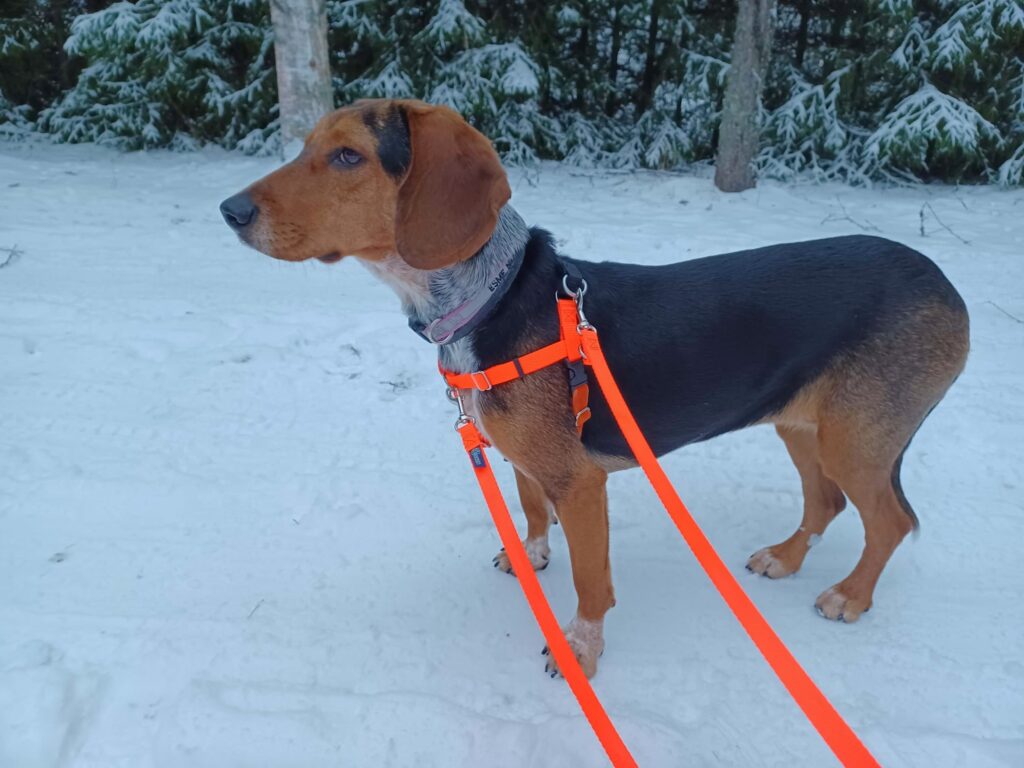
A harness typically consists of straps that encircle the dog’s torso, with attachment points on the back, shoulders, and/or chest for a leash.
It should fit snugly around your dog’s chest, but should not restrict his movement or breathing.
A harness is designed to distribute pressure more evenly across the dog’s chest and back, rather than focusing all the pressure on the neck like a collar does.
This makes them more comfortable for dogs to wear and can help reduce the risk of injury.
Types Of Harness
There are several types of harnesses available, including:
- Front-Clip Harness: These have a leash attachment at the front of the chest, rather than on the back, to discourage pulling and provide more control over the dog’s movements.
- Back-Clip Harness: These have a leash attachment on the dog’s back; these types of harnesses are often better for smaller dogs or those with neck or spine issues.
- Dual-Clip Harness: Some harnesses have both, allowing you to choose which attachment works best for your dog’s walking style. You can even use both if you have a leash that has two attachments, one on each end.
- No-Pull Harness: These harnesses have a special design that tightens around the dog’s chest when he pulls, providing gentle pressure to discourage pulling behavior.
What Are Dog Harnesses Made From?
Dog harnesses are crafted from a variety of materials, each chosen for its unique properties such as strength, comfort, and durability.
Common materials used in the construction of dog harnesses include:
Nylon: A widely used material due to its resilience, versatility, and the vast array of available colors and designs.
Polyester: Similar to nylon, polyester is strong and can come in various patterns and colors, often used for both its aesthetic appeal and functionality.
Mesh: A breathable fabric that’s especially suitable for small dog harnesses or for use in warmer climates to keep dogs cool.
Neoprene: Often used in conjunction with other materials like nylon, neoprene adds cushioning and is water-resistant, making it comfortable for the dog.
Leather: Known for its durability and comfort as it softens and conforms to the dog’s body over time.
Canvas: A sturdy and heavy-duty fabric that can withstand rough use, often chosen for its toughness.
Reflective Materials: These are incorporated into harnesses for added visibility during nighttime walks or in low-light conditions.
Factors To Consider
Better Control: Harnesses are a great option for pet parents who want to have better control of their dog during walks, especially for those who have dogs that pull on the leash.
Because the leash attachment is on the dog’s body, it allows for more control and less strain on the owner’s arms.
More Secure: One of the main advantages of a harness is that it can help prevent dogs from slipping out of their collar, which can be a common problem for dogs who are prone to pulling or tugging.
May Need Training: Some dogs may find them uncomfortable or difficult to wear, particularly if they are not used to wearing them.
Our rescue dog Florence used to balk at having her harness put on simply because she wasn’t used to having humans handle her or lean over her as was needed to fasten the clips.
I had to take time to train her so she would have a positive association with her harness, and we practiced putting it on and taking it off, consistently rewarding her with delicious, high-value treats, until she was comfortable with the process.

Choosing A Harness
When choosing a harness, pet owners should make sure that it fits properly and is the right choice for their dog’s breed, size, and any medical condition the pet has.
Be aware that harnesses do not always have a place for an ID tag, so it’s best to get one with a ring for a tag or use both a collar with a tag and a harness when out walking.
I prefer to use personalized embroidered collars to eliminate the need for tags altogether.
For the harness itself, I recommend the Freedom No-Pull Harness.
It’s made in the USA by 2 Hounds Design, comes in a wide range of colors and designs, and fits just about any shape or size of dog.
Don’t miss my unbiased product reviews to find out more about the Freedom Harness and GoTags Personalized Dog Collar!
Benefits Of Using A Dog Harness
According to the American Kennel Club, a harness can:
- Be more comfortable for your dog.
- Help prevent your dog from slipping out.
- Help puppies that haven’t learned to walk on a leash.
- Help avoid injury (such as throat damage) in small dogs who are more likely to pull or tug at the leash.
- Help prevent your dog’s leash from getting caught under his legs.
- Help discourage pulling if you use a front-clip harness.
- Be better for dogs with tracheal collapse (a hacking cough often brought on by excitement, exercise, drinking water, or extreme temperatures).
- Help alleviate dog back pain.
Is A Harness A Magic Solution For Leash Pulling?
A harness is not a substitute for training and will not magically “cure” dogs of pulling on the leash.
It can certainly help, but it should be used in combination with proper training so the dog can learn how to walk calmly and politely next to their owner.
A professional positive reinforcement trainer can help with this, if needed.
Why Your Dog (Or Puppy) Needs To Wear A Harness For Walks
In an ideal world, all puppies would be trained early on how to walk in a self-controlled manner on a leash without pulling.
Unfortunately, of course, that doesn’t happen.
And what about rescue dogs who have never learned how to walk on a leash, or any other dog that just hasn’t been trained properly?
As I’ve mentioned, collars can put pressure on a dog’s neck and cause discomfort, especially if they pull or lunge.
Harnesses, on the other hand, distribute the pulling force across the dog’s chest and back, reducing the risk of injury or choking.
In terms of control, harnesses provide more leverage and control over the dog’s movements, especially if they tend to pull or lunge.
Collars, on the other hand, provide less control and can lead to injury or discomfort if used incorrectly.

The Veterinarian’s Perspective
Dr. Karen Becker DVM advises against using collars that pull on a dog’s neck to teach leash walking, as it doesn’t promote self-controlled behavior.
This is particularly important for energetic young dogs who haven’t yet mastered leash manners.
Dr. Becker recommends a harness to prevent neck pressure and potential damage—especially in puppies with developing cartilage and delicate necks, which can suffer long-term harm from collar use.
For the best protection against laryngeal damage, Dr. Becker endorses a harness system that doesn’t encircle the pet’s neck.
Measuring Your Dog For The Right Fit
Collar: A collar should fit snugly but not too tightly around the dog’s neck, with enough room to fit two fingers between the collar and the dog’s skin.
Harness: A harness should fit comfortably around the dog’s chest and shoulders, with enough room to move freely but not so loose that it slides around or rubs against the front legs.

Watch For Signs Of Discomfort
Even with the right size and type of equipment, some dogs may still experience discomfort or pain while wearing a collar or harness.
Signs to watch for include rubbing or chafing of the skin, resistance to putting on the equipment, excessive scratching or licking of the area, and changes in behavior such as reluctance to walk or play.
Pressure points can also cause discomfort or pain, particularly in the shoulder and chest areas.
Preventing Escape
One of the main safety concerns for dog owners is preventing their pet from escaping during walks.
A collar may break or slip off easily, especially if the dog pulls or lunges suddenly.
Harnesses, on the other hand, provide a more secure fit and less risk of escape.
Harnesses are especially useful for large dogs, greyhounds, whippets, and other breeds with a slim neck and a strong urge to chase prey.
Special Considerations For Different Dog Breeds
When it comes to choosing between a collar and harness for walking a dog, different breeds may have different needs.
Small And Toy Breeds
Small and toy breeds, such as Chihuahuas and Toy Poodles, may benefit from using a harness.
This is because their small size and delicate necks make them more prone to injury from the pressure of a collar.
Brachycephalic (Flat-Faced) Breeds
Brachycephalic breeds, such as Bulldogs and Pugs, may have breathing difficulties and are more prone to glaucoma.
Using a collar may put pressure on their neck and exacerbate these issues, so a harness might be the preferable option.
Training And Behavior
Positive Reinforcement Techniques
Positive reinforcement techniques are a fun and effective way to train your dog to walk on a leash.
Positive reinforcement involves rewarding good behavior with high-value treats or praise.
For example, when your dog walks calmly beside you, he can be rewarded with a treat or verbal praise.
It’s important to avoid punishment-based training methods as these can cause pain, fear and anxiety.
Positive reinforcement techniques not only create a stronger bond between the owner and dog but also make training more enjoyable for both parties.
Choosing The Right Leash
Lastly, the type of leash you choose can impact your decision to use a collar or harness.
A standard leash can work with both collars and harnesses, but there are also specialized leashes that can provide additional control and safety.
For example, a double-ended leash (like my favorite, the Euro Leash) can be used with a harness to provide more control and prevent pulling.
Retractable leashes are not recommended as they give you very little control and have been known to break or cause injury.
READ NEXT
Resources
- A Vet’s Dire Warning: This Favorite Product Can Cause a Life-Threatening Emergency Down the Road – Dr. Karen Becker
- Can Collars Really Damage the Thyroid? – Dr. Jean Dodds
- Dog Collars vs Harnesses – Pat Miller
- How Choke Collars Can Cause Real Damage to Your Dog – Dr. Patricia Elliott
- Is a Dog Harness Better Than a Dog Collar? – American Kennel Club
- Train your dog to STOP pulling on leash [Video] – Dog Training by KikoPup
NEED A DOG TRAINER OR BEHAVIOR EXPERT?

If you need more help dealing with a training or behavior issue, please find professional help from a force-free dog trainer who can consult with you either in person or remotely.

GOOD PLACES TO START ARE:
- COAPE Association of Pet Behaviourists and Trainers
- Pet Dog Trainers of Europe
- International Companion Animal Network
- Institute of Modern Dog Trainers
- Pet Professional Guild

All dog owners deserve to have successful relationships with their canine companions!
