

Managing Dog Energy in a Multi-Dog Home: 10 Tips That Really Work

This page may contain affiliate links, which means we may receive a commission, at zero cost to you, if you make a purchase through a link. Please see our full disclosure for further information.
Life in a multi-dog home is lively, to say the least. With different ages, breeds, and personalities under one roof, energy levels can vary wildly—one dog might be bouncing off the walls while another prefers a quiet nap. Without a plan, all that energy can spill over into stress, conflict, or destructive behavior. The good news? With the right strategies, you can channel your dogs’ energy in positive ways that keep the household calm, balanced, and harmonious.
1. The Power of Personal Retreats
Just like people, dogs benefit from having their own retreats where they can rest, eat, and feel secure. Creating designated spaces helps reduce stress, prevent conflict, allow each dog to make their own choices, and give them a sense of control over their environment.
Sleeping Areas
Provide each dog with their own bed or resting spot in different parts of the home. This gives them a safe place to retreat for downtime or sleep without interruption. Even if dogs sometimes choose to share, or swap places, having multiple options prevents competition.
Feeding Stations
Mealtimes are a common trigger for tension in multi-dog households. Set up separate feeding stations (ideally in different rooms or behind gates) so each dog can eat at their own pace without feeling rushed or threatened. This also helps prevent resource guarding.
Chews and Toys
The same applies to high‑value items like chews or toys — giving them in separate areas prevents competition. Dogs are social animals but still benefit from autonomy. Having safe zones they can retreat to helps them self‑regulate, reduces tension in the home, and helps prevent problems arising due to guarding behaviors.
2. Structure and Routine
Dogs thrive when they know what to expect, and a consistent routine helps reduce stress. Without structure, dogs may compete for attention, food, or space. A predictable routine and clear rules create clarity, reduce competition, and give each dog confidence in what’s going to happen next. Over time, this builds a calmer, more harmonious group dynamic.
Establish a Routine
Set regular times for meals, walks, play, and rest. Predictable schedules help dogs feel secure while ensuring their energy is directed into healthy activities rather than chaos.
Set Clear Boundaries
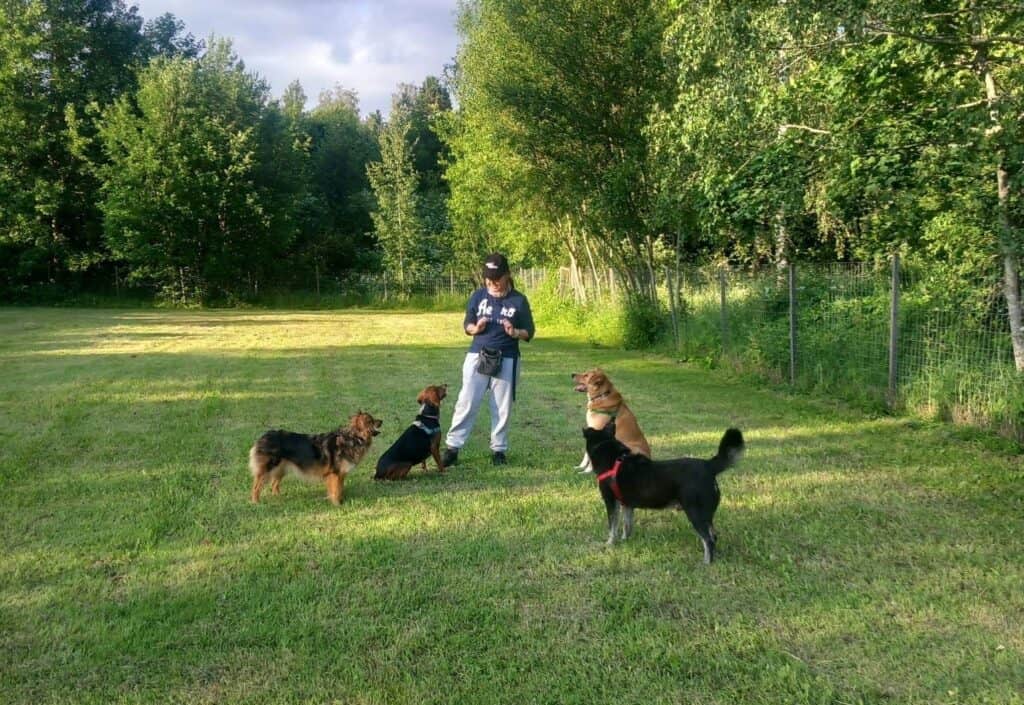
Just like children, dogs benefit from clear expectations. Teach simple, consistent manners skills such as waiting calmly before meals, settling on their beds when visitors arrive, or coming back when called. Consistency prevents confusion and helps the group function smoothly together.
Reinforce Positive Behaviors
Reward calm, cooperative behaviors with praise, high-value treats, or attention. Reinforcing moments of self‑control, like lying quietly on their bed when the mailman arrives, or not barking at the garbage truck, encourages emotional regulation and helps keep dogs under threshold emotionally.

What Is a Threshold in Dog Training?
A threshold is an invisible dividing line between two emotional states. When a dog is under threshold, they’re in the “green zone”: able to listen, interact, and take treats or cues. Once they cross that line and go over threshold, their stress or excitement spikes. This can lead to barking, lunging, freezing, or ignoring cues because they’re too overwhelmed to think clearly. Plus, it can take them a long time to calm down afterwards.
Why Staying Under Threshold Matters
Dogs learn best when they feel calm and safe. Training under threshold allows them to build positive associations with triggers instead of reinforcing negative or reactive behaviors. By contrast, repeatedly letting a dog go over threshold can make behavior problems harder to address and slow down progress. It also keeps the dog in a heightened state of stress or arousal, which makes it harder for them to relax, recover, and feel secure in everyday situations.
3. Positive Reinforcement Training
Positive reinforcement works by marking and rewarding the behaviors you want to see. Treats, praise, toys, or play (anything the dog values highly) can all serve as rewards. For example, when teaching “sit,” you can lure your dog into position, mark the behavior with a cheerful cue like “Yes!” or a click, and then deliver the reward. With repetition, the dog quickly learns that sitting reliably earns something valuable. Once he has learned the behavior, you can phase out the reward.
Why Positive Reinforcement Works
Positive reinforcement sets dogs up for success by rewarding the behaviors you want to see. If your dog makes the wrong choice, nothing bad happens — he simply gets the chance to try again. This creates a secure learning environment where dogs feel free to experiment, problem‑solve, and build confidence as they figure out what earns rewards.
Emotional and Behavioral Benefits
Positive reinforcement training encourages dogs to become optimistic, active learners. Because they aren’t punished for mistakes, they’re less likely to develop fear or frustration. Studies show that dogs trained with positive reinforcement display fewer problem behaviors, lower stress levels, and reduced risk of aggression compared to those trained with aversive methods (Hiby et al., 2004; Vieira de Castro et al., 2020). In a multi-dog home, this translates into calmer interactions and fewer conflicts.
Learning and Retention
Behaviors taught through positive reinforcement are retained longer and require less maintenance. Rewards keep dogs motivated and engaged, making training sessions more effective and enjoyable. The method is adaptable for all ages and breeds, whether you’re teaching simple manners or advanced skills.
Relationship and Bond
Because rewards are paired with desired behaviors, dogs learn to associate their handler with trust, safety, and positive outcomes. This strengthens the bond between the dog and his person, creating a collaboration built on respect rather than fear. In a multi-dog household, that trust helps prevent rivalry and makes group management smoother.
Ethical and Welfare Aspects
Positive reinforcement avoids punishment and aversive tools, making it a humane, low‑stress approach that protects canine welfare. It allows behavior problems to be addressed safely by redirecting unwanted actions into more appropriate alternatives, without risking harm or increasing anxiety.
4. Every Dog Learns Differently
It’s important to recognize that every dog has unique needs. Age, breed, temperament, and past experiences all shape how a dog learns and responds to training.
Assess and Adapt
Observe each of your dogs’ strengths, challenges, and motivators. Some may thrive on advanced problem‑solving, while others respond better to shorter, simpler sessions with extra encouragement.
Tailor Techniques
Adjust training to match the individual, from using puzzle toys for mental enrichment to breaking tasks into smaller steps for dogs who need more time. Always teach shared basics (sit, stay, come) to provide structure across the group.
Address Behavioral Needs
Specific challenges, such as anxiety or reactivity, often require customized training plans. Identifying and working on these issues individually prevents them from spilling over into the group dynamic.
5. Breed Traits and Compatibility
Different breed of dog bring different exercise needs, temperaments, and quirks, and these differences can shape how well dogs coexist.
Research Breed Characteristics
Before adding a new dog, consider the typical traits of the breed. High‑drive working dogs like Border Collies or Australian Shepherds often need hours of physical and mental stimulation, while more laid‑back breeds such as Bulldogs or Basset Hounds may be content with shorter activity. Knowing these tendencies helps you choose a dog that fits your home and lifestyle.
Balance Energy and Personality
Breed tendencies are only part of the picture. Individual personality, age, and past experiences matter just as much. A calm Labrador may blend more easily with a senior dog than a high‑octane puppy of the same breed. Matching energy levels and temperaments reduces conflict and promotes smoother group dynamics.
Mixed‑Breed Considerations
With mixed‑breed dogs, it’s harder to predict traits from appearance alone. Focus on the dog in front of you — their actual energy level, temperament, and behavior — rather than assumptions about breed mix. This approach ensures you’re meeting the real needs of your dog, not just the expected ones.
6. Exercise and Off‑Leash Play
Regular exercise is another way to channel dogs’ energy into healthy outlets, reduce tension, and help prevent problem behaviors.
Tailored Physical Activity
Again, different dogs have different needs and preferences. High‑energy dogs may thrive on long hikes or agility work, while older or lower‑energy dogs benefit from shorter walks or “sniffaris” (i.e. sniffing walks). Matching the activity to the individual keeps everyone fulfilled without overexertion.
Safe Off‑Leash Play
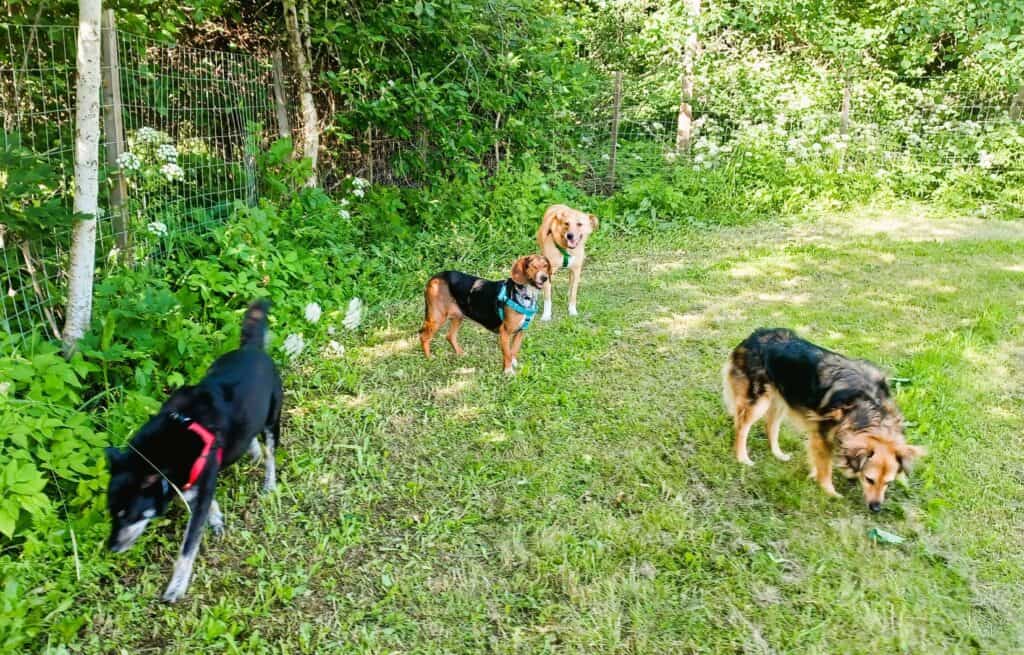
Off‑leash time gives dogs freedom to run, play, and practice recall skills. Always choose secure, enclosed areas and supervise interactions closely. Play is a powerful counter to negative emotions like fear, anxiety, and stress. The release of endorphins dogs experience during play carry over into daily life, helping them stay calmer and more resilient.
Monitor and Manage Interactions
Play should stay loose and balanced. Watch for signs of stress, like stiff posture, raised hackles, or prolonged staring, and redirect the dogs before tension escalates. End sessions on a positive note, with praise or rewards, to reinforce good behavior.
Balance Activity with Rest
Just as important as exercise is downtime. Dogs need plenty of opportunities to rest and recharge, which helps maintain a calmer household.
7. Mental Stimulation for Enrichment
Engaging a dog’s brain helps reduce boredom and negative emotions like fear, stress, and anxiety, and, as a result, destructive behaviors. When dogs use their “thinking brain” for problem‑solving, it inhibits the “emotional brain,” helping them stay calmer and more resilient in everyday life.
Puzzle Toys and Interactive Feeders
Puzzle toys (like KONGs and LickiMats), snuffle mats, and slow‑feed bowls turn mealtimes into a mental workout. These activities tap into natural foraging instincts, slow down fast eaters, and make mealtimes last longer. Since eating is one of the highlights of a dog’s day, stretching it out contributes to a more positive overall mood state, which helps keep the household calm.
Rotating Toys and Activities
Novelty keeps dogs engaged. Rotate toys every few days and vary activities to keep things interesting.
8. Nose Work for a Mental Workout
Sniffing itself is inherently calming for dogs, lowering their pulse rate and reducing stress levels (Budzinski & Budzinski). Beyond relaxation, sniffing, exploring, and foraging activate the brain’s “seeking” system, the network linked to anticipation and reward. This engagement triggers the release of the feel‑good hormone dopamine, which boosts motivation and leaves dogs feeling great.
Getting Started
Begin with simple hide‑and‑seek games using treats or toys in boxes, containers, or around the house or yard. Gradually increase the challenge by adding more hiding spots or introducing new scents.
Why It Helps
Because nose work engages the “thinking brain,” it channels energy into focus and problem‑solving while calming the emotional brain. In multi-dog homes, giving each dog their own sniffing challenges helps prevent boredom, reduces unwanted behaviors, and contributes to that overall sense of calm.

9. Group Classes and Socialization
Group classes and supervised socialization can complement at‑home training by providing new environments, people, and dogs in a structured, positive way. These experiences build confidence, strengthen manners skills, and offer healthy outlets for energy.
Group Training Classes
Well‑run classes give dogs the chance to practice focus around distractions, learn new skills, and interact safely under professional guidance. They also give owners fresh tools and strategies to support training at home. Just check that the trainer is professionally qualified and uses positive reinforcement training methods. Make sure that the experience is positive for your dog, otherwise it can create stress, undermine confidence, and your dog will get nothing out of it.
Supervised Socialization
Playdates, dog‑friendly outings, or controlled park visits can teach dogs how to navigate social settings. Always go at your dog’s pace. Not every dog enjoys group environments, and forcing it can backfire. If your dog prefers to stay home and not mingle, that’s absolutely fine. Remember, work with the dog you have, not the dog you think they should be,
The Goal
Positive, gradual exposure helps dogs adapt, stay calm in new situations, and interact politely with others, all of which contribute to a more harmonious household.
10. Doggy Daycare or a Dog Walker
When busy schedules make it hard to give dogs the exercise and attention they need, doggy daycare or a professional dog walker can be invaluable.
Daycare Benefits
A well‑run daycare provides supervised play, socialization, and plenty of activity, ideal for high‑energy or social dogs. It can also ease separation anxiety and reduce boredom‑related behaviors at home.
Dog Walker Option
For dogs who prefer one‑on‑one attention or find group settings stressful, a dog walker offers exercise, companionship, and routine without the bustle of daycare.
Choosing the Right Fit
Look for reputable providers with safe facilities, clear policies, and experienced staff who understand how to read canine body language. Not every dog thrives in daycare, so matching the option to your dog’s temperament ensures a positive experience.
References
- Carrots versus Sticks: The Relationship between Training Methods and Dog-Owner Bond – A. C. Vieira de Castro, J. Barrett, L. de Sousa, & I. A. S. Olsson
- Dog Training Methods: Their Use, Effectiveness and Interaction with Behaviour and Welfare – E. F. Hiby, N. J. Rooney, & J. W. S. Bradshaw
- Pulse Study “At The Heart of The Walk” – Christina & Aurélien Budzinski
