

10 Life-Changing Tips To Boost Mobility In Your Old Dog With Weak Back Legs

This post may contain affiliate links, which means we may receive a commission, at zero cost to you, if you make a purchase through a link. Please see our full disclosure for further information.
Imagine watching your faithful canine companion, who once bounded effortlessly around the yard, struggling to take a simple stroll.
It’s a heart-wrenching sight that many pet owners encounter as their dogs age and face mobility challenges.
When our beloved rescue dog Bertie reached his mid-teens and started to struggle with weak back legs and joint stiffness, I was prepared to move heaven and earth to help him live a more comfortable life.
And I learned a lot in the process.
So if your senior pup has started to show weakness in his back legs and you are desperate to do everything you can to help him, you’re in the right place.
Aging dogs with weakened hind limbs can still lead fulfilling lives, and as responsible pet parents, it’s up to us to lend them a helping hand wherever we can.
In this article, I’ll explore the various causes behind hind leg weakness, discuss effective strategies to enhance your furry friend’s mobility, and provide you with the insights you need to make informed decisions about his ongoing well-being.
Exploring The Causes Of Weakness In The Back Legs
As dogs age, their bodies often undergo various changes, including weakening in the back legs.
This can happen for a number of reasons, including:
Arthritis And Joint Degeneration
The wear and tear on joints over the years can lead to inflammation, pain, and a reduced range of motion.
When arthritis affects the hips and spine, it can cause weakness in the back legs, making it difficult for your dog to move comfortably.
As a result, he may have difficulty getting up from his bed, have trouble balancing, and be unstable on slippery floors or uneven ground.
Canine Arthritis: The Facts
- Osteoarthritis is a painful condition that is the most common cause of chronic pain in dogs. It affects 80% of dogs over 8 years old and potentially up to 35% of dogs of all ages.
- Arthritis can occur in dogs of any age due to developmental joint disease, a leading cause of arthritis, resulting in imperfectly fitting joints and early onset degenerative changes.
- Arthritis affects all structures within the joint, not just the cartilage, and can lead to complete joint failure if left unmanaged.
- The degenerative process involves cartilage destruction, inflammation of the joint capsule, thickening of the outer fibrous layer, thinning of joint fluid, bone remodeling, and weakening of supportive ligaments.
- Nerve receptors within the bone and joint capsule convey inflammation and tissue damage messages to the brain, increasing in number and sensitivity over time.
- Unregulated pain signals can lead to “wind up,” where the brain magnifies pain signals from joints, increasing perceived pain levels.
- Arthritis affects not only the affected joint but also causes weight shifting, weak limbs, compensatory use of other body parts, and potential secondary issues in other structures.
- Continuous pain signals can lead to nervous system remodeling and central sensitization, where pain signals become hyper-reactive, requiring complex pain management.
- Arthritis is often a secondary disease caused by developmental joint issues like elbow dysplasia and hip dysplasia, with certain dog breeds more predisposed to the condition.
- Osteoarthritis involves inflammation in its development but is distinct from immune-mediated arthritis or rheumatoid arthritis.
- While arthritis can’t be cured, pain management strategies can significantly improve the quality of life for dogs suffering from arthritis.
Source: Canine Arthritis Management

Joint Issues
Degenerative joint diseases like hip dysplasia or intervertebral disc disease (IVDD) can also lead to weakness in the back legs.
Hip dysplasia occurs when the hip joint doesn’t develop properly, causing discomfort and reduced mobility.
IVDD, on the other hand, involves the deterioration of spinal discs, which can lead to nerve compression and weakness in the limbs.
Source: VetHelpful
Muscle Atrophy
As dogs age, their activity levels may decrease due to factors such as reduced exercise and a slower metabolism.
This reduction in physical activity can lead to muscle atrophy, where muscles begin to waste away.
Weak muscles in the hindquarters can result in instability and make it difficult for the dog’s legs to support his weight.
Neurological Conditions
Certain neurological conditions like degenerative myelopathy, spinal cord tumors, or nerve damage can result in a loss of coordination and strength and impact a dog’s ability to control his back legs.
Conditions such as these affect the nervous system and can cause a range of symptoms including weakness, paralysis, wobbling or dragging of the back legs, and loss of coordination.
Sources: Merck Veterinary Manual; Fetch by WebMD
How To Help Your Senior Dog: A Guide To Providing Support And Care
Let’s now look at the 10 essential ways you can help your dog as his back legs start weakening.
#1. Veterinary Care
When it comes to addressing the challenges of weak back legs in your aging dog, partnering with a veterinarian is your first and most crucial step.
A veterinarian can conduct a thorough physical exam, which might include physical assessments, X-rays, blood tests, and other diagnostic tests to determine the root cause of your dog’s weakened hind limbs.
But the journey doesn’t end with the initial diagnosis and treatment plan.
Regular check-ups are an integral part of the process, enabling your veterinarian to monitor your dog’s progress and make any necessary adjustments.
Always Advocate For Your Dog
It saddens me to say that one veterinarian I consulted with a view to improving our elderly desert dog Bertie’s mobility and quality of life informed me that Bertie had lived a good life and reached a good age.
According to her, it would have been more humane to euthanize him.
But Bertie was still very engaged in life.
He enjoyed mooching around the yard and sniffing the grass, hanging out with his dog siblings, and was eating well.
I didn’t think it was fair to cut his life short just because his back legs had weakened.
So I walked out from that particular consult, and instead found a vet who agreed with me, and was prepared to work with me.
She devised a pain management plan with the right mix of appropriate medications, and was completely invested in making sure Bertie could continue to live his best life for as long as possible.
The moral of the story? Always advocate for your dog!
While it’s a vet’s job to be realistic and make sure your dog doesn’t suffer, it’s also important for them to show empathy and, wherever possible, offer the best treatment options, as appropriate.

#2. Pain Management
Managing your dog’s pain effectively is paramount to ensuring his comfort and overall quality of life.
Medications
Work with your veterinarian to find the best combination of pain medication for your dog and stick to the treatment plan, which – in most cases – will involve regular check-ups.
As appropriate, your veterinarian will be able to discuss suitable medications for pain relief and to reduce inflammation.
Nails
It’s important to keep your dog’s nails clipped short to make walking more comfortable for him.
If his nails are too long, it can alter his gait and posture, causing discomfort and even pain while walking.
Clipped nails allow for natural and pain-free movement.
If your dog has long hair between his toes, it’s also a good idea to keep that clipped short to reduce the risk of him slipping.
#3. Exercise And Physical Therapy
Incorporating appropriate exercise and physical therapy into your dog’s routine can make a world of difference in supporting weak hind legs and overall well-being.
Some dog owners may also wish to consider complementary therapies that offer holistic pain relief.
Here are some strategies to consider:
Low-Impact Exercises
Activities like swimming can provide the perfect balance between exercise and minimal strain on your pup’s joints.
Gentle walks, slow strolls, sniffing, or leisurely explorations around the yard also offer opportunities for your dog to stay active while staying comfortable.
Gentle activity not only aids in muscle toning but also boosts circulation, which is essential for joint health.
Not to mention, it helps keep your dog’s mind active.
On days when Bertie didn’t want to walk much, we’d either just do a five-minute walk up and down outside the house, or just stand in the front yard, watching and sniffing.
Always take your cues from your dog to see how much he wants – or doesn’t want – to do on any given day.

Physical Therapy
A certified canine rehabilitation specialist can develop a tailored physical therapy regimen that targets your dog’s specific needs.
Physical therapy exercises can help improve your dog’s range of motion, enhance muscle strength, and relieve discomfort.
Sessions may involve controlled movements, stretching, and gentle resistance exercises designed to support your dog’s weak back legs.
Massage Therapy
Massage can be an effective tool for promoting circulation, easing muscle tension, and alleviating pain.
Whether through gentle strokes or targeted pressure, massage can help your dog’s mobility by improving joint flexibility and reducing stiffness.
Galen Myotherapy
Galen Myotherapy is a specialized form of massage therapy that focuses on releasing muscle tension and restoring balance to the musculoskeletal system.
I used some of these techniques with Bertie to great effect.
If you want to try this, consider seeking guidance from a trained practitioner who can perform these techniques safely and effectively.
As always, please do consult your veterinarian before embarking on any new exercise or therapy plan to ensure that the activities are safe and appropriate for your dog.
Laser Therapy
Laser therapy for dogs, also known as veterinary laser therapy or cold laser therapy, is a non-invasive medical treatment that uses focused light energy to promote healing and reduce pain in various conditions.
This therapeutic technique utilizes low-level lasers or light-emitting diodes (LEDs) to target specific areas of the dog’s body, stimulating cellular activity and enhancing the body’s natural healing processes.
Acupuncture
Acupuncture involves the strategic placement of needles to stimulate energy flow and alleviate pain points.
Hydrotherapy
Hydrotherapy involves water-based exercises and movements designed to strengthen muscles and joints, promoting flexibility, and easing pain.
#4. Diet And Nutrition
A well-rounded, healthy diet is not only crucial for maintaining healthy joints but also for managing your dog’s weight effectively.
Balanced Diet For Joint Health
Opt for a high-quality commercial dog food specifically designed for senior dogs or dogs dealing with joint issues.
Look for formulas containing beneficial ingredients such as omega-3 fatty acids and antioxidants.
These components can aid in reducing inflammation and supporting joint health, ultimately contributing to your dog’s improved mobility.
Foods rich in lean protein and complex carbohydrates can help preserve muscle mass and provide sustained energy levels.
Source: VCA Animal Hospitals
Maintaining A Healthy Weight
Excess weight can place additional strain on your dog’s already weakened back legs, exacerbating his condition.
Collaborate closely with your veterinarian to determine the ideal portion size and calorie intake tailored to your dog’s age, size, and activity level.
Make adjustments to your dog’s diet if needed.
Joint Supplements
Consider introducing supplements like glucosamine and chondroitin into your dog’s regimen.
Although more research needs to be done, these supplements may have the potential to promote healthy cartilage, alleviate joint discomfort, and enhance overall joint function.
“Limited studies in animals have been performed to evaluate the effectiveness of glucosamine/chondroitin for osteoarthritis, and of the studies that do exist, the quality is lacking,” explains Dr. Rania Gollakner.
“However, there is anecdotal evidence that these supplements may be helpful.”
Personally, I found YuMOVE to be particularly helpful with Bertie and found a noticeable difference after he started taking it.
YuMOVE is a joint supplement designed to help support joint health and mobility in dogs.
It contains a range of ingredients that are thought to be beneficial for joint health, including glucosamine, green-lipped mussel, hyaluronic acid, manganese, vitamin C, and vitamin E.
Please make sure you consult with your veterinarian before incorporating any supplements into your dog’s diet.
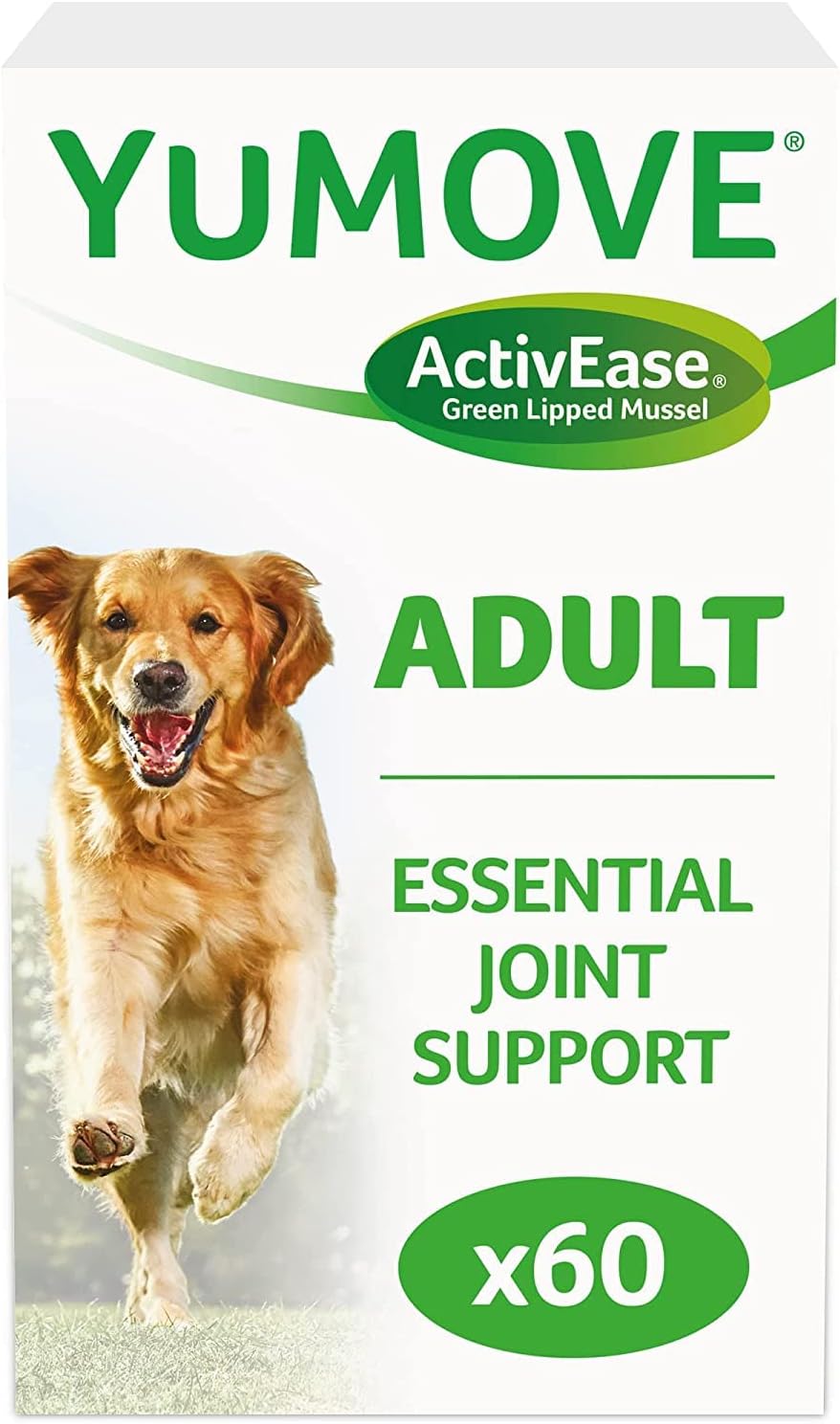
- Triple-action formula eases (occasional) stiffness, supports joint structure and promotes mobility in adult dogs.
- Powered by unique and sustainably sourced ActivEase Green Lipped Mussel (GLM).
- Contains hyaluronic acid, a major part of synovial fluid and part of our unique formula, which helps lubricate and cushion the joint.
- Plant based glucosamine provides basic building blocks of cartilage helping to maintain joint structure.
- GLM is a source of chondroitin, which helps to maintain healthy joints.
- Antioxidants Vitamins C and E help to mop up free radicals.
- YuMOVE is the UK's #1 vet-recommended joint supplement brand.
- Already supporting over 2 million dogs a year globally.
- Made in the USA with globally sourced ingredients.
Hydration Matters
The impact of adequate hydration on joint health is often underestimated.
Ensuring your senior dog has access to clean and fresh water at all times is essential, not only for maintaining healthy joints, but for supporting his overall well-being.
Note that each dog’s nutritional needs can differ based on factors like breed, size, and health status.
#5. Home Modifications
Adapting your home environment to accommodate your beloved senior dog’s weak back legs is another essential step in ensuring his comfort.
By making thoughtful adjustments, you can create a safe and supportive space that helps him to navigate his surroundings with ease.
Here’s what I did for Bertie and you can do the same to make your home a haven for your furry friend:
Orthopedic Pet Beds
An orthopedic pet bed is a specialized bed that offers superior cushioning and support to help soothe aging bones and alleviate joint pain.
Investing in an orthopedic bed ensures that your dog can enjoy restful sleep and reduced discomfort, contributing to his overall well-being.

- Cooling gel dog bed in celadon green color.
- Size: 40" x 32" x 9.5" (4" base foam height; sleep surface: approx. 34.5" x 26.5" with 16" opening)
- Sofa-style design creates a cozy space that promotes comfort and security.
- Designed with supportive bolsters for dogs to rest their heads on for optimum lounging comfort.
- Features a cuddly soft plush faux fur main sleep surface and thick fluffy bolsters wrapped in smooth micro velvet, gentle on noses and paws.
- Gel top helps whisk heat away and contours to your pet's figure to cushion pressure points and improve body alignment.
- Fluff-filled bolsters support the neck, back, hips, and joints to help ease discomfort and promote restful sleep.
- 90-Day Limited Coverage against material defects, plus 60-Day Guarantee with select products.
- CertiPUR-US foam is 100% manufactured in USA and independently tested to meet CertiPUR-US standards for emissions, content, and durability.
- Made WITHOUT formaldehyde, phthalates, mercury, lead, and ozone depleters.
- Cover is completely machine washable and is easily removed with a two zipper design that allows access to the foam base and bolsters.
Elevated Food And Water Bowls
Elevated food and water bowls are designed to be raised off the ground, providing a more comfortable feeding and drinking experience for dogs dealing with mobility challenges.
Key benefits include improved digestion, enhanced comfort, convenience, and minimized mess.
Elevating the bowls brings food closer to your dog’s mouth, promoting better posture and reducing strain on the legs, neck and back.

- Dog bowl stand can be adjusted to 12" for large dogs, 8" for medium dogs, and 2.8" for small dogs.
- Helps reduce joint strain for dogs with arthritis or mobility issues.
- Rubber anti-skid pads at leg ends prevent stand from moving around while eating or spilling water while drinking.
- Silicone mats on bowl insets to enhance bowl stability.
- Easy to install and disassemble: customized three heights can be achieved by tucking legs into different sides of the platform.
- 2 x removable 1.5-liter stainless steel bowls.
Pet Water Drinking Fountains
Pet water drinking fountains provide a continuous flow of fresh, filtered water that is more natural than water in a bowl and encourages dogs to drink more, improving hydration.
You can also place your dog’s drinking fountain on an upturned milk crate, low table, or even a pile of books to make sure it’s elevated at a height that’s comfortable for him.

- 95oz capacity ideal for all cats as well as small- to medium- size dogs.
- Made of food grade materials and BPA free.
- Water-level window and LED light shows you how much water your cat drinks in real time.
- Two flow designs: Flower waterfall (faucet drinking) and the gentle fountain.
- 5 stage filtration system, including coconut shell activated carbon and cotton layer, ion exchange resin and thick non-woven fabric.
- Ultra-quiet pump with low-energy consumption.
Ramps
Consider integrating walking ramps into your home to help your dog navigate different levels.
Whether it’s helping him access the sofa (or your bed) or ascending stairs, a ramp offers a more gentle incline that helps avoid painful movements and jarring the joints.
You can also use a ramp to help your dog access your car if he can no longer jump in and out.
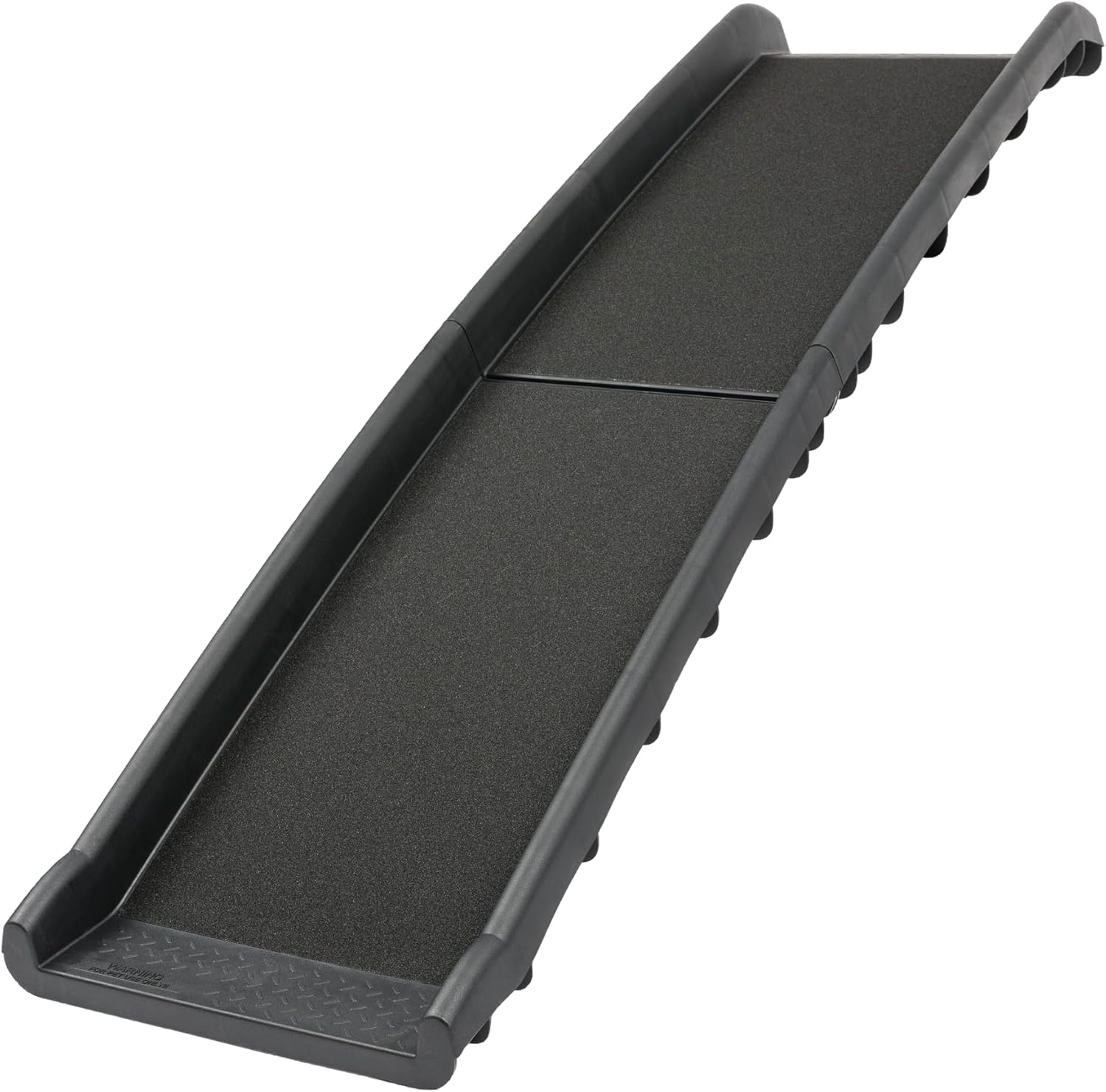
- Folding ramp to help dogs get in and out of your car, minivan, or SUV.
- Size: 62" L x 16" W x 4" H.
- Safety tested and durable: independently tested and rated to support pets up to 150 lb.
- Weighs only 10 lbs, so is easy to carry and lift in and out of the car as needed.
- High traction surface and side rails keep dogs from slipping or falling.
- Ramp easily folds in half and locks with safety latch for convenient storage.
- US-based customer care.
Pet Stairs
Pet stairs are another invaluable tool for creating a senior-friendly environment.
Placed near furniture (e.g. the sofa or your bed) or elevated surfaces, pet stairs enable your dog to ascend and descend without putting unnecessary pressure on his joints or causing pain.

- Foam steps designed to fit right up to the edge of your high bed, tall couch, or other big furniture so your pet can climb up and down more easily.
- CertiPUR-US certified foam for safety and quality—manufactured without ozone depleters, PDBW flame retardants, mercury, lead, and other substances/chemicals that can be harmful to pets.
- Can help reduce joint strain for older or senior dogs, or dogs with injuries.
- Minimize the need for owners to have to pick up their dog.
- 3-step, 4-step, and 5-step options available.
- Available in 17 different colors and patterns to fit your individual style.
Yoga Mats
You can buy yoga mats pretty cheaply and they can work wonders in creating a slip-free environment for your increasingly wobbly pup.
The placement of yoga mats around the home provide better traction for your senior dog, making it easier for him to move around confidently without the fear of slipping.
Trust me, there’s nothing worse than your dog losing his grip and falling down, and being able to get up again without your assistance.
We had yoga mats all over the house to help Bertie walk with more stability and confidence.
It may not have looked pretty, but for me, the trade-off was well worth it.

- Durable and lightweight yoga mat has extra-thick cushioning.
- Textured, sticky, non-slip surface for excellent traction and superior grip.
- Non-toxic and 6P-free PVC yoga mat is a healthier choice for you, your dog, and the planet—free of DEHP, DBP, BBP, DINP, DIDP and DNOP .
- Size: 68" L x 24" W x 6mm thick.
Dog Shoes
For some dogs, dog shoes with non-slip rubber soles may be helpful.
However, make sure your pup is happy about wearing them so you don’t add any more stress and discomfort.
I had dog shoes for Bertie to help him navigate the snow and ice, but he hated clumping around them in the home, so I didn’t use them indoors.
However, for some dogs dog shoes might be another way to provide them with improved traction in the home.

- Simply measure your dog's paws, and choose size according to the size chart.
- Dual mesh is very breathable and more stretchable.
- Rubber sole with wavy design to be more durable, slip-resistant, and soft.
- Reflective stripes for better visibility in the dark.
- One elastic strap is adjustable, easy to put on and take off.
- Free exchange if the size does not fit your dog.
Dog Coats
Depending on where you live, a dog coat can be extremely helpful for regulating your dog’s body temperature.
As we’ve seen, older dogs tend to lose muscle mass and may struggle to stay warm.
We ended up with an entire wardrobe for Bertie, from a body warmer, to a fleece, to his Hurtta Extreme Warmer Winter Parka (that he’s wearing in most of the pictures in this article), to an all-out thermal ski suit.
Here are four very important lessons I learned during the process:
- Make sure you buy dog clothing where your dog doesn’t need to lift his legs.
- Make sure you buy dog clothing where you don’t have to manipulate your dog’s legs to fit into holes to put the garment on.
- Make sure your dog clothing covers your dog’s hips so it keeps those stiff joints nice and warm.
- Make sure your dog clothing is easily removable and washable.
In my experience, it’s essential to have items of clothing that will slip easily over your dog’s head and back, and that you can fasten under his body with ease.
The last thing you want to be doing is pulling around his sore joints to fit them through sleeves or whatever, no matter how gentle you are.

- Eco version shell fabric, wadding, and belt are made from 100% recycled material, and the lining is made from 50% recycled polyester.
- Fluorocarbon-free Rudolf eco water-repellent treatment is used to weatherproof the coat.
- Unique foil lining material of the extreme warmer reflects the dog's heat and stimulates blood circulation efficiently, unlike a regular winter jacket.
- Besides a high collar, jacket has a warming tricot hood that can be lifted to protect the dog's ears and head.
- Adjustable back length, collar and waist, and a protective rear hem make this highly technical outfit suitable for a range of applications.
Warming Mats
A warming mat is another great option to help regulate your dog’s body temperature.
A warming mat will keep your pup warm and cozy during colder months and also provide relief for his sore, stiff joints.

- Temperature regulator with 6 adjustable levels, ranging from 86 to 131/30 to 55.
- 5-level timer (2/4/8/12/24 H) that stops heating automatically when the timer concludes.
- Keep track effortlessly with indicator light that progressively moves down every 4 hours to indicate remaining time.
- 7-layer protective structure with UL-certified heating wire to safeguard pets from burns.
- Crafted from V-0 flame retardant materials and soft PVC envelope to ensure waterproof and flame-resistant properties.
- Removable and machine-washable plush velvet cover for convenience.
- Gently alleviates aching joints and muscles.
- Well-suited for whelping boxes and senior dogs with joint sensitivities.
#6. Assistive Devices
Assistive devices are specifically designed to provide dogs with weak back legs with support and keep them more comfortable.
Support Harnesses

A support harness, like the Doggie Stylz support harness, is a supportive device that is worn around a dog’s body, encompassing the chest, shoulders, and front legs and/or the hindquarters, depending on your dog’s needs.
Support harnesses often have handles or straps you can attach a leash to so you can lift/support your dog’s back legs to provide stability while walking.
Support harnesses are strategically crafted to distribute weight evenly, allowing you to support your dog as he walks around (or runs, as in Bertie’s case)..
When I started using a harness for Bertie’s back legs, it was instrumental in building up his strength and mobility.
After a few weeks of walking with the aid of the harness, I was able to remove it completely for several months before we needed it again.
A harness can be particularly useful for aiding your dog during walks and going up and down steps, so your pup doesn’t have to put so much weight on his weak back legs.
Note: Unlike slings, harnesses can offer more consistent support during walks or other activities, making them suitable for both short-term and long-term use.

- Available in a wide range of sizes, ensuring a proper fit for all dogs.
- Helps your older, injured, or recovering dog climb stairs, go for walks, and get in/out of your vehicle.
- Multifaceted functionality can provide front-only, rear-only, or combined full body support.
- Lifts hips and abdomen together to more evenly distribute pressure on your dog's body. Simply lift from the rubber handles.
Slings
A dog sling is typically a fabric or supportive material that is placed under the dog’s belly to provide lift and support to the hindquarters.
They offer direct support to the dog’s hind end and can help distribute weight, making it easier for the dog to move.
Slings are ideal for short-term assistance, such as helping a dog move from one place to another or assisting them during bathroom breaks.

- Simple and effective solution especially for elderly dogs, weak hind legs, orthopedic injuries, hip dysplasia, arthritis pain, IVDD / TPLO / ACL / CCL surgery or other debilitating ailments.
- Help your dog stand up, go up and down stairs, get in and out of vehicles, onto furniture, outside for a bathroom break, or to provide some assistance when taking a walk.
- Comfortable thick design and soft lining with sheepskin-like covering.
- Handle equipped with removable padding is protects your hand.
- Reflective nylon band runs through the sturdy sling to hold the weight of any breed.
- Adjustable straps long enough to fit a range of dog sizes.
- Easy use: Does not get in the way when your pup needs to "go" and can be moved out of the way easily if needed. After using, just fold and put it into the portable gift bag.
- Machine washable.
Dog Lift Harnesses
A dog lift harness is a bit like a cross between a sling and a support harness.
This type of sling/harness can provide a longer term solution than a sling, allowing you to support your dog’s hips and weak back legs when walking, without having to bend over and strain your back.
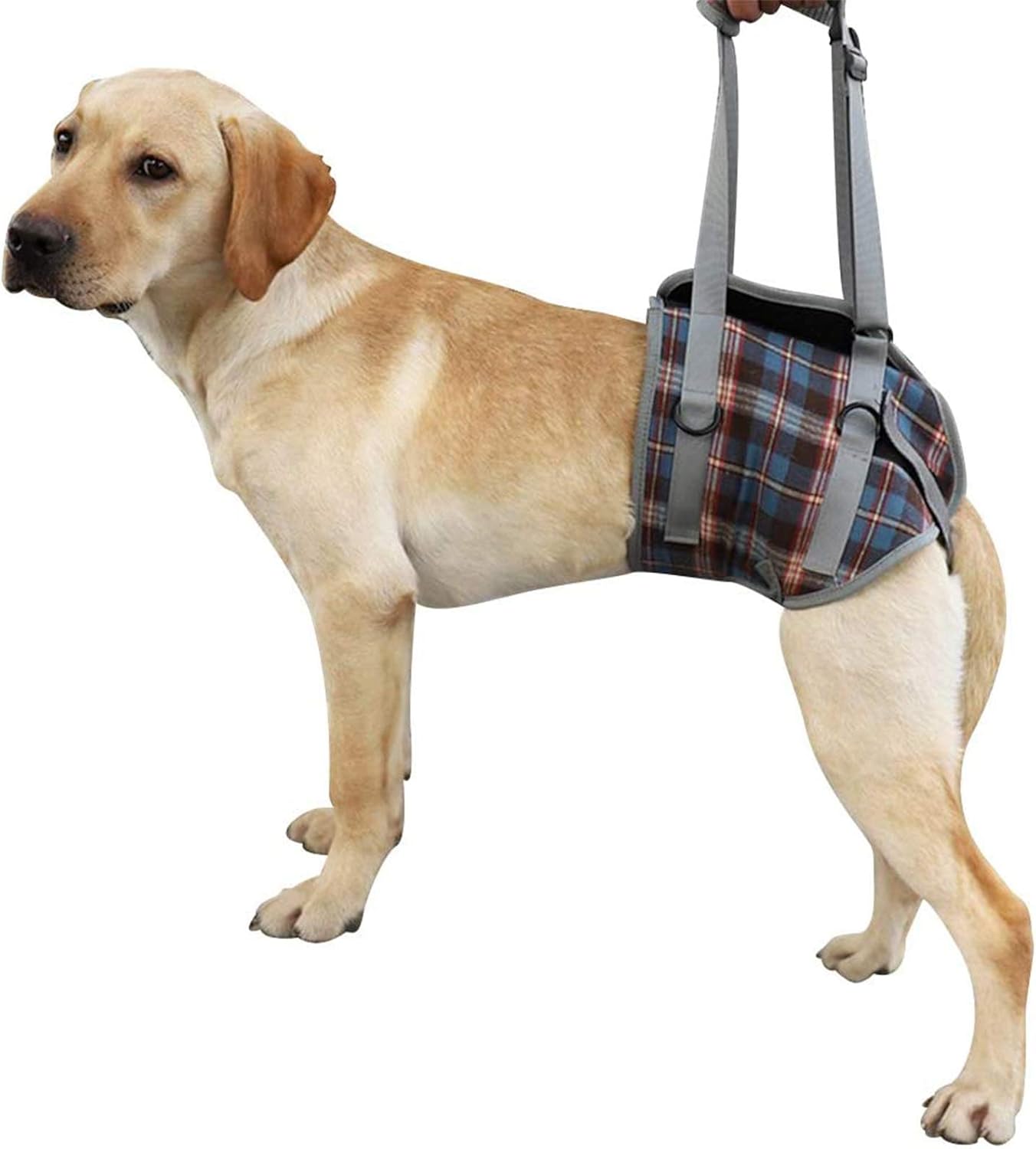
- Help your dog to walk, climb, and live a normal life again after suffering from degenerative myelopathy, hip dysplasia, ACL tears, arthritis, or other debilitating ailments.
- Premium quality for strength and durability and equipped with comfortable padding to protect your hand.
- Soft mesh lining is breathable for your dog's underbelly.
- Great replacement for traditional dog sling carrier when supporting your dog's back legs—no need to bend over to lift your dog off the ground.
- Quick and easy to use.
- Includes shoulder strap (sold separately) so you can carry your dog on your back.
Mobility Aids
Innovative mobility aids, such as wheeled carts, dog strollers, or dog wheelchairs, can offer a transformative solution for dogs with significant mobility challenges.
Customized to fit your dog’s measurements, devices such as these provide dogs with the ability to move freely and explore their surroundings despite their weak back legs.
Having said that, it’s important to research each product carefully before buying to make sure it will best meet your dog’s needs, and be safe and comfortable for him.
Once again, I advise you to first consult with your veterinarian or a canine rehabilitation specialist to determine which, if any, are the most suitable options for your dog.
Wheeled Carts

- Ideal for dogs with mobility issues, they can still get outdoors for walks and gain valuable sensory stimulation.
- Strong steel frame construction holds up to 150 lbs.
- Durable 600 denier polyester fabric is easily cleaned after use.
- Quick and easy set up in seconds.
- Folds compactly and stores easily.
Dog Strollers

- Easy-locking, no-zip entry.
- Elevated paw rest.
- Panoramic view window, and top window with viewing area.
- Easy one-hand fold mechanism.
- 600 denier water-resistant material.
Dog Wheelchairs

- Designed to help pets with injured or disabled rear legs to walk, run and play freely.
- Also for dogs with mobility issues due to aging, congenital disabilities, car accidents, joint pain, hip dysplasia, etc.
- Reflective strips woven into the front harness, rear saddle, and leash to help make wheelchair more visible when walking at night.
- Dense foam wheels with rubber treads will not puncture and will allow your dog to explore all types of terrain.
- Adjustable in height, width, and length to fit your pet within a certain range.
- Dog can use wheelchair for assisted walking or full rear leg support with no rear leg weight bearing.
- Unit is lightweight and easy to assemble.
#7. Emotional Support
Your dog’s emotional well-being is just as vital as his physical health.
Just as we humans benefit from emotional support during tough times, our dogs also thrive when they receive the care, attention, and understanding they deserve.
Quality Time
Spend quality time with your dog and enjoy every moment you can.
Engage in activities he loves, such as gentle walks, cuddle sessions, or simply hanging out with him.
Your reassuring presence and touch can really help alleviate stress and anxiety.
Studies show that when we engage in physical interactions like cuddling or petting our dogs, oxytocin (aka the “cuddle hormone” or “love hormone”) is released on both sides.
This fosters feelings of happiness, pleasure, and bonding, making your dog feel good.
Sources: Marti et al.; Nagasawa et al.
Gentle Affection
Physical touch is also a great way to provide comfort and relaxation.
Be attentive to your dog’s cues – some dogs may enjoy an under the collar rub, while others prefer a head scratch.
Routine
Try to maintain a consistent routine to provide your dog with a of security and help reduce anxiety.
As best you can, stick to regular feeding times, walks, play sessions, and bedtime rituals.
Positive Reinforcement
Praise and positive reinforcement go a long way in boosting your dog’s spirits, so let him know you’re proud and appreciative of his presence and courage in this difficult journey.
Comfort Zone
Create a comfortable and cozy space where your dog can relax and feel secure.
Provide soft bedding (remember that orthopedic bed), blankets, and perhaps a favorite toy or two.
This designated area can be your dog’s sanctuary where he can retreat to when he wants to sleep or relax, away from the business of the home or the shenanigans of resident kids or other pets.
#8. Mental Enrichment
In the same way as regular exercise and emotional support are important, keeping your dog’s mind engaged is another essential piece of the puzzle.
Options include:
Easy Food Puzzles
Food puzzles or interactive toys that dispense treats can engage your dog’s brain while satisfying his natural instincts to forage.
Like humans, as dogs age they may find things they used to do with ease, much more difficult.
So be sure to select appropriate food puzzles that your dog can complete easily – any puzzle pieces should be large enough for him to manipulate, and treats should fall out quickly and easily to make it rewarding.
These puzzles require your dog to think, problem-solve, and work for their rewards, keeping their cognitive skills sharp.
Sniffing Games
Hide treats or favorite toys in different spots around your home or yard, encouraging your dog to use his nose to find them.
This not only provides mental stimulation but also taps into his innate desire to explore.

Training Sessions
Incorporate short and gentle training sessions into your daily routine.
Practice simple cues that your dog already knows, like “wait” or “come.”.
Training not only exercises his brain but also fosters a sense of accomplishment and boosts their confidence.
Note: Avoid asking your dog to “sit” as this is likely to be painful and difficult – if not impossible – for him.
#9. Regular Vet Check-Ups
I’ve mentioned this before but am mentioning it again because regular vet check-ups are an important cog in this complex machine.
Your veterinarian can provide you with essential insights into your dog’s condition and ensure that his treatment plan remains effective.
Early Detection
Regular check-ups enable early detection of any potential issues that may arise, on top of your dog’s already weak back legs.
Catching problems early on can prevent them from worsening and improve the chances of successful intervention.
Personalized Care
Every dog is unique, and their needs can change over time.
Regular vet visits allow your veterinarian to tailor the treatment plan to your dog’s specific requirements, ensuring that he receives the best possible care.
Medication Adjustments
If your dog is on medication to manage pain or other symptoms, your veterinarian can monitor the effects and adjust dosages if necessary.
This ensures that he is receiving the appropriate relief without any adverse effects.
Peace of Mind
Consistent veterinary care offers you peace of mind, knowing that your dog’s health is being monitored closely.
It allows you to address any concerns or questions you may have and receive professional guidance on caring for your furry companion.
#10. When To Consider Euthanasia: Making Difficult Decisions
Facing the prospect of euthanasia for your beloved dog is undoubtedly one of the most challenging decisions any pet owner can confront.
While it’s a heartbreaking choice, it’s important to consider your dog’s well-being and quality of life above all else.
Here are some factors to contemplate when determining if it’s time to consider euthanasia:
Quality Of Life
Assess your dog’s overall quality of life.
Is he experiencing more pain than comfort?
Is he able to engage in activities he once enjoyed?
Is he still engaging in daily life – with you, with other family members, with other pets, with his environment?
Mobility
If your dog’s back leg weakness has progressed to a point where he is having a hard time standing, walking, or relieving himself without significant struggle, it might indicate that his condition is severely affecting his daily life.
Pain Management
If your dog’s pain cannot be adequately managed with medication, therapies, or interventions, he might be experiencing unnecessary suffering.
Loss Of Appetite And Interest
A significant decline in appetite, energy, and interest in surroundings can be indicators that your dog’s condition is taking a toll on his mental and emotional well-being, and perhaps deteriorating.
When Bertie stopped eating and we were unable to coax him even with his favorite foods, we knew it was time to say goodbye.
Overall Health
If your dog’s weak back legs are accompanied by other serious health issues that compromise his overall health, it might be an indication that his body is no longer able to sustain a good quality of life.
Consult With Your Veterinarian
Discuss your concerns with your veterinarian.
Their professional insight can help you make an informed decision.
Veterinarians can evaluate your dog’s condition objectively and provide guidance on whether euthanasia is the right choice.
Your Dog’s Comfort
Ultimately, your dog’s comfort should be your guiding principle.
If his difficulties overwhelm his pleasure in life, and if his pain and discomfort outweigh his ability and desire to engage, euthanasia is likely the compassionate choice to prevent unnecessary distress.
Considering euthanasia is never easy, and it’s natural to experience a range of emotions.
As a responsible and loving pet owner, your priority is to ensure that your dog’s well-being is the primary focus.
While the decision is heart-wrenching, it’s a reflection of your profound love and commitment to providing the best possible life for your furry friend, even in the face of the most difficult choices.
The night before we said goodbye to Bertie, I sat with him for 8 hours on his lovely, comfy orthopedic bed, reminiscing about all the good times and trying make sure he stayed comfortable.
I dreaded the arrival of dawn because then I knew the countdown was on.
All the time it was dark, it felt like reality was suspended.
If you find yourself in that situation, my heart goes out to you.
But know that you have done your very best to make sure your beloved pup had a long, happy life and that you did everything you could to help him.

This article is a tribute to my beautiful Bertie, our Sunny Boy, and the kindest soul I have ever known. Returned to the shelter aged 6 months for “being destructive,” we adopted him because, 3½ years later, he was the longest-staying resident. For no apparent reason than he was “just another desert dog” who also happened to have a stumpy tail. He rewarded us with his gentle nature and zest for life for the next 15 years. He traveled with us from Dubai to Los Angeles, and Los Angeles to Helsinki. This old desert dog adapted to the forests, snow, and frigid temperatures like a duck to water and will be forever remembered for his exuberant ‘figure-of-8’ zoomies and the infectious joy he found in every moment.
READ NEXT
Resources
- Disorders of the Spinal Column and Cord in Dogs– William B. Thomas DVM
- Effects of contact with a dog on prefrontal brain activity: A controlled trial –
Rahel Marti, Milena Petignat, Valentine L. Marcar, Jan Hattendorf, Martin Wolf, Margret Hund-Georgiadis, & Karin Hediger - Feeding Mature and Senior Dogs – Krista Williams BSc DVM & Robin Downing DVM CVPP CCRP DAAPM
- Glucosamine Chondroitin Combination – Rania Gollakner BS DVM MPH
- Investigation and Management of Canine Osteoarthritis – Rob Pettitt, & Alexander German
- Oxytocin-gaze positive loop and the coevolution of human-dog bonds – Miho Nagasawa, Shouhei Mitsui, Shiori En, Nobuyo Ohtani, Mitsuaki Ohta, Yasuo Sakuma, Tatatsushi Onaka, Kazutaka Mogi, & Takefumi Kikusui
- Senior Dog Care – Special Considerations – Malcolm Weir DVM MSc MPH, Krista Williams BSc DVM, & Ernest Ward, DVM
- What Galen Myotherapy Can Help With – Galen Myotherapy
- Why Your Dog’s Back Legs Are Weak And Collapsing – Nicole Cohen DVM DABVP
- What to Know About Degenerative Myelopathy in Dogs – Cheryl Whitten
- What Is Arthritis? The Basics – Canine Arthritis Management
