
One of These Approaches Helps Fearful Dogs Face Their Fears. The Other Makes Things Worse

Are you accidentally flooding your dog instead of helping them?
If you’ve ever been told to “just expose your dog to the thing they’re scared of” (think, take them to a busy park when they’re terrified of other dogs, or walk them along a noisy road until they stop reacting), you’ve encountered the logic behind what’s known as flooding. It may even sound reasonable. Face the fear, get over the fear. It’s what plenty of people were told to do with their own anxieties for years.
The problem is that for dogs, it doesn’t work that way. And when it goes wrong — which it often does — the consequences can be serious and long-lasting.
There are two fundamentally different approaches to helping a fearful dog: flooding and desensitization. One of them is grounded in decades of behavioral science and has a strong track record with even the most severely affected dogs. The other can make a fearful dog significantly worse, damage the relationship between dog and owner, and in some cases, tip a frightened dog into aggression.
Here’s how to tell them apart, and why one of them should never be on the table.
What is flooding?
Flooding is the practice of exposing a fearful animal to what scares them (aka their trigger) at full intensity for a prolonged period, until they stop reacting. The idea is that if they can’t escape the thing they’re scared of, they’ll eventually learn it isn’t going to hurt them.
In practice, this might look like:
- Holding a dog still while a stranger approaches and pets them, despite the dog struggling to get away.
- Taking a dog who is terrified of other dogs to an off-leash dog park and waiting for them to “get used to it.”
- Forcing a dog who panics at the vet to remain on the table without allowing them to move, until they stop showing signs of fear.
In many cases, the dog will eventually stop reacting in such situations. But not because they’ve learned the thing is safe. They stop because they’ve entered a state of learned helplessness. This is a psychological shutdown in which they’ve realized that nothing they do will change what’s happening to them. They may look calm but inside they’re anything but. Rather, they’re defeated and resigned to whatever may happen next. It’s a horrible place to be.
This state is often misread as progress. The dog is quiet, still, and not reacting anymore. Owners (and even some trainers) interpret this to mean the fear has resolved. It hasn’t.
What’s been learned is that resistance is pointless, and that their most trusted person will not help them when they’re scared.

What are desensitization and counter-conditioning?
Desensitization and counter-conditioning are almost always used together, which is why you’ll often see them referred to as DS/CC or simply “desensitization.”
Desensitization means gradually exposing your dog to their trigger, starting at an intensity so low that it produces no fear response at all. You then very slowly increase that intensity over time, always staying below the point where your dog becomes distressed.
Counter-conditioning means pairing the trigger with something your dog loves — usually a high-value treat (think steak, chicken, hotdog, cheese…) — so their emotional response to the scary thing begins to shift from fear to something more positive. Over time, your dog not only learns that the scary thing isn’t so dangerous after all, but that its presence actually predicts good things happening.
Together, these two approaches change your dog’s emotional response to the thing that scares them at the level of the nervous system, not just their surface behavior. That’s the crucial difference. The goal isn’t a dog who tolerates something frightening. It’s a dog whose fear has genuinely reduced.
Why flooding doesn’t work for fearful dogs
The research on this is clear. Flooding (also known in clinical contexts as implosion therapy) can produce rapid behavioral change in the short term. But the underlying emotional state doesn’t change. The fear remains. And in many cases, the experience of being unable to escape a terrifying situation creates new layers of trauma on top of the existing one.
Dogs learn through association. If the association being formed is “this person will not help me when I am overwhelmed and scared,” the damage to your relationship can be significant and lasting.
There’s something else worth mentioning here, and it’s the concept of the fear threshold, sometimes called “threshold” for short. When your dog is above threshold, they are in a state of genuine physiological arousal. Their stress hormones are elevated. Their rational brain has, in effect, gone offline. A dog above threshold cannot think or learn. They can only react. All flooding does is keep your dog above threshold for an extended period, which is not a learning experience. It’s an unpleasant ordeal.
The threshold: the concept that changes everything
Once you understand threshold, the logic of desensitization becomes immediately clear.
The threshold is the point at which your dog shifts from noticing their trigger to reacting to it. Below threshold, your dog is aware of the scary thing but is still able to function. In other words, they can take treats, respond to cues, make choices, and think clearly. Above threshold, they can’t do any of that. The rational brain shuts down and the survival brain takes over.
Desensitization works exclusively below threshold. You find the distance, intensity, or duration at which your dog can perceive their trigger without reacting (known as their “working distance”) and you start there. Every session takes place at or below that point. Progress means gradually, incrementally closing that distance, or increasing that intensity or duration, while your dog remains in a state where they can actually learn.
It’s slow. It requires patience. And it works in a way that flooding never can, because you are working with your dog’s nervous system rather than against it.

What this looks like in practice
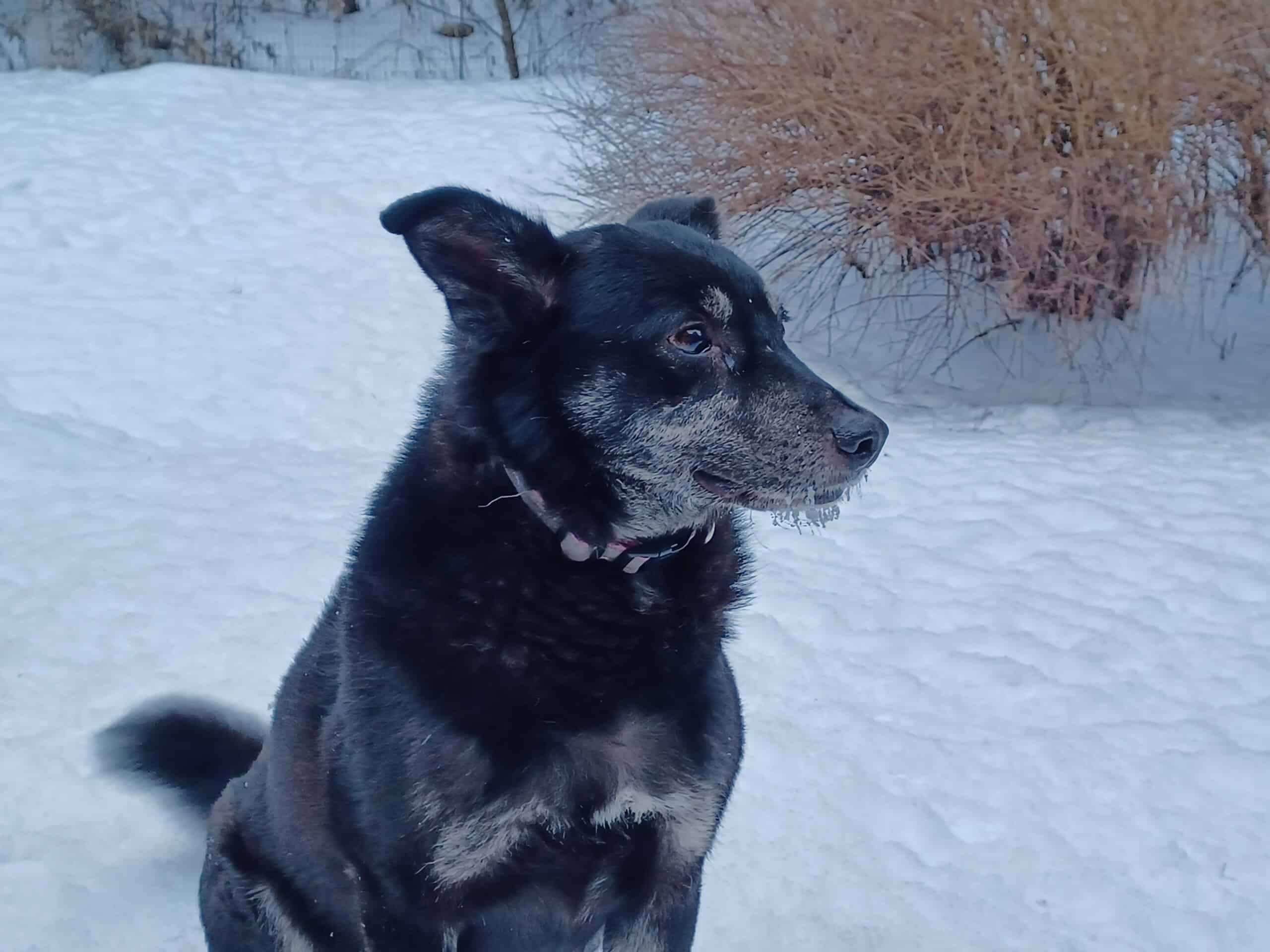
Our rescue dog Louis was one of the most fearful dogs I have ever met. He had spent the first two years of his life chained up and mistreated, and his fear of the veterinary clinic was intense — so intense that we sought out a vet who was willing to come out to the car to examine him and administer vaccinations. When he needed further treatment, they would sedate him before we carried him into the clinic.
Was that ideal? No. Was it the right choice for Louis? Absolutely. Because the alternative — forcing a dog of Louis’s fear level through a full veterinary examination while he was in a state of complete panic — would have achieved nothing except making his fear worse and potentially putting the vet staff at risk.
The approach we took with Louis at the vet clinic was built entirely around desensitization. For months, we drove to the car park and sat there. Nothing happened. Treats appeared. We drove away. On another occasion, we walked to the entrance and stood outside. Treats appeared. We left. Occasionally we went inside briefly, with Louis choosing to approach rather than being pulled in. Treats, praise, back to the car.
It took a long time. Louis never became a dog who enjoyed vet visits. But he eventually became a dog who wouldn’t have a complete meltdown at the mere sight of the veterinary clinic.
Another of our dogs, Maggie’s, experience is another example of why flooding fails. We had to rush her to the vet with a rattlesnake bite and they took her straight in for emergency treatment. As a result, the normally confident and sociable Maggie developed a profound fear of the vet clinic. She had undergone a version of flooding in the most acute sense — an overwhelming, inescapable, frightening experience — and the result was a dog who would put on the brakes and refuse even to walk through the clinic door, for years afterward. The experience hadn’t taught her the vet was safe. It had confirmed her worst fears.
Important Note: Always advocate for your dog and find a vet who is prepared to work with you to find what’s best for your dog. In Maggie’s case, the amazing veterinary specialist caring for her recommended we took her home before she was 100% ready. This was purely because he could see how distressed she was at being hospitalized and knew she would recover fast at home, where she felt safe with people she trusted.
The vet clinic: where this matters most
The veterinary clinic is one of the most common contexts in which flooding is applied, usually unintentionally. Your dog is frightened. The vet needs to examine them. Time is limited, other patients are waiting, and the instinct is to get on with it. Your dog may have to be muzzled or restrained for the examination to proceed, and your dog is left with an experience that confirms: this place is scary and dangerous, and the people there will not listen to me.
Research suggests that around 55% of dogs show some level of fear at the vet. But that figure isn’t inevitable. It’s what happens when a dog’s signals are ignored, appointment after appointment, because there simply wasn’t time to do it any other way. In other words, flooding.
There’s a growing movement toward Fear Free veterinary practice, which is built on exactly the principles of desensitization and counter-conditioning — keeping dogs below threshold, pairing clinical experiences with high-value rewards, allowing dogs more choice in how examinations are conducted. The results are measurably better for dogs, less stressful for owners, and safer for vet staff. It works because the science behind it works.
What to do instead
If your dog has a fear or phobia, whether it’s the vet, other dogs, men, thunder, children, or any of the countless things that dogs can learn to be afraid of, the approach is always the same.
Find the working distance. Where can your dog be in the presence of their trigger without reacting? That’s your starting point. Not closer. Not “just a little bit above” where they’re comfortable. Exactly where they can function.
Pair the trigger with something great. Every time the trigger appears, high-value food appears too. Cheese, chicken, or whatever your dog finds most motivating. The goal is a new association: that thing predicts good things. This is the counter-conditioning.
Move forward on your dog’s timeline, not yours. Progress in desensitization is measured in inches, not yards. If your dog is reacting, you’ve moved too fast. Go back a step. Stay there until the response is consistently calm. Then try again.
Watch their body language. A dog who is above threshold is telling you, clearly, that you’ve pushed too far. Yawning, lip licking, turning away, freezing, refusing food are all stress signals, and all of them mean the same thing: this is too much, too fast.
Don’t flood. Not even a little. Not “just this once.” Not because a trainer told you to push through. The research is consistent: flooding does not resolve fear in dogs. It suppresses it, at best. At worst, it deepens it, creates new trauma, and destroys the trust your dog has placed in you.
A note on professional help
Severe fear and phobia in dogs is not always something that owners can address alone, and there’s no shame in that. If your dog’s fear is significantly impacting their quality of life (or yours), it’s worth seeking support from a professionally qualified, reward-based behaviorist who works within the principles of desensitization and counter-conditioning.
It’s also worth asking your vet about the role of medication. For some dogs with severe anxiety, appropriate medication can lower their overall arousal level enough to give you a starting point for your desensitization plan. Medication isn’t a shortcut or a substitute for behavior modification, but for dogs like our Louis whose fear was deeply embedded, it can be the thing that makes the rest of the work possible.
Quick reference: Flooding vs desensitization at a glance
Flooding: Full exposure to the scary thing (“the trigger”) at high intensity. The dog cannot escape. Produces shutdown, not learning. Can deepen fear, create new trauma, and damage trust.
Desensitization: Gradual exposure below the fear threshold. The dog remains able to function. Paired with high-value rewards. Produces genuine change in emotional response.
Threshold: The point at which a dog shifts from calmly noticing their trigger to reacting to it. Desensitization works below it. Flooding ignores it.
Signs you’ve gone too fast: Yawning, lip licking, turning away, freezing, refusing food, inability to settle. These are stress signals. Go back a step.
The rule: If your dog is reacting, they’re above threshold. Stop, create distance, and go back to where they were comfortable.
This article draws on the principles explored in the following articles on my site:
- 6 Proven Socialization Tips to Transform Your Shy Dog
- 15 Things That Terrify Dogs (And How You Can Help Them Feel Safe)
- 55% of Dogs Are Scared of the Vet: Here’s How to Help
- Avoid These 12 Mistakes When Managing Your Dog’s Anxiety
For the next step, see Why Rescue Dog Timelines Can Set Owners (and Dogs) Up to Fail
