

Why Nail Trims Are A Must For Dogs (And How To Do It Safely)

This post may contain affiliate links, which means we may receive a commission, at zero cost to you, if you make a purchase through a link. Please see our full disclosure for further information.
Many dog owners are familiar with the sound of their dog’s toenails clicking as they walk across the floor.
However, overgrown claws can put pressure on the toes and paws, which puts strain on the legs.
This can be uncomfortable for the dog, especially when walking on hard surfaces like concrete.
Long nails can also affect a dog’s “gait and posture, which in turn can cause pain and inflammation in their joints,” says Dr. Beth Turner.
So it’s important to keep your dog’s nails trimmed in terms of his health and well-being, and to help prevent pain and injury.
How long should a dog’s nails be?
The length of a dog’s nails will depend on the dog’s individual conformation and lifestyle. For example, dogs who do a lot of running and jumping are likely to wear their nails down more quickly than those who lead a more sedentary lifestyle.
Dogs with very flat feet are more likely to have problems with overgrown nails than those with normal or high-arched feet.
If you can hear your dog’s nails clicking when he walks across the floor, or his nails reach the ground when he’s standing still, take that as a sign he’s due for a nail trimming session.
Do long nails hurt dogs?
Long nails can make it difficult for a dog to grip surfaces, which can lead to slips and falls. In older dogs, this is “especially concerning,” explains Dr. Turner: “If they splay their legs repeatedly this can cause trauma to their joints and muscles, or worsen arthritic conditions.”
Overgrown nails can also get caught on things and get pulled, or potentially break, which can be very painful.
Additionally, long nails are more susceptible to splitting. This can expose the quick, which can become infected and, again, extremely painful.
Finally, if the nails are left to just keep growing, they will eventually curl all the way back round and start digging into the dog’s skin or paws. “This is true of all nails, but especially the dewclaws,” says Dr. Turner.
How often should a dog’s nails be clipped?
Dogs’ nails grow just like humans’ nails, and if they’re not regularly trimmed, they can become overgrown.
Depending on the dog’s activity level, breed, conformation, and nail length, their nails should be trimmed “every three to four weeks,” according to the Advanced Care Veterinary Hospital.
What is the correct way to cut a dog’s nails?
Trimming a dog’s nails is an important part of dog grooming, but it’s important to do it correctly.
Dogs’ nails are made of tough keratin, which is the same material that makes up our hair and nails.
Avoiding the quick
The quick is the inner part of the nail that contains blood vessels and nerves. If you cut the quick, it will bleed and be painful for your dog.
To avoid this happening, angle the trimmer so you’re cutting just above the quick.
What if my dog has black nails / dark nails / white nails / clear nails?
For black, or dark nails, trim the tip of the nail at just 1mm at a time until you see a black dot in the center of the nail – this is the quick.
For clear, or white nails, trim until you see a somewhat oval-shaped pink area – again, this is the quick.
If you accidentally cut the quick, don’t worry!
Quickly apply some styptic powder, flour, baking soda, or cornstarch to stop the bleeding.
Styptic pencils are another option. My tip is to have one of these on hand before you start, just in case.
With practice, you’ll get a feel for how much you can trim without hitting the quick.
If you’re not sure, it’s better to err on the side of trimming too little rather than too much.
In addition, “cutting your dog’s nails frequently will cause the quick to recede and allow the nails to be trimmed shorter,” explains Dr. Turner.
What equipment should I use to cut my dog’s nails?
When it comes to trimming your dog’s nails, you need to have the right tools and you have a few different options when it comes to equipment.
Guillotine scissors are a popular choice, as they offer a sharp, clean cut.
Nail trimmers or nail clippers are other options, and they tend to be less expensive than scissors.
However, they can be more difficult to use, and it’s important to make sure that you don’t cut too deeply.
A dog nail grinder or Dremel tool is also an option, and this can be a good choice if your dog is particularly terrified of clippers.
But nail grinders may make a noise, create a build-up of heat, and take longer to get the results you need.
In this video, the trainer demonstrates how to help a dog get used to different types of equipment:
How can I keep my dog’s nails short without clipping them?
There are a number of ways to keep your dog’s nails short naturally too.
One way is to provide your dog with a scratching board or mat.
This will give him a place to scratch and stretch his nails, keeping them shorter naturally.
You might have to train a “scratch” behavior here. This video explains how to do this:
Another way to keep your dog’s nails short is to make sure he gets plenty of exercise.
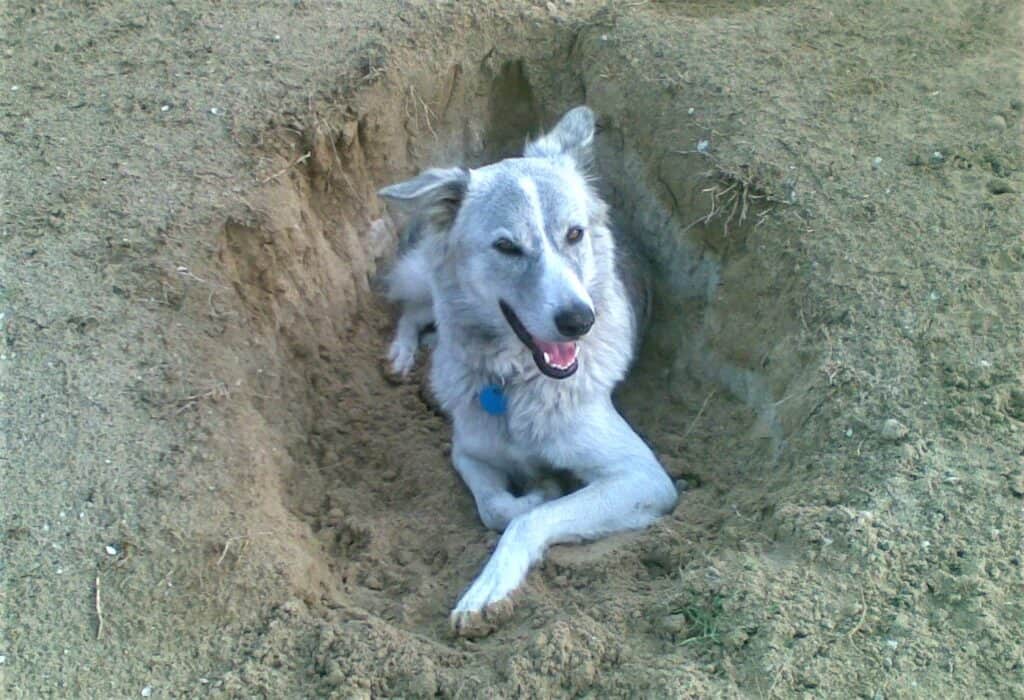
A long walk or hike, playtime, digging, and other outdoor activities all help to wear down nails.
Why dogs don’t like having their paws touched?
Dogs’ paws are different from human feet in a number of ways.
For one, they are much tougher and can withstand walking on surfaces that would be uncomfortable or even painful for humans.
Dogs’ paws are essential for their survival and are used for digging, dispersing scent, clawing at prey (or toys), navigating the environment, and escaping predators.
The canine foot is also loaded with nerve endings and is therefore extremely sensitive.
A dog’s paws contain Pacinian corpuscles, which are receptors located in the skin that can sense pressure and vibration.
This means that when you touch a dog’s paw, they are likely feeling a great deal of sensation.
If your dog is sensitive about having his paws handled or is wary of nail trims, don’t miss my article How To Calm Your Dog And Cut His Nails Without A Struggle, where I explore different training options and calming aids to help make trimming your dog’s nails as stress-free as possible – for both of you.
Resources
- An inter-species computational analysis of vibrotactile sensitivity in Pacinian and Herbst corpuscles Julia C. Quindlen-Hotek, Ellen T. Bloom, Olivia K. Johnston & Victor H. Barocas
- Conditioning your dog to love nail trimming – Kelly Duggan
- How often should you cut your dog’s nails? – Dr. Beth Turner
- How to teach your dog to trim his nails with a scratchboard – Animal Behavior College
- Mechanoreceptor – Wikipedia
- Nail trim terror – address it! – AwesomeDogsVideo
- When slowly is faster – Alex Walker
- Why is it Important to Trim Your Pet’s Nails? – Advanced Care Veterinary Hospital
