
How to Make a DIY Snuffle Mat for Dogs in 20 Minutes (Even If You Can’t Sew)

Your dog inhales his dinner in 11 seconds flat. Or he’s pacing around at 8 PM because it’s pouring rain and you skipped the evening walk. Or he’s anxious, bored, and has decided that the baseboards look chewable.
Here’s something dog owners don’t always realize: mental exercise is just as important for dogs as physical activity.
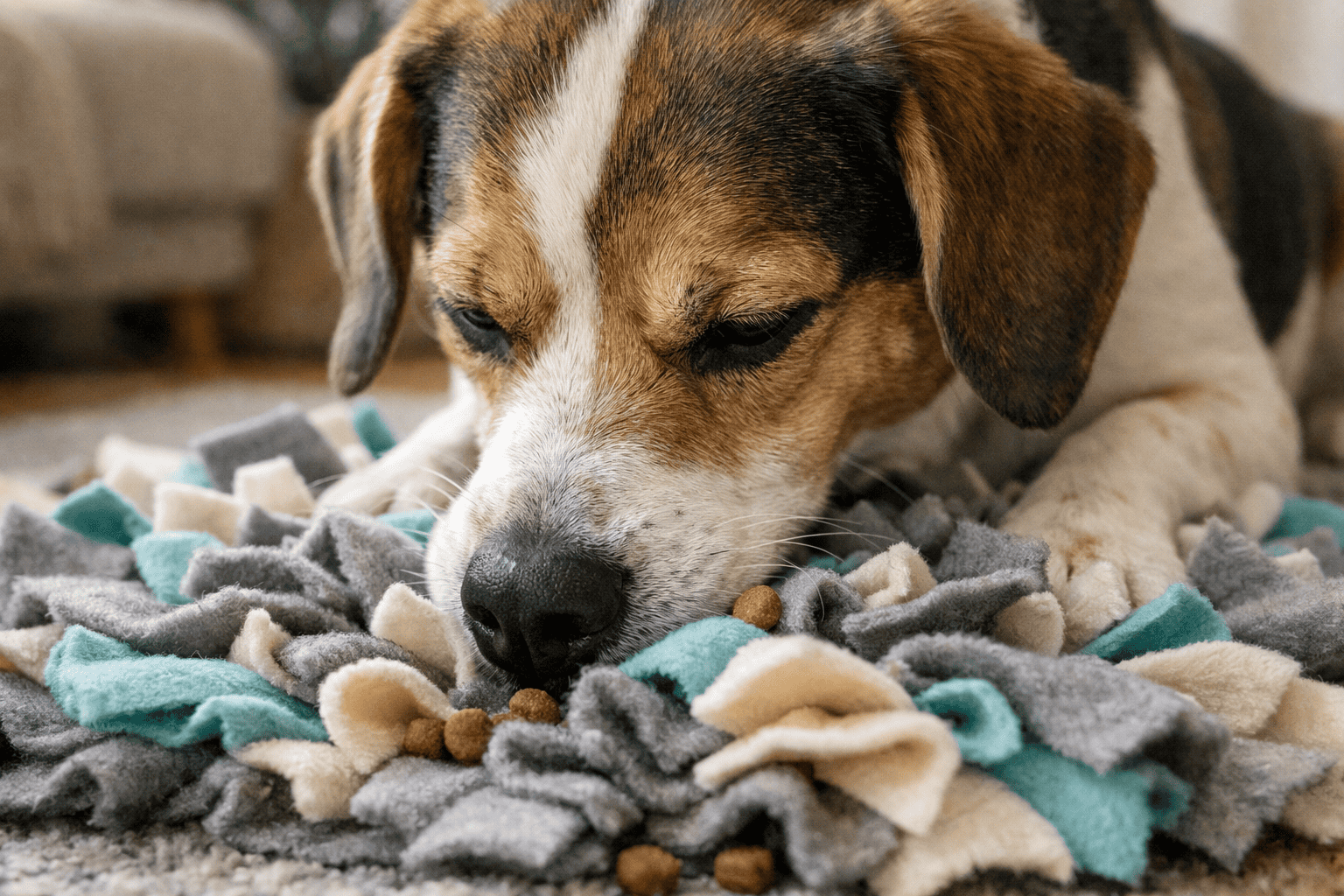
An easy way to fix this? A snuffle mat. It’s a simple enrichment toy that turns mealtimes into a foraging game. Instead of wolfing food from a bowl, your dog sniffs, searches, and problem-solves to find hidden kibble or treats. This kind of mental work activates the “thinking brain,” which helps quiet the emotional brain that drives stress, anxiety, and over-arousal.
The result? A calmer, more focused, and more satisfied dog.
You don’t even need to buy one. You can make a snuffle mat in 20 minutes with stuff you probably already own—old fleece, a rubber mat, scissors. That’s it.
This guide covers how to make one, what materials work best, how to adjust difficulty, and how to keep it safe. Let’s turn your old fabric scraps into your dog’s new favorite brain game.
What Is a Snuffle Mat and Why Dogs Love It
A snuffle mat taps into your dog’s natural foraging instincts. These are the same behaviors wild canines use to search for food.
Sniffing is mentally exhausting but emotionally calming. Unlike physical exercise, it lowers arousal instead of increasing it. That’s why a 10-minute snuffle session can tire your dog out as much as a 30-minute walk.
Snuffle mats are especially helpful for:
- Fast eaters
- Anxious or stressed dogs
- Seniors or injured dogs needing low-impact enrichment
- Rainy-day indoor activity
- Dogs that need help to chill out
Core Design Principles for an Effective Snuffle Mat
A good DIY snuffle mat isn’t just a pile of fabric. The design matters.
Sturdy perforated base: Use a rubber or plastic sink/bath mat with holes. It keeps its shape and withstands repeated use.
Soft, non-fraying fabric: Fleece is ideal. It’s gentle on the nose, durable, and washable. Avoid fabrics that shed or create long threads.
High density: Pack strips closely together so food hides deep within the mat. Density creates real sniffing work.
Flat, low profile: A low mat is less likely to flip, slide, or frustrate enthusiastic dogs.
Size matters: Small dogs do well with compact mats. Large dogs may benefit from bigger, denser surfaces.
Weight and grip: Non-slip bases or heavier mats prevent sliding during intense sniffing.
Washability: If you plan to feed meals in the mat, choose washable materials.
How to Make a Classic Fleece Snuffle Mat (Step-by-Step)
Materials Needed
- Rubber or plastic sink/bath mat with holes (non-slip preferred)
- Fleece fabric (about 1–2 yards for a medium mat)
- Fabric scissors or rotary cutter
- Measuring tape
Step-by-Step Instructions
1. Cut fleece into strips about 1–2 cm wide and 15–20 cm long (roughly 1–2 inches by 6–8 inches).
2. Thread one strip through two adjacent holes so both ends sit on top.
3. Tie a tight single knot.
4. Repeat across the mat, filling every hole to create a dense “forest.”
5. Fluff the fabric to open hiding spaces.
That’s it. You’re done.
Making a Larger or More Stable Mat
Want something bigger or tougher? Zip-tie two mats together before adding fleece for larger dogs. Double the base thickness for extra durability. Add non-slip backing or place on a rug for grip.

Budget DIY Snuffle Mat (Cardboard or Fabric Base)
If you want a very cheap or temporary version, use thick cardboard or sturdy fabric, punch evenly spaced holes, and tie fleece strips through as above.
When This Version Is Useful
- Testing whether your dog enjoys snuffle mats
- Short-term enrichment
- Ultra-low budget setups
Limitations
- Less durable
- Usually not washable
- Breaks down faster
Who Should Avoid This
- Power chewers
- Drooly dogs
- Dogs that shred materials

Best Fabrics for DIY Snuffle Mats
Different fabrics change how a snuffle mat feels, how durable it is, and how deep your dog must forage.
Soft Fabric Options
Fleece: Durable, soft, non-fraying, washable
The gold standard for classic snuffle mats. Cut into strips and knot through a perforated base. Ideal for most dogs and frequent washing.
Cotton flannel: Soft but may fray
Works like fleece but edges can fuzz. Either accept some wear or fold strips before knotting. Good option for sensitive noses.
Sweatshirt material: Strong, low shedding
Old hoodies and joggers work very well. Cut sleeves and body into strips (about 1–2 cm wide) and knot through a rubber mat like fleece. Or create loop pockets by sewing or tying folded strips across a fabric base so food hides underneath. Great for dogs that pull harder than fleece can handle.
Jersey (T-shirt): Soft but thin
Because it’s lightweight, use narrower spacing or layer multiple strips per hole to create depth.
To make a quick no-base T-shirt snuffle, simply scatter kibble across a flat t-shirt. Roll it tightly like a burrito then fold the ends inward (or loosely knot). Let your dog unroll and sniff through layers. Good for beginners, seniors, and low-effort enrichment.
Upcycled Household Materials
Towels: Tough, absorbent, durable
Excellent for drooly dogs and heavy sniffers.
To make a rolled towel snuffle, start by scattering kibble across the towel. Roll it up tightly from one end then fold into a spiral or loose knot. For more challenge, place it inside a shallow box. This creates a dense, low-impact foraging experience without endlessly tying fabric.
Microfiber cloths: High scent trapping
Push treats into folds or knot loosely into clusters. Some dogs dislike the texture, so test first to see if your dog wants to engage.
Old bathmats: Ready-made snuffle surface
If the pile is firmly stitched, you can simply hide kibble between tufts. This works best for light to moderate foragers.
Layered fleece + jersey
Combine thick fleece strips with thinner jersey for varied texture and depth. This increases difficulty and scent trapping.
Tougher, More Durable Options
Denim: Very tough, long-lasting
Denim is ideal for strong foragers who shred fleece.
To make a denim snuffle from an old pair of jeans, cut the legs into narrow strips (denim is thick). Knot through a rubber base or make denim folds/pockets by sewing or tying layered strips so the food hides between folds rather than deep tufts. Check your dog’s gums regularly and retire this option if there’s any sign of irritation.
Fabrics to Avoid
- Loose-weave fabrics that unravel into long threads
- Shedding synthetic fluff (ingestion risk)
- Brittle, stiff, or scratchy materials that irritate nose or gums
Simple Rules
- Soft fabrics for sensitive or gentle dogs.
- Tougher fabrics for strong foragers.
- Rolled or folded setups for low-effort, no-sew enrichment.
How to Introduce Your Dog to a Snuffle Mat
Start easy. Scatter food on top of the mat so your dog can see it. Let him learn the concept—sniff, find, eat. Once he gets it, gradually hide food deeper into the fabric.
Keep sessions short and successful. You want calm, focused searching, not frustration. If your dog starts digging, flipping, or getting frantic, the mat’s too hard. Make it easier.
Encourage sniffing, not destruction. If your dog tries to rip the mat apart instead of using his nose, intervene early. You don’t want him treating this like a chew toy.
Adjusting Difficulty (Beginner → Advanced)
Dogs often need to start easy and work their way up. Begin by scattering food on the surface where it’s visible. Once your dog understands the game, start hiding kibble deeper into the fabric layers. A sparse mat with lots of open space is easier than a densely packed one, so increase density as your dog’s skills improve.
Keep sessions short and successful. The key is slow progression. If your dog finishes in seconds, make it harder. If your dog starts digging, flipping, or getting frantic, the mat’s too hard. Make it easier. You want to create calm focus, not to cause additional stress.
You can also switch from treats to full meals to increase engagement time. Mixing different fabric textures—like combining fleece with jersey or denim—adds complexity because each material holds scent differently. For advanced dogs, layer two mats on top of each other or add hidden clusters of food in specific spots to create scent challenges.
Safety Guidelines for DIY Snuffle Mats
Supervise your dog the first few times he uses a snuffle mat. You need to know if he’s a sniffer or a shredder. If he starts chewing, pulling out strips, or trying to eat the fabric, remove the mat immediately. Some dogs just aren’t safe with fabric-based enrichment.
Watch for fabric ingestion. If pieces disappear, stop using the mat. Avoid long threads that can cause intestinal blockages—check your knots regularly and trim any loose ends. For dogs using tougher materials like denim or canvas, monitor their teeth and gums.
If you have multiple dogs, try feeding them separately. Competition over a snuffle mat can escalate fast. If your dog shows any resource guarding behavior like freezing, growling, or stiffening, remove the mat and work on that issue separately.
It’s best not use a snuffle mat if your dog obsessively shreds fabric, compulsively eats non-food items (known as pica), or gets agitated when trying to figure it out. For these dogs, a lick mat or stuffed food puzzle toy like a KONG might be a safer, more calming option.
Cleaning and Maintenance
After each use, shake out crumbs and hair. Food residue attracts bacteria and makes your mat gross fast. Remove trapped debris like kibble dust, slobber, and dirt regularly before it builds up.
Machine wash when needed on a gentle cycle (unless using cardboard, obviously!). Don’t overdo it; washing too often can loosen knots and wear down fabric. Air dry to protect the fabric and knots. Heat from a dryer can shrink fleece and weaken ties.
After drying, reshape and fluff the mat to restore hiding spaces. Fabric compresses over time, especially with enthusiastic sniffers. When the fabric starts thinning, fraying, or knots loosen to the point where strips pull out easily, replace the mat. A worn-out mat isn’t just less effective, it can also become a safety risk.
Choosing the Right Snuffle Mat for Your Dog
Match the mat to your dog’s needs and habits. For example:
Sensitive noses: Soft fabrics like fleece or jersey.
Chewers: Tougher fabrics like denim or canvas. Better yet, consider thicker alternatives like rolled towels.
Senior dogs: Shallow, soft mats that don’t require excessive bending or digging.
Heavy feeders: Washable, durable materials that can handle daily use.
Kibble vs treats vs raw: Choose based on cleanability. Raw feeders need mats that can handle moisture and frequent washing.
Common Mistakes with Snuffle Mats
Making the mat too sparse defeats the purpose. If there’s no challenge, your dog won’t need to engage his brain. On the flip side, if you make it too challenging too soon, your dog might just give up.
Leaving your dog unsupervised with a new snuffle mat too soon can be risky. Watch how he uses it first to make sure he’s sniffing, not chewing or ingesting fabric.
Choose your materials carefully. Fabrics that shed, fray into long threads, or feel harsh on the nose can create safety or comfort issues. The mat should also match your dog’s size; one that’s too large or heavy can be awkward to use.
Regular cleaning matters. Food residue and moisture can build up over time, so shake out debris and wash the mat as needed to keep it safe and hygienic.
Benefits of Snuffle Mats Beyond Feeding
Snuffle mats are more than slow feeders. They reduce stress and anxiety by giving your dog’s brain something to do that isn’t obsessing over the doorbell or the neighbor’s cat. They help settle hyper or over-aroused dogs, the kind that can’t seem to relax even after a long walk.
Snuffle mats encourage calm focus. Unlike fetch or tug, which ramp your dog up, sniffing lowers the pulse rate and brings them down. It’s low-impact mental exercise, which makes it perfect for seniors, injured dogs, or dogs with physical limitations.
For fearful dogs, snuffle mats help build confidence. Success is built in because they always find the food. That win creates positive associations and emotional resilience.
Used regularly, snuffle mats can be a powerful tool in creating an all-around calmer dog.
Final Thoughts: Make One and See What Happens
You don’t need to overthink this. Grab some fleece scraps and a rubber mat. Spend 20 minutes tying knots. Toss some kibble in and see what happens.
Worst case? Your dog’s just not really into it. Best case? You’ve just made the cheapest, most effective enrichment toy your dog’s ever used.
