

10 DIY Dog Enrichment Toys You Can Make at Home (Easy, Safe & Free)

Your dog destroyed another $20 puzzle toy in under three minutes. Or maybe she’s pacing the living room at 9 PM because she’s getting bored. Or she’s decided your couch cushions needed “remodeling.”
Here’s the thing: your dog probably doesn’t need more exercise, but she may be under-stimulated. Her brain simply needs something to do.
Enrichment toys can help fix this. They tap into your dog’s natural instincts to sniff, forage, shred, and problem-solve. And the best part? You don’t need to buy fancy gear that’ll might well be in pieces by Tuesday.
You already own everything you need. Old t-shirts. Cardboard boxes. Tennis balls. A muffin tin you never use. That’s it.
This list focuses on safe, plastic-free DIY dog enrichment toys that take minutes to make, cost nothing, and actually work. Let’s turn your household junk into your dog’s favorite brain games!
Before You Start: Safety Rules
Match the toy to your dog’s chewing style and jaw strength. Not all dogs can handle all toys.
Supervise all new enrichment toys at first. You need to know how your dog reacts before leaving her alone with it.
Avoid sharp plastic, brittle materials, string, or anything that splinters. If your dog tries to swallow pieces whole, switch to fabric-based or supervised puzzles only.
Enrichment should reduce stress, not create emergency vet visits.

Easy DIY Dog Enrichment Toys
#1. Muffin Tin Treat Game
Difficulty: Easy → Medium
Place kibble or treats into a muffin tin. Cover each cup with a tennis ball. Your dog sniffs, nudges, and lifts the balls to get the food.
Why it works: Builds problem-solving skills and slows down eating.
Make it harder: Cover more cups or use different textures as lids.
Safety note: Supervise dogs who might try to chew the tin or balls.
#2. DIY Snuffle Mat
Difficulty: Easy → Advanced
Tie fleece strips through the holes of a rubber sink mat until it’s dense. Scatter kibble throughout. Your dog sniffs it all out.
Why it works: Nose work is deeply calming and mentally exhausting.
Make it harder: Bury food deeper or knot the fleece strips tighter.
Safety note: Skip this for dogs who eat fabric.
#3. Tennis Ball Treat Puzzle
Difficulty: Easy → Medium
Cut a small slit along a tennis ball’s seam—just big enough to fit kibble inside. As your dog mouths and rolls it, treats fall out slowly.
Why it works: Engages jaw coordination and persistence.
Make it harder: Use fewer or larger treats.
Safety note: Not for power chewers who destroy tennis balls.
#4. T-Shirt Braided Rope Toy
Difficulty: Easy → Medium
Cut an old t-shirt or towel into long strips. Braid tightly and knot both ends. Tuck treats into the braid for extra interest.
Why it works: Provides chewing, tugging, and scent engagement.
Make it harder: Braid thicker fabric or hide treats deeper.
Safety note: Inspect regularly for loose threads.
#5. Sock-and-Ball Tug Toy
Difficulty: Easy
Put a tennis ball inside a sturdy sock and tie a firm knot above it. Use for gentle tug or supervised fetch.
Why it works: Combines texture, movement, and interaction.
Make it harder: Add scent or layer two socks together.
Safety note: Skip this for dogs who swallow fabric.
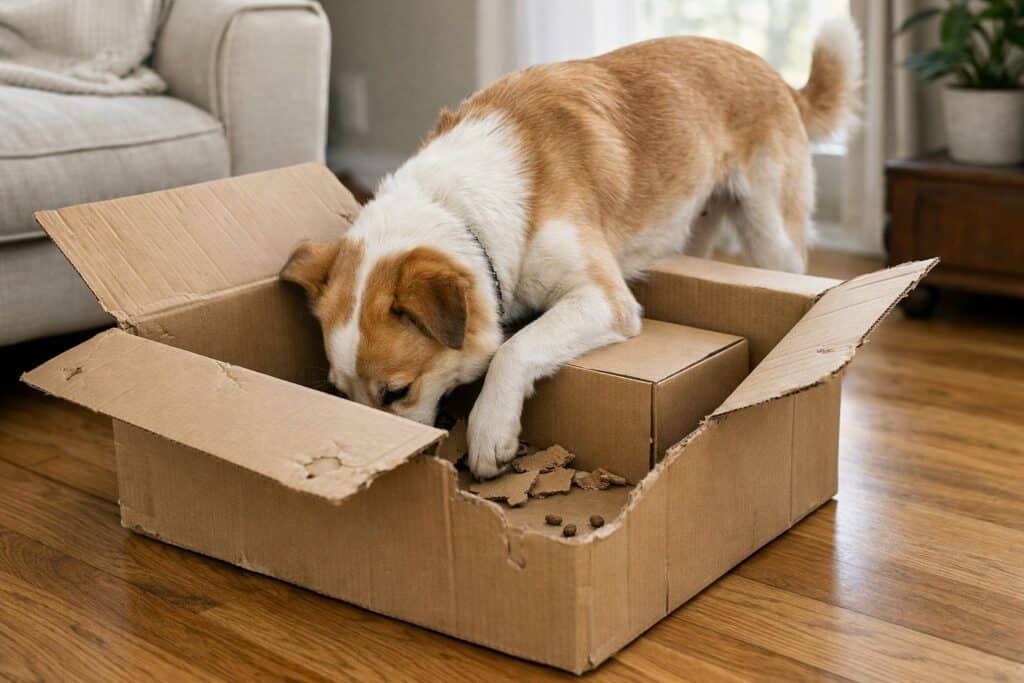
#6. Cardboard Box Shred-and-Search
Difficulty: Easy → Advanced
Put treats or kibble inside a cardboard box. Nest smaller boxes inside larger ones for added challenge. Let your dog rip through it.
Why it works: Shredding is natural and stress-relieving.
Make it harder: Add paper packing or loosely close the flaps.
Safety note: Supervise to prevent cardboard ingestion.
#7. Toilet Roll Puzzle
Difficulty: Easy
Fold one end of a cardboard tube closed, add treats, fold the other end. Your dog tears or noses it open.
Why it works: Quick, satisfying, low-effort enrichment.
Make it harder: Place it inside a box or wrap it in a towel.
Safety note: Single-use and supervised only.
#8. Towel Wrap Game
Difficulty: Easy → Advanced
Lay a towel flat, sprinkle treats on it, then roll or loosely knot it. Your dog paws, noses, and unties it to get the food.
Why it works: Great beginner puzzle with adjustable difficulty.
Make it harder: Use thicker towels or tighter knots.
Safety note: Avoid for dogs who shred fabric compulsively.
#9. DIY Jeans Pocket Scent Puzzle
Difficulty: Medium
Stuff a back pocket in your old jeans with fabric scraps or treats (or both).
Why it works: Provides scent work, texture, and gentle chewing.
Make it harder: Place inside another fabric layer or box.
Safety note: Use thick denim only and supervise closely.
#10. Natural Rustle Toy
Difficulty: Medium
Wrap a small bundle of clean, dry leaves or soft bark inside a sturdy cloth or old t-shirt. Tie securely to create a rustling sensory toy.
Why it works: Natural outdoor scents + soft sound = calming sensory enrichment.
Make it harder: Hide treats inside the bundle.
Safety note: Use only dog-safe vegetation and supervise carefully. Avoid sticks or brittle plant material that may splinter, cause injury, or become lodged in your dog’s throat.
DIY Dog Toy Safety: The Non-Negotiables
Most DIY toy fails come from wrong materials, poor sizing, or lack of supervision. Consider these guidelines:
Choose Safe Materials
Use sturdy, non-toxic materials your dog can’t easily destroy.
Good: plain cotton, fleece, denim, hemp, jute, undyed rope.
Bad: brittle plastic, sharp edges, metal parts, splintering materials, long threads, loose strings, fraying rope.
If it cracks, splinters, or shreds into tiny pieces, don’t use it. Always supervise play and remove items at the first sign of damage.
Match the Toy to Your Dog
A safe toy for one dog can be dangerous for another.
- Make toys too large to swallow. If it fits fully behind the molars, it’s a choking risk.
- Power chewers need thicker, tougher materials.
- Avoid very hard objects that don’t indent with your thumbnail (can fracture teeth).
- Never use small detachable parts—buttons, bells, plastic eyes, squeakers.
- Avoid designs that create suction or trapping hazards (narrow tubes, single-hole balls).
Supervise New Toys
Always supervise new DIY toys, especially cardboard, fabric, or shreddable items. Stop play immediately if your dog swallows pieces instead of chewing and spitting.
Inspect toys regularly and toss them at the first sign of tearing, unraveling, or shedding. If in doubt, don’t hesitate to remove it.
Food Toy Safety
- Use dog-safe foods only. Skip salty, fatty, or hard-to-digest items.
- Ensure openings allow food access without your dog destroying the toy.
- Adjust treat quantity for your dog’s size and health.
Hygiene and Household Item Prep
- Wash fabric toys and clean food-holding toys regularly.
- Remove caps, rings, staples, tape, glue, or anything detachable from repurposed items.
- Keep DIY toys separate from similar household objects (e.g., avoid sock toys if you don’t want your dog chewing real socks).
Making the distinction clear helps prevent unwanted chewing habits.
Why DIY Enrichment Actually Works
Enrichment isn’t about tiring your dog out. It’s about giving her brain something to focus on. Mental challenges activate the “thinking” brain, which helps quiet the “emotional” brain that drives negative emotions like fear, stress, and anxiety.
When your dog is focused on sniffing, solving, and figuring things out, negative emotions are less likely to take over, This helps her stay calm and relaxed, and can prevent behavior problems arising.
DIY enrichment toys help your dog:
- Use her natural instincts like sniffing, foraging, shredding, and problem-solving
- Slow down fast eating and promote calmer feeding patterns
- Reduce stress, frustration, boredom, and emotional overload
- Build confidence through decision-making and small, achievable challenges
- Provide safe indoor outlets for energy without overstimulation
- Encourage independent engagement and focus
How to Rotate Toys to Keep Them Effective
To keep your dog interested, it can help to rotate toys every few days instead of offering everything at once. Two to three enrichment options per day is plenty.
Be aware of the signs you need to adjust the difficulty, for example:
- Dog gives up immediately → too hard
- Dog finishes in seconds → too easy
- Dog becomes frustrated → simplify
When DIY Enrichment Isn’t Enough
If your dog still shows signs of chronic stress, destructive behavior, or ongoing frustration, enrichment alone may not be enough.
While enrichment can certainly lower emotional arousal and provide healthy outlets for it, it does not fix the root cause of fear, anxiety, or learned behavior patterns.
Look beyond enrichment if you notice:
- Persistent pacing, whining, barking, or inability to settle
- Ongoing destructive behavior
- Extreme reactivity, fear, or sudden behavior changes
- Guarding, ongoing frustration, or escalating emotional arousal
- Withdrawal, shutdown, or loss of interest in activities
In these situations, consider:
- Adjusting the home environment (predictability, safe spaces, routine)
- Teaching coping and relaxation skills through training
- Reducing stress triggers where possible
- Consulting a qualified behavior professional if problems persist
Enrichment is powerful and essential, but it’s one piece of the bigger behavior picture, not a cure-all.
