

Dog Scared Of Other Dogs? Proven Tips To Conquer Their Fear

The initial months of a puppy’s life are formative for developing social skills, where interaction with siblings and guidance from the mother are critical.
These early experiences allow puppies to interpret signals and cues from other canines, teaching them about play, boundaries, and communication.
A puppy that is well-socialized during this sensitive period is likely to grow into an adult dog with greater confidence and less fear around other dogs.
Conversely, a lack of socialization—or even bad socialization—can leave a dog uncertain and even frightened in the presence of their canine peers.
If your dog is one of those, I get it.
I’ve lived with my fair share of fearful rescue dogs that freak out at the mere sight of another dog in the distance.
Read on to learn about proven tips to help your dog conquer her fears and help her become more confident around other dogs.
Key Takeaways
- Early life experiences play a vital role in shaping a dog’s social competence.
- Socialization with siblings and the mother sets the foundation for a dog’s communication skills.
- Past negative experiences can significantly impact a dog’s behavior towards other dogs.
- Gradual exposures to other dogs at a distance the dog can handle, paired with positive experiences are key to helping a dog overcome her fear.
- Seek professional help if your dog’s fear is severe, or if you’re unsure how to address it.
The Root Of Canine Anxiety
The absence of early positive experiences with other dogs risks being translated into an adult dog that’s unequipped to handle the social intricacies of canine encounters.
When puppies miss out on their vital early learning stages, especially between 3 and 14 weeks of age, they may exhibit fearful or even aggressive behavior later on.
Between 3 to 14 weeks is what’s known as the sensitive period and is the optimal time to introduce puppies to new, novel experiences—including positive interactions with unknown dogs.
But there is more to it than simply crossing off items on a checklist.
Positive Experiences
The key to good socialization is that all those early experiences need to be positive.
If the puppy is scared during an exposure to a barky dog behind a fence, or gets bullied by another dog during what is meant to be a fun play session, it defeats the purpose completely.
Even worse, it could potentially have a lasting negative impact, setting the dog up for a lifetime of being scared of dogs in those specific contexts—or even dogs in general.
Negative Experiences
Just like humans, dogs can also develop fear through traumatic events or a one-off bad experience.
For example, if your dog was attacked by another dog during a walk or at the park, that traumatic experience could stick with her, potentially leading to a long-term fear of all dogs.
Or all dogs of a certain size, color, or breed, depending on dog that initiated the traumatic event.
This fear can manifest through avoidance, escape attempts, or defensive aggression, which are all signs that a dog is deeply uncomfortable with the situation.
Our rescue dog Roxy spent the first two years of her life in the shelter, and although she was surrounded by other dogs, it was a stressful, impoverished environment.
Throughout her life she was always wary of dogs she didn’t know.
Worse still, one of our neighbors had a large German shepherd and didn’t keep their gate shut.
One day we walked past and the dog ran out the gate and made a beeline for Roxy, jumping on her and attacking her.
From that moment on, Roxy was scared of German shepherds—or any dog that remotely resembled a German shepherd—based on that single negative experience.

Recognizing Signs Of Fear In Dogs
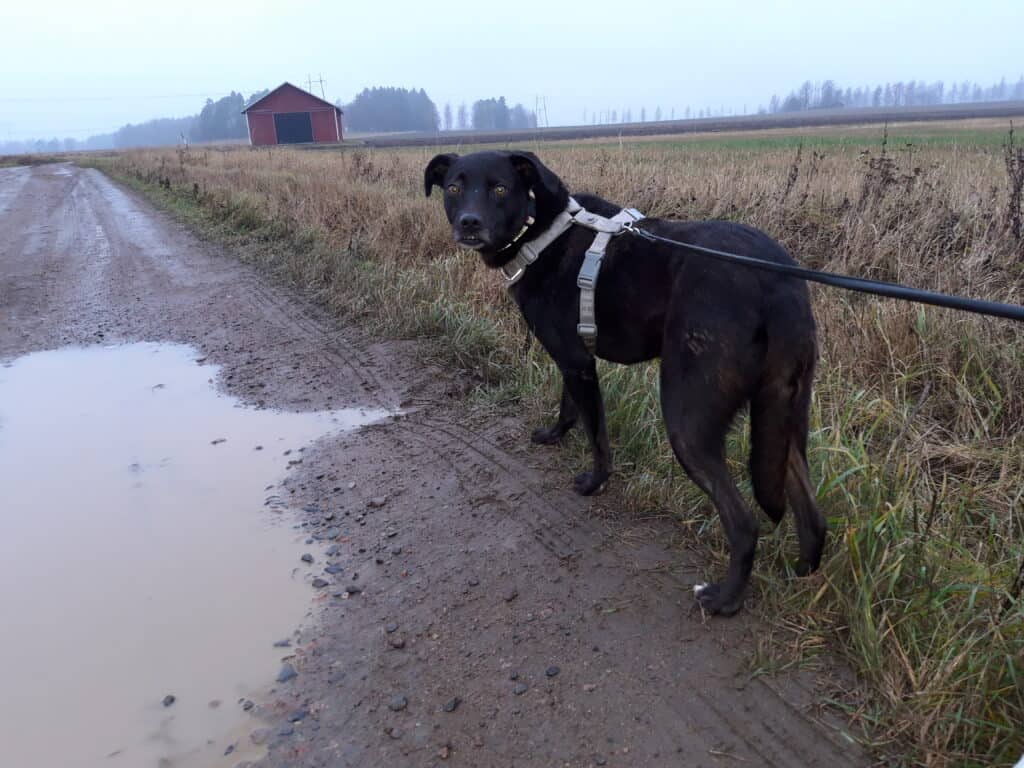
Tuning into your dog’s body language is your secret decoder to understand how she’s feeling.
Keep an eye out for subtle yet telling signs.
When your dog is scared, you might catch her pupils dilating or the fur along her back stiffening (aka raised hackles or piloerection).
Look for other tell-tale signs, like yawning and lip-licking, often mistaken for tiredness or hunger but really a dog’s way of saying, “Hey, I’m not feeling too comfortable right now.”
Likewise, trembling or panting can be clear signs of stress, but they too can easily be misinterpreted as excitement.
A fearful dog may also adopt a hunched body posture, freeze on the spot, or even try to hide behind your legs, complete with a tucked tail and flattened ears.
Deciphering these behaviors can be a mix of art and science.
Some behaviors are obvious, some are more subtle.
Lunging, growling and barking, for example, are explicit signs of discomfort.
The goal is to manage the environment by watching for triggers (other dogs, in this case) while keeping an eye on your dog for any signs of stress.
This way, you can plan ahead and create a safe bubble for your furry family well before her stress hits the roof.
By reading, acknowledging, and responding to your dog’s cues, you can play a vital role in helping her navigate her fears effectively and with compassion.
Creating Positive Experiences
Positive Reinforcement
To help your dog build her confidence and view the presence of other dogs in a more positive light, positive reinforcement is your most powerful tool.
This means rewarding your dog (this can be a treat, verbal praise, affection, or even a toy of fun game – anything she values highly) when she does a behavior you like.
The rationale is straightforward – by offering a positive consequence immediately after the dog displays a desired behavior, you’re reinforcing a connection in her mind. This connection makes her more inclined to repeat the behavior in the future, anticipating a positive outcome.
The magic here is that behaviors that get rewarded tend to become habits, creating a loop of more and more confident interactions.
It’s not just a mood boost for your dog; it’s like giving her a gold star for great social behavior.
In other words, when your pup shows calm behavior in new situations or around unfamiliar dogs, she earns a tasty treat.
Step by step, these little wins add up, turning her into a confident and sociable companion who starts to see other dogs as potential pals, rather than threats.
So, you’re not just creating a safe space; you’re building a friendship zone where she learns that keeping her cool in social situations brings all the good stuff her way.

New E-Book
👉 My new E-book, The Fearless Fido Formula: 15 Mistakes Smart Dog Parents Never Make Again is officially live!
👉 If you’re a dog parent, especially of a fearful pup, this is for YOU!
👉 AND…you’ll get 4 amazing bonuses for FREE!
Not sure if this is right for you and your dog? Get more info here
Slow, Steady Exposure
Not so fast, however.
It’s essential to take things slowly and work to your dog’s timeline at a distance she feels comfortable with.
At the same time, you will keep a close watch on her body language to look for those telling signs of stress and reward for calm behavior.
Desensitization And Counter-Conditioning
The official terms for all this are desensitization and counter-conditioning.
These are behavioral techniques used together to help anxious dogs overcome their fear or discomfort in specific situations, such as being around other dogs.
- Desensitization: This involves exposing the dog to the scary thing (in this case, other dogs) at a level where she remains calm and relaxed. Starting at a safe distance and gradually reducing it over time helps the dog become accustomed to the presence of other dogs without triggering anxiety. The goal is to decrease the dog’s emotional response to the scary thing.
- Counter-Conditioning: This technique involves pairing the presence of the scary thing with something positive. For example, every time the dog sees another dog, she receives treats, gets showered with praise, or engages in a fun game. This creates a positive association with the perceived threat, helping the dog to reframe her emotional response.
Let’s look at how this would work:
Start At A Safe Distance
In the beginning, control the environment as much as possible.
This could mean starting with just you and your dog in a safe area with no distractions, and having a friend or “helper” walk in the distance with a dog you know stays calm around other dogs.
If you don’t have a helper, then you can also use random strangers’ dogs who happen to be out on their walks.
Note: the dog park is not the place for this!
That would be too much to process at this stage.
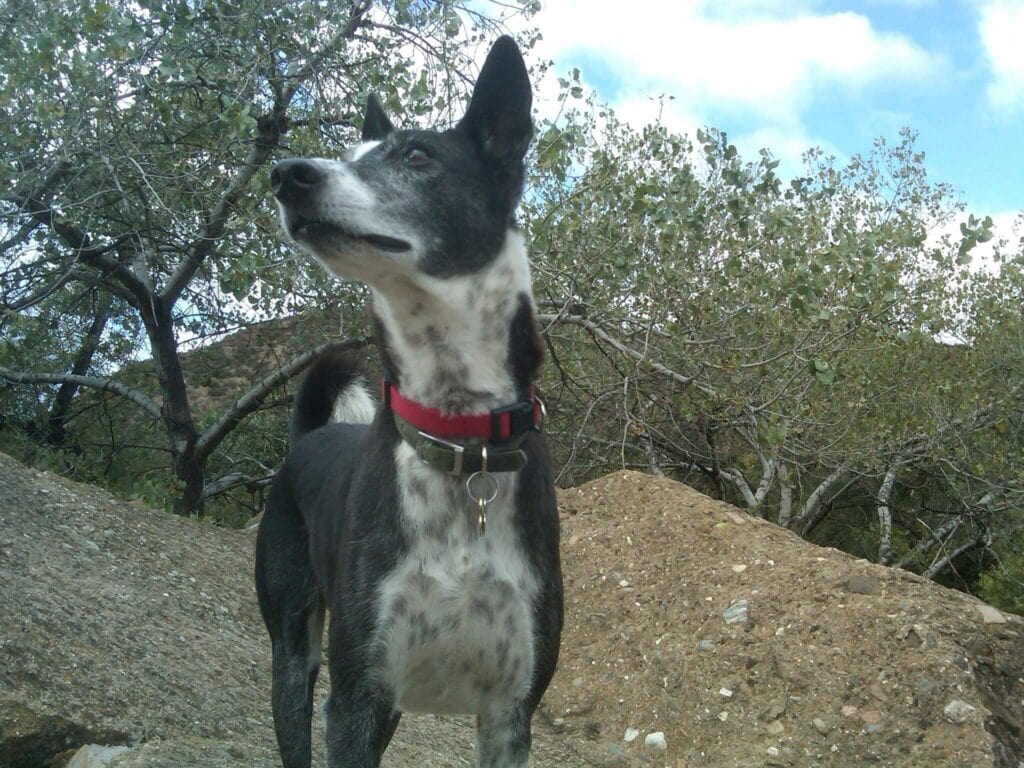
Meanwhile, watch your dog’s body language carefully to figure out at what distance she is comfortable with seeing the other dog while remaining calm and relaxed.
This distance could be 10 yards, 20 yards, 50 yards or anything else.
Once you’ve worked that out, this will be your starting point.
Whenever the other dog is in sight, keep rewarding your dog with her favorite treats (ideally something she absolutely loves and doesn’t get any other time – think hot dog, chunks of cheese, ribeye steak).
When the other dog moves away and is out of sight, stop the rewards.
This is how you can start to reduce the fear and create a more positive association with the presence of another dog.
Gradual Approach
Take it slow and gradually decrease the distance between your dog and other dog.
Not on the same day though!
This will take place over a period of days, weeks, or even months.
Remember, your dog is the one setting the timeline.
Watch your dog’s reactions and keep rewarding her for staying calm.
If she shows the slightest sign of anxiety, don’t hesitate to increase the distance again and take a break.
Monitor And Adjust
Keep paying close attention to your dog’s body language and watching for those tell-tale signs of anxiety or stress.
Adjust the proximity to the other dog (or dogs) based on her reactions.
It’s crucial that your dog stays calm (aka under threshold), so take a step back if needed and always proceed at a pace that suits your pup.
Repeat And Reward
Consistently practice these steps, showering your dog with treats for staying calm.
By associating these safely managed encounters with other dogs with delicious rewards, you’re building up a positive environment that will boost her confidence around other dogs.
Over time, she will associate other dogs with good things and will be more comfortable being around them.
Remember to always reward your dog for calm, appropriate behavior and never punish her for showing fear or anxiety.
This can make the situation worse and damage the trust between you and your canine friend.
Alternative Socialization Strategies
The dog park may seem like a great spot for dogs to mingle, but for a frightened dog, they are usually far too much to handle.
All those well-meaning, free-roaming dogs rushing up to her combined with all those strange sounds and scents can be completely overwhelming.
Think of it like going to a party where you don’t know anyone.
It can be a scary and stressful situation, especially when you are not comfortable around new people or situations.
Play Dates
Instead of a dog park, try setting up play dates with one or two dogs your pup is already familiar with, or dogs who are calm around other dogs and won’t be a threat.
Ideally, these mini meet-ups would take place in a quiet corner, like your own fenced backyard where your dog will feel safe.
Similar Dogs
Another tip I’ve found helpful is choosing specific playtimes with dogs of similar size and temperament.
This careful matching can prevent towering over or rough play that might scare a small or timid dog.
Professional facilities often offer structured playgroups with canine experts guiding interactions.
This can be a fantastic way for your dog to socialize without the anxiety of an unpredictable setting.
Walking Companion
Lastly, a quick stroll with another calm dog can sometimes do wonders.
This low-pressure situation allows your dog to observe a fellow dog companion without the added stress of needing to interact directly.
It’s all about gentle exposure and not forcing connections, to help conquer her fears one step at a time.
When To Seek Professional Help
If your dog’s fear of other dogs escalates beyond occasional nervousness into more intense reactions such as panic, aggression, or complete shutdown, it might be time to call in a professional dog trainer.
Persistent fearful behavior can deeply affect your dog’s quality of life and, in some cases, pose risks to her safety and the safety of other dogs.
Watch for signs like extreme avoidance, excessive barking, lunging, or snapping when your dog sees other dogs.
These behaviors suggest your efforts alone may not suffice, and that’s perfectly okay.
Consider enlisting the help of a certified positive reinforcement dog trainer or a veterinary behaviorist if your dog’s fearful reactions are consistent and don’t improve with the gentle methods you’ve tried.
These professionals can assess your dog’s behavior, identify specific triggers, and create a tailored behavior modification plan.
They will have the expertise to guide you through more advanced techniques such as the systematic desensitization and counterconditioning I’ve mentioned here, which may be necessary for especially fearful dogs.
Seeking help is a strength, not a failure, and is a positive step towards helping your canine companion live a happier and more relaxed life.
Embracing Your Dog’s Unique Personality
Just like people, dogs have their own unique preferences, and that’s completely fine.
Some dogs enthusiastically engage with all dogs, while others may have a more select group of dog friends.
Not every dog craves the company of other dogs, and that’s okay too.
It’s also important to remember that dogs, just like people, can have off days where they don’t want to be social.
Our nervous rescue dog Louis was absolutely terrified the one time we tried to take him to the dog park, and went around barking and snapping at the other dogs.
We got him out of there immediately and instead walked him around the perimeter at a distance he was comfortable with.
Louis was perfectly fine with our three other dogs, but had no interest in meeting or playing with other dogs.
With the exception of really small dogs who he evidently felt safe with and were no threat to him.
And that was fine with us.
Recognizing that Louis was not the most social pup didn’t worry us.
Respecting his social preferences made him feel secure and confident and was paramount in building his bond of trust with us, his human companions.
As caring dog parents, it’s our job to respect and accommodate our dog’s preferences and not force them into situations that make them uncomfortable.
READ NEXT
NEED A DOG TRAINER OR BEHAVIOR EXPERT?

If you need more help dealing with a training or behavior issue, please find professional help from a force-free dog trainer who can consult with you either in person or remotely.

GOOD PLACES TO START ARE:
- COAPE Association of Pet Behaviourists and Trainers
- Pet Dog Trainers of Europe
- International Companion Animal Network
- Institute of Modern Dog Trainers
- Pet Professional Guild

All dog owners deserve to have successful relationships with their canine companions!
