

Why Does My Cat Sleep On My Bed with Me? 10 Surprising Reasons

Are you one of those cat owners whose cat sleeps on the bed with you?
A cat who occupies prime real estate to the point where you can barely move?
If you’re anything like me, you’ve likely experienced the “joy” of having your leg/chest/head/arm pinned down by the unexpected weightiness of your furry companion.
Where no amount of strategic ninja moves can set you free.
And if you dare disturb the royal slumber, you might just be rewarded with a growl or even a claw-filled tantrum.
But what is it about your bed that makes it so appealing?
In this article, we’ll delve into 10 primary reasons behind this endearing (or infuriating, depending on your perspective) nighttime habit so we can find out exactly why your cat is sleeping on your bed with you.
10 Reasons Why Your Cat Chooses Your Bed
#1. Warmth And Comfort
Cats crave comfort and warm places, making beds the ideal spot for them to catch some Z’s.
Just like us, cats enjoy snuggling up in a cozy and warm spot after a long day.
Plus, beds offer a soft and comfortable sleeping surface that can help your kitty get a good night’s sleep.
You might also be unwittingly providing a source of warmth – your body heat can make the bed an appealing and cozy place for your cat to catch forty winks.
A human heating pad if you will.

#2. Feeling Safe And Secure
Cats seek safety and security, especially during sleep, to make sure they avoid potential threats.
That’s why your bed can be a perfect place for your kitty for a long, deep sleep.
After all, what could be cozier and safer than curling up next to his favorite human with all that extra protection?
When your cat feels secure, he’s more likely to fully relax, allowing for a deeper and more restful sleep.
#3. Trust And Familiarity
Trust plays a critical role in your cat’s decision to bunk with you.
Essentially, if your cat feels safe and comfortable around you, he’s more likely to snuggle up for the night.
Think of it as a bonding activity that strengthens your human-cat relationship.
Fun fact: sleeping together is an instinct rooted in feral cat colonies, where communal sleeping provided safety and warmth.
So, in a way, your bed simulates a secure group environment, fulfilling your cat’s instinctual need for a protected space.
In multi-cat homes, communal snoozing can also promote bonding, but make sure each cat has access to their own space to reduce the potential for fights and territorial issues.
#4. Bonding And Affection
While cats may have a reputation for being solitary animals, they are actually quite social and can form close bonds with humans and other pets.
So when your furry feline chooses to rest beside you, it’s more than just a comfortable spot — it indicates he has a strong bond with you and is also a way of showing his affection.
I have my own theory too.
Sometimes it’s just super convenient for cats to wedge themselves up against you while engaging in their night-time ablutions.
It means they can get a better angle when trying to access those hard-to-reach body parts, or even just to stretch those long feline limbs out a bit better.

#5. Attention And Interaction
Many cats enjoy attention and interacting with their owners (albeit on their terms, of course), even during sleep.
So by letting your cat sleep on your bed, you are providing him with the physical contact and snuggle time he is looking for.
This can help him feel more secure and connected to you.
Plus, who doesn’t love falling asleep to the sound of their cat purring in contentment?
#6. Stress Relief
Being close to your cat can provide him with a sense of comfort and ease at night.
As a result, you can help reduce his stress and anxiety levels, allowing him to plop down for a peaceful nap without a care in the world.
And when it comes to bedtime, your cat may feel a lot more confident when he knows you’re close by.
#7. Prime Real Estate
Cats love high places, and your bed offers your cat the perfect elevated vantage point.
From this perch, he can survey the bedroom and keep an eye on the bedroom door for any interlopers or potential threats.

#8. Familiar Scents And Scent Mixing
Being territorial creatures, cats have a highly developed sense of smell, and scent plays a vital role in their lives.
To mark their territory and signal their presence to other cats, cats depend on scent glands situated on various parts of their body, including the head, face, flanks, tail, and paws.
You may have noticed your feline companion rubbing his head along your bed sheets or scratching the bed covers or mattress.
When your cat leaves scent markings on the bed like this, it’s a way of staking claim to his territory.
More than that, by mingling his scent with yours, your feline friend crafts a unique “communal scent,” which instills a profound sense of security, especially for anxious cats.
#9. Shared Routines
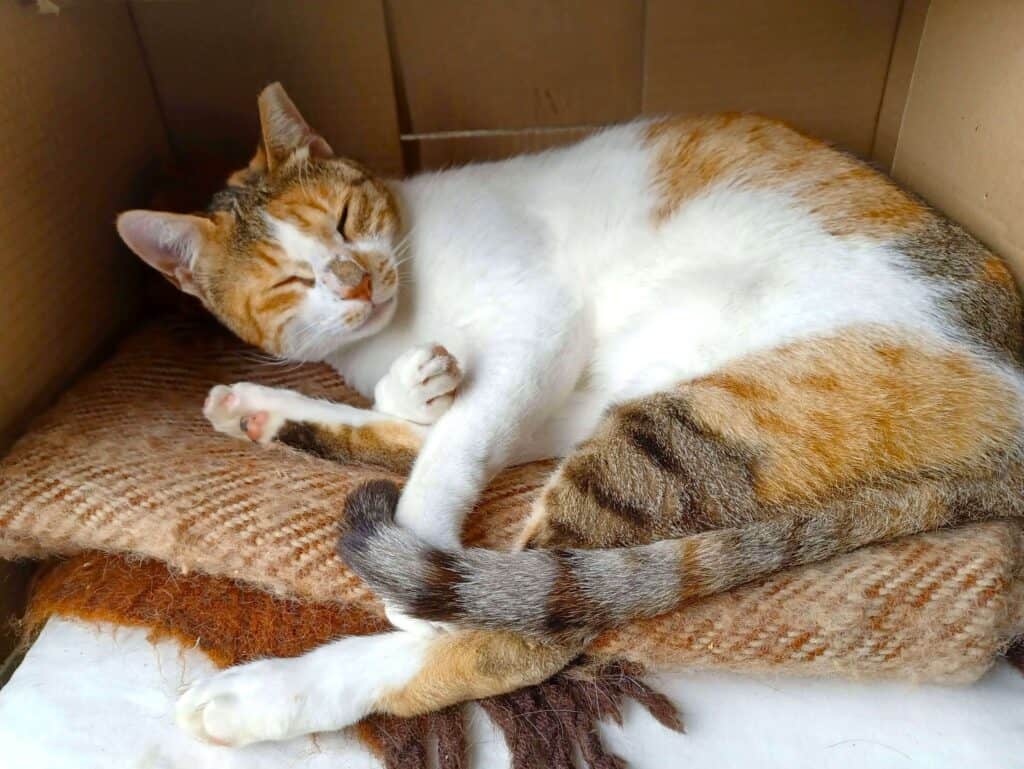
Cats are creatures of habit and often prefer to sleep in the same spot every night.
They also appreciate routine and many cats love being a part of their owners’ nightly sleep ritual.
By allowing your cat to sleep with you, you are providing them with a warm and comfortable spot to rest. Your cat may choose to sleep on your chest, in the crook of your arm, or even on top of your head.
Our rescue cat Jasmine comes running into the bedroom and wedges herself up against me as soon as the lights go off.
Our shared sleep schedule is the highlight of her evening!
In the past we’ve had Mini Me, who would sleep in the crook of my arm all night; Raven, who would sleep across my head on the pillow; Magnus, who used to lie heavily across my forearm; and Jeffrey who wedged himself against my thigh and got extremely irritated if you dared to move in the night.
These are all quirky little routines and sleeping habits developed over time that the cats (and let’s be honest, I also) took great pleasure in.
#10. Pain, Discomfort, Or Illness
If your cat starts meowing or yowling more than usual during the night, it could be a sign that he is in pain or discomfort.
This could be due to a variety of reasons, such as an injury or underlying illness.
If you notice any unusual meowing or yowling, it’s a good idea to take your cat to the vet to rule out any health concerns.
Certainly, if your cat suddenly starts acting strangely in the night, and wants to get close to you when he normally wouldn’t, pay close attention.
Our sweet tabby cat Finlay once started yowling in distress in the middle of the night.
He was freezing cold and shivering, and tried to wedge himself up against me in the bed.
It was clear that something was wrong, and I tried to keep him warm until I could get him to the vet first thing in the morning.
Sadly, Finlay had gone into shock and they were unable to revive him.
We had to let him go.

Human Beds Vs. Cat Beds
While it may be tempting to buy a cat bed for your feline friend, you may find he still prefers to sleep on your bed.
Sometimes cats just prefer to sleep in close proximity to their human family members, and your bed is the safest place for them to do so.
Your cat may not like the texture or smell of his cat bed, or it may be in a noisy busy location where he doesn’t feel safe, which can make him reluctant to use it.
In multi-cat homes, your bed may also be the ideal spot for your cat to sleep if he is lower in the pecking order or being bullied by one of the other cats.
Sleeping up against you can offer an extra layer of defense against potential risks or nocturnal ambushes.
The Pros And Cons Of Sleeping With Your Cat
Potential Benefits
- Sleeping with your cat can provide you with a sense of security and safety, especially if you live alone.
- Your cat’s presence can help you feel protected and less anxious. There’s nothing like having a purring bundle of fluff kneading the duvet with their front paws and leaning against you for a spot of stress reduction.
- Studies show petting your cat can actively lower your blood pressure, help the body release relaxing, feelgood endorphins, and cut down on stress hormone levels (WebMD, 2013).
- Studies also show that a cat’s purring frequency reduces stress level and blood pressure in humans, potentially decreasing the risk of heart attack by up to 40 percent (East Shore’s Veterinary Hospital, 2023). This can also be good for our immune systems as well as our mental health.
- A cat’s normal body temperature is higher than a human’s, so co-sleeping with your favorite feline is a great way to provide extra warmth at night.
Note: If you have outdoor cats, it’s important to keep them indoors during the night for disease control and their own safety.
Potential Drawbacks
- Cats are known for shedding fur, and they can also track in dirt and allergens from outside. This can be a problem if you have allergies.
- Risk of scratches or bites. If you move around a lot during the night, you might accidentally disturb your cat’s beauty sleep and get scratched or bitten.
- If you’re a light sleeper, it may not be the best idea to let your cat sleep in your bed because they can also be quite disruptive. Our cats often walk right over me in the night to go get a snack. They’ll even tread on my head. They just don’t care! Sometimes they’ll start up a noisy chasing game or meow at the front door to go outside.
Personally, I think the benefits outweigh the drawbacks, but all of these factors can disturb your precious quality sleep, so it’s really a personal decision whether you allow your cat in the bedroom or not.

How Can I Keep My Cat Off My Bed?
If you prefer not to have your cat on your bed at night, there are several alternatives you can try.
You can provide cozy and secure sleeping spots in other areas of the house, such as a cat bed or a cat tree. or a cozy carboard box in a quiet area.
You can also use positive reinforcement training techniques to encourage desired sleeping behavior.
You might want to check out my post, Can’t Sleep At Night? How To Keep Your Cat Off Your Bed, for more details.
Frequently Asked Questions
Why Do Cats Like To Sleep With Their Owners?
Cats are social animals and many enjoy being close to their owners at night. Sleeping with their owners provides a sense of comfort and security for cats. Additionally, cats are attracted to the warmth and softness of their owners’ beds.
What Does It Mean When A Cat Sleeps On Your Bed?
When a cat sleeps on your bed, it means that they feel safe and comfortable around you. It is a sign of trust and affection. Your cat may also be seeking warmth and security from your body heat and the softness of your bed.
Is It Healthy To Sleep With Your Cat?
Sleeping with your cat can be healthy as long as you take certain precautions. Make sure that your cat is clean and free of any parasites or diseases. Also, be aware that some people may be allergic to cats, so it is important to keep your bedroom well-ventilated.
Do Cats Have A Favorite Person To Sleep With?
Cats do not necessarily have a favorite person to sleep with. However, they may have a stronger bond with one person in the household. This can be due to the amount of time they spend together, the level of attention they receive, or simply their personalities.
Why Do Some Cats Prefer To Sleep Next To Their Owners’ Feet?
Some cats prefer to sleep next to their owners’ feet because it provides them with a sense of security. They can keep an eye on their surroundings while feeling protected by their owner’s presence. Additionally, sleeping next to their owner’s feet may provide a cooler and more comfortable sleeping spot.
What Are The Benefits Of Sleeping With Your Cat?
Sleeping with your cat can provide several benefits, such as reducing stress and anxiety, improving your mood, and providing a sense of comfort and security. Additionally, sleeping with your cat can help strengthen the bond between you and your furry friend.
Resources
- 6 Ways Pets Can Improve Your Health – Lisa Fields
- The Healing Power of Cat Purring – East Shore’s Veterinary Hospital
