
Easy (and Free!) DIY Cat Enrichment Ideas Using Household Items You Already Have

That Amazon box sitting by the door? Your cat is already more interested in it than the $40 feather wand you bought last month.
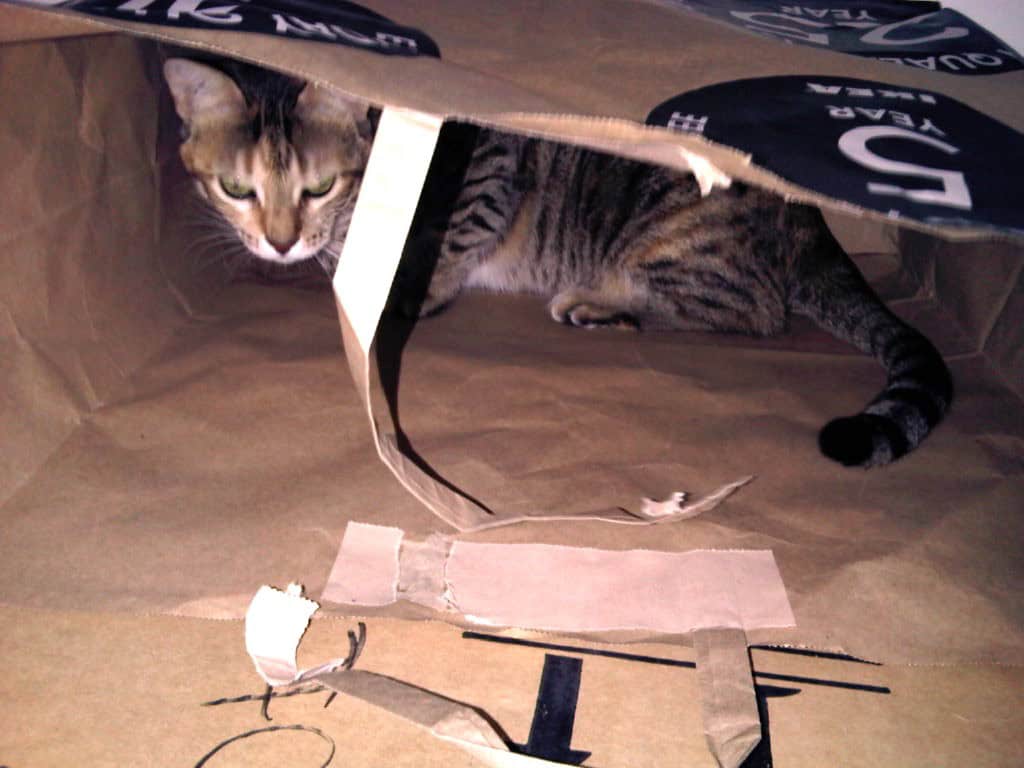
Cats don’t care about price tags or how “interactive” the packaging claims a toy is. They care about textures to scratch, spaces to hide in, objects that crinkle, and anything that moves unpredictably. A paper bag delivers all of that for free.
The truth is, DIY cat enrichment isn’t about Pinterest-worthy craft projects. It’s about understanding what cats actually want to do—stalk, pounce, shred, investigate—and giving them household objects that satisfy those instincts.
A towel becomes a hunting ground. A cardboard box becomes a fortress. A crumpled receipt becomes prey. These aren’t substitutes for “real” enrichment—they often work better because they tap into what cats are naturally driven to do.
This guide walks you through simple DIY cat enrichment ideas using household items you already own. No glue guns required. No trips to the pet store. Just practical, low-effort ideas that work for indoor cats, small spaces, and cats who’ve ignored every toy you’ve ever brought home.
Why DIY Cat Enrichment Works
DIY enrichment doesn’t mean crafting; it means repurposing and giving your cat new ways to interact with familiar items.
Household enrichment works because it:
- Encourages key cat behaviors like exploration, sniffing and foraging
- Taps into natural hunting instincts and provides and outlet for them
- Adds choice and variety to your cat’s day, boosting a calmer, more positive emotional state
- Fits easily into daily routines
The key is to offer options and rotate them occasionally, rather than leaving everything out at once.
Cardboard and Paper Enrichment for Cats
Cardboard and paper-based enrichment works so well because it combines texture, sound, hiding, and choice—all things cats are naturally drawn to. These materials are also lightweight and temporary, which can make them feel less threatening to cautious cats.
For many indoor cats, cardboard and paper provide just enough novelty to spark curiosity without overwhelming them.
Box-Based Enrichment Ideas
Cardboard boxes offer more than just a place to sit. They allow cats to hide, observe, and control their environment, which is mentally enriching even when the cat isn’t actively moving.
Ways to use boxes for enrichment:
- Place a box on its side so your cat can walk in and out freely
- Turn a box upside down and cut one or two small entry holes
- Stack two boxes slightly offset to create multiple access points
- Add a toy furry mouse or scrunched-up paper ball for extra engagement
You don’t need to turn boxes into permanent structures. Simply changing their position every few days can make a familiar box feel new again. Many cats enjoy sitting inside a box and watching the room rather than actively playing, and that observation time still counts as mental stimulation.
Hiding is a natural cat behavior that can help reduce stress, so adding a few hidey-holes around your cat’s home environment help them feel calmer and more relaxed overall.
Paper Bags, Packing Paper and Tissue Paper
Loose paper adds sound and movement, which can be intriguing without requiring high energy. This makes paper enrichment especially appealing to many cats.
Try:
- Crumpling packing paper loosely inside a box
- Creating shallow piles of paper your cat can step through
- Letting your cat investigate the sound of paper at their own pace
- Throw a scrunched-up paper ball for your cat to chase
Some cats will chase and pounce, others will sniff, and some will simply sit nearby and watch. All of these responses are valid. The value comes from engagement on the cat’s terms, not from how active they appear.
Note: Always remove handles from paper bags and supervise new setups briefly to ensure your cat feels comfortable.
DIY Food Enrichment for Cats
Food-based enrichment is one of the most powerful tools for indoor cats because it provides a safe outlet for natural hunting instincts. In the wild, cats don’t eat from bowls — they search, stalk, investigate, and work for their food in small bursts throughout the day.
When all food appears in one predictable place, that entire instinctive sequence disappears. Food enrichment brings part of that experience back in a way that feels natural, calming, and deeply satisfying.
The goal isn’t to make getting food difficult; it’s to make it interactive. Hunting is a natural, hard-wired behavior for cats, and food puzzles provide a healthy outlet for it by activating the brain’s “seeking” system. Searching for, finding, and “catching” food is inherently rewarding triggers the release of feel-good endorphins, which helps support a calmer, more content overall mood.
How? Because when their predatory needs are met, cats are less likely to develop frustration- or boredom-based behavior problems like destructive scratching, excessive meowing, and litter box issues.
Simple DIY Food Puzzles
DIY food puzzles encourage cats to hunt with their brains. Activities like sniffing, problem-solving, and figuring out how to access food engage all the same instincts used during hunting, and have a similar impact on how your cat feels.
Simple setups include:
- An empty egg carton with a few pieces of dry food tucked into the cups
- A paper towel tube with the ends folded and small holes cut along the sides
- A shallow box with crumpled paper hiding food underneath
Start with very easy puzzles so your cat gets their reward quickly. The goal is engagement, not a challenge that’s overwhelming. When cats experience success, they’re more likely to stay curious, confident, and persistent, rather than giving up and feeling frustrated.
Scatter Feeding and Foraging Setups
Scatter feeding turns meals into a search-and-discover activity, which closely mirrors natural foraging behavior.
Instead of placing all food in one bowl:
- Scatter small amounts across a safe, clean area
- Hide food in predictable spots your cat can learn to check
- Place a few pieces at different heights to encourage choice and movement
- Try scattering treats in a cardboard box so you cat has to go in an “extract” them
This allows cats to engage their senses, make decisions, and “complete the hunt,” which can be deeply satisfying. Many cats appear calmer and more settled after food-based enrichment because this instinctive need has been met.
DIY Cat Enrichment for Small Spaces
Cats don’t measure their territory in square footage. They measure it in access, control, and vantage points. Even a small home can feel rich and engaging when a cat is able to move vertically, hide when needed, and observe safely.
Vertical and Hiding Enrichment
Vertical space allows cats to feel more in control of their environment, which is especially important for indoor cats. Being able to rise above the activity in a room gives cats a sense of safety and perspective. It also helps reduce competition in multi-cat homes, by expanding territory upwards and providing more resting spots.
When cats feel safe, their stress levels naturally decrease.
Simple vertical and hiding options include:
- Shelves, stools, or the backs of sturdy furniture
- Blankets draped over chairs to create covered spaces
- Cardboard boxes placed in quiet corners
As we’ve already seen, hiding is a natural, healthy behavior for cats, not something to discourage. Having access to hiding spots helps reduce stress levels in cats, allows them to retreat when overwhelmed, and re-emerge on their own terms. This is a powerful form of emotional self-regulation.
Observation-Based Setups
Observation is one of the most underestimated forms of mental enrichment. Watching the world doesn’t have to be passive for cats. By contrast, it can be engaging, stimulating, and calming.
A safe perch by a window ledge, shelf, or secure surface allows cats to:
- Watch birds, people, and passing movement
- Track changes in light and sound
- Engage their senses without physical effort
Because the cat is elevated and protected, they can observe safely without needing to react. This kind of controlled observation satisfies curiosity while reinforcing a sense of security, making it especially beneficial for cautious or sensitive cats.
Low-Cost Mental Enrichment for Cats
Mental enrichment doesn’t need to cost money to be effective. What matters most is novelty, choice, and the opportunity to interact, not the price tag.
Free Enrichment Ideas
Free enrichment ideas that work surprisingly well include:
- Slightly rearranging furniture to create new pathways or corners
- Temporarily opening access to a room your cat doesn’t usually explore
- Introducing safe new scents, such as a cloth rubbed on outdoor surfaces (think tree bark, dried leaves, etc.) or cat-safe herbs like catnip or valerian.
- Changing resting locations by moving a bed, box, or blanket to a new spot
Even small changes encourage cats to reassess their environment, take in new information, and mentally engage with their surroundings. These brief moments of novelty often spark curiosity without causing stress.
Note: Not all cats enjoy change. For some cats, even small changes in their home environment can be overwhelming, so watch your cat carefully for any signs of stress to make sure you don’t overdo it.
Rotating Household Items
You can rotate a variety of any of these simple enrichment items over a period of time or when your cat starts to lose interest. Rotating them occasionally keeps them novel and interesting and helps prevent them from becoming part of the background.
How to Use DIY Enrichment Safely and Effectively
DIY enrichment works best when it’s gentle, optional, and responsive to your cat’s preferences.
Let Your Cat Choose
Enrichment should always be an invitation, not an obligation. Some cats will jump in immediately, while others observe first or walk away entirely.
That’s okay. When cats are allowed to choose whether and how they engage, enrichment becomes a positive experience rather than a source of pressure.
Keep It Simple
The most successful enrichment ideas are often the simplest:
- Familiar materials
- Predictable setups
- Short interactions
You don’t need to constantly add new activities. Paying attention to what your cat already enjoys and offering small variations of that can often be usually enough.
DIY enrichment isn’t about doing more or creating constant novelty. It’s about meeting your cat’s core behavioral needs in ways that fit their individual preferences. Small, intentional changes that support natural behaviors (like hunting, exploring, choosing, and resting) help regulate the nervous system and promote a more stable, positive emotional state over time. When these needs are consistently met, cats are far less likely to develop stress- or frustration-based behavior problems.
